
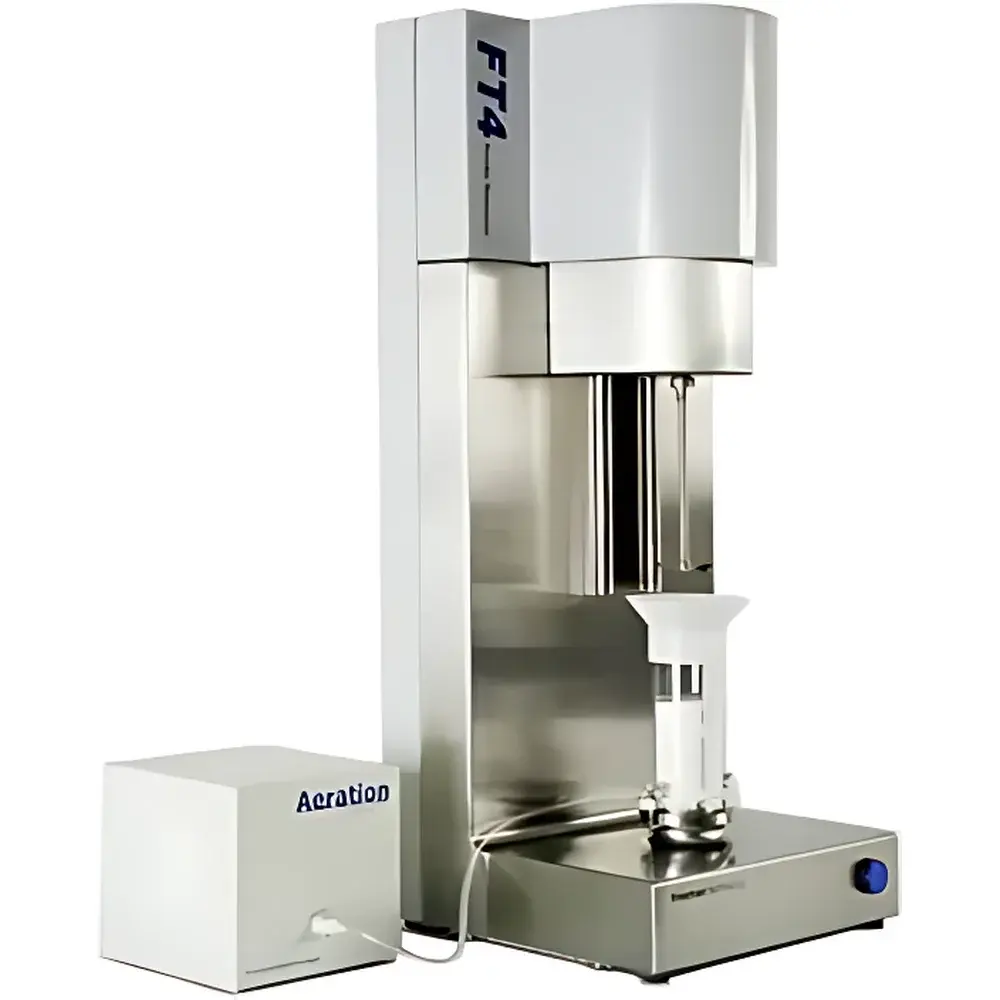
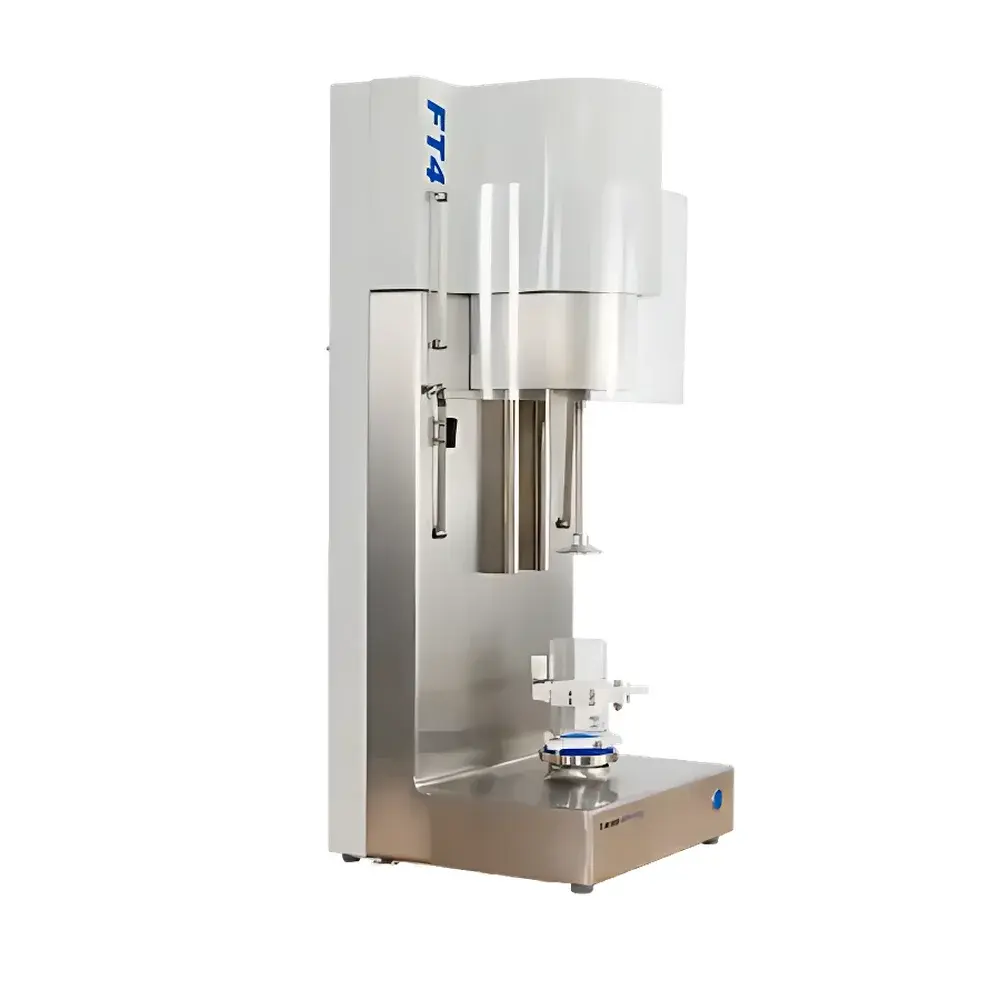
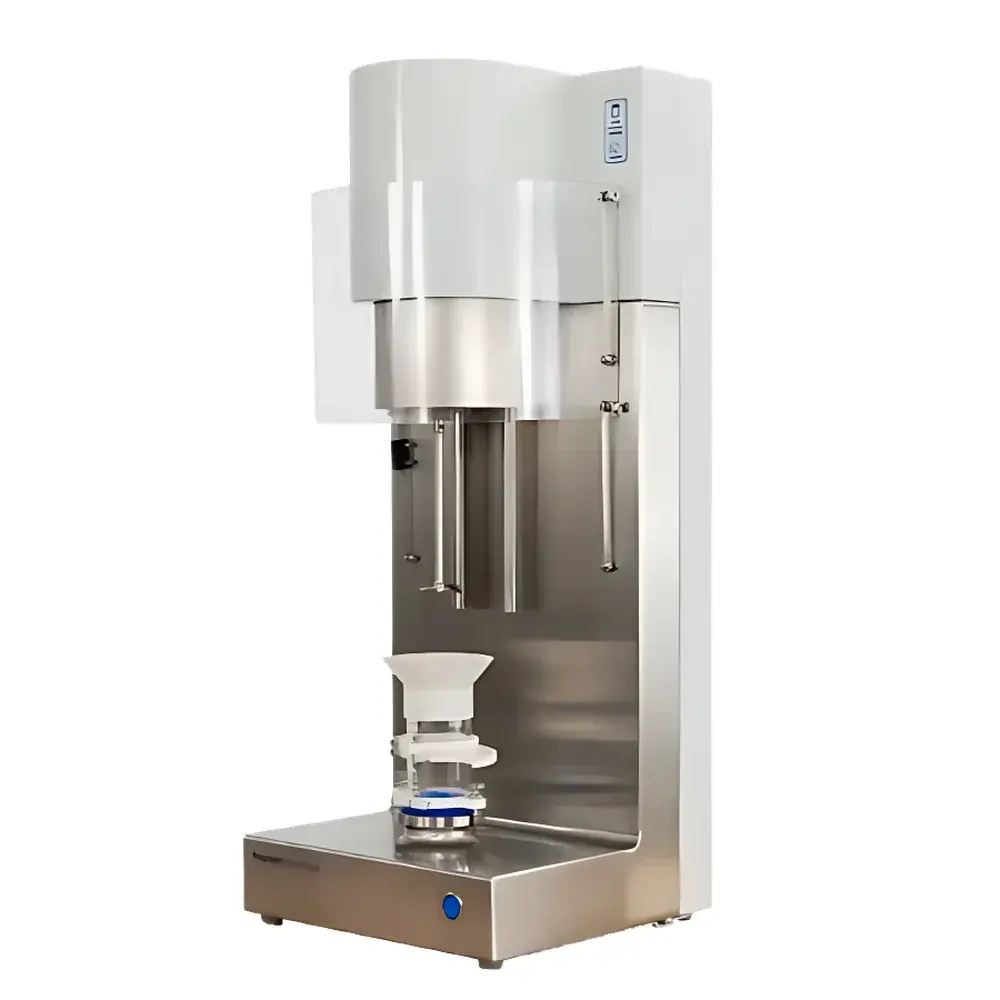
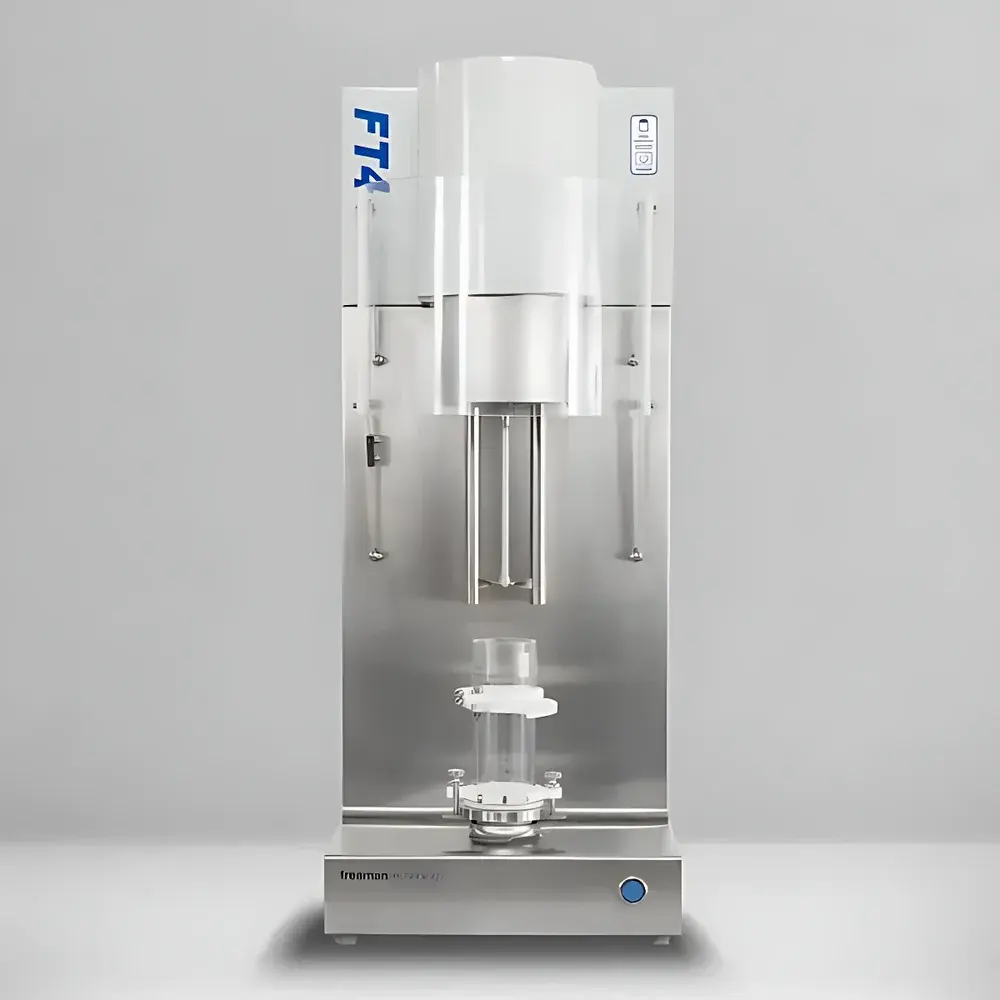
Micromeritics FT4 Powder Rheometer
| Brand | Micromeritics |
|---|---|
| Origin | United Kingdom |
| Model | FT4 |
| Instrument Type | Multifunctional Powder Flowability Tester |
| Measurable Powder Parameters | Flow Function, Flow Energy, Aeration Energy, Consolidation Energy, Compressibility, Permeability, Wall Friction Angle |
| Maximum Sample Vessel Capacity | 160 mL |
| Minimum Sample Volume | 1 mL (with optional mini shear cell) / 10 mL (standard) |
Overview
The Micromeritics FT4 Powder Rheometer is a state-of-the-art, multifunctional powder rheometer engineered for precision characterization of bulk and dynamic flow properties of cohesive and free-flowing powders. Unlike conventional shear-based testers that rely solely on static yield loci, the FT4 employs a patented dynamic rotational measurement principle grounded in controlled blade penetration mechanics. A motor-driven, vertically translating impeller rotates at precisely defined angular and axial velocities—establishing reproducible helical motion through the powder bed. This motion induces localized shear, dilation, and particle rearrangement under controlled stress states, generating quantitative resistance data directly correlated with real-world processing conditions such as hopper discharge, pneumatic conveying, die filling, and roller compaction. The instrument’s design conforms to the physical principles of granular rheology, where flow behavior emerges from interparticle forces (van der Waals, capillary, electrostatic), particle morphology, and environmental variables (humidity, consolidation history). As such, the FT4 delivers process-relevant metrics—not just empirical indices—enabling predictive modeling of powder handling performance across unit operations.
Key Features
- Four complementary test methodologies: Dynamic Flow, Automated Shear Cell (ASTM D7891-compliant), Bulk Property Assessment, and Process Variable Profiling
- High-resolution force and torque transducers with <0.01 mN·m resolution and <±0.2% full-scale accuracy
- Programmable impeller kinematics: independent control of rotation speed (0.01–30 rpm), vertical translation rate (0.01–50 mm/s), and helix angle (15°–75°)
- Dual sample volume capability: standard 10–160 mL vessel + optional 1 mL mini-shear cell for high-value or limited-availability materials
- Integrated environmental enclosure option for humidity and temperature control (20–80% RH, 15–40°C)
- Robust mechanical architecture with vibration-damped base and electromagnetic shielding for stable signal acquisition
Sample Compatibility & Compliance
The FT4 accommodates a broad spectrum of powder types—including pharmaceutical actives and excipients, metal and ceramic powders for additive manufacturing, food ingredients, pigments, catalysts, and battery electrode materials—regardless of particle size distribution (0.1 µm–2 mm), density (0.2–8 g/cm³), or surface energy. All standard test protocols are developed in alignment with ASTM D7891 (Standard Test Method for Measuring the Flow Properties of Powders Using a Rotational Shear Cell), ISO 4762 (Powder Metallurgy—Determination of Flow Rate of Metal Powders), and USP & Ph. Eur. general chapters on powder characterization (e.g., USP , Ph. Eur. 2.9.35). Data integrity meets FDA 21 CFR Part 11 requirements when operated with validated software configurations, supporting audit trails, electronic signatures, and role-based access control for GLP/GMP environments.
Software & Data Management
The FT4 is operated via proprietary rSpace™ software, a Windows-based platform designed for scientific rigor and regulatory compliance. It provides fully automated test sequencing, real-time visualization of torque/force profiles, and integrated calculation of all core parameters—including Flow Function (FF), Flow Energy (FE), Aeration Energy (AE), Consolidation Index (CI), Compressibility Index (CI), Permeability Coefficient (k), and Wall Friction Angle (φw). Raw data are stored in HDF5 format with embedded metadata (operator ID, timestamp, environmental conditions, calibration logs). Export options include CSV, PDF reports, and direct integration with LIMS and MES systems via OPC UA or RESTful API. Software validation packages—including IQ/OQ documentation, traceable calibration certificates, and change control records—are available for regulated laboratories.
Applications
The FT4 serves as a critical decision-support tool across R&D, formulation development, QC release testing, and scale-up engineering. In pharmaceutical manufacturing, it informs capsule fill weight variability, tablet press feed frame performance, and blend uniformity assessment. In metal AM, it correlates powder spreadability and recoater blade load with layer density and defect formation. In food processing, it predicts silo arching, mixer torque demand, and spray dryer feed stability. Additional use cases span cement hydration kinetics, toner charge distribution modeling, catalyst attrition resistance evaluation, and polymer powder sintering behavior prediction. Its ability to decouple interdependent powder properties—e.g., distinguishing cohesion arising from moisture vs. surface roughness—makes it indispensable for root-cause analysis in production deviations.
FAQ
How does the FT4 differ from traditional shear cell testers?
The FT4 combines dynamic flow measurement with automated shear testing—capturing both time-dependent and stress-dependent responses—whereas conventional shear cells only generate static yield loci under consolidated conditions.
Can the FT4 be used for regulatory submissions?
Yes—when deployed with validated rSpace™ software and documented procedures, FT4 data meet ICH Q5C, Q8(R3), and FDA guidance expectations for material characterization in drug product development.
Is calibration traceable to national standards?
All torque and force sensors are calibrated using NIST-traceable reference standards; annual recalibration services include full uncertainty budgets and ISO/IEC 17025-accredited certificates.
What sample preparation is required?
Minimal preparation is needed: powders are gently poured into the vessel without tapping or vibration unless simulating specific conditioning steps; pre-consolidation protocols follow ASTM D6393 guidelines.
Does the FT4 support method transfer between labs?
Yes—the standardized impeller geometry, kinematic parameters, and rSpace™ analysis algorithms ensure cross-site reproducibility; Micromeritics offers multi-lab method verification programs with statistical comparability reporting.



