
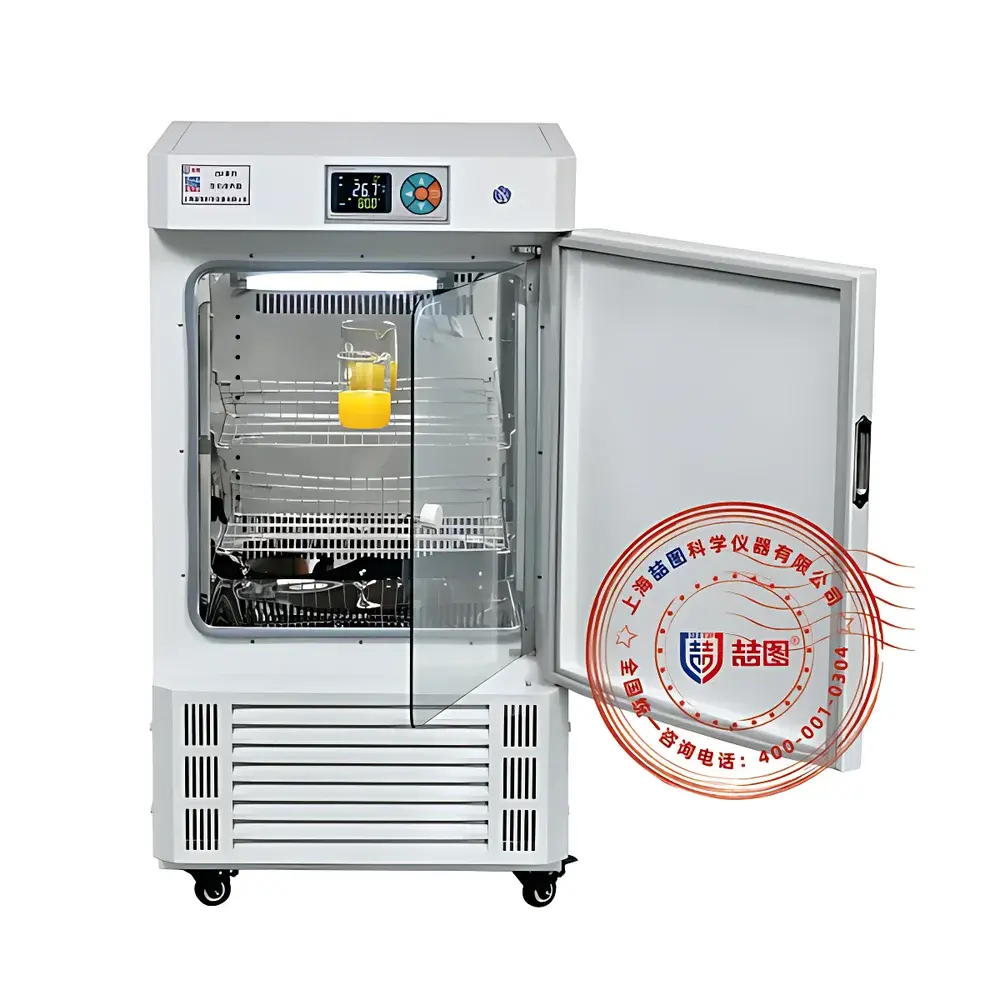
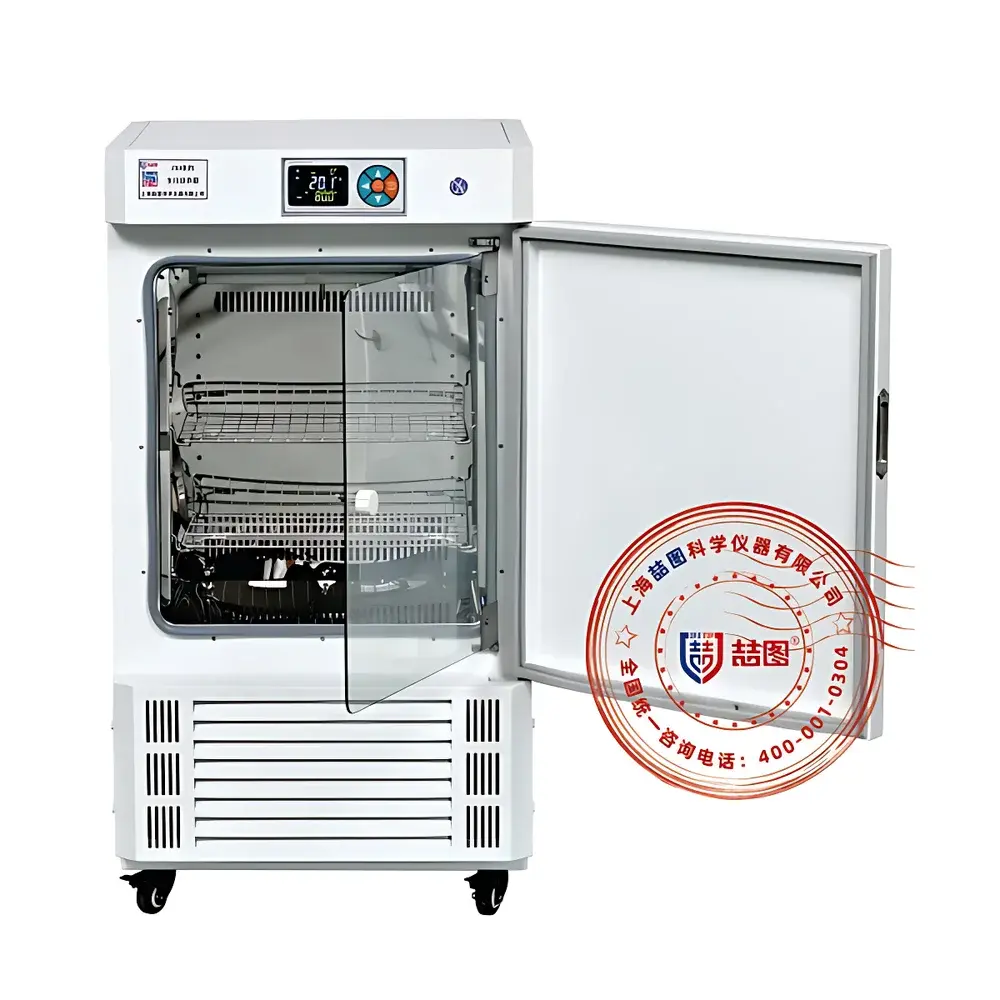
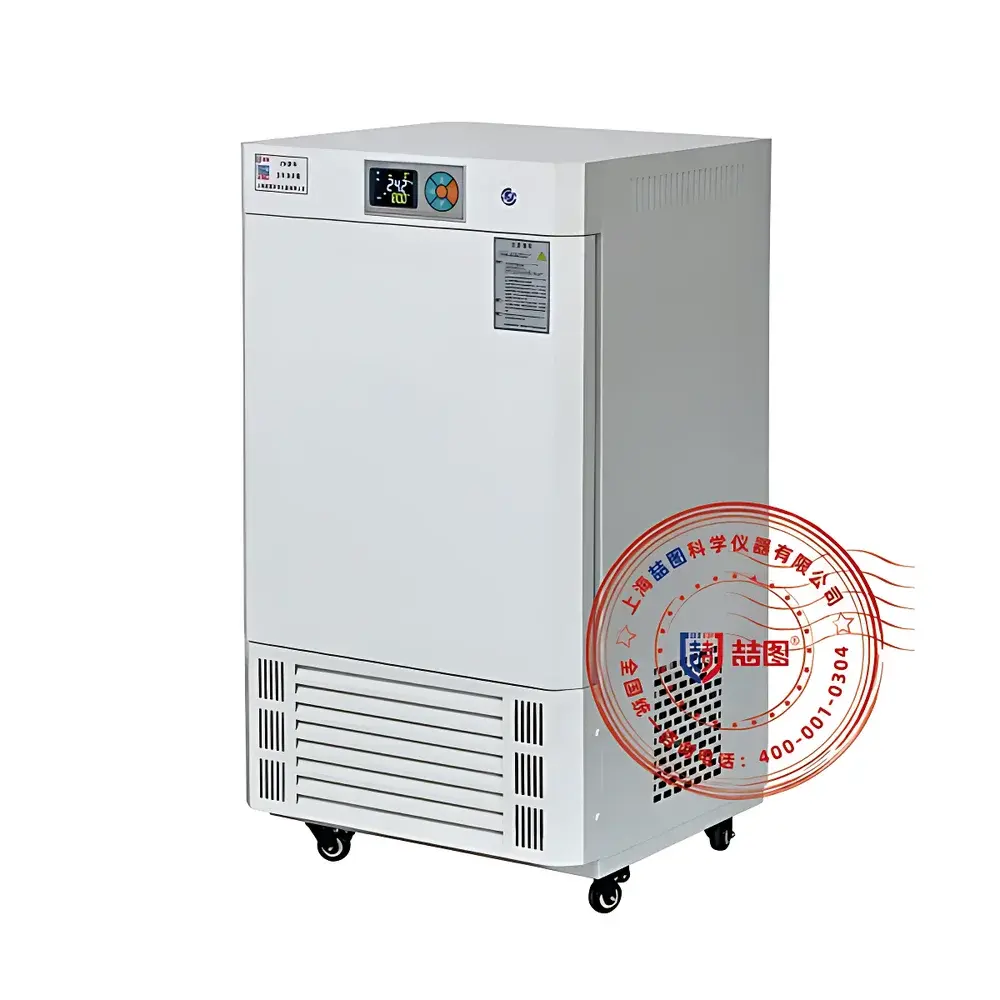
DRETOP BD6-70E Integrated BOD Incubation and Analysis System
| Brand | DRETOP |
|---|---|
| Origin | Shanghai, China |
| Model | BD6-70E |
| Instrument Type | Laboratory BOD Analyzer |
| Principle | Manometric (Pressure-Difference) Method |
| Temperature Range | 0–65 °C |
| BOD Measurement Range | 0–4000 mg/L |
| Accuracy | ±8% |
| Incubation Temperature Setting | 20 °C ±1 °C |
| Temperature Uniformity | ±0.5 °C |
| Temperature Resolution | 0.1 °C |
| BOD Resolution | 0.01 mg/L |
| Test Duration | 1–30 days |
| Sample Capacity | 6 independent channels |
| Data Storage Duration | 10 years |
| Battery Life | ≥2 years |
| Power Supply | AC 220 V, 50 Hz |
| Dimensions (W×D×H) | 450×320×500 mm (chamber), 275×185×75 mm (analyzer unit) |
| Internal Chamber Material | Mirror-finish stainless steel |
| Door Seal | Magnetic gasket |
| Control System | Microprocessor-based 30-segment programmable controller |
| Communication Options | RS485 (optional), USB (optional), Bluetooth data export (standard on BD6-70E) |
| Compliance | Designed for ASTM D5210, ISO 5815-1, and EPA Method 405.1 workflows |
Overview
The DRETOP BD6-70E Integrated BOD Incubation and Analysis System is an engineered solution for standardized biochemical oxygen demand (BOD) determination in accordance with internationally recognized environmental testing protocols. It combines a precision-controlled incubation chamber and a manometric BOD analyzer into a single, space-efficient platform—eliminating inter-device calibration drift, manual sample transfer errors, and ambient temperature interference common in conventional two-unit setups. The system operates on the pressure-difference (manometric) principle: microbial respiration in sealed BOD bottles consumes dissolved oxygen, generating a proportional pressure drop across a mercury-free electrolytic sensor cell. This differential is converted to oxygen depletion rate and integrated over time to yield BOD5, BOD7, or custom-duration values in mg/L. Engineered for regulatory-grade water quality laboratories, the BD6-70E maintains strict thermal stability (20 °C ±1 °C) and uniformity (±0.5 °C) across its 450 × 320 × 500 mm stainless-steel chamber—validated per ISO/IEC 17025 environmental testing requirements.
Key Features
- Single-platform integration of incubation and manometric analysis—reducing footprint by >40% versus standalone configurations
- Six independent, isolated BOD measurement channels; each channel supports autonomous start/stop timing, enabling staggered sample loading without cross-contamination or data coupling
- Magnetic door seal and mirror-polished 304 stainless-steel interior ensure rapid thermal recovery (<15 min after door opening) and resistance to corrosion from humid, nutrient-rich incubation environments
- Microprocessor-based 30-segment programmable controller supports complex incubation profiles (e.g., ramp-hold-cool sequences) for non-standard BOD assays or parallel microbiological studies
- Mercury-free pressure transduction system compliant with Minamata Convention guidelines; zero liquid waste, no toxic disposal, and <0.5% long-term signal drift under continuous operation
- Integrated Bluetooth 5.0 module enables direct wireless export of time-series BOD curves, raw pressure logs, and compliance metadata to LIMS or Excel-compatible CSV files
- Embedded power management includes compressor start-delay logic, duty-cycle limiting, and brownout recovery—extending refrigeration system service life beyond 10,000 operational hours
Sample Compatibility & Compliance
The BD6-70E accommodates standard 580 mL BOD bottles (glass or PETG) with integrated stir bars and gas-permeable septa. Its pressure-sensing architecture eliminates dilution requirements across the full 0–4000 mg/L range, supporting undiluted analysis of wastewater influents, industrial effluents, and surface waters per EPA 405.1 and ISO 5815-1 Annex A. The incubation chamber meets ASTM D5210 specifications for temperature homogeneity and stability during 5-day BOD5 assays. All firmware and data handling modules support audit-trail generation required for GLP-compliant reporting. Optional RS485 interface enables integration with SCADA systems for centralized environmental monitoring networks operating under ISO 14001 frameworks.
Software & Data Management
The BD6-70E runs embedded firmware v3.2 with dual-mode data handling: real-time local display (7-inch capacitive touchscreen) and remote archival via Bluetooth or optional USB/RS485. Each test record stores timestamped pressure differentials at 15-minute intervals, calculated BOD concentration (mg/L), cumulative oxygen demand curve, and instrument environmental logs (chamber temp, sensor voltage, battery status). Data files are stored in encrypted binary format with SHA-256 checksums and retain full traceability for ≥10 years. Exported CSV files include column headers compliant with ASTM E1395 metadata standards. Firmware updates are delivered via signed .bin packages validated against DRETOP’s public key infrastructure—ensuring integrity and authenticity per NIST SP 800-193 guidelines.
Applications
- Regulatory BOD5 and extended BOD (up to 30 days) testing for municipal wastewater treatment plant discharge permits (NPDES, EU Urban Wastewater Directive)
- Biodegradability screening of industrial chemicals per OECD 301B and ISO 7827 protocols
- Quality control of drinking water source protection zones using low-concentration BOD trends (0.1–5 mg/L detection capability)
- Research-scale microbial respiration kinetics in activated sludge, biofilm reactors, and sediment microcosms
- Academic teaching labs requiring simultaneous multi-sample BOD instruction with full data transparency and reproducibility
FAQ
What BOD standards does the BD6-70E comply with?
It supports method execution and data reporting aligned with ASTM D5210, ISO 5815-1, EPA Method 405.1, and EN 1899-1.
Can I run non-BOD incubation experiments in the chamber?
Yes—the temperature range (0–65 °C) and programmable controller allow use as a general-purpose microbiological incubator for bacterial growth, fungal culture, or seed germination studies.
Is validation documentation available for GxP environments?
DRETOP provides IQ/OQ templates, calibration certificates traceable to NIM (China National Institute of Metrology), and firmware validation reports meeting FDA 21 CFR Part 11 electronic record requirements.
How is sensor drift managed during long-term deployments?
The system performs automatic zero-point compensation every 24 hours using internal reference pressure cells, with drift correction logged in each data file.
What maintenance is required for the manometric sensors?
No consumables or electrolyte refills are needed; annual verification against certified pressure standards is recommended—full procedure included in the service manual.







