
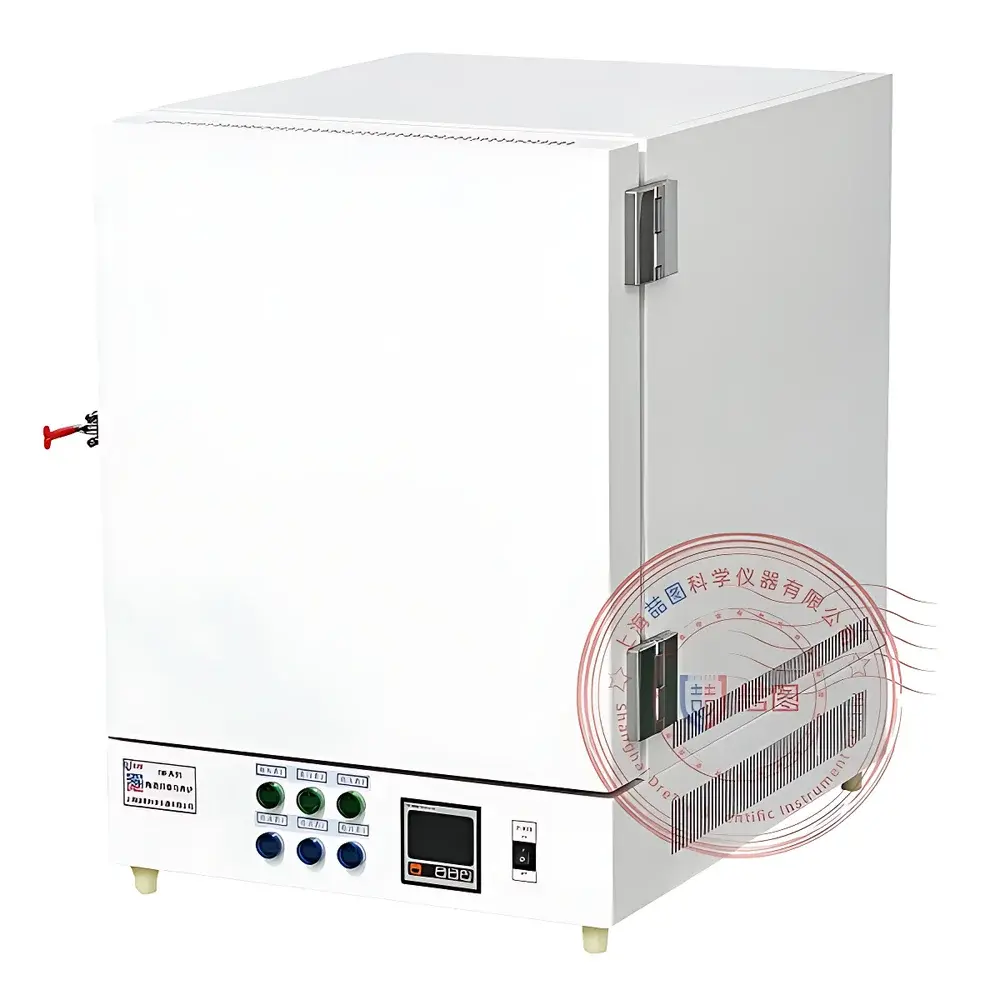
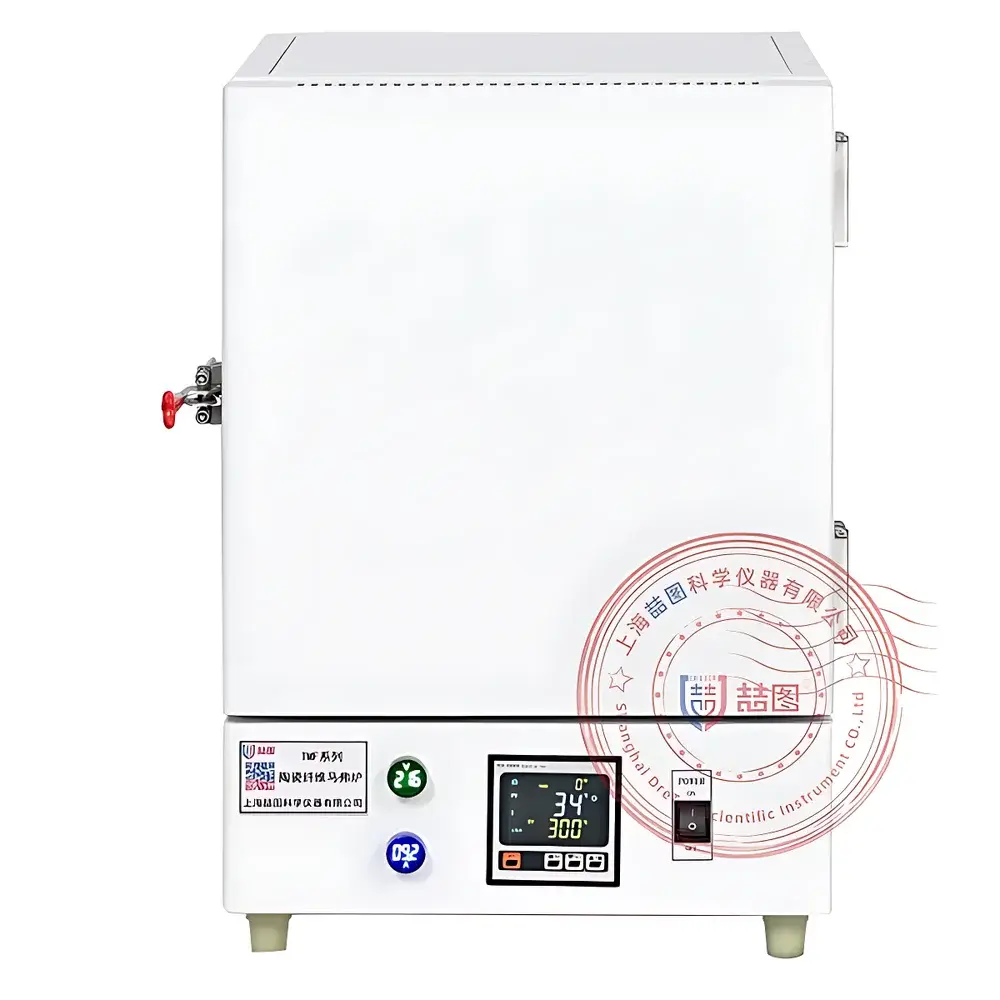
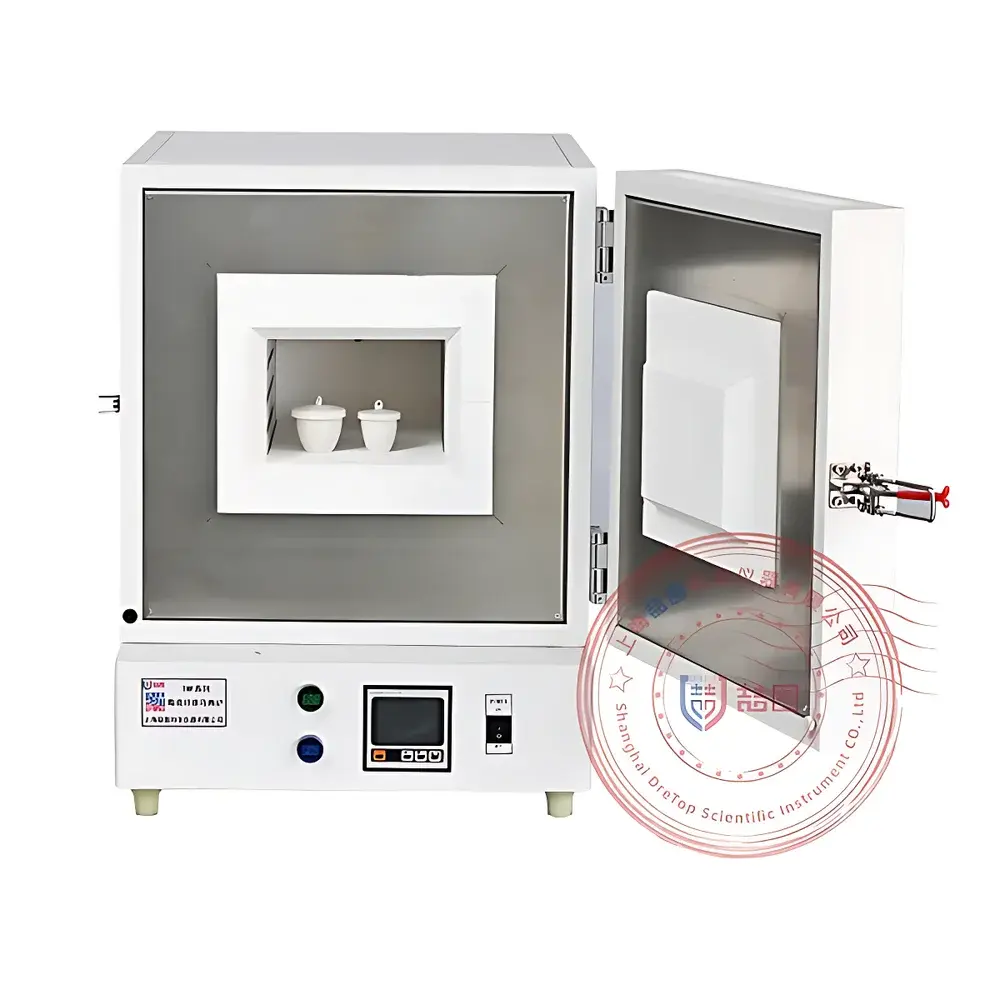
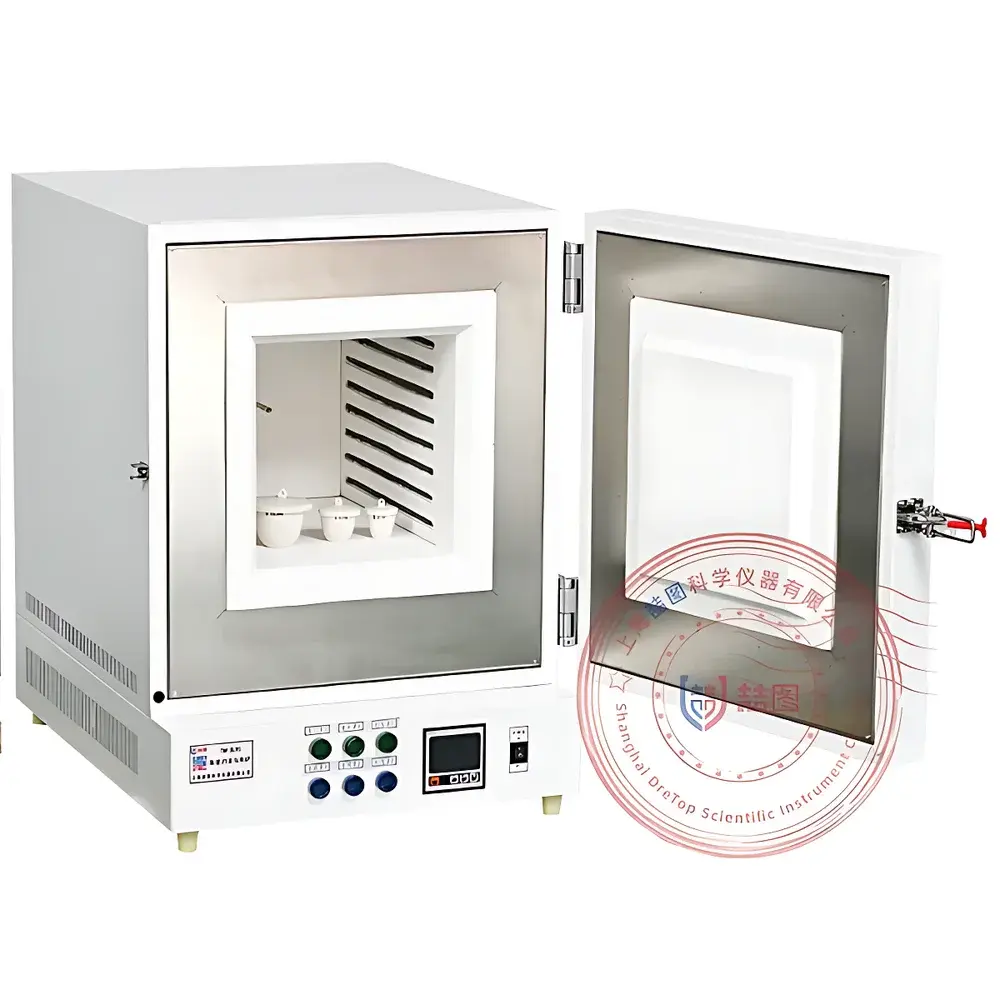
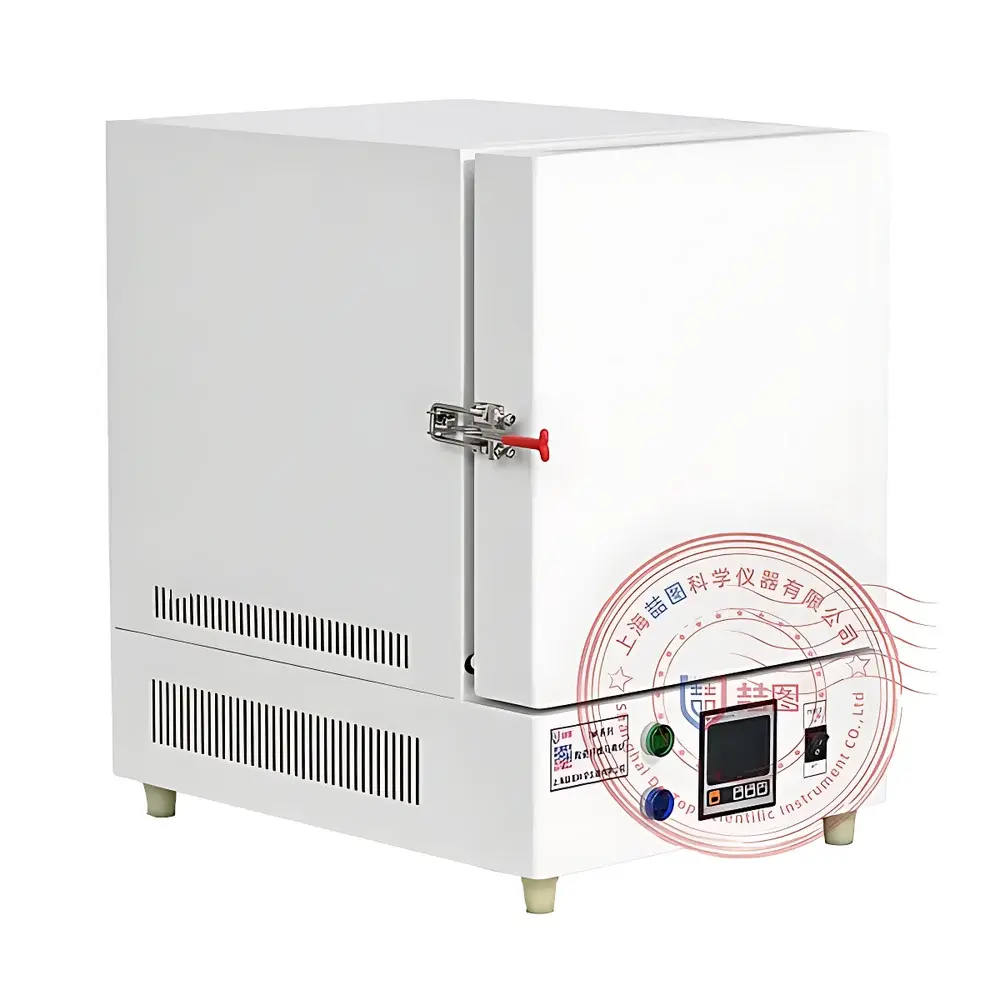
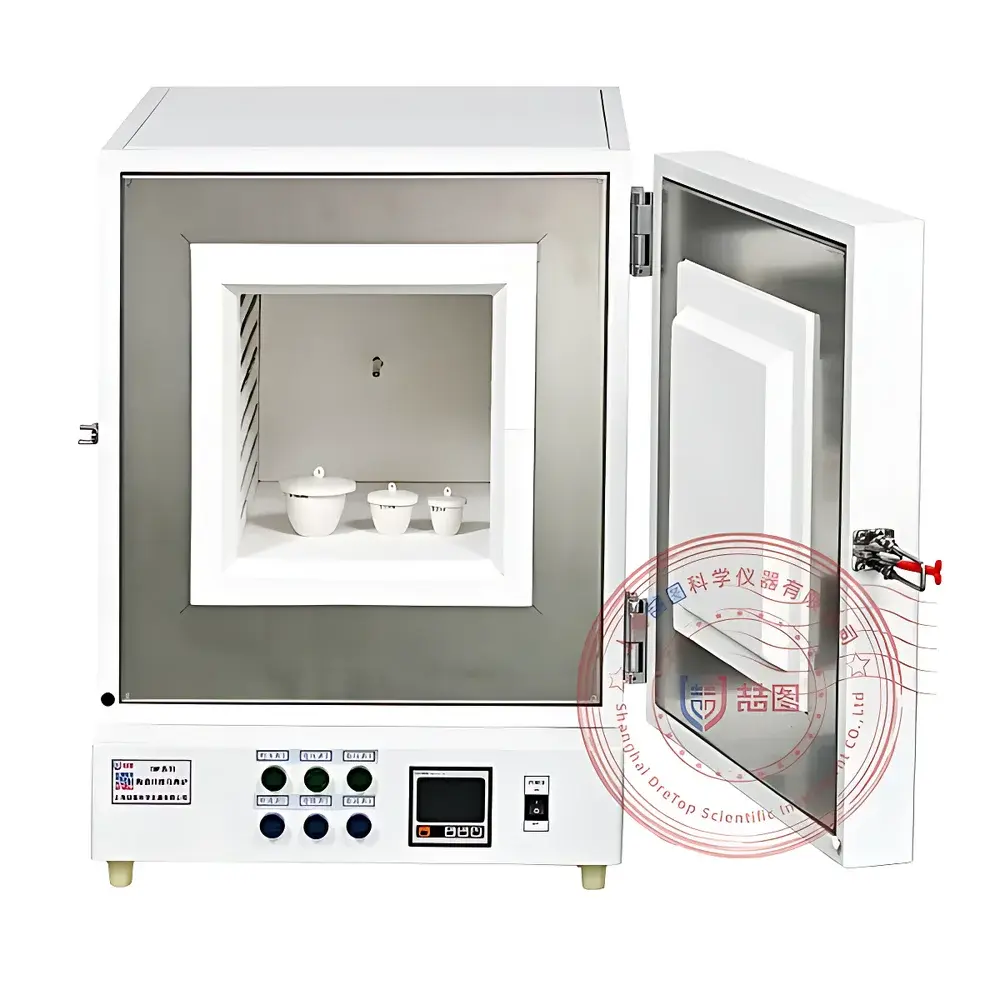
DRETOP TMF Series Ceramic Fiber Muffle Furnace
| Brand | DRETOP |
|---|---|
| Origin | Shanghai, China |
| Model | TMF Series |
| Type | Box-Type Muffle Furnace |
| Max Temperature | 1200 °C |
| Temperature Control Accuracy | ±1 °C |
| Max Power | 21 kW |
| Heating Time to Max Temp | ≤60 min |
| Heating Elements | Ni-Cr-Mo Alloy / Ultra-High-Temperature Alloy |
| Internal Chamber Dimensions | 120×200×80 mm to 450×600×450 mm |
| Nominal Volume | 2 L to 120 L |
| Control System | Programmable PID (T/TP/TC Series) |
| Safety Features | Dual-Stage Over-Temperature Protection, Door-Interlocked Power Cut-off, Auto-Restart After Power Recovery, Real-Time Voltage/Current Monitoring |
Overview
The DRETOP TMF Series Ceramic Fiber Muffle Furnace is a high-performance, energy-efficient box-type laboratory furnace engineered for precise thermal processing in research, quality control, and industrial R&D environments. Unlike traditional refractory brick furnaces, the TMF series employs vacuum-microporous ceramic fiber insulation—offering exceptional thermal resistance, ultra-low heat capacity, and rapid thermal response. Its heating architecture utilizes triple-wall radiant heating with spiral-wound Ni-Cr-Mo or ultra-high-temperature alloy elements embedded in the chamber walls, ensuring uniform temperature distribution across the entire working zone (±3 °C at 1200 °C per ASTM E220 calibration practice). Designed for applications demanding strict thermal profiles—including ashing, calcination, sintering, annealing, and heat treatment—the furnace complies with fundamental requirements of ISO/IEC 17025 for equipment qualification and supports GLP/GMP-aligned workflows through programmable ramp-hold cycles and audit-ready operational logging.
Key Features
- Triple-wall radiant heating system with alloy heating elements wound into side and rear chamber walls—enabling rapid, uniform heating and minimizing thermal gradients.
- Vacuum-microporous ceramic fiber chamber lining (density: ~220 kg/m³), providing superior insulation efficiency, weight reduction (>70% lighter than brick-lined equivalents), and low standby power loss.
- Programmable 30-segment PID controller (TP/TC models) with user-defined ramp rates, soak durations, and automatic cooling protocols—fully compliant with USP & ASTM thermal process validation frameworks.
- Door-interlocked safety circuit: heating ceases immediately upon door opening and resumes automatically after closure—critical for intermittent sample handling without thermal drift.
- Dual-level over-temperature protection: primary PID-based cutoff + independent mechanical limit switch—meeting IEC 61000-6-2 EMC and IEC 61000-6-4 immunity standards.
- Integrated voltage/current monitoring with digital readout—enabling real-time electrical diagnostics and early detection of element degradation or phase imbalance.
- Ergonomic structural design: phosphate-coated steel housing with high-temp epoxy powder coating; reinforced door latch mechanism ensuring gas-tight seal and minimal radiant leakage (<1.5 kW/m² surface temperature at 1200 °C).
Sample Compatibility & Compliance
The TMF series accommodates standard crucibles (alumina, quartz, silicon carbide), ceramic setters, and metal trays up to 450 mm × 600 mm × 450 mm. Its inert, sealed muffle environment eliminates direct flame contact and minimizes oxidation—ideal for air-sensitive processes when paired with optional inert gas inlet valves (N₂, Ar). The furnace meets essential safety and performance benchmarks including UL 61010-1 (2nd Ed.), CE marking under Machinery Directive 2006/42/EC, and electromagnetic compatibility per EN 61326-1. For regulated laboratories, TC-series models support 21 CFR Part 11-compliant electronic records via RS485 Modbus RTU interface and configurable user access levels (operator, engineer, administrator).
Software & Data Management
TC-series models feature a 7-inch color capacitive touchscreen with embedded firmware supporting real-time temperature curve visualization, historical trend replay, and CSV export via USB. All TP/TC controllers log timestamped events—including setpoint changes, door openings, alarm triggers, and power interruptions—with retention of ≥10,000 entries. Optional RS485 communication enables integration into LabVantage, STARLIMS, or custom SCADA systems. Data integrity is preserved through non-volatile memory with battery-backed clock and auto-recovery after unexpected power loss—ensuring continuity of multi-day thermal cycles without manual intervention.
Applications
- Thermal analysis preparation: ash content determination (AOAC 942.05, ASTM D3174), loss-on-ignition (LOI) testing for geological and cementitious materials.
- Ceramic & glass processing: glaze firing, controlled nucleation annealing, devitrification studies, and microstructural stabilization per ISO 10545-9.
- Materials science: sintering of nanopowders (e.g., TiO₂, ZnO), solid-state reaction kinetics, and phase transformation studies under controlled atmospheres.
- Metallurgy: solution heat treatment, stress-relief annealing, and tempering of small-scale alloy components per AMS 2750E pyrometry requirements.
- Environmental & pharmaceutical labs: residual solvent removal, catalyst activation, and excipient thermal stability screening per ICH Q1A(R2).
FAQ
What is the maximum operating temperature and corresponding temperature uniformity specification?
The TMF series achieves a maximum rated temperature of 1200 °C. At this setpoint, radial and axial uniformity across the usable chamber volume is maintained within ±3 °C (measured per ASTM E220 Annex A3 using nine-point thermocouple mapping).
Does the furnace support inert or reducing atmospheres?
Yes—optional front-panel-mounted inert gas inlet valves (standard NPT 1/4″ thread) allow continuous purging with N₂, Ar, or forming gas. Sealed muffle design prevents ambient air ingress during operation.
Can temperature profiles be exported for regulatory documentation?
TC-series units support USB export of full-cycle temperature logs with timestamps, operator ID, and event annotations—formatted for direct inclusion in FDA 21 CFR Part 11–compliant validation reports.
What maintenance is required for long-term accuracy?
Annual verification using traceable reference thermocouples (Type S or R) is recommended. Heating elements require no routine replacement under normal use; ceramic fiber integrity should be visually inspected for cracking or compression before each high-temperature cycle.
Is remote monitoring supported?
Via optional RS485-to-Ethernet gateway, real-time temperature, power status, and alarm states can be integrated into building management systems (BMS) or cloud-based lab infrastructure platforms.



