
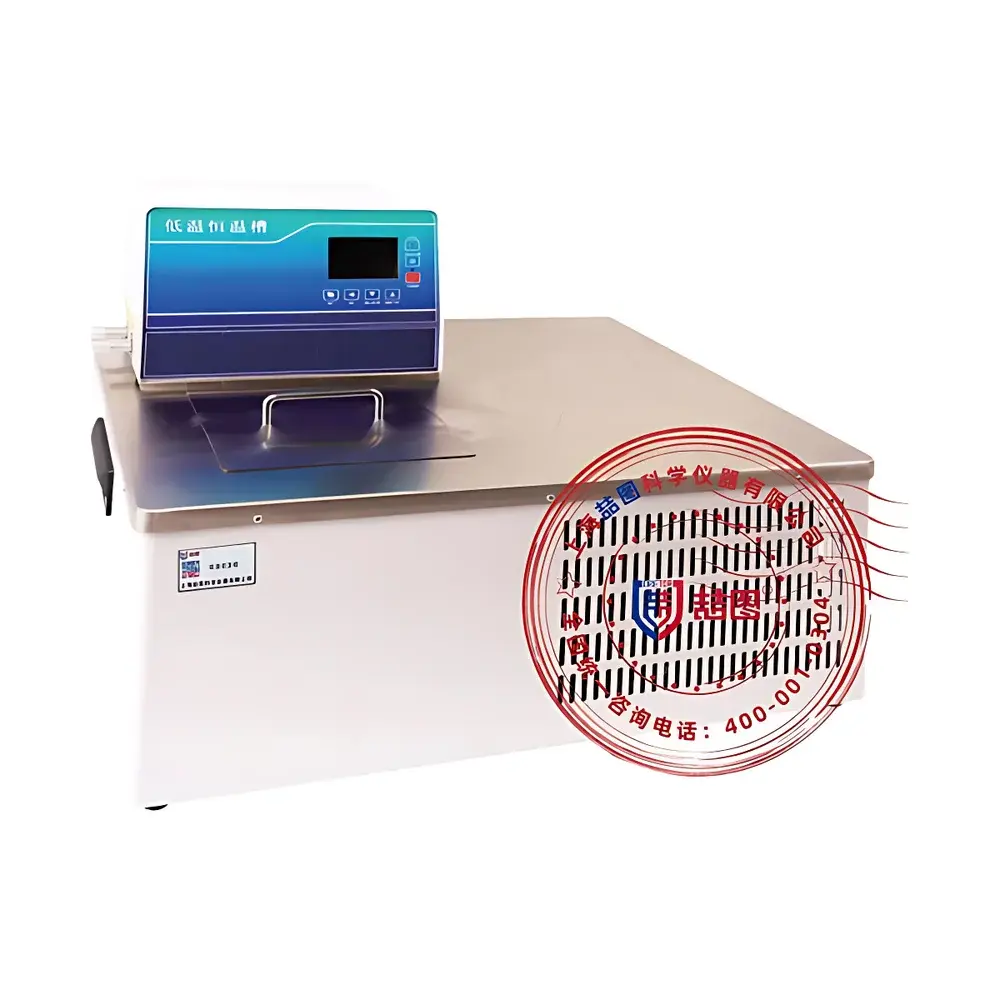
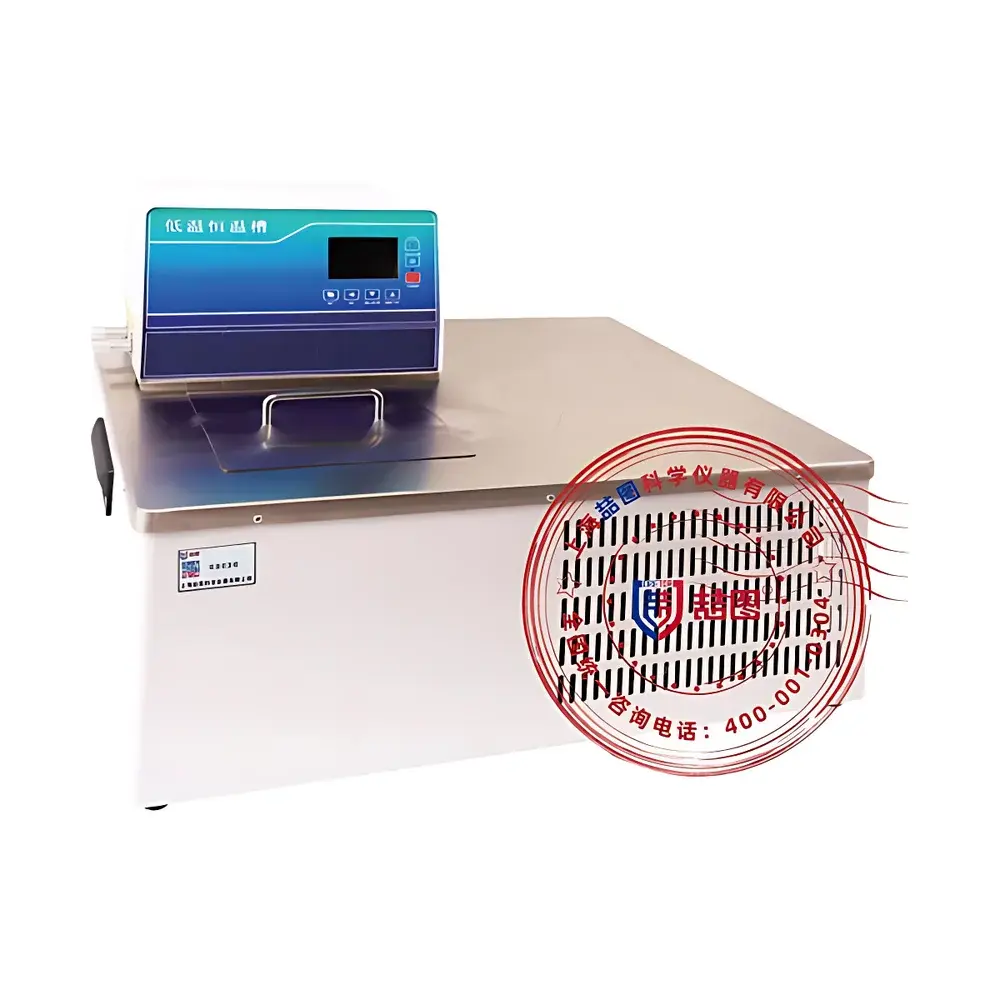
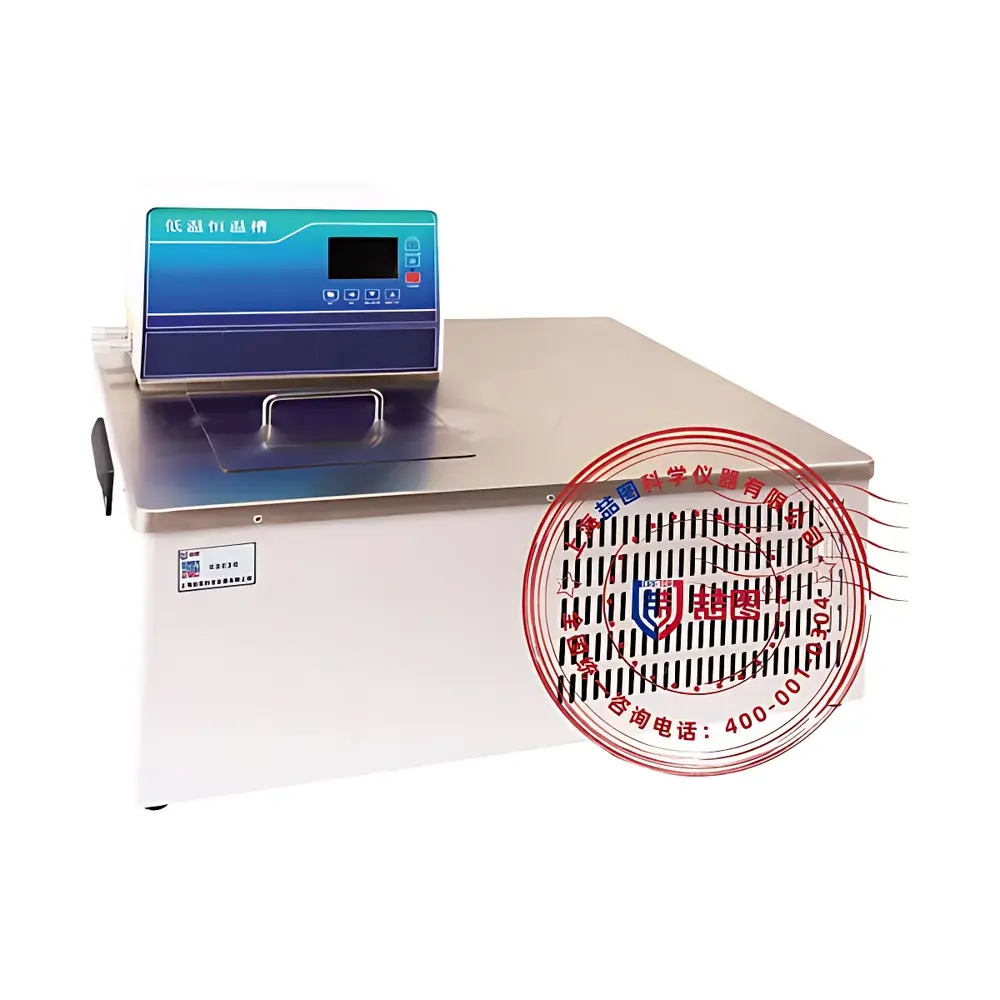
DRETOP TDCW-4006 Horizontal Low-Temperature Constant Temperature Bath
| Brand | DRETOP |
|---|---|
| Origin | Shanghai, China |
| Model | TDCW-4006 |
| Bath Volume | 6 L |
| Temperature Range | −40 °C to +100 °C |
| Temperature Stability | ±0.5 °C |
| Temperature Resolution | ±0.1 °C |
| Circulation Type | Internal Only |
| Control Mode | PID with Touchscreen LCD |
| Construction | 304 Stainless Steel Interior & Work Surface |
| Power Supply | AC 380 V |
| Safety Protections | Over-Temperature Alarm, Low-Level Fluid Detection, Compressor Overheat & Overcurrent Protection, Power-Fail Memory |
Overview
The DRETOP TDCW-4006 Horizontal Low-Temperature Constant Temperature Bath is a compact, benchtop-ready thermal control system engineered for precision temperature maintenance across demanding laboratory and industrial applications. Utilizing a closed-loop refrigeration-heating cycle with dual-stage compressor technology and high-efficiency heat exchangers, the unit delivers stable, uniform thermal environments in liquid media—enabling accurate external device cooling (e.g., reaction vessels, condensers, synthesis reactors) or direct sample conditioning within the bath chamber. Its horizontal configuration optimizes footprint efficiency without compromising thermal performance, making it ideal for space-constrained analytical labs, QC testing stations, and R&D workbenches. Designed for continuous operation under variable load conditions, the TDCW-4006 maintains consistent temperature fields through laminar-free internal circulation powered by a low-heat-generation centrifugal pump—eliminating self-heating artifacts that compromise field homogeneity in conventional systems.
Key Features
- Touchscreen LCD interface with intuitive PID temperature control algorithm—supports real-time setpoint adjustment, ramp/soak programming, and parameter logging.
- Robust 304 stainless steel tank interior and work surface—resistant to corrosion from common heat transfer fluids (e.g., ethylene glycol/water mixtures, ethanol, silicone oils) and compatible with GLP-compliant cleaning protocols.
- Integrated drain valve and dual-port fluid connections—facilitates rapid medium exchange, routine maintenance, and seamless transition between internal recirculation and external loop configurations (via optional tubing).
- Multi-layer safety architecture: independent over-temperature cutoff, fluid-level sensor with auto-shutdown, compressor thermal overload protection, and electronic current monitoring—all compliant with IEC 61010-1 Class II safety standards.
- U-shaped multi-orifice internal flow path—enhances turbulence and minimizes thermal stratification, achieving ≤±0.5 °C uniformity across the full 200 × 200 × 180 mm working chamber.
Sample Compatibility & Compliance
The TDCW-4006 supports a wide range of heat transfer media—including deionized water (5–80 °C), 30–50% ethylene glycol/water solutions (−10 to 100 °C), anhydrous ethanol (≥99.5%, −40 to 20 °C), and specialty low-temperature fluids (e.g., propylene glycol blends)—subject to compatibility verification per ASTM D1384 and ISO 8502-9. All wetted surfaces are electropolished 304 stainless steel, ensuring resistance to chloride-induced pitting and organic solvent degradation. The unit meets CE marking requirements (EMC Directive 2014/30/EU, LVD Directive 2014/35/EU) and conforms to ISO/IEC 17025 calibration traceability frameworks when operated with NIST-traceable reference thermometers. It is suitable for use in environments governed by FDA 21 CFR Part 11 (when paired with validated data acquisition software) and supports audit-ready documentation for GMP/GLP workflows.
Software & Data Management
While the TDCW-4006 operates autonomously via its embedded controller, optional RS485/Modbus RTU or USB-to-serial interfaces enable integration with third-party SCADA platforms (e.g., LabVIEW, MATLAB, DeltaV) for remote monitoring and scheduled temperature profiling. Data logging—covering setpoint, actual temperature, compressor status, and alarm events—is stored internally for up to 30 days (1-minute intervals) and exportable via USB flash drive. When deployed with DRETOP’s optional PC-based DTC-Link software (v3.2+), users gain access to real-time graphing, statistical process control (SPC) charts, deviation alerts, and electronic signature-capable report generation—fully aligned with ALCOA+ data integrity principles.
Applications
- Thermal conditioning of analytical instrumentation: HPLC column ovens, GC detectors, viscometers, and spectrophotometer cuvette holders.
- Controlled-temperature synthesis: Exothermic/endothermic reaction management in jacketed reactors and automated parallel synthesizers.
- Material property testing: Thermal expansion coefficient measurement, polymer crystallization studies, and phase-change behavior analysis per ASTM D696 and ISO 11359.
- Biological stability assessment: Accelerated shelf-life testing of biologics, vaccines, and diagnostic reagents per ICH Q5C guidelines.
- Calibration support: Providing stable reference temperatures for thermometer, thermocouple, and RTD verification per ISO/IEC 17025 Clause 6.5.2.
FAQ
What is the recommended heat transfer fluid for operation at −40 °C?
Anhydrous ethanol (≥99.5% purity) or certified low-temperature synthetic bath fluid (e.g., Dow Corning DC-704) is required; aqueous glycol solutions are unsuitable below −30 °C due to freezing point elevation.
Can the TDCW-4006 support external circulation to a 5-L reactor?
Yes—by disconnecting the internal recirculation tubing and connecting the inlet/outlet ports to the reactor’s jacket using chemically resistant silicone or PTFE-lined hoses (max. 10 m total length, 8 mm ID). Flow rate: 12–18 L/min at ΔT = 20 °C.
Is the unit compatible with USP Analytical Instrument Qualification protocols?
Yes—the TDCW-4006 satisfies IQ/OQ requirements for temperature accuracy, stability, and uniformity verification; PQ must be performed in situ with user-defined acceptance criteria and documented per Annex 15.
Does the system include built-in validation tools for temperature mapping?
No—mapping requires external calibrated PT100 probes (Class A, ±0.1 °C) and a validated data logger; however, the unit provides stable, reproducible thermal fields verified per ASTM E2251-22 Annex A1.
What maintenance schedule is recommended for optimal long-term performance?
Fluid replacement every 6 months (water/glycol), quarterly inspection of condenser coils and pump impeller, annual calibration of internal Pt100 sensor against a traceable standard, and biannual verification of safety interlocks per manufacturer’s Service Manual Rev. 4.2.
Related Products



