
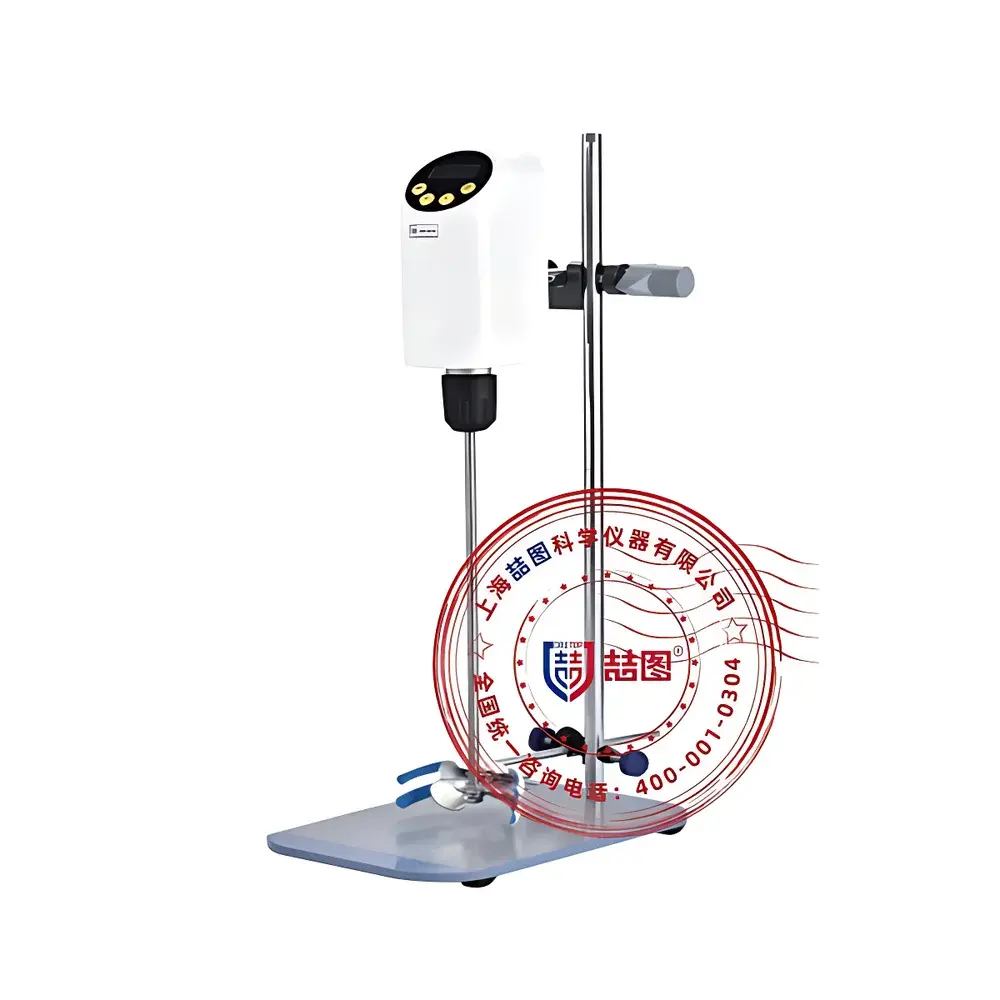
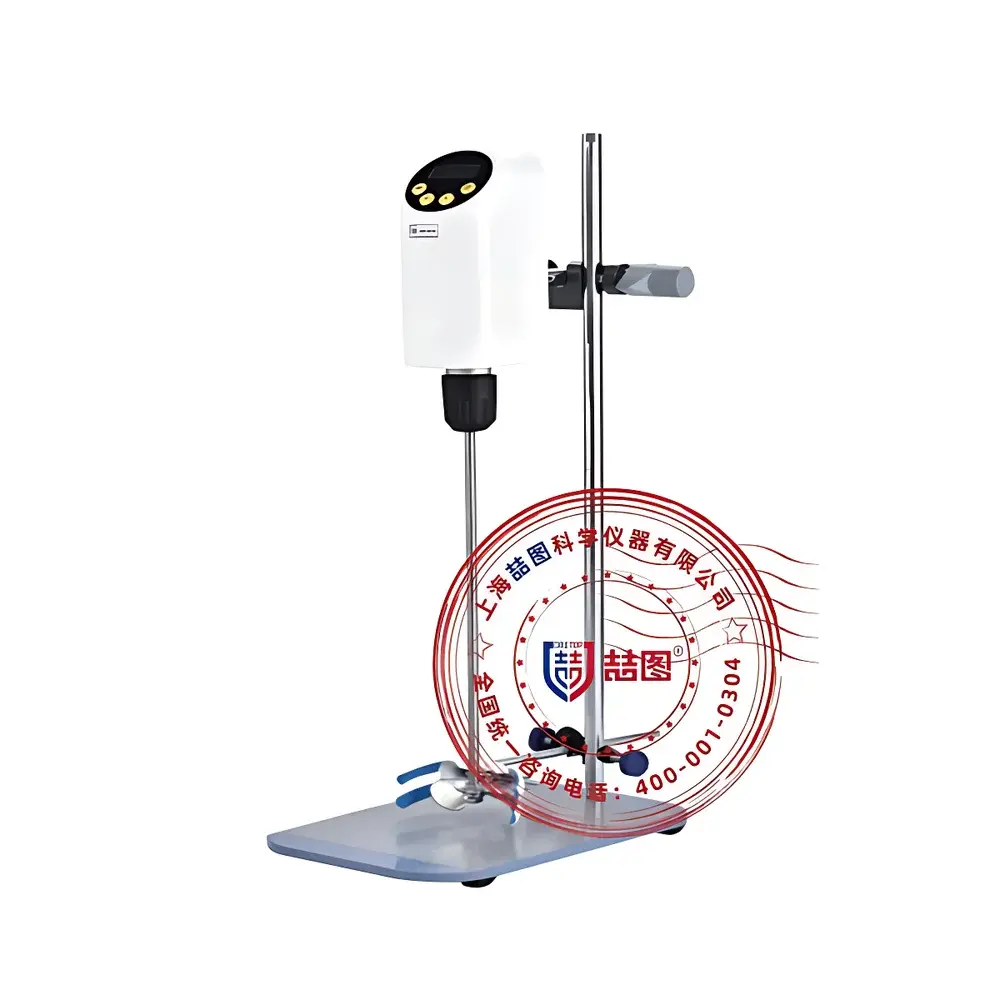
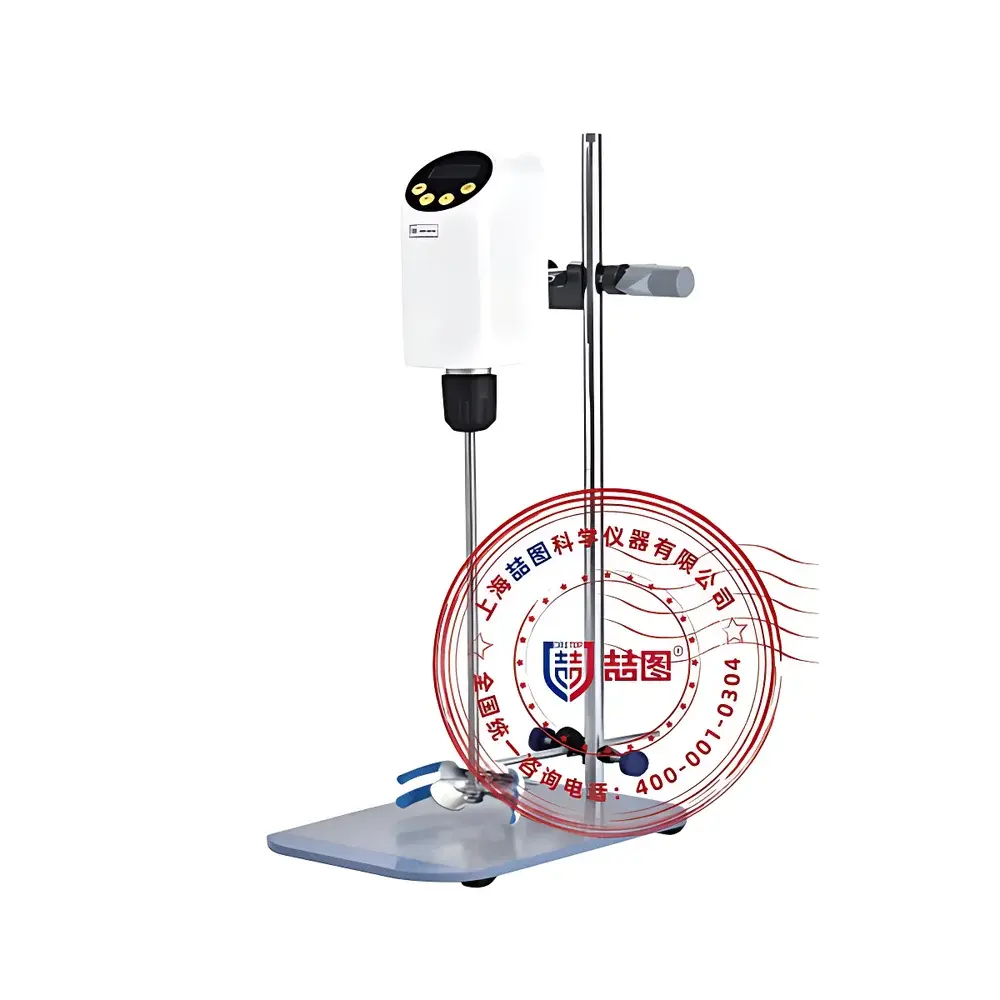
DRETOP TS20-180 Overhead Stirrer
| Brand | DRETOP |
|---|---|
| Origin | Shanghai, China |
| Model | TS20-180 |
| Instrument Type | Overhead Stirrer |
| Maximum Mixing Volume | 20 L |
| Speed Range | 0–2200 rpm |
| Speed Increment | 20 rpm |
| Motor Output Power | 180 W |
| Max Torque | 90 N·cm |
| Chuck Capacity | 0.5–10 mm |
| Voltage | 220 V, 50 Hz |
| Dimensions (D×W×H) | 200 × 315 × 600 mm |
| Display | LED showing setpoint & actual speed, timer function |
| Drive | Brushless DC motor |
| Safety | Automatic overload protection, stall detection, circuit protection, soft-start & reverse capability |
| Standard Impeller | Type-55 two-blade stainless steel impeller |
Overview
The DRETOP TS20-180 Overhead Stirrer is an engineered solution for precise, reproducible mechanical agitation in laboratory and pilot-scale applications requiring robust torque delivery across a wide viscosity spectrum. Designed on the principle of direct-drive rotational mixing, it applies controlled shear and bulk fluid motion through a vertically mounted motor assembly positioned above the vessel—eliminating submersible components and enabling sterile, sealed, or pressurized reactor integration. Its brushless DC motor architecture delivers high starting torque (90 N·cm) with low-speed stability (<50 rpm), essential for initiating agitation in non-Newtonian fluids such as polymer melts, resins, or concentrated suspensions without vortexing or splashing. Unlike magnetic stirrers limited by heat transfer and volume constraints, the TS20-180 supports open or capped vessels up to 20 L, making it suitable for reaction monitoring, gas dispersion, solid suspension, and homogenization tasks where thermal isolation, chemical compatibility, or mechanical scalability are critical.
Key Features
- Brushless DC motor with zero carbon wear, delivering consistent torque output and <45 dB(A) acoustic emission during continuous operation at rated load.
- LED digital display showing real-time speed (0–2200 rpm, ±1 rpm resolution) and programmable timer (0–99 h 59 min), supporting GLP-compliant experiment documentation.
- Soft-start algorithm prevents abrupt acceleration, minimizing sample splash and mechanical shock to sensitive vessels (e.g., round-bottom flasks, jacketed reactors).
- Bi-directional rotation control enables optimized flow patterns—clockwise for axial pumping, counterclockwise for radial dispersion—enhancing mixing uniformity in heterogeneous systems.
- Integrated safety architecture includes automatic shutdown upon current surge (>120% nominal), thermal cutoff (>85°C motor winding temp), and electronic stall detection.
- Standardized 0.5–10 mm keyless chuck accommodates ISO 2278-compliant impellers; compatible with ASTM D1893-compliant paddle geometries including Type-55, anchor, helical, and disperser discs.
Sample Compatibility & Compliance
The TS20-180 is validated for use with Newtonian and non-Newtonian liquids ranging from water (1 mPa·s) to highly viscous media exceeding 50,000 mPa·s (e.g., silicone oils, molten polymers, pharmaceutical gels). Its overhead configuration avoids contamination risks associated with submerged drives and permits operation under inert atmospheres or vacuum conditions when paired with appropriate reactor seals. The unit complies with IEC 61010-1:2010 for electrical safety in laboratory equipment and meets CE marking requirements for EMC (EN 61326-1) and low-voltage directive (2014/35/EU). While not intrinsically rated for hazardous areas, it may be deployed in Class I, Division 2 environments when installed per NFPA 70 (NEC) guidelines and isolated from explosive vapors via physical barriers or purge systems.
Software & Data Management
Although the TS20-180 operates as a standalone instrument, its analog speed output (0–10 V DC) and digital RS-232 interface support integration into centralized lab automation platforms. When connected to third-party SCADA or LIMS systems, speed setpoints, runtime logs, and fault events can be archived with timestamped metadata—enabling traceability per FDA 21 CFR Part 11 Annex 11 requirements for electronic records. Optional firmware upgrades provide MODBUS RTU protocol support for PLC-based process synchronization in GMP-compliant pilot plants. All parameter changes are logged locally in non-volatile memory, preserving audit trails independent of external connectivity.
Applications
- Chemical synthesis: Controlled addition of reagents into exothermic reactions using variable-speed ramping protocols.
- Pharmaceutical formulation: Suspension of insoluble actives in oral suspensions or topical gels under shear-sensitive conditions.
- Environmental testing: Homogenization of sediment cores or wastewater sludge prior to metal extraction (EPA Method 3050B).
- Materials science: Dispersion of nanofillers (e.g., graphene oxide, SiO₂) in epoxy matrices using high-shear disperser discs.
- Food R&D: Hydration and viscosity development of hydrocolloid systems (e.g., xanthan gum, carrageenan) under temperature-stable benchtop conditions.
- Educational labs: Demonstration of Reynolds number transitions, power number correlations, and impeller selection criteria per Perry’s Chemical Engineers’ Handbook.
FAQ
What impeller types are recommended for high-viscosity (>10,000 mPa·s) applications?
Anchor, helical ribbon, or pitched-blade turbine impellers are preferred for viscous regimes due to their large surface area and wall-scraping geometry—maximizing heat transfer and minimizing stagnant zones.
Can the TS20-180 be used in jacketed reactors with temperature control?
Yes—its overhead design allows unobstructed access to reactor ports and compatibility with circulating chillers/heaters; ensure impeller shaft length and coupling alignment match vessel geometry.
Is calibration required before first use?
No factory calibration is needed; however, users should verify speed accuracy using a handheld tachometer against the displayed value at three points (100, 1000, and 2200 rpm) as part of initial IQ/OQ validation.
How is torque limitation enforced during overload events?
The motor controller monitors instantaneous current draw; if sustained overcurrent exceeds 1.5× nominal for >2 seconds, the drive halts output and locks the display until manual reset.
Does the unit support external footswitch or relay control?
Yes—the rear-panel dry-contact terminals accept TTL-level start/stop signals and allow remote initiation of timed runs from external logic controllers or safety interlocks.



