
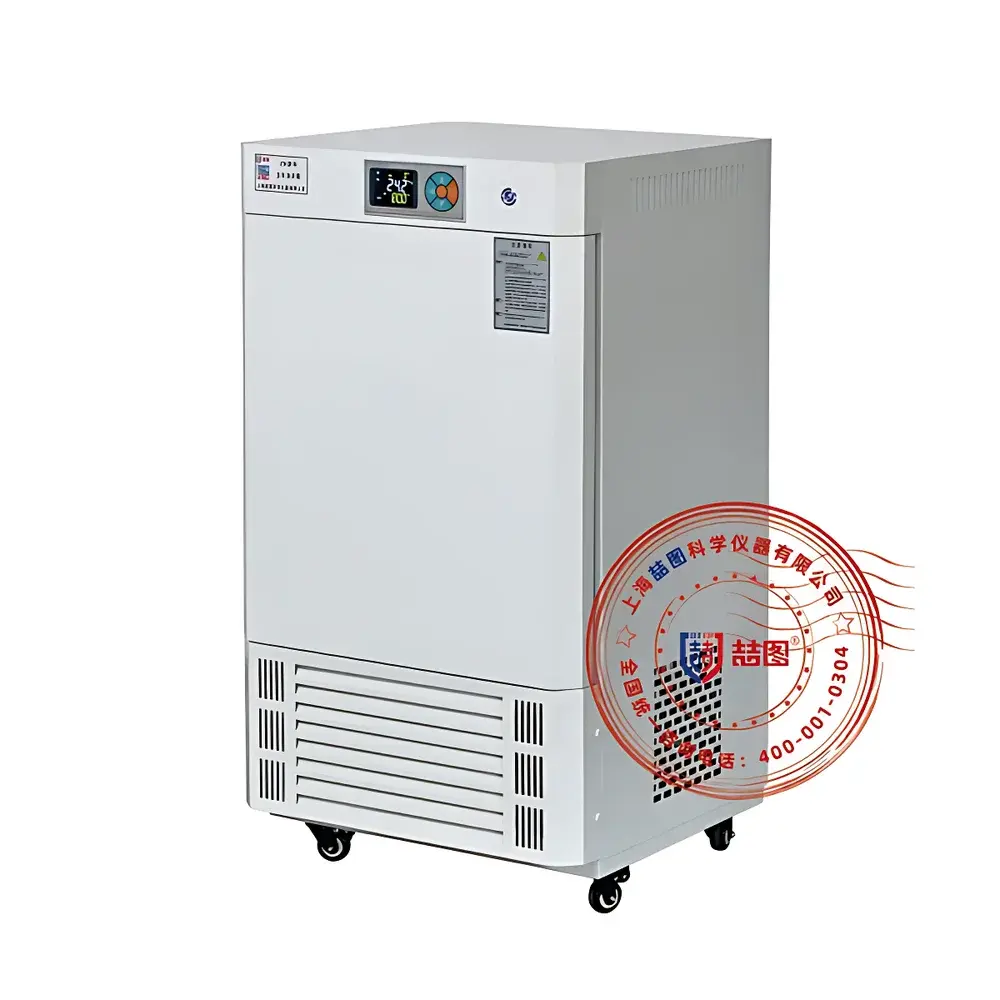
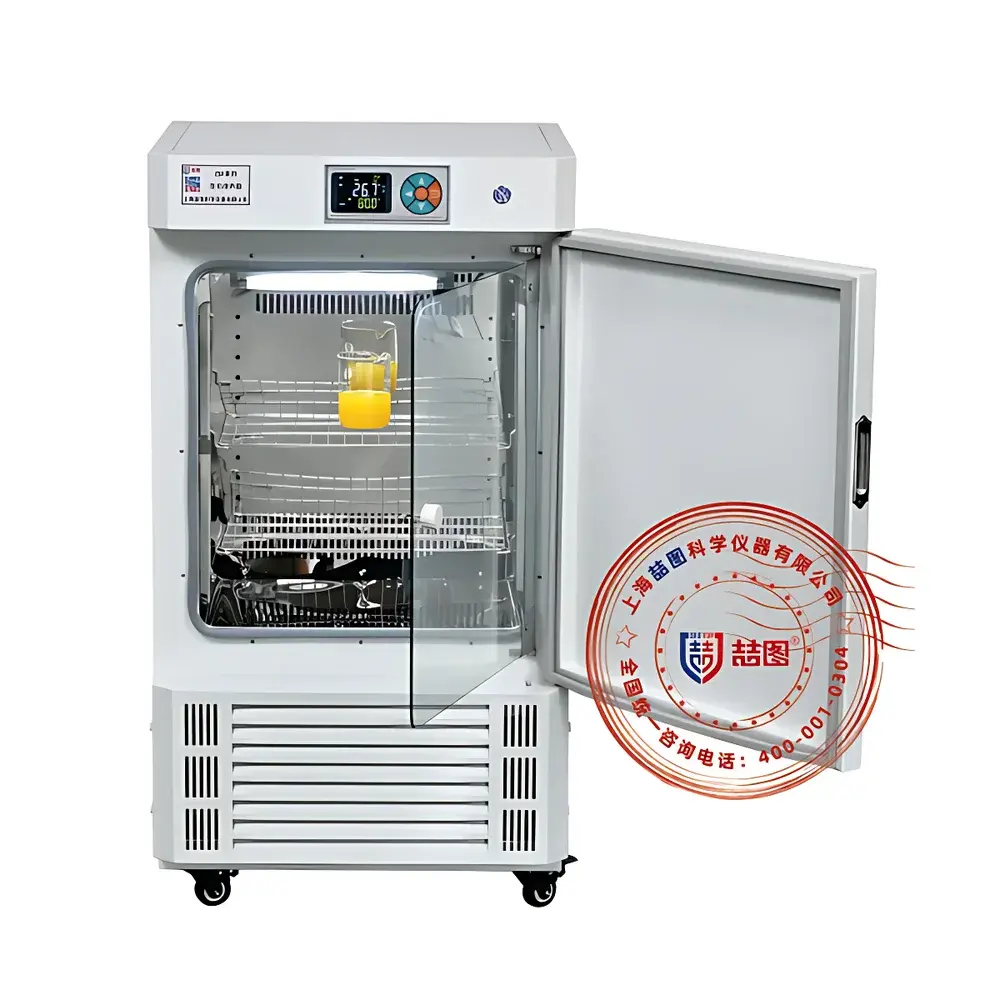
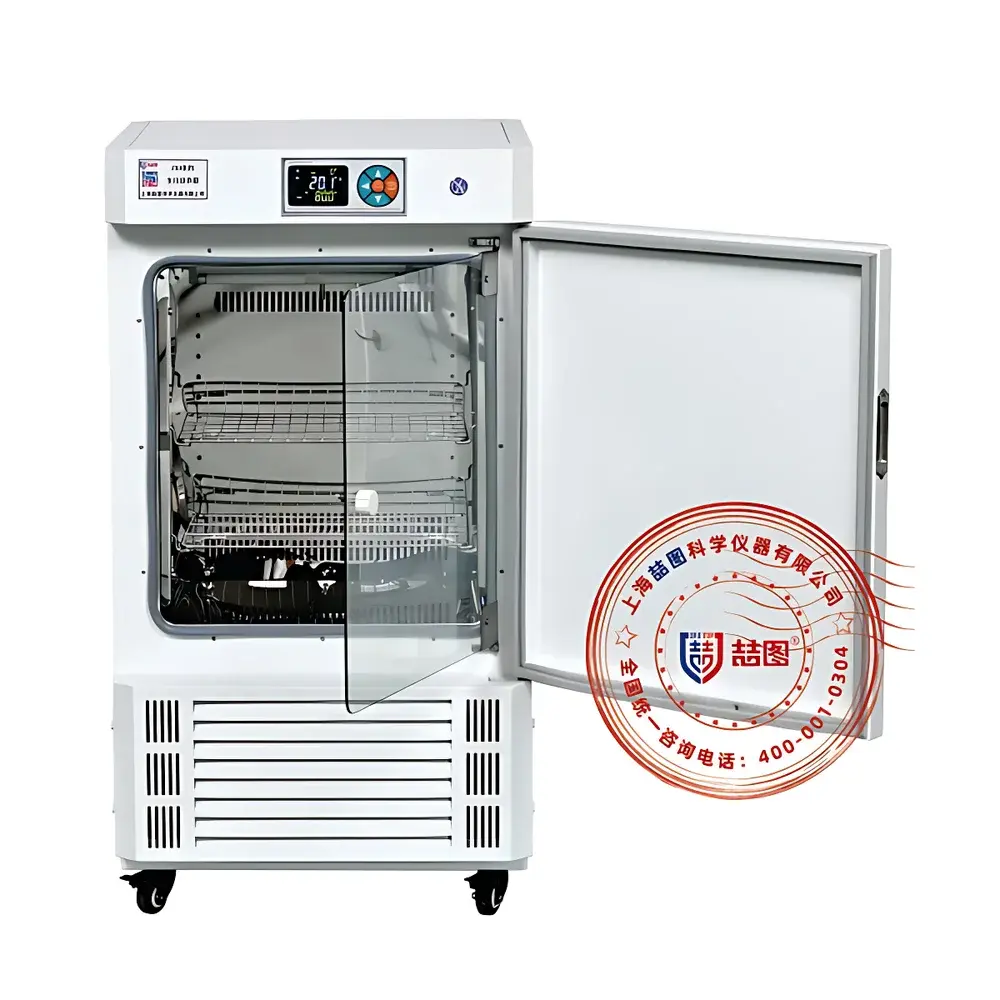
DRETOP ZSH-178-II Dual-Chamber Biochemical Incubator
| Brand | DRETOP |
|---|---|
| Origin | Shanghai, China |
| Model | ZSH-178-II |
| Heating Method | Air-Jacketed |
| Cooling Method | Compressor-Based Refrigeration |
| Convection Type | Natural Convection (with Optional Forced-Air Upgrade) |
| Temperature Range | 0–70 °C |
| Temperature Accuracy | ±0.1 °C |
| Temperature Uniformity | ±1.5 °C (empty chamber @ 25 °C) |
| Temperature Fluctuation | ±0.5 °C |
| Chamber Volume | 2 × 178 L (total 356 L) |
| Internal Dimensions (per chamber) | 464 × 708 × 543 mm (18.3 × 27.9 × 21.4 in) |
| External Dimensions (typical configuration) | 2110 × 890 × 2050 mm |
| Power Supply | 240 VAC, 50 Hz |
| Refrigerant | Eco-friendly R134a (non-CFC) |
| Control System | Microprocessor-based PID with programmable ramp-soak cycles (10 programs, up to 10 steps each) |
| Display | Vacuum Fluorescent Display (VFD), multi-parameter real-time readout |
| Compliance | Designed to support GLP-compliant workflows |
Overview
The DRETOP ZSH-178-II Dual-Chamber Biochemical Incubator is an engineered solution for laboratories requiring independent, stable thermal environments across two physically isolated compartments. Each chamber operates with fully autonomous temperature control — enabling simultaneous experiments at distinct setpoints without cross-contamination or thermal interference. Its dual-chamber architecture leverages air-jacketed heating and compressor-based refrigeration to maintain precise thermal conditions from 0 °C to 70 °C, making it suitable for a broad spectrum of biochemical applications including BOD incubation, microbial growth studies, enzyme activity assays, and environmental stability testing. The system employs a microprocessor-driven PID control algorithm with automatic fault diagnostics at startup, ensuring consistent thermal performance and operational integrity. Structural design prioritizes contamination control and ease of maintenance: stainless steel (AISI 304 / EN 1.4301) interior surfaces with radius-rounded corners minimize microbial retention, while the double-glazed observation window — featuring an inner tempered glass panel and outer magnetic door seal — ensures thermal insulation without compromising visual monitoring.
Key Features
- Dual independent chambers (2 × 178 L), each with separate PID temperature controllers, digital VFD display, and programmable ramp-soak profiles (up to 10 programs, 10 steps per program)
- Air-jacketed heating system combined with high-efficiency compressor refrigeration using environmentally compliant R134a refrigerant
- Temperature accuracy of ±0.1 °C and uniformity of ±1.5 °C (measured empty at 25 °C), validated per ISO 17025 traceable protocols
- Stainless steel (AISI 304) interior with seamless welded corners and removable wire shelving for complete cleanability and autoclave-compatible disinfection
- Vacuum fluorescent display with intuitive menu navigation, real-time parameter readouts (setpoint, actual temp, elapsed time), and configurable alarm thresholds
- Comprehensive safety architecture: over-temperature alarm, compressor delay protection, power-fail recovery with parameter memory retention, and automatic restart after brownout
- Optional forced-air convection upgrade available via adjustable-speed axial fan, mitigating moisture loss during long-term BOD or cell culture incubation
Sample Compatibility & Compliance
The ZSH-178-II accommodates standard microbiological vessels (Petri dishes, test tubes, flasks, BOD bottles) and supports both aerobic and anaerobic sample configurations when used with auxiliary gas control modules. Its internal geometry — with height-adjustable shelves and unobstructed airflow paths — permits flexible loading while preserving thermal homogeneity. Regulatory alignment includes design compatibility with Good Laboratory Practice (GLP) and Good Manufacturing Practice (GMP) documentation frameworks. Data logging functionality (via optional RS-485 interface) enables integration into LIMS environments and satisfies audit requirements under FDA 21 CFR Part 11 when paired with validated software. The unit meets electromagnetic compatibility standards per IEC 61326-1 and electrical safety requirements per IEC 61010-1.
Software & Data Management
While the ZSH-178-II operates as a standalone instrument with embedded firmware, its RS-485 serial interface allows bidirectional communication with external data acquisition systems or centralized lab management platforms. Users may configure temperature profiles, monitor real-time chamber status, and retrieve event logs (e.g., alarm triggers, door openings, compressor cycles) through ASCII protocol commands. When integrated with compliant third-party software, the incubator supports electronic signature capture, user access level assignment, and audit trail generation — essential elements for regulated environments conducting environmental monitoring per ISO 14644 or water quality analysis per ASTM D5210 and ISO 5815-1.
Applications
- Biochemical Oxygen Demand (BOD) testing in accordance with APHA Standard Methods 5210B and ISO 5815-1
- Microbial enumeration (total viable count, coliforms, E. coli) per ISO 6222, ISO 4833-1, and USP <61>
- Enzyme kinetics and protein stability studies requiring tightly controlled thermal gradients
- Seed germination and plant tissue culture under defined photoperiod-independent conditions
- Environmental simulation for ecotoxicology assessments (e.g., OECD 201, 211)
- Long-term stability testing of pharmaceutical excipients and diagnostic reagents per ICH Q1A(R2)
FAQ
What is the maximum operating temperature range for each chamber?
Each chamber is independently controllable from +2 °C to +50 °C for routine biochemical work; extended operation up to 70 °C is supported in heating-only mode.
Is the incubator compatible with BOD-specific testing protocols?
Yes — optional BOD-rated sockets (IPX4 rated, grounded, 240 VAC output) are available for direct in-chamber power delivery to dissolved oxygen meters and stirrers.
Can temperature data be exported for regulatory reporting?
Via RS-485 interface and compliant host software, continuous temperature logging with timestamping, user ID tagging, and tamper-evident audit trails can be generated.
Does the unit support validation documentation packages?
DRETOP provides IQ/OQ documentation templates aligned with ISO/IEC 17025 and ASTM E2500; full PQ support requires site-specific sensor mapping and cycle verification.
What materials are used in critical contact surfaces?
Interior chamber walls, shelves, and door liners are fabricated from AISI 304 stainless steel (EN 1.4301), passivated and electropolished to reduce biofilm adhesion potential.




