
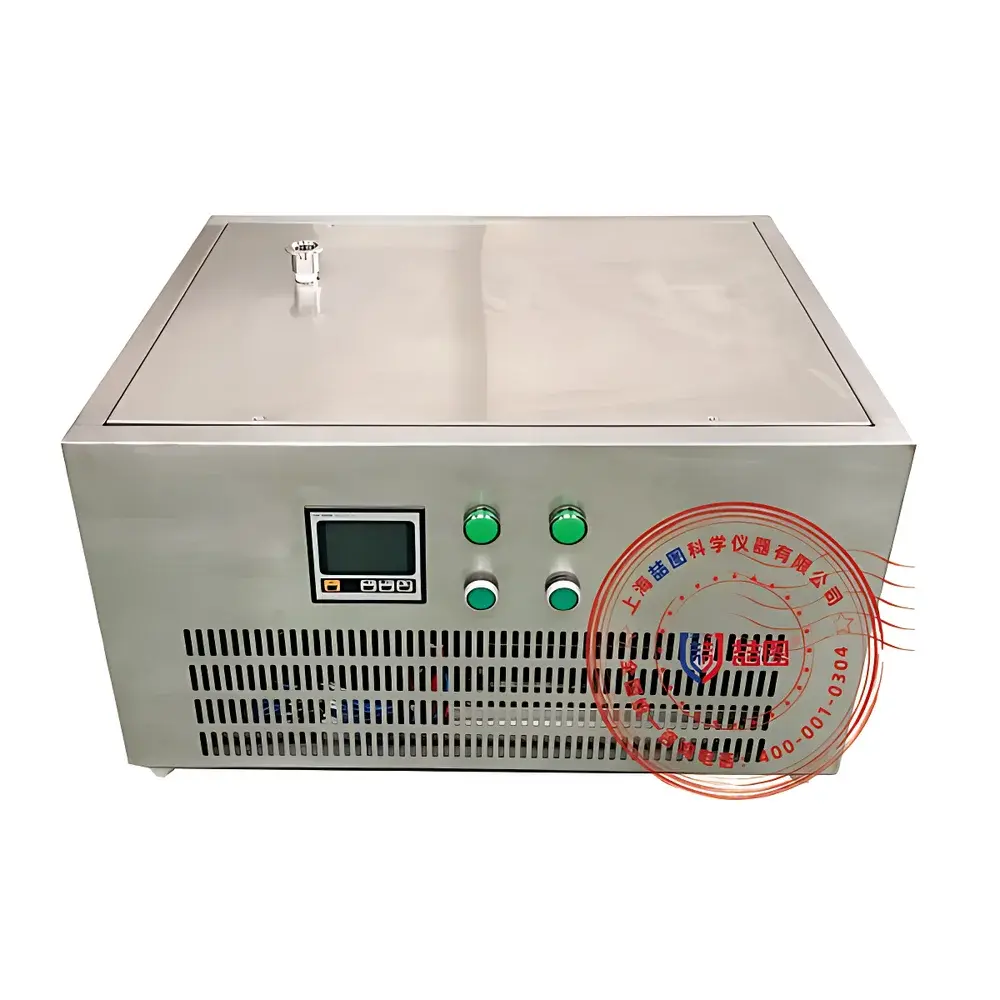
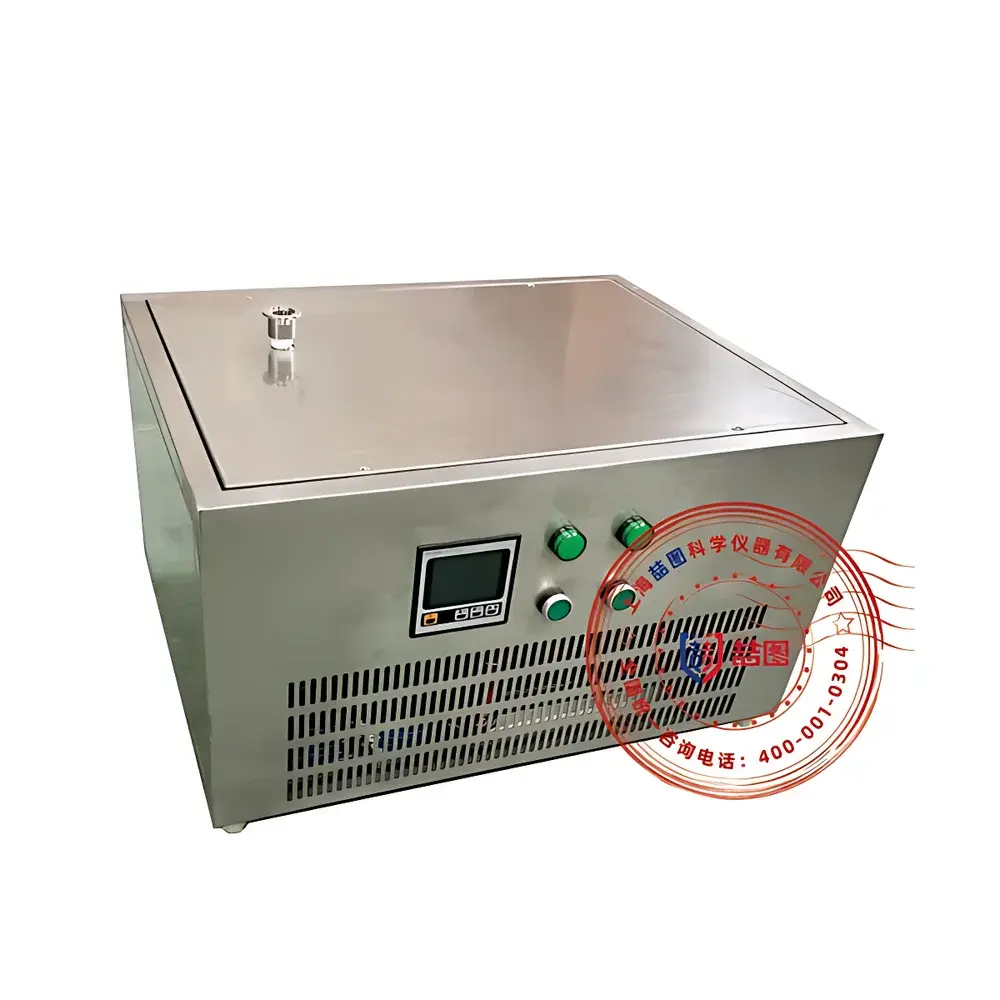
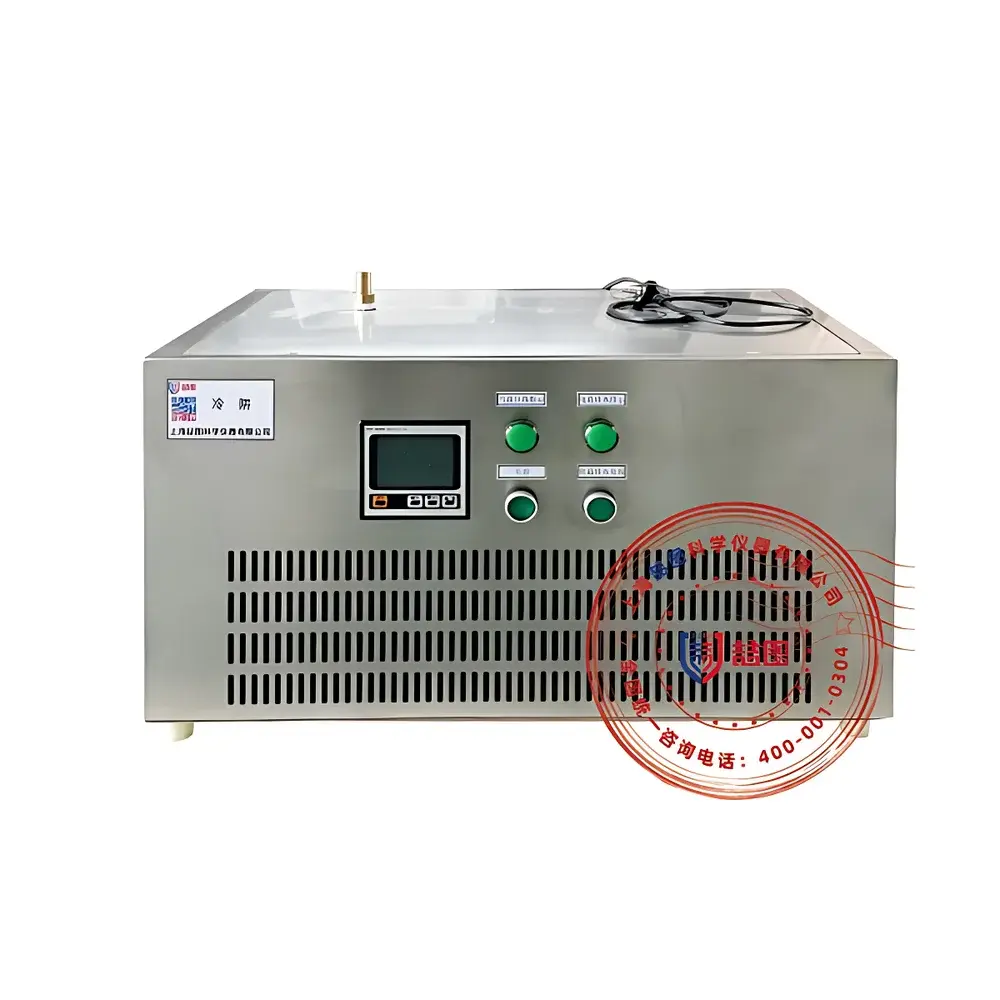
DRETOP VCP Series Full-Function Vacuum Cold Trap
| Brand | DRETOP |
|---|---|
| Origin | Shanghai, China |
| Manufacturer Type | Authorized Distributor |
| Country of Origin | China |
| Model | VCP-2003 / VCP-2005 / VCP-2008 / VCP-2015 / VCP-4003 / VCP-4005 / VCP-4008 / VCP-4015 |
| Temperature Range | −20 °C (VCP-20xx series) / −40 °C (VCP-40xx series) |
| Refrigeration Method | Compressor-based cooling |
| Power Supply | 220 V, 50 Hz |
| Condensate Capacity | 3 L / 5 L / 8 L / 15 L |
| Display | LCD digital temperature display (optional color touchscreen with temperature logging and curve recording) |
| Construction Material | 304 stainless steel cold trap chamber |
| Drain/Collection Valve | Standard integrated valve for condensate discharge or solvent recovery |
Overview
The DRETOP VCP Series Full-Function Vacuum Cold Trap is an engineered cryogenic capture device designed to intercept and condense vapors—primarily water, solvents, and volatile organic compounds (VOCs)—within high-vacuum systems. Operating on the principle of surface condensation, it functions as a physical barrier between vacuum sources (e.g., rotary vane or diaphragm pumps) and upstream process equipment such as freeze dryers, rotary evaporators, vacuum ovens, centrifugal concentrators, and thin-film deposition chambers. By maintaining a thermally stable, sub-ambient cold surface within its 304 stainless steel chamber, the VCP series achieves efficient phase transition of gaseous species into liquid or solid form—thereby preventing backstreaming, pump oil contamination, and system cross-contamination. Its dual-zone design (−20 °C and −40 °C variants) enables application-specific selection based on vapor pressure profiles of target analytes, ensuring optimal trapping efficiency across diverse laboratory and industrial vacuum workflows.
Key Features
- Compressor-based refrigeration system delivering rapid cooldown and stable low-temperature operation—critical for high-recovery capture of low-boiling solvents (e.g., acetone, methanol, ethyl acetate) and water vapor.
- 304 stainless steel cold trap chamber with electropolished interior surface—chemically inert, corrosion-resistant, and compliant with GLP/GMP cleaning validation requirements; suitable for aqueous, alcoholic, and moderately aggressive solvent environments.
- LCD digital temperature display with real-time monitoring; optional color touchscreen interface supports temperature logging, time-stamped curve recording, and user-defined alarm thresholds for process traceability.
- Integrated drain and collection valve enables controlled discharge or solvent recovery directly from the condensate reservoir—minimizing manual handling and supporting closed-loop solvent reuse protocols.
- Modular footprint: benchtop, floor-standing, or fume hood-compatible installation; compact geometry optimizes space utilization in regulated lab environments without compromising thermal integrity or accessibility.
- Cavity-cooled architecture ensures uniform thermal distribution across the condensing surface—enhancing reproducibility and reducing localized icing or channeling effects that compromise trapping efficiency.
Sample Compatibility & Compliance
The VCP Series demonstrates broad compatibility with common laboratory and production-scale vacuum processes involving water, ethanol, isopropanol, acetone, dichloromethane, and other Class I–III solvents per ICH Q3C guidelines. Its stainless steel construction meets ASTM A240 standards for corrosion resistance, while its electrical safety design complies with IEC 61010-1 for laboratory equipment. When deployed in pharmaceutical lyophilization lines, the cold trap mitigates vacuum pump oil emulsification—a known root cause of nonconformance under USP and FDA 21 CFR Part 211. In semiconductor PVD/CVD tool integration, it reduces residual hydrocarbon and moisture partial pressures, contributing to ISO 14644-1 Class 5 cleanroom compliance by limiting particulate-generating condensate re-evaporation.
Software & Data Management
The optional touchscreen controller provides audit-ready data management capabilities aligned with 21 CFR Part 11 requirements. It records timestamped temperature profiles at user-configurable intervals (1–60 seconds), stores ≥10,000 data points locally, and exports CSV-formatted logs via USB interface. Event logs—including power cycle detection, temperature deviation alerts (>±2 °C), and valve actuation timestamps—are retained with immutable metadata. No cloud connectivity or remote access functionality is included, preserving data sovereignty and simplifying IT validation in regulated QC/QA laboratories.
Applications
- Biopharmaceutical Freeze Drying: Captures sublimated water vapor upstream of primary vacuum pumps, preventing oil degradation and extending service intervals per manufacturer maintenance schedules.
- Solvent Recovery in R&D Labs: Paired with rotary evaporators or centrifugal concentrators to recover >92% of volatile organics—reducing VOC emissions and supporting ISO 14001 environmental objectives.
- Vacuum Oven Protection: Installed between drying chambers and backing pumps to intercept solvent vapors during polymer curing, battery electrode drying, or ceramic sintering cycles.
- Nanomaterial Processing: Mitigates solvent vapor load during vacuum-assisted dispersion or coating steps—maintaining consistent particle morphology and reducing post-processing filtration burden.
- Thin-Film Deposition Support: Functions as a cryo-baffle in PVD and CVD tools to scavenge outgassed precursors and reaction byproducts, improving film stoichiometry and reducing defect density.
FAQ
What is the recommended maintenance interval for the compressor system?
Compressor oil and refrigerant levels should be verified annually; filter-drier replacement is advised every 24 months under continuous operation (8 h/day, 5 days/week).
Can the VCP cold trap be used with corrosive gases such as HCl or Cl₂?
No. The standard 304 stainless steel chamber is not rated for halogenated or strongly acidic vapors. For such applications, consult DRETOP engineering for Hastelloy®-lined variants.
Is the temperature display calibrated to NIST-traceable standards?
Yes—each unit ships with a factory calibration certificate (ISO/IEC 17025 accredited) covering the full operating range; field recalibration is supported using certified reference thermometers.
Does the drain valve support automated solvent transfer to a secondary vessel?
The standard valve is manually operated. Integration with programmable peristaltic pumps requires third-party mechanical adaptation and is not covered under warranty.
How does ambient temperature affect minimum achievable trap temperature?
At 35 °C ambient, the −40 °C models maintain ≤−38 °C setpoint stability; performance degrades by ~0.8 °C per 1 °C ambient rise above 30 °C due to condenser heat rejection limits.



