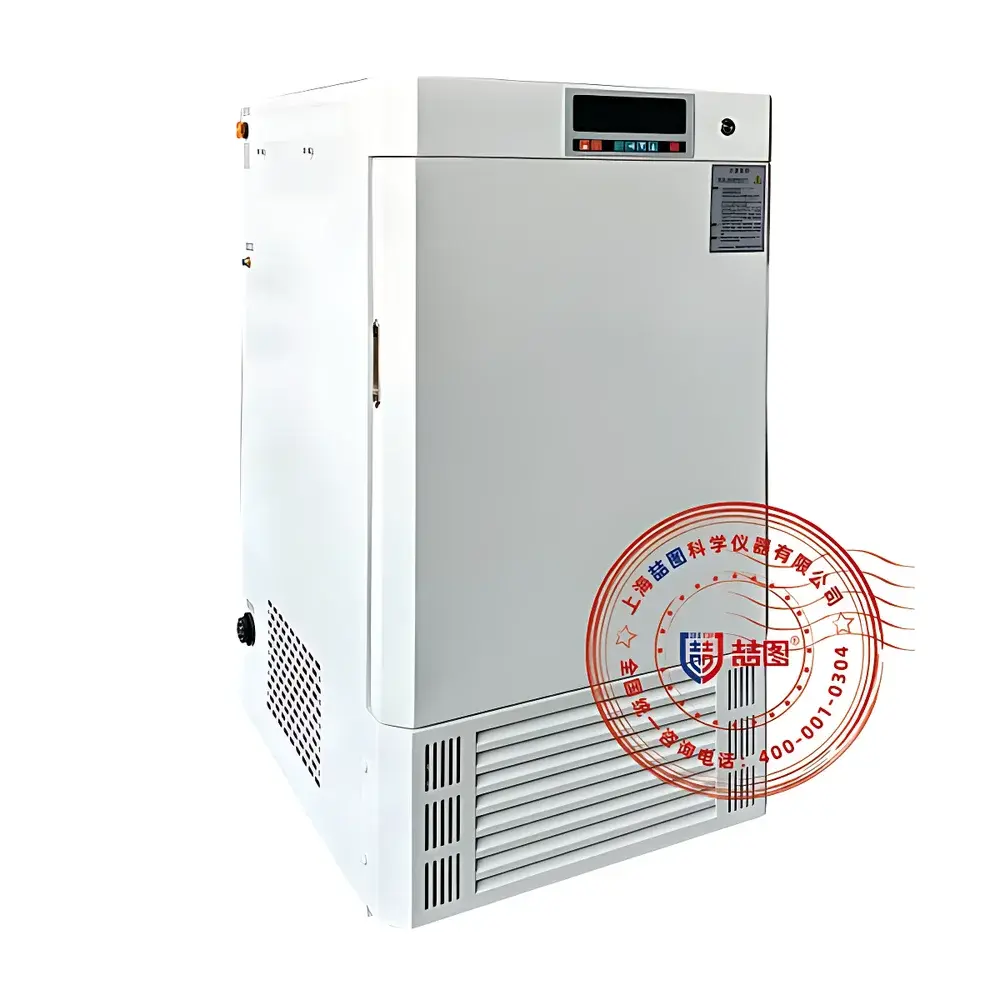
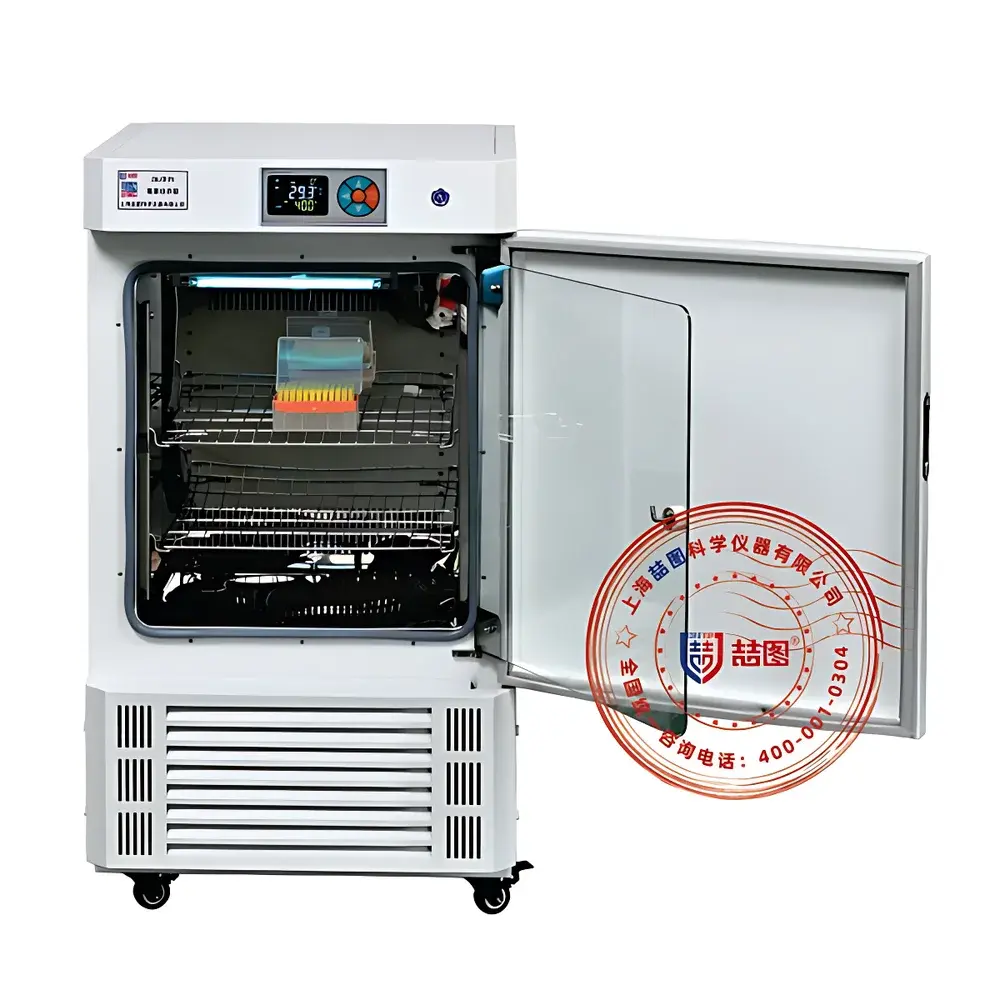
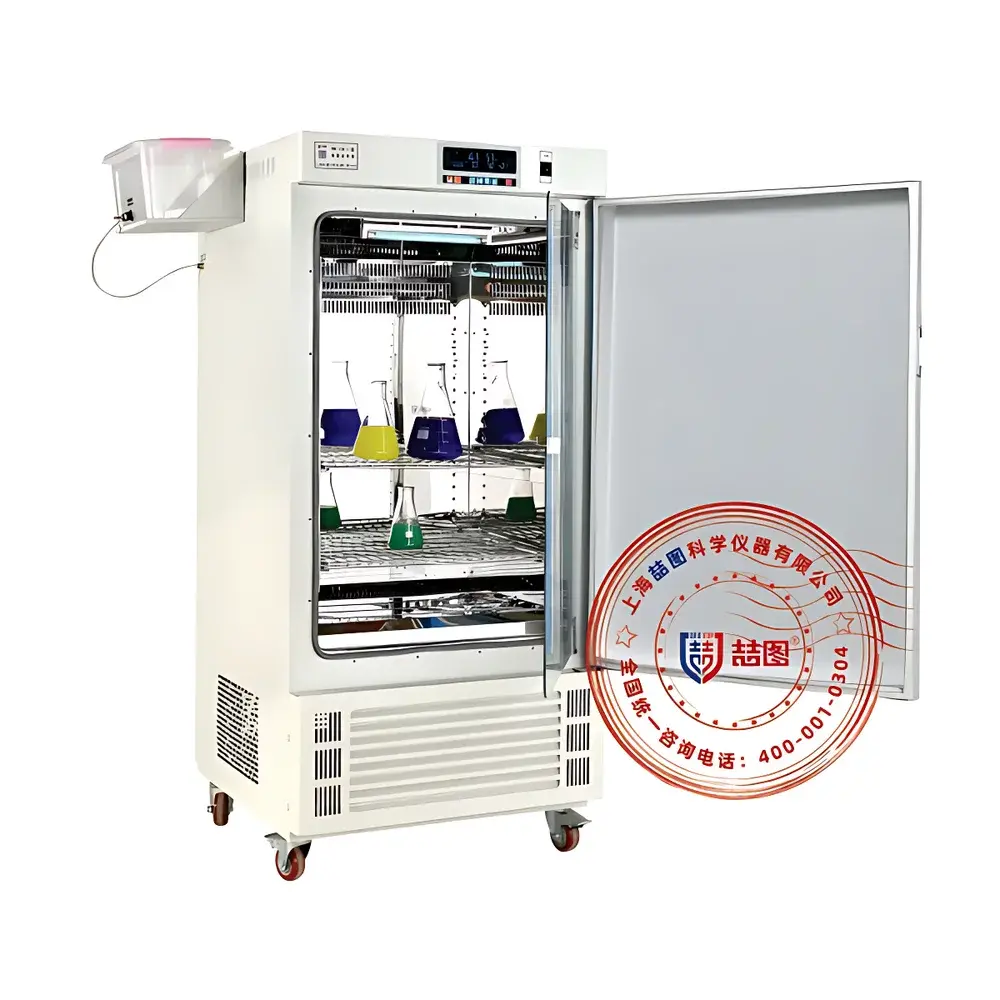
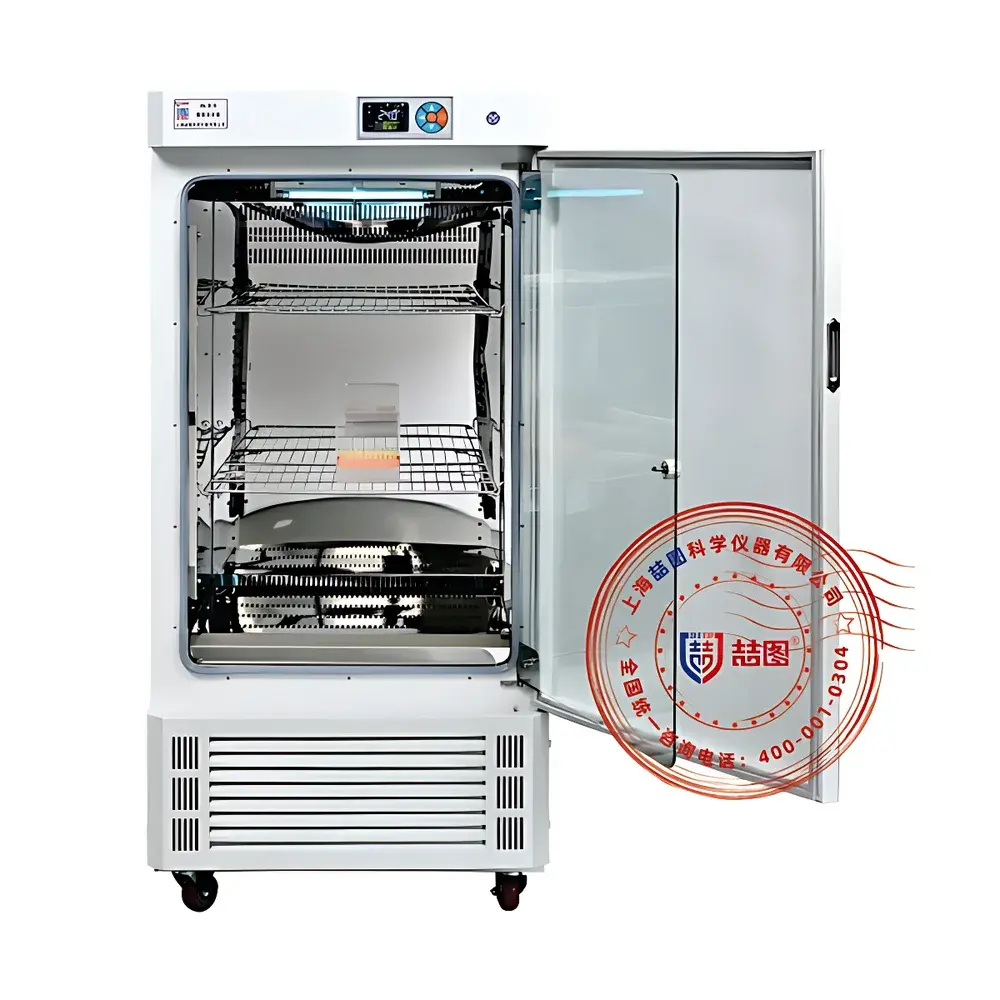
DRETOP ZMJ-150-I Mold Incubator
| Brand | DRETOP |
|---|---|
| Origin | Shanghai, China |
| Manufacturer Type | Authorized Distributor |
| Country of Origin | China |
| Model | ZMJ-150-I |
| Control Method | Mechanical Button Interface |
| Air Circulation | Forced Convection |
| Temperature Range | 0–65 °C |
| Temperature Fluctuation | ±0.5 °C |
| Temperature Uniformity | ±1 °C (empty chamber, at 25 °C) |
| Capacity | 150 L |
| External Dimensions (W×D×H) | 620 × 645 × 1374 mm |
| Internal Dimensions (W×D×H) | 480 × 390 × 780 mm |
Overview
The DRETOP ZMJ-150-I Mold Incubator is a precision-engineered environmental chamber designed specifically for the controlled cultivation of filamentous fungi, yeasts, and other eukaryotic microorganisms requiring stable thermal conditions without active humidity regulation. Unlike general-purpose incubators, this model integrates a dedicated thermal architecture optimized for mycological applications—where consistent temperature maintenance over extended periods (e.g., 5–28 days) is critical for spore germination, hyphal extension, and colony morphology assessment. Its operational range spans 0–65 °C, enabling both low-temperature psychrotolerant strain maintenance and elevated-temperature thermotolerance studies. The unit employs a P.I.D. (Proportional-Integral-Derivative) temperature control algorithm to minimize overshoot and ensure high reproducibility across repeated experimental cycles. All thermal performance metrics—including ±0.5 °C fluctuation and ±1 °C uniformity (measured per ISO 15184:2021 Annex B protocols at 25 °C in empty configuration)—are validated under GLP-compliant calibration procedures traceable to NIM (National Institute of Metrology, China).
Key Features
- Microprocessor-based P.I.D. temperature controller with large backlit LCD display and tactile membrane buttons for intuitive parameter entry and real-time monitoring of setpoint, actual temperature, and elapsed time.
- Forced-air convection system utilizing a high-efficiency axial fan and optimized internal air ducting to ensure rapid thermal equilibration and minimal vertical/horizontal gradients—critical for uniform fungal growth across multi-level shelving.
- Stainless steel interior chamber (304 grade) with removable, height-adjustable shelves; seamless welds and radius-corner construction eliminate microbial harborage zones and facilitate autoclave-compatible cleaning or chemical decontamination.
- Dual-door observation window: outer magnetic door seal with low-conductivity insulation and inner tempered glass panel to maintain thermal integrity while permitting non-invasive visual inspection without disturbing chamber equilibrium.
- Integrated UV-C germicidal lamp (254 nm, 15 W) mounted in the ceiling compartment for periodic sterilization of circulating air and surface disinfection between runs—validated to achieve ≥3-log reduction of Aspergillus niger spores per ICH Q5C Annex 2 guidelines.
- Robust mechanical safety architecture including independent over-temperature cut-off, power-fail memory retention, automatic restart after voltage recovery, and compressor delay protection (≥3 min inter-cycle interval) to extend service life and reduce thermal shock-induced failure.
Sample Compatibility & Compliance
The ZMJ-150-I supports standard microbiological sample formats including Petri dishes (90 mm and 150 mm), slant tubes, stab cultures, and multi-well plates placed on its three adjustable stainless steel shelves (load capacity: 15 kg total). It complies with key international standards governing laboratory incubation equipment: IEC 61010-1 (safety requirements for electrical equipment), ISO 13408-1 (aseptic processing—general requirements), and ASTM E171 (standard specifications for environmental chambers). While not equipped with active humidification, its sealed chamber design maintains ambient relative humidity levels sufficient for most mold propagation protocols (e.g., USDA APHIS fungal identification workflows, USP microbial enumeration validation). For applications requiring precise RH control, DRETOP offers the ZMJ-150-II series with integrated ultrasonic humidifier and capacitive RH sensor.
Software & Data Management
This base model operates via embedded firmware with no external software dependency. All operational parameters—including temperature setpoint, timer duration (1–9999 minutes), and alarm thresholds—are stored in non-volatile EEPROM memory, ensuring data persistence during mains interruption. Optional RS485 serial interface enables integration into centralized lab monitoring systems using Modbus RTU protocol for remote status polling and event logging. When paired with third-party SCADA platforms (e.g., Ignition, LabVIEW), users can generate audit trails compliant with FDA 21 CFR Part 11 requirements—including user authentication, electronic signatures, and immutable timestamped records of all parameter changes and alarm events.
Applications
- BOD (Biochemical Oxygen Demand) testing per ISO 5815-1, where fungal metabolism contributes to oxygen depletion in wastewater samples.
- Mycotoxin production studies under defined thermal stress, supporting EFSA and FAO/WHO risk assessment frameworks.
- Strain preservation and revival protocols for culture collections (e.g., ATCC, CBS), particularly for xerophilic species such as Wallemia sebi and Xeromyces bisporus.
- Accelerated aging tests evaluating material susceptibility to biodeterioration (e.g., ASTM G21, ISO 846) in aerospace composites, archival paper, and polymer coatings.
- Pharmaceutical stability testing per ICH Q1A(R2), including preliminary screening of excipient–microbe interactions under non-humidified thermal stress.
FAQ
Does the ZMJ-150-I include humidity control?
No. This model provides only temperature regulation. Humidity management requires upgrading to the ZMJ-150-II or ZMJ-150T-II variants, which integrate programmable RH control (50–85% RH, ±3–5% RH accuracy) via ultrasonic misting and feedback-closed-loop sensing.
Is the UV lamp automatically interlocked with door opening?
Yes. The UV-C emitter deactivates immediately upon door opening and re-engages only after full closure and a 5-second safety delay, complying with IEC 62471 photobiological safety classification.
Can the incubator be validated for GMP environments?
Yes. Its mechanical controls, deterministic thermal response, and optional RS485 interface support IQ/OQ/PQ documentation per ASTM E2500 and EU Annex 15. Calibration certificates and factory test reports are supplied with each unit.
What is the maximum allowable load volume without compromising temperature uniformity?
Loading should not exceed 70% of internal volume (i.e., ≤105 L equivalent) to maintain specified ±1 °C uniformity. Overloading disrupts laminar airflow and increases thermal inertia, extending stabilization time by up to 40%.
Are spare parts and service support available outside China?
DRETOP maintains authorized service partners in Germany, USA, and Singapore. Critical components—including compressors, P.I.D. controllers, and UV lamps—are stocked globally with lead times under 10 business days.