
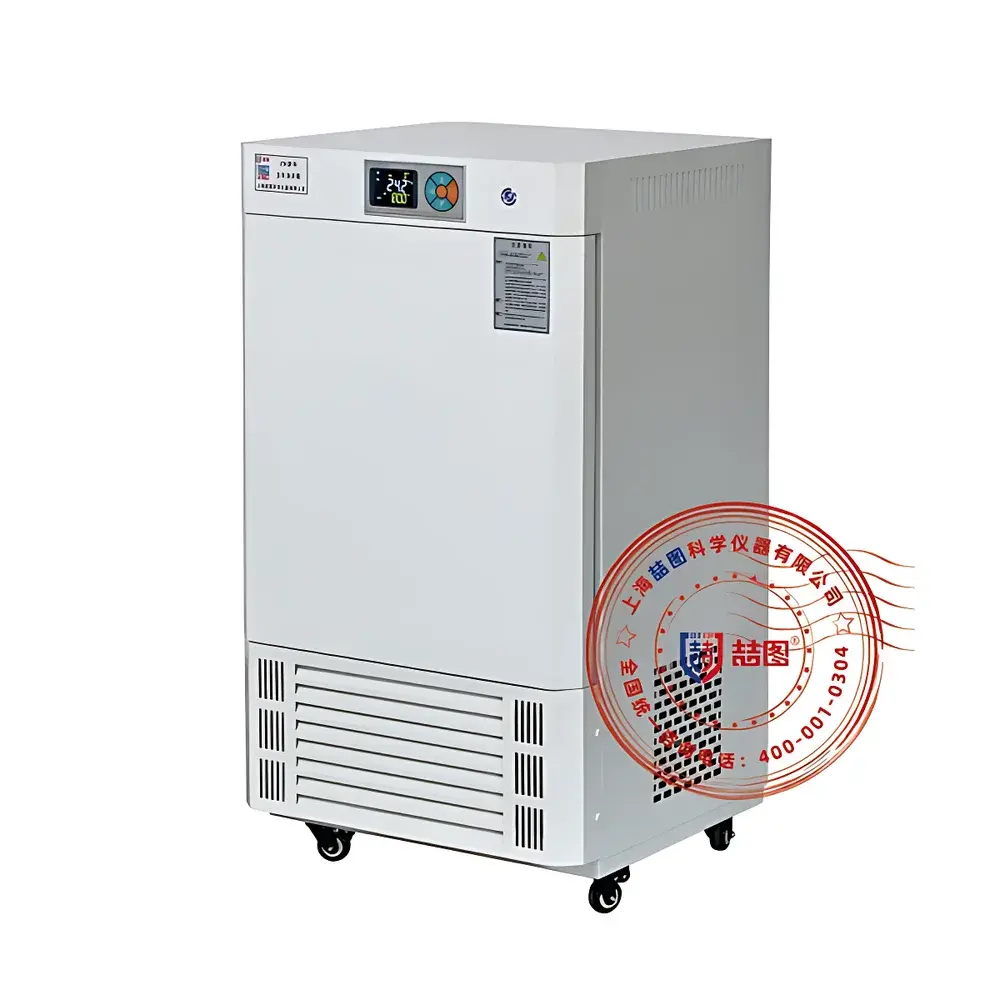
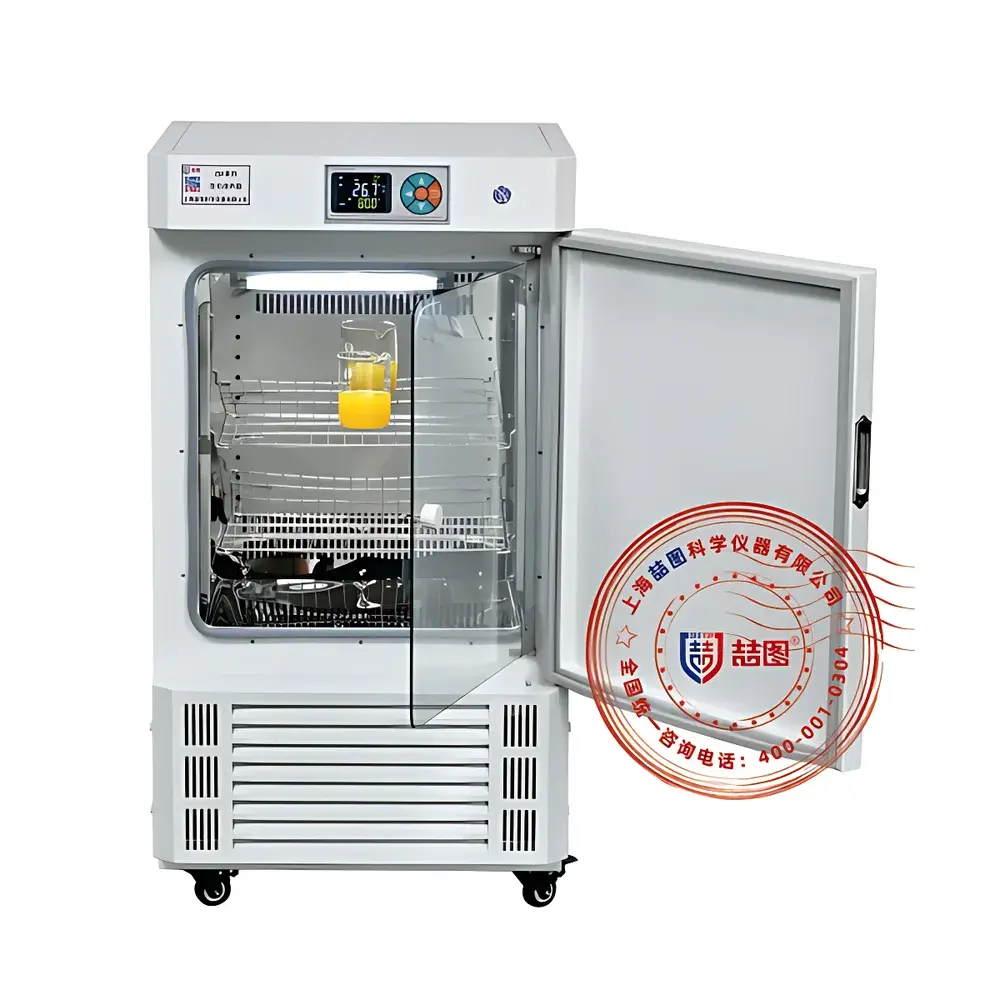
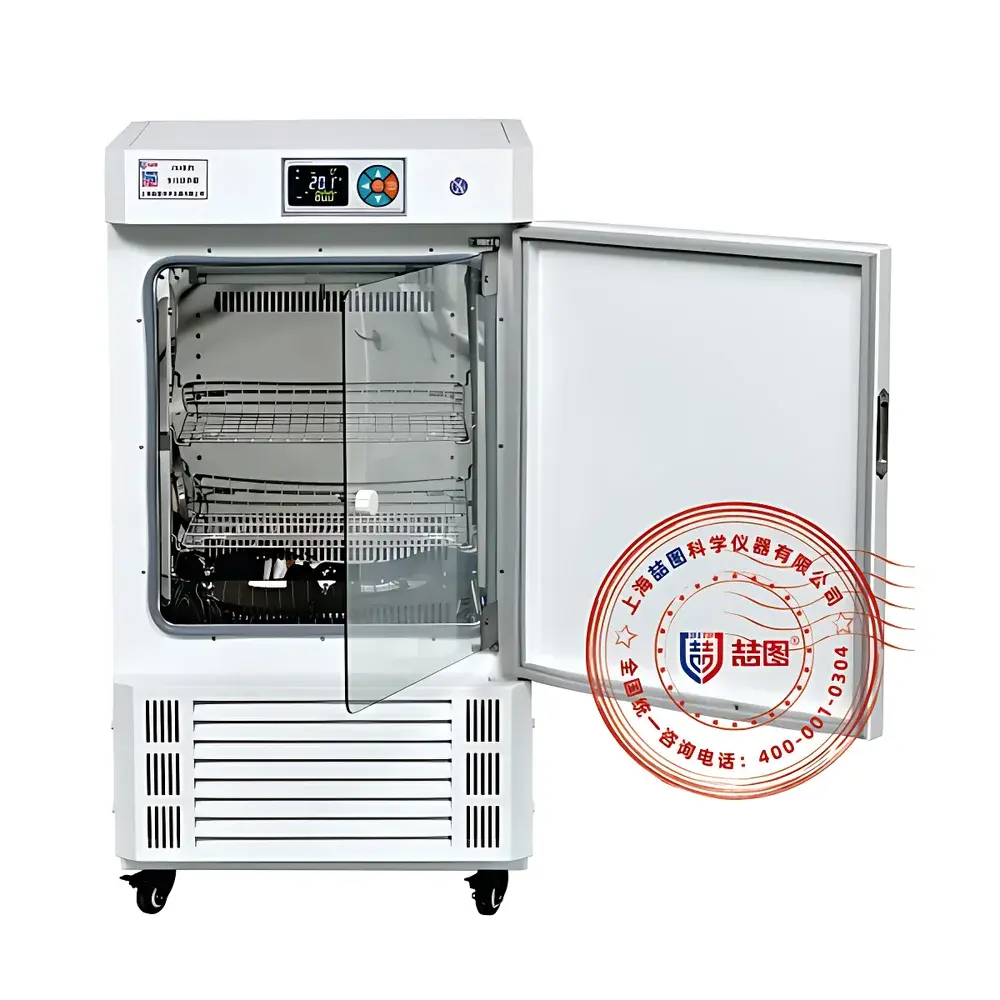
DRETOP ZSH-300 Biochemical Incubator
| Brand | DRETOP |
|---|---|
| Origin | Shanghai, China |
| Manufacturer Type | Authorized Distributor |
| Country of Origin | China |
| Model | ZSH-300 |
| Refrigeration Method | Compressor-based cooling |
| Air Circulation | Forced convection |
| Temperature Range | 0–70 °C |
| Temperature Accuracy | ±1 °C |
| Temperature Fluctuation | ±0.5 °C |
| Temperature Uniformity | ±1 °C (empty chamber, @25 °C) |
| Capacity | 300 L |
| External Dimensions (W×D×H) | 720×790×1650 mm |
| Power Supply | AC 220 V, 50 Hz |
| Input Power | 1450 W |
| Temperature Resolution | 0.1 °C |
| Timer Range | 1–9999 min |
| Shelving | 3 adjustable stainless steel shelves |
| Optional Accessories | BOD socket (IPX4-rated), RS485 interface, independent overtemperature cutoff, test port, micro-printer |
Overview
The DRETOP ZSH-300 Biochemical Incubator is a precision-engineered, forced-air incubation system designed for stable, reproducible temperature control across a broad operational range (0–70 °C). It employs a dual-mode thermoregulatory architecture—integrating compressor-based refrigeration with resistive heating—to maintain setpoint stability under variable ambient conditions, enabling year-round use in diverse laboratory environments. Its core application domain includes biochemical oxygen demand (BOD) testing per ASTM D5210 and ISO 5815-1, microbial cultivation (e.g., aerobic/anaerobic bacteria, yeasts, and fungi), cell-based assays, environmental simulation studies, and quality control workflows in pharmaceutical, food safety, and public health laboratories. The unit conforms to general design principles aligned with ISO 13485–compatible manufacturing practices and supports GLP-compliant operation through configurable alarm thresholds, parameter retention, and power-failure recovery logic.
Key Features
- Microprocessor-based P.I.D. temperature controller with 0.1 °C resolution, real-time display of setpoint, actual temperature, and elapsed time; programmable alarm thresholds for overtemperature events.
- Robust thermal architecture: high-efficiency hermetic compressor (R134a or R600a refrigerant, F-series models), integrated heating elements, and intelligent compressor cycling with start-delay and stop-interval protection to extend service life.
- Optimized airflow system: axial贯流 (cross-flow) fan with adjustable speed (via optional stepless regulator), engineered internal ducting, and uniform air distribution to achieve ±1 °C temperature uniformity (empty, at 25 °C) per IEC 61000-4-2 test methodology.
- Dual-door observation window: outer magnetic seal door with low-conductivity insulation; inner tempered glass door providing unobstructed visual access while minimizing thermal loss and condensation.
- Stainless steel interior chamber (304 grade), fully welded seams, rounded internal corners, and removable, height-adjustable shelves—facilitating complete sterilization via ethanol wipe-down, hydrogen peroxide vapor (HPV), or autoclave-compatible protocols.
- Mobility and stability: four swivel casters (two lockable), reinforced cold-rolled steel exterior housing, and ergonomic handle placement for safe repositioning within shared lab spaces.
Sample Compatibility & Compliance
The ZSH-300 accommodates standard microbiological culture vessels—including Petri dishes (90–150 mm), test tubes (13–25 mm OD), Erlenmeyer flasks (up to 2 L), and multi-well plates—without airflow interference. Its 300 L chamber volume supports concurrent multi-assay workflows. The incubator meets functional requirements for BOD5 analysis under EPA Method 405.1 and APHA Standard Methods 5210B. While not certified to UL 61010-1 or IEC 61010-1 as a standalone medical device, its electrical safety design follows Class I protection principles. Optional BOD sockets provide IPX4-rated, isolated 220 V AC outputs for in-chamber electrochemical sensors or stirrers, supporting USP dissolved oxygen measurement setups.
Software & Data Management
The base model features embedded firmware with non-volatile memory for parameter retention across power cycles. Optional RS485 serial interface enables integration into centralized lab monitoring systems (e.g., LabVIEW, SCADA, or custom Python-based logging platforms) using Modbus RTU protocol. Data export is supported via time-stamped CSV files when paired with an optional thermal printer. For enhanced traceability, the T-series variant (ZSH-300T) adds audit-trail functionality compliant with FDA 21 CFR Part 11 requirements—including user login, electronic signatures, and immutable event logs for temperature excursions, alarm acknowledgments, and configuration changes.
Applications
- Biochemical Oxygen Demand (BOD) incubation per ISO 5815-1 and ASTM D5210, including dilution water conditioning and seeded sample stabilization.
- Microbiological quality control: total viable count (TVC), coliform enumeration, pathogen enrichment (e.g., Salmonella, Listeria), and antimicrobial susceptibility testing (AST) incubation per CLSI M07-A11.
- Environmental monitoring: water and wastewater analysis, soil respiration assays, and biodegradability screening (OECD 301 series).
- Educational and research use: undergraduate microbiology labs, fermentation kinetics studies, enzyme activity profiling, and plant tissue culture pre-incubation.
- Pharmaceutical QC: stability-indicating storage for reference standards, excipient compatibility testing, and accelerated aging per ICH Q1A(R2).
FAQ
What is the temperature recovery time after door opening?
Typical recovery to ±0.5 °C of setpoint requires ≤12 minutes following a 30-second door opening at 37 °C ambient, verified per ISO 15378 Annex C guidelines.
Is the unit suitable for CO₂-independent cell culture?
No—this is a temperature-only incubator without CO₂ regulation, humidity control, or sterile filtration; it is intended for non-CO₂-dependent organisms and biochemical assays.
Can the incubator be validated for GMP environments?
Yes—its repeatable thermal performance, alarm logging capability, and optional RS485/printer interfaces support IQ/OQ/PQ execution per ASTM E2500 and EU Annex 15 requirements.
What maintenance is required for long-term reliability?
Biannual inspection of condenser coil cleanliness, verification of door seal integrity, and calibration of the internal Pt100 sensor against a NIST-traceable reference thermometer are recommended.
Does the ZSH-300F model comply with Montreal Protocol refrigerant restrictions?
Yes—the F-series uses R600a (isobutane), a hydrocarbon refrigerant with zero ozone depletion potential (ODP = 0) and global warming potential (GWP) < 10, fully compliant with EU F-Gas Regulation (EU) No 517/2014.





