
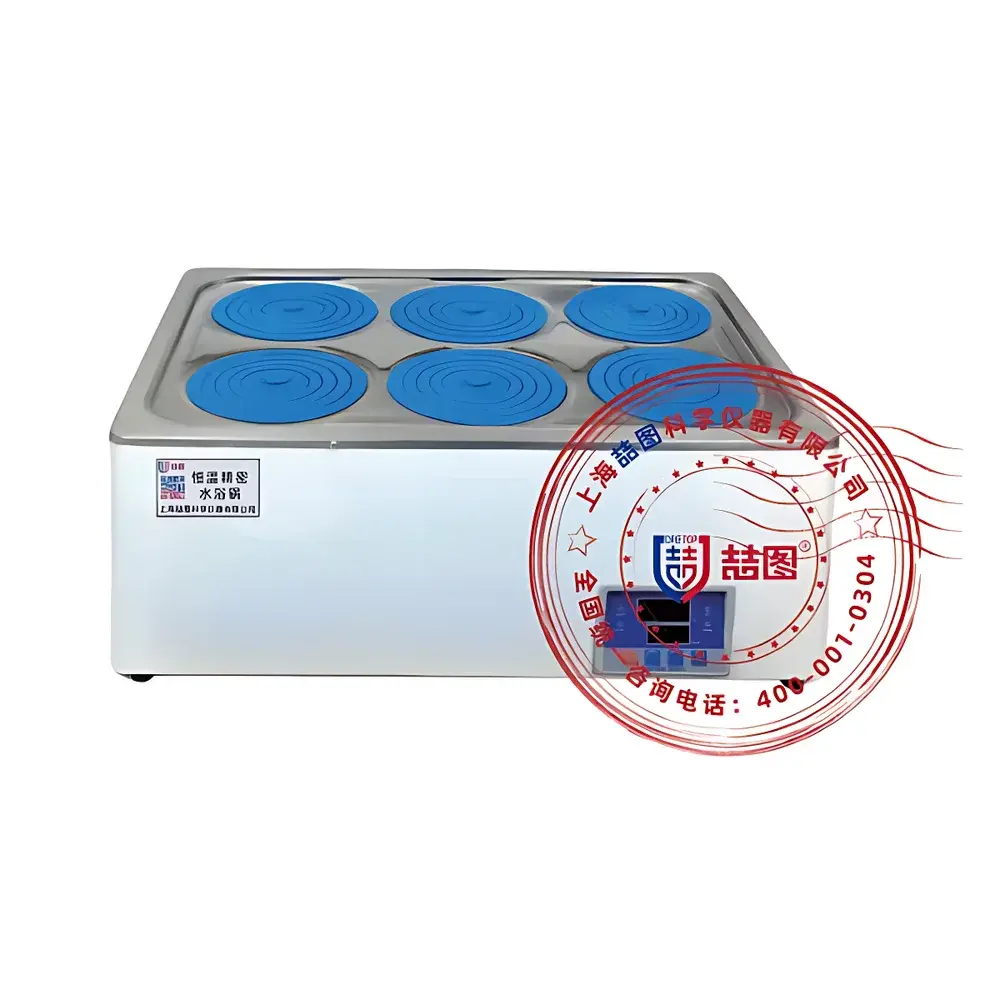
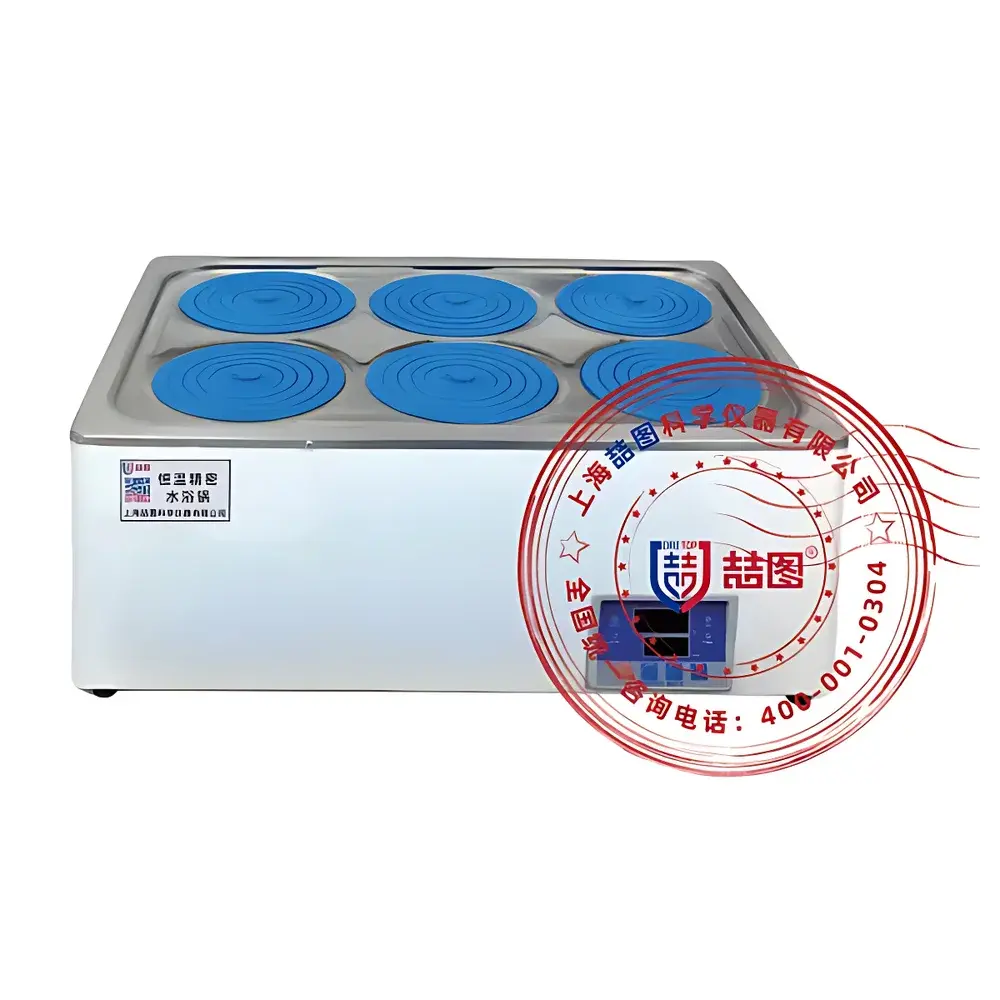
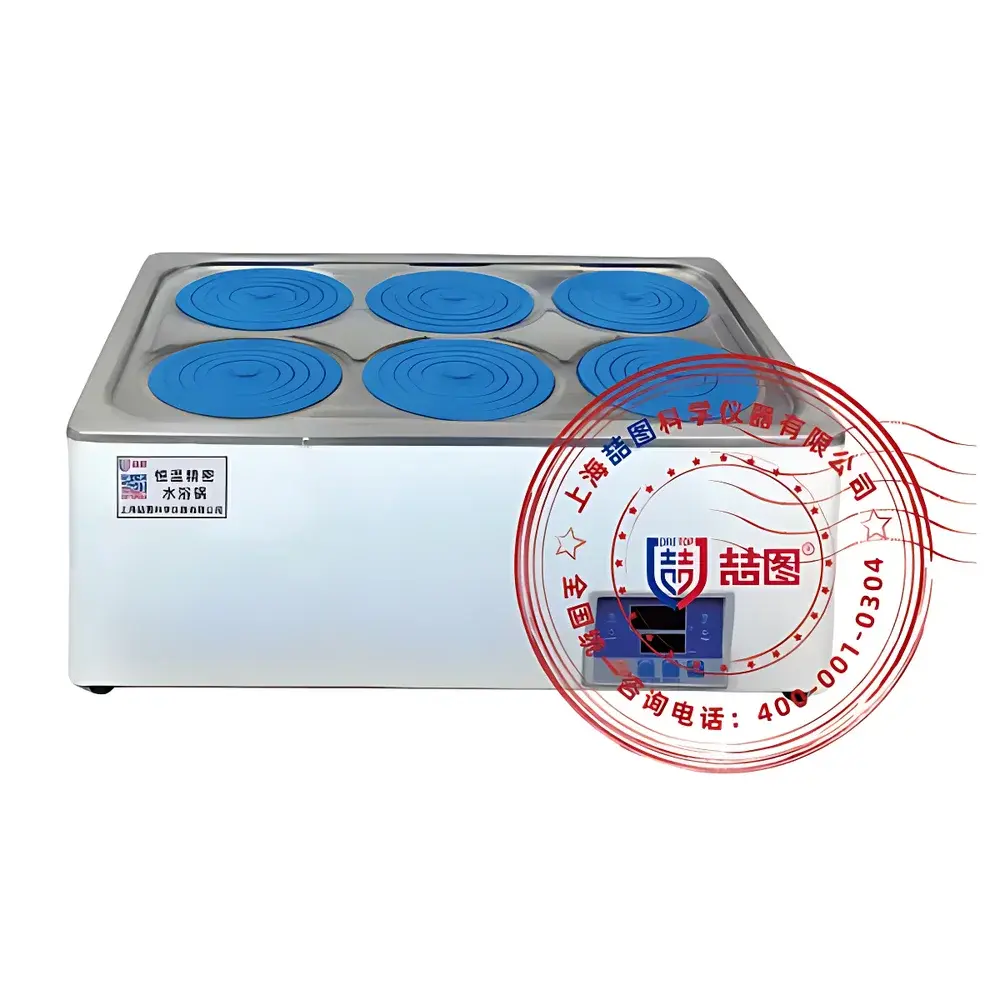
DRETOP GHP-26 Precision Water Bath
| Brand | DRETOP |
|---|---|
| Origin | Shanghai, China |
| Model | GHP-26 |
| Temperature Range | Ambient +5 to 99.9 °C |
| Temperature Accuracy | ±0.1 °C |
| Bath Volume | 12 L |
| Heating Power | 1200 W |
| Display Resolution | 0.1 °C |
| Temperature Uniformity | ±0.5 °C |
| Power Supply | AC 220 V, 50 Hz |
| Construction | Seamless Stainless Steel Inner Chamber |
| Safety Features | Over-Temperature Audio-Visual Alarm, Adjustable Low-Water-Level Detection with Automatic Cut-Off |
Overview
The DRETOP GHP-26 Precision Water Bath is an engineered thermal platform designed for stable, repeatable, and contamination-free temperature control in analytical, pharmaceutical, and life science laboratories. Operating on the principle of convective heat transfer via immersion in a thermostatically regulated water medium, the GHP-26 maintains precise thermal environments across a wide operational range (ambient +5 °C to 99.9 °C) with high spatial uniformity (±0.5 °C) and exceptional stability (±0.1 °C accuracy). Its seamless stainless steel inner chamber—formed via single-draw stamping rather than welded assembly—eliminates crevices, weld seams, and potential leakage points, ensuring long-term structural integrity and compliance with ISO 15190:2020 requirements for laboratory safety infrastructure. The unit is intended for applications requiring passive, non-agitated thermal equilibration—including reagent warming, sample conditioning prior to chromatographic or spectroscopic analysis, media sterilization validation, and accelerated stability testing per ICH Q1A(R3) guidelines.
Key Features
- High-stability PID temperature control algorithm with adaptive tuning, delivering rapid thermal response and minimal overshoot during setpoint transitions;
- Digitally adjustable low-water-level threshold with real-time sensor feedback; automatic heating shutdown prevents dry-burn damage and extends heater tube service life;
- Over-temperature protection circuit with dual-stage fail-safes: audible alarm + visual LED indicator + immediate power cutoff at user-defined upper limit;
- Intuitive touch-button interface with 0.1 °C display resolution and built-in temperature calibration offset function for traceable field adjustment;
- Structurally reinforced housing with rounded edges and vibration-dampening base design, supporting stable placement on benchtops under routine lab traffic conditions;
- Corrosion-resistant 304 stainless steel bath chamber, passivated per ASTM A967, resistant to common laboratory acids, bases, and organic solvents used in sample preparation workflows.
Sample Compatibility & Compliance
The GHP-26 accommodates standard laboratory glassware including beakers (up to 1000 mL), Erlenmeyer flasks, test tubes, and culture bottles. Its 12 L bath volume supports simultaneous processing of multiple samples without compromising thermal homogeneity. The device meets general electrical safety requirements per IEC 61010-1:2010 and incorporates design elements aligned with GLP-compliant environments—such as audit-ready parameter logging capability (when integrated with optional RS232/USB data output module), non-volatile memory for setpoint retention after power loss, and tamper-evident calibration lockout. While not intrinsically certified for hazardous locations, its sealed construction and absence of exposed heating elements make it suitable for use in Class 10,000 cleanrooms when operated with deionized or distilled water.
Software & Data Management
The GHP-26 operates as a standalone instrument with embedded firmware controlling all thermal regulation functions. Optional communication modules enable connection to external PCs running Windows-based data acquisition software (e.g., LabVIEW-compatible drivers or vendor-provided DRETOP Control Suite). When configured, the system supports time-stamped temperature logging at user-selectable intervals (1–60 s), export to CSV format, and generation of calibration reports compliant with ISO/IEC 17025 documentation standards. Audit trail functionality—including operator ID tagging, parameter change history, and event timestamps—is available in networked configurations meeting FDA 21 CFR Part 11 requirements for electronic records and signatures.
Applications
- Pharmaceutical quality control: dissolution media pre-conditioning, stability study incubation support, and buffer equilibration prior to HPLC mobile phase preparation;
- Clinical microbiology: agar plate warming, blood culture bottle incubation support, and enzyme assay thermal activation;
- Academic research: DNA denaturation/annealing simulation, protein refolding studies, and solvent evaporation kinetics under controlled thermal gradients;
- Food & beverage testing: enzymatic activity assays (e.g., amylase, protease), fat extraction pre-heating, and sensory sample temperature standardization;
- Environmental analysis: BOD incubation support, pesticide extraction solvent conditioning, and soil leachate thermal stabilization prior to ICP-MS analysis.
FAQ
What is the recommended maintenance schedule for the GHP-26?
Perform weekly visual inspection of water level and chamber cleanliness; descale monthly using 5% citric acid solution if using tap water; verify temperature accuracy quarterly using a NIST-traceable reference thermometer.
Can the GHP-26 be used with non-aqueous bath fluids?
No—this unit is validated exclusively for water-based media. Use of oils, glycols, or silicone fluids voids warranty and may compromise sensor accuracy and safety interlocks.
Is remote monitoring supported out-of-the-box?
Basic remote status indication (power-on, alarm active) is available via optional dry-contact relay outputs; full telemetry requires add-on serial or Ethernet interface module.
Does the GHP-26 meet CE or UL certification requirements?
The unit complies with CE marking directives (EMC Directive 2014/30/EU and LVD Directive 2014/35/EU); UL listing is not currently held but conforms to equivalent safety principles per UL 61010-1.
How is temperature uniformity verified across the bath volume?
Uniformity is validated during factory acceptance testing using nine-point thermocouple mapping per ASTM E2251-17 Annex A1; a certificate of conformance is included with each shipment.



