
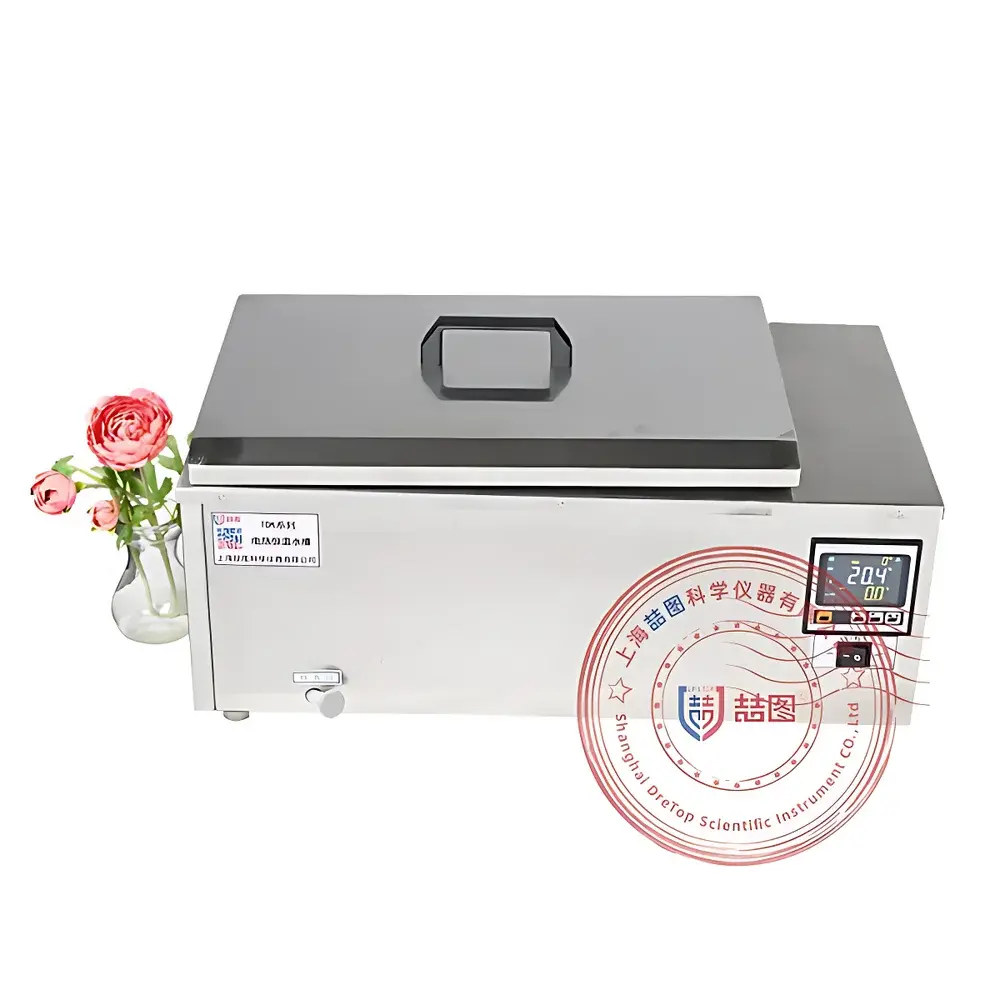
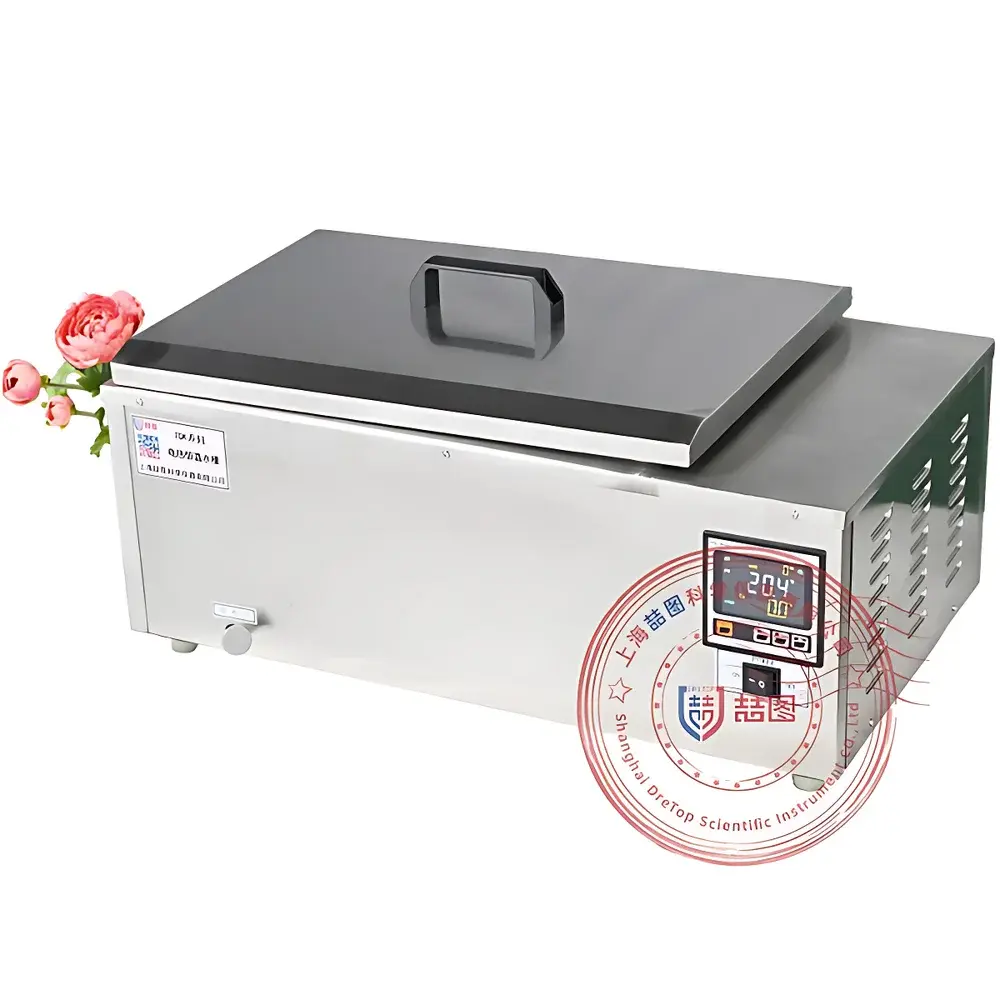
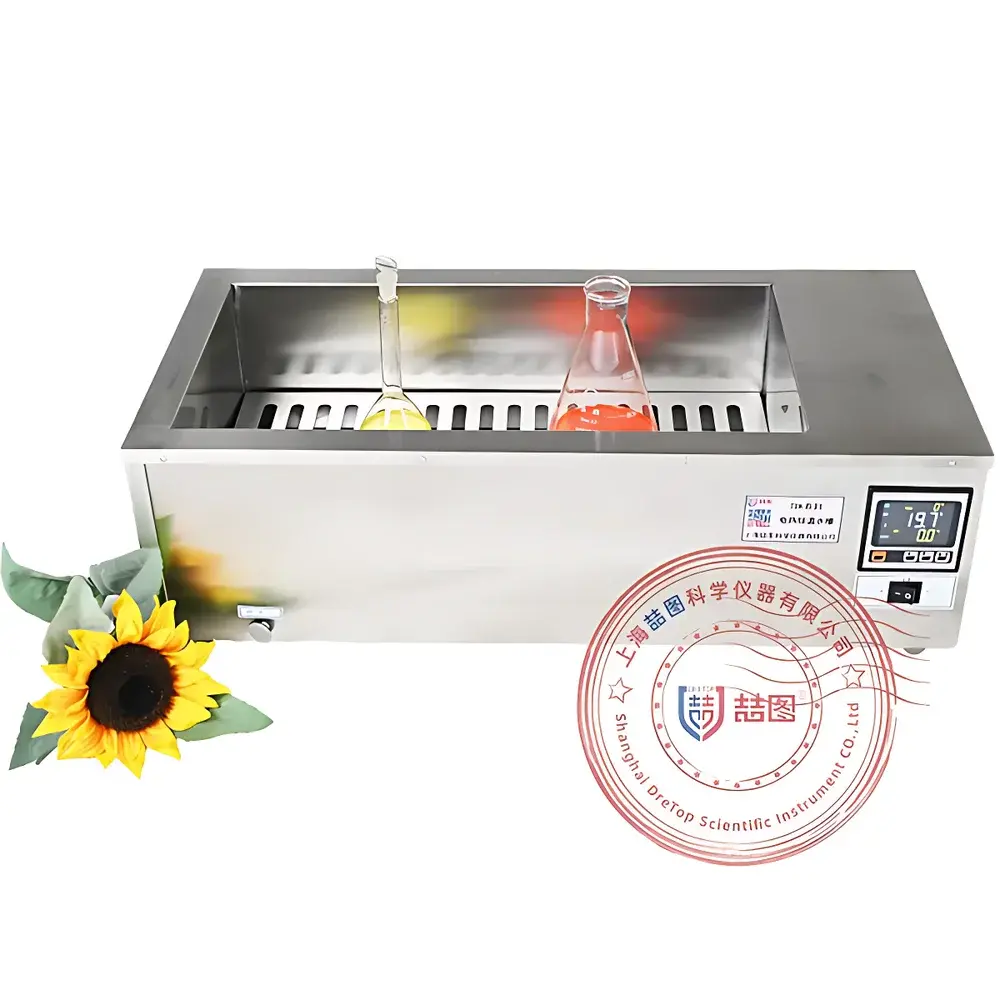
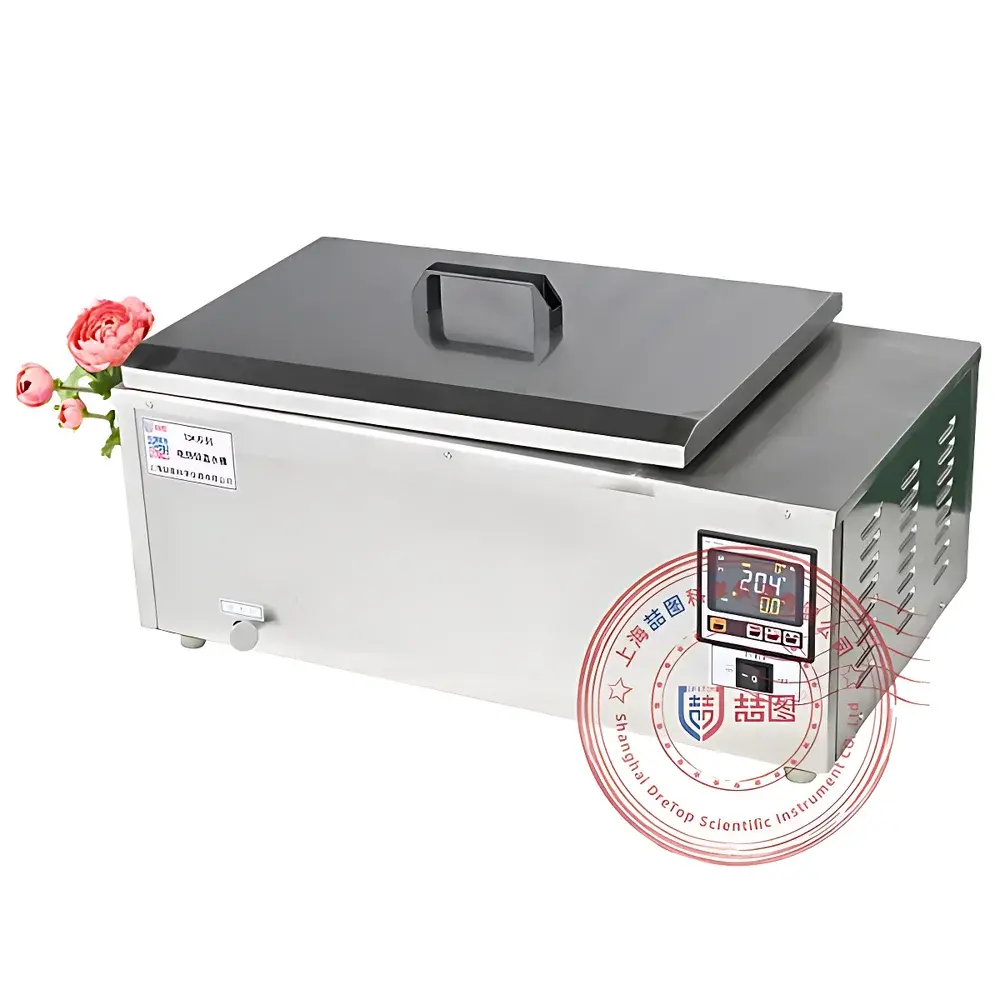
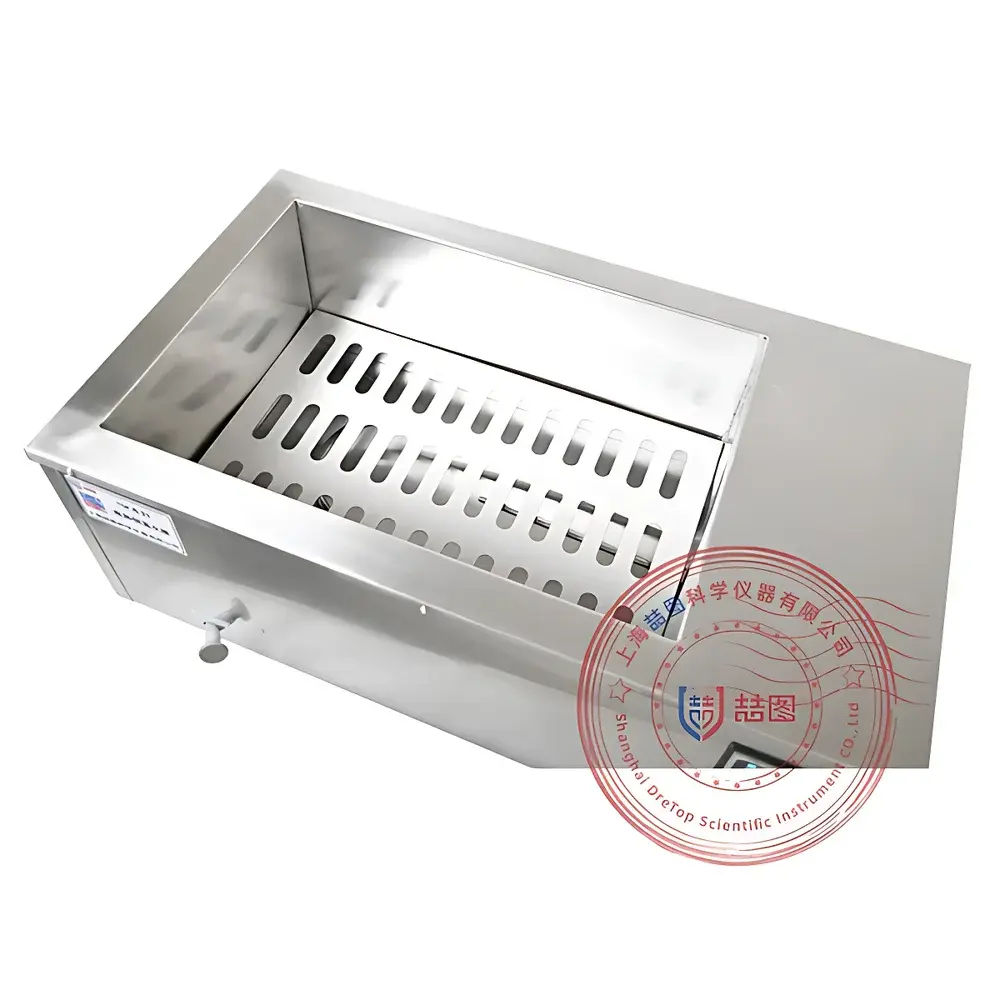
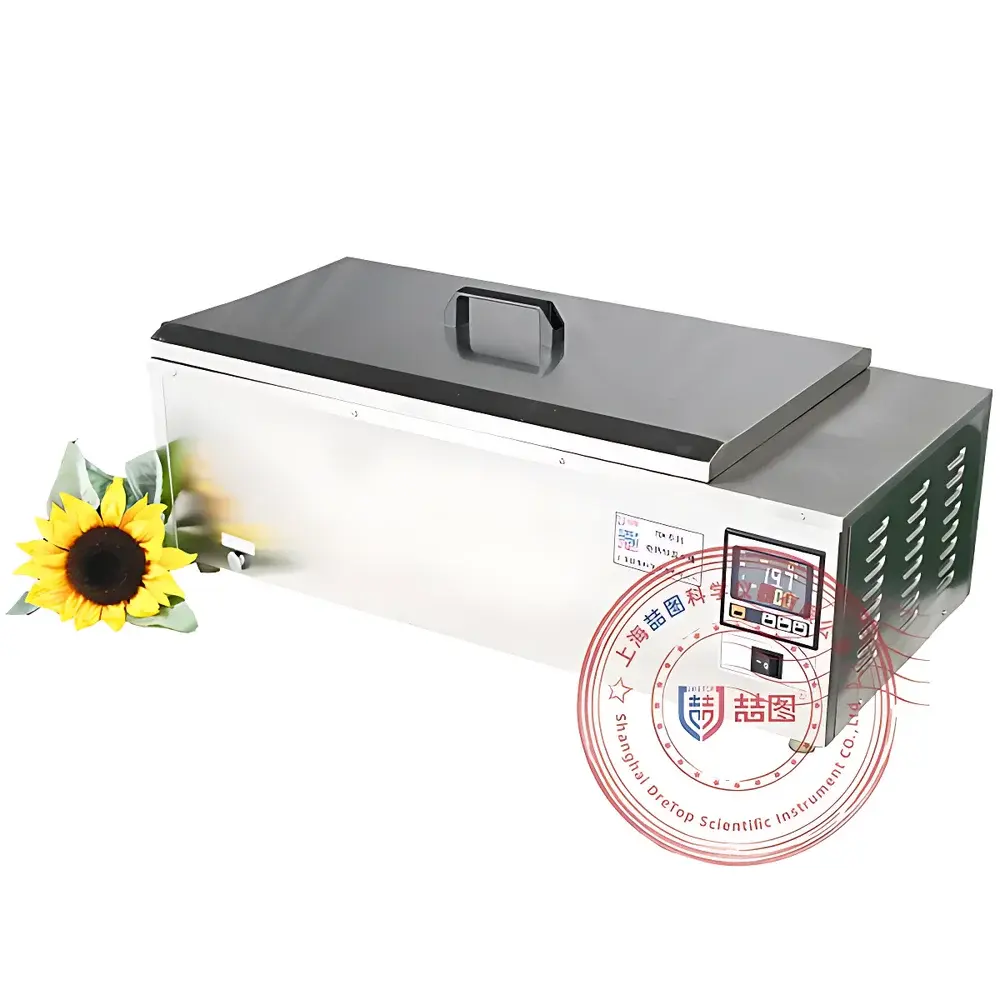
DRETOP TDK-24R Refrigerated Circulating Bath
| Brand | DRETOP |
|---|---|
| Origin | Shanghai, China |
| Model | TDK-24R |
| Bath Volume | 24 L |
| Temperature Range | 15 °C to 70 °C |
| Temperature Stability | ±0.3 °C |
| Temperature Resolution | 0.1 °C |
| Cooling/Heating Type | Dual-mode (Refrigeration & Heating) |
| Input Power | 1000 W |
| Supply Voltage | AC 250 V, 50 Hz |
| Communication Interface | RS485 |
| Construction | Stainless Steel Interior & Deck, Powder-Coated Exterior |
| Circulation Mode | Internal/External Dual-Mode Pump System |
| External Cooling Capability | Yes (via dual-port fluid circulation) |
Overview
The DRETOP TDK-24R Refrigerated Circulating Bath is a precision-engineered temperature control system designed for laboratory and industrial applications requiring stable, bidirectional thermal regulation. Based on closed-loop refrigeration combined with resistive heating, the unit maintains setpoint accuracy through PID-controlled compressor operation and high-efficiency heat exchange. Its core function is to serve as a reliable external thermal reservoir—capable of both cooling and heating—for immersion-based sample conditioning, reaction temperature control, or calibration of temperature-sensitive instrumentation. Unlike basic water baths, the TDK-24R integrates active circulation to ensure uniform thermal distribution across its 24-liter stainless steel chamber and enables remote temperature management of auxiliary equipment via externally routed fluid paths.
Key Features
- Hermetically sealed refrigeration system with overheat and overcurrent protection circuits—ensuring operational safety and long-term compressor reliability
- 304 stainless steel inner tank and work surface, resistant to corrosion from aqueous solutions, mild acids, and common organic solvents
- Dual-mode circulation pump supports both internal recirculation (for bath homogeneity) and external loop configurations (for secondary temperature zones or jacketed reactors)
- Two independent fluid ports (inlet and outlet) allow flexible plumbing: direct connection for external cooling loops or closed-loop internal routing using standard silicone or reinforced rubber tubing
- RS485 serial interface compliant with Modbus RTU protocol—enables integration into centralized lab monitoring systems, automated data logging, and time-stamped temperature history export
- Intuitive digital controller with real-time display of setpoint, actual bath temperature, and system status indicators (e.g., compressor active, heater active, alarm)
Sample Compatibility & Compliance
The TDK-24R accommodates a broad range of sample formats—including glassware (Erlenmeyer flasks, beakers, reaction vessels), metal sample holders, and sensor probes—provided they fit within the bath’s usable depth and do not obstruct fluid flow near the circulation inlet/outlet. It is compatible with water as the primary heat transfer medium for operation between 15 °C and 70 °C. For extended-range applications beyond this interval, alternative fluids such as glycol–water mixtures may be used under validated conditions. The unit meets general electrical safety requirements per IEC 61010-1 for laboratory equipment and incorporates grounding continuity, insulation resistance, and leakage current safeguards. While not certified to specific ISO/IEC 17025 or GLP audit requirements out-of-the-box, its RS485 logging capability supports traceable temperature records suitable for internal quality procedures aligned with ISO 9001 or ASTM E2877 (Standard Guide for Validation of Temperature-Controlled Equipment).
Software & Data Management
The built-in RS485 interface permits connection to PC-based acquisition software or programmable logic controllers (PLCs) without additional hardware adapters. Users can configure polling intervals (e.g., every 1–60 seconds), define alarm thresholds, and retrieve timestamped temperature logs in CSV format. When integrated with validated third-party platforms (e.g., LabVIEW, MATLAB, or custom SCADA systems), the TDK-24R supports 21 CFR Part 11-compliant audit trails—provided the host software implements electronic signatures, user access controls, and immutable record storage. Firmware updates are performed via serial command protocol; no proprietary drivers are required.
Applications
- Calibration of thermometers, RTDs, and thermocouples against NIST-traceable reference standards
- Temperature stabilization of spectrophotometer cuvettes, viscometer spindles, or density meter cells
- Controlled-rate cooling/heating cycles in polymer crystallization studies or phase transition analysis
- Thermal preconditioning of biological samples prior to enzymatic assays or cell viability testing
- Supporting environmental stress screening (ESS) in electronics QA labs where component-level thermal soak is required
- Providing consistent coolant supply to rotary evaporators, condensers, or cold traps operating at sub-ambient temperatures
FAQ
What is the minimum operating temperature of the TDK-24R?
The specified lower limit is 15 °C. Operation below this point is not supported due to refrigerant cycle constraints and potential condensation-related risks within the compressor housing.
Can the unit maintain temperature stability during external load fluctuations?
Yes—the PID algorithm dynamically adjusts compressor duty cycle and heater output based on real-time feedback from dual platinum RTD sensors located in the bath sump and circulation path, ensuring ±0.3 °C stability even when external heat sinks draw up to 300 W of thermal load.
Is deionized water recommended for extended use?
Deionized water reduces mineral deposition but must be supplemented with biocide or periodic replacement to prevent microbial growth in stagnant zones; conductivity monitoring is advised for continuous operation exceeding 72 hours.
Does the TDK-24R support analog voltage output for PLC interfacing?
No—analog outputs are not provided; only RS485 digital communication is available. External signal converters may be used if 0–10 V or 4–20 mA interfaces are required.
What maintenance intervals are recommended for optimal performance?
Compressor oil inspection every 24 months; condenser coil cleaning every 6 months in dust-prone environments; circulation pump impeller inspection annually; calibration verification of temperature sensors every 12 months using a certified reference thermometer.



