
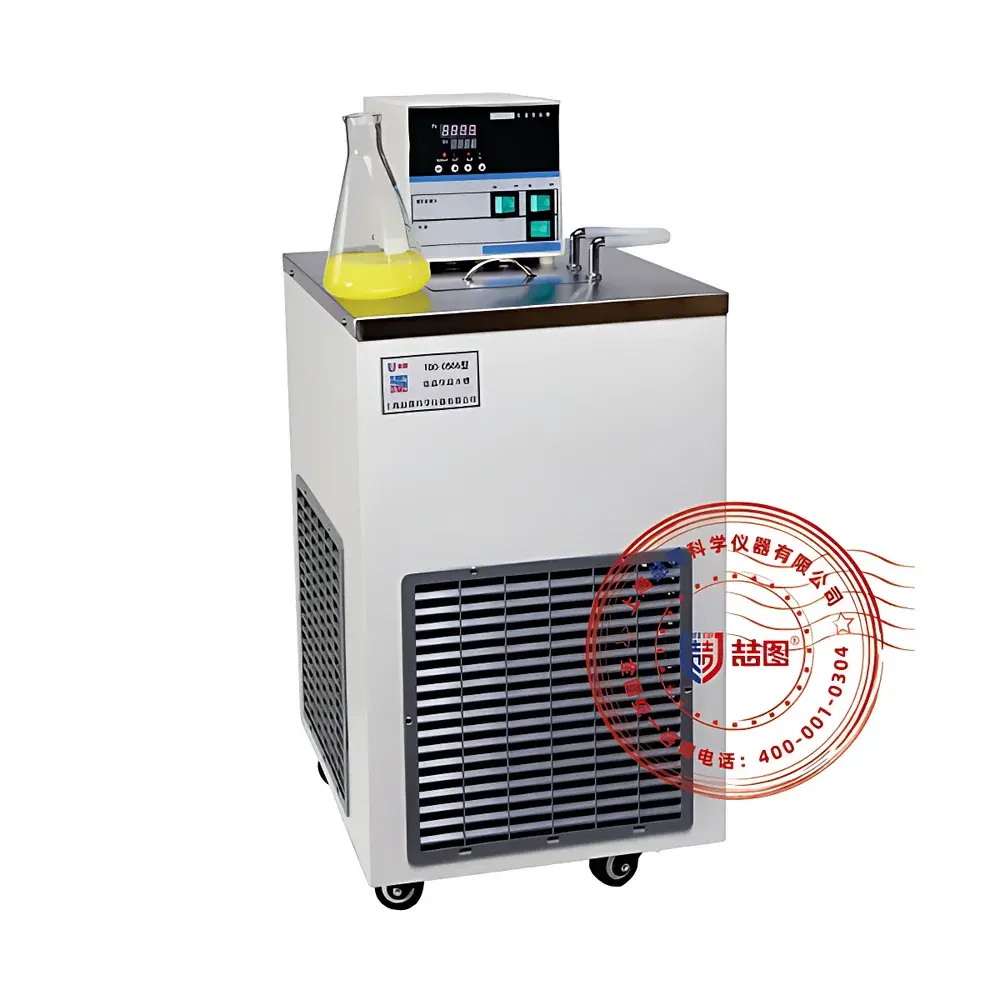
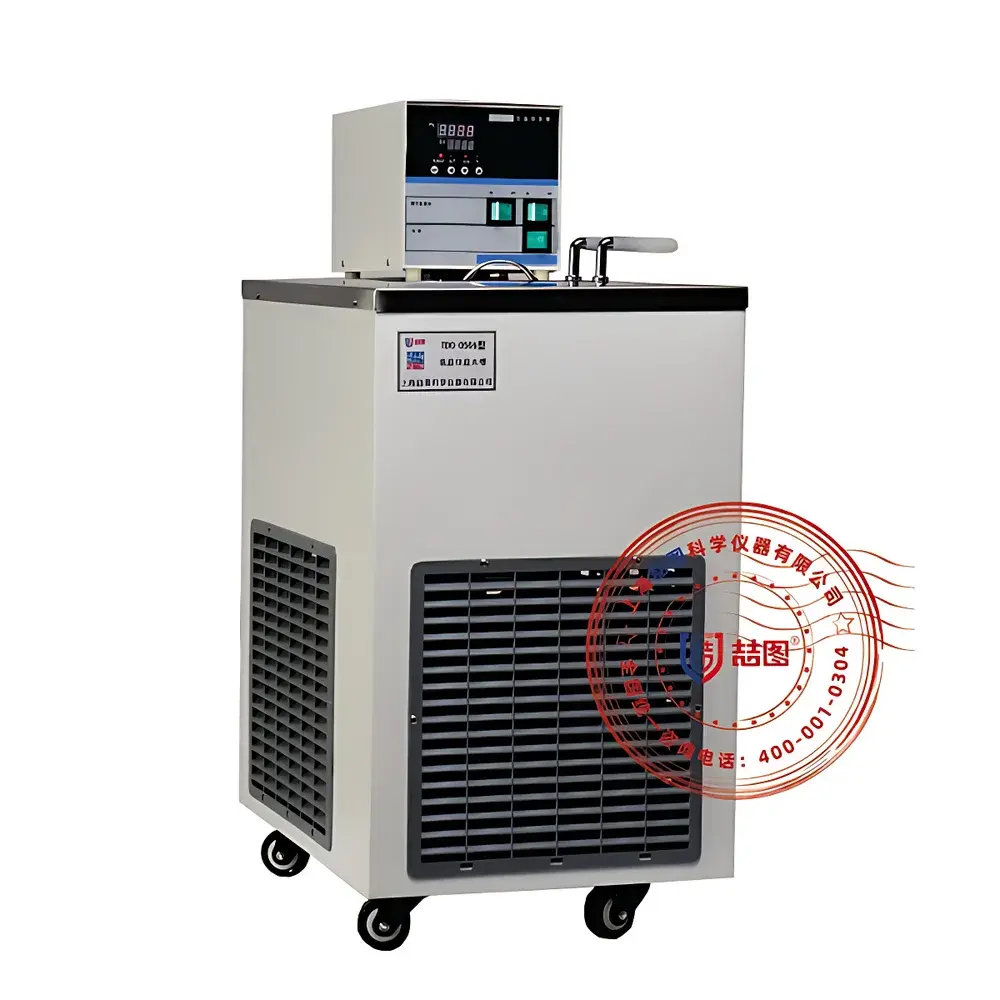
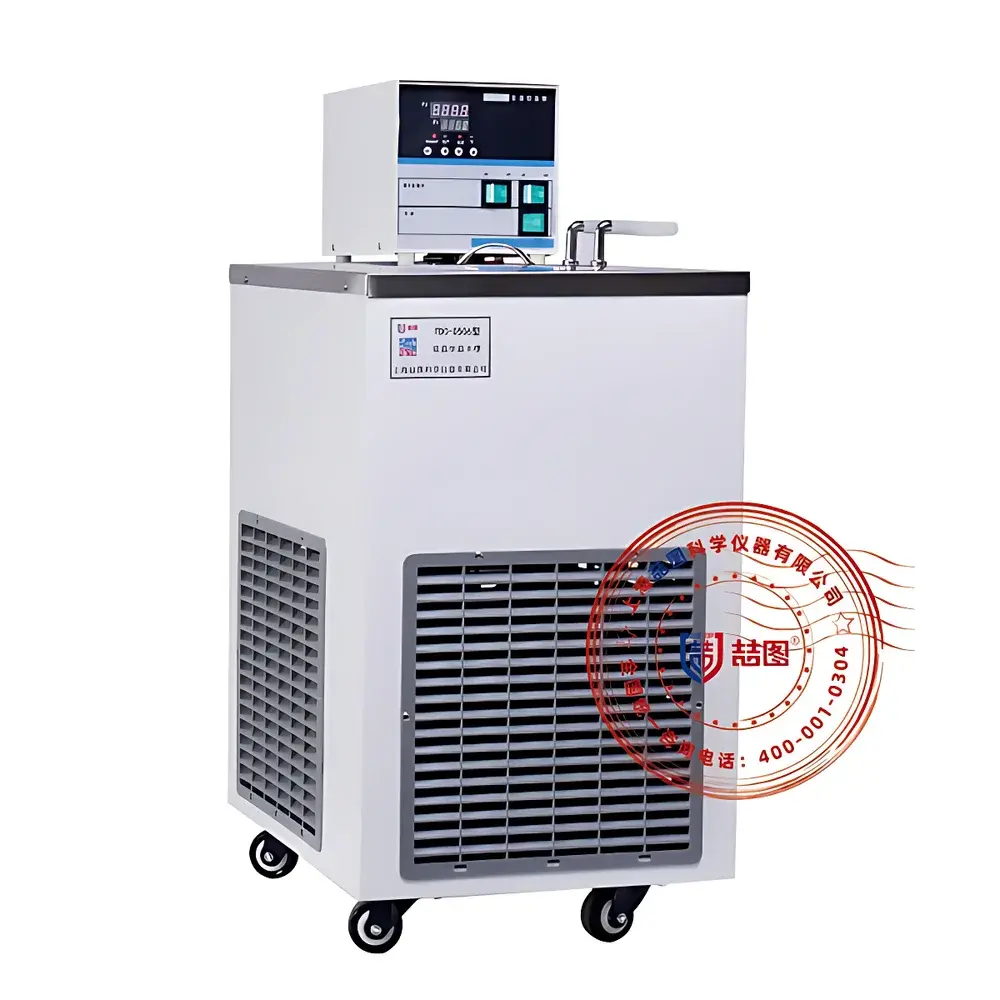
DRETOP TDC Series Precision Low-Temperature Circulating Bath
| Brand | DRETOP |
|---|---|
| Origin | Shanghai, China |
| Model | TDC Series |
| Temperature Range | –5 °C to 100 °C (standard) |
| Temperature Stability | ±0.1 °C (standard) |
| Temperature Uniformity | ±0.5 °C (standard) |
| Bath Volume | 6 L to 50 L |
| Circulation Type | Internal recirculation (with external loop capability) |
| Control System | PID-based touchscreen LCD controller |
| Construction | 304 stainless steel tank and work surface |
| Power Input | 600 W to 7200 W |
| Safety Protections | Over-temperature alarm, low-level fluid detection, compressor overheat/overcurrent protection, power-fail memory |
Overview
The DRETOP TDC Series Precision Low-Temperature Circulating Bath is a laboratory-grade temperature control system engineered for high-stability thermal management of external apparatus and direct sample immersion. Utilizing a dual-mode refrigeration–heating thermodynamic cycle with hermetically sealed compressors and precision PID feedback control, the TDC series delivers tightly regulated liquid environments across a broad operational range—from –40 °C to +100 °C—depending on model configuration. Its core function is to serve as a stable, uniform, and controllable heat transfer medium for applications requiring precise thermal conditioning, including calibration of sensors, stabilization of analytical instruments (e.g., spectrophotometers, viscometers), temperature-dependent reaction control in synthesis reactors, and thermal validation of material properties. Unlike passive water baths, the TDC series integrates active internal circulation via a low-heat-generation centrifugal pump, eliminating localized thermal gradients and ensuring rapid equilibration and long-term stability without self-heating interference.
Key Features
- Three-tiered precision architecture: Standard (±0.1 °C stability), Ultra-Precision (U-series, ±0.01 °C), and Metrology-Grade (M-series, ±0.001 °C), enabling traceable thermal control aligned with ISO/IEC 17025 requirements.
- Stainless steel 304 bath chamber and deck—corrosion-resistant, non-porous, and compatible with aqueous, glycolic, alcoholic, and silicone-based heat transfer fluids.
- Dual-mode thermal regulation: Simultaneous cooling and heating within a single unit eliminates need for separate chillers or heaters; optimized refrigerant charge and oversized condenser ensure consistent performance at extreme setpoints.
- Modular circulation design: Internal U-shaped multi-orifice return manifold ensures turbulent, homogeneous flow distribution; optional external loop interface supports connection to jacketed reactors, condensers, or custom test fixtures.
- Integrated safety infrastructure: Real-time monitoring of fluid level, compressor temperature, current draw, and ambient cabinet temperature; automatic shutdown on fault detection with audible/visual alerts.
- Ergonomic horizontal footprint (TDCW variant): Low-profile chassis designed for benchtop integration—minimizes lab floor space while maintaining full-volume capacity and accessibility.
Sample Compatibility & Compliance
The TDC series accommodates a wide spectrum of heat transfer media—including deionized water, ethylene glycol/water mixtures (1:1 to 1:3), anhydrous ethanol (≥99.5%), isopropanol, and specialized low-volatility synthetic heat transfer fluids—subject to compatibility with both stainless steel wetted parts and user-installed experimental vessels. All models meet CE marking requirements for electromagnetic compatibility (EMC Directive 2014/30/EU) and low-voltage safety (LVD Directive 2014/35/EU). The control firmware supports audit-trail logging and password-protected parameter locking—facilitating compliance with GLP and GMP workflows under FDA 21 CFR Part 11 when paired with validated data acquisition systems. Temperature accuracy specifications are verified per ASTM E74–22 (Standard Practice for Calibration of Laboratory Thermometers) using NIST-traceable reference probes.
Software & Data Management
While the TDC series operates autonomously via its embedded touchscreen controller, optional RS485/Modbus RTU and USB interfaces enable integration into centralized lab automation platforms (e.g., LabVIEW, MATLAB, or LIMS). Real-time temperature logs can be exported in CSV format for post-processing; setpoint profiles (ramp-hold cycles) may be preloaded and executed without PC dependency. Firmware updates are performed via USB stick with version-controlled release packages. All operational events—including start/stop timestamps, alarm triggers, and sensor calibration history—are stored in non-volatile memory with time/date stamping, supporting retrospective analysis during quality audits.
Applications
- Calibration laboratories: Reference temperature source for thermometer, RTD, and thermocouple verification across extended ranges.
- Chemical synthesis: Precise thermal control of jacketed glass reactors and continuous flow systems during exothermic/endothermic reactions.
- Materials science: Thermal cycling of polymers, composites, and phase-change materials under controlled strain-free conditions.
- Pharmaceutical QC: Dissolution testing bath temperature maintenance per USP <711>; stability chamber qualification support.
- Electronics testing: Thermal stress screening of PCBs and semiconductor components at sub-zero or elevated temperatures.
- Biotechnology: Incubation support for cryopreservation protocols, enzyme kinetics assays, and cold-chain validation studies.
FAQ
What heat transfer fluids are recommended for operation below –20 °C?
Anhydrous ethanol (≥99.5%) or isopropanol are preferred for –40 °C to –20 °C operation due to low freezing points and acceptable viscosity. Ethylene glycol/water mixtures are unsuitable below –35 °C. Always verify fluid compatibility with stainless steel and avoid aqueous mixtures containing chloride ions.
Can the TDC bath be used for external circulation with a 50 L reactor?
Yes—models with ≥3500 W input power (e.g., TDC-4050, TDCW-4050) support external loops up to 25 m total tubing length (½” ID PTFE or stainless steel) with pressure head ≤1.2 bar. Flow rate remains stable above 2.5 L/min across the full temperature range.
Is the temperature uniformity specification measured at the center or across the entire bath volume?
Uniformity (±0.5 °C standard; ±0.005 °C M-series) is defined as the maximum deviation between nine spatially distributed PT100 probe readings taken simultaneously at standardized positions (per IEC 60584-2), confirming volumetric homogeneity—not just central point stability.
Does the system support remote monitoring via Ethernet or Wi-Fi?
No native Ethernet/Wi-Fi module is included; however, third-party serial-to-Ethernet gateways (e.g., Moxa NPort) may be deployed to enable TCP/IP access to Modbus registers for supervisory SCADA integration.
How often should the heat transfer fluid be replaced in routine lab use?
Deionized water: every 3 months. Ethanol/isopropanol: replace upon discoloration or odor change (typically 6–12 months). Glycol mixtures: annual replacement unless microbial growth or pH shift is observed. Silicone oils: inspect annually for viscosity increase or darkening; replace if viscosity exceeds +15% of initial value.



