
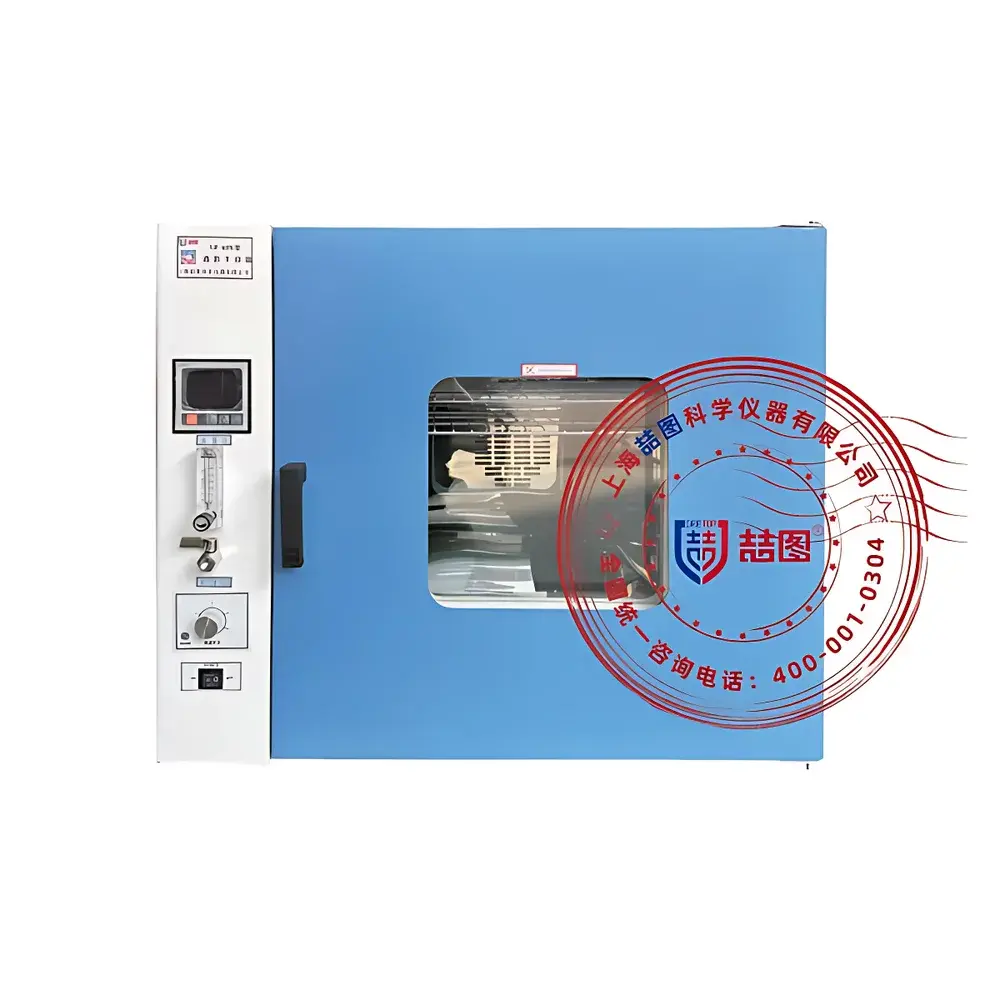
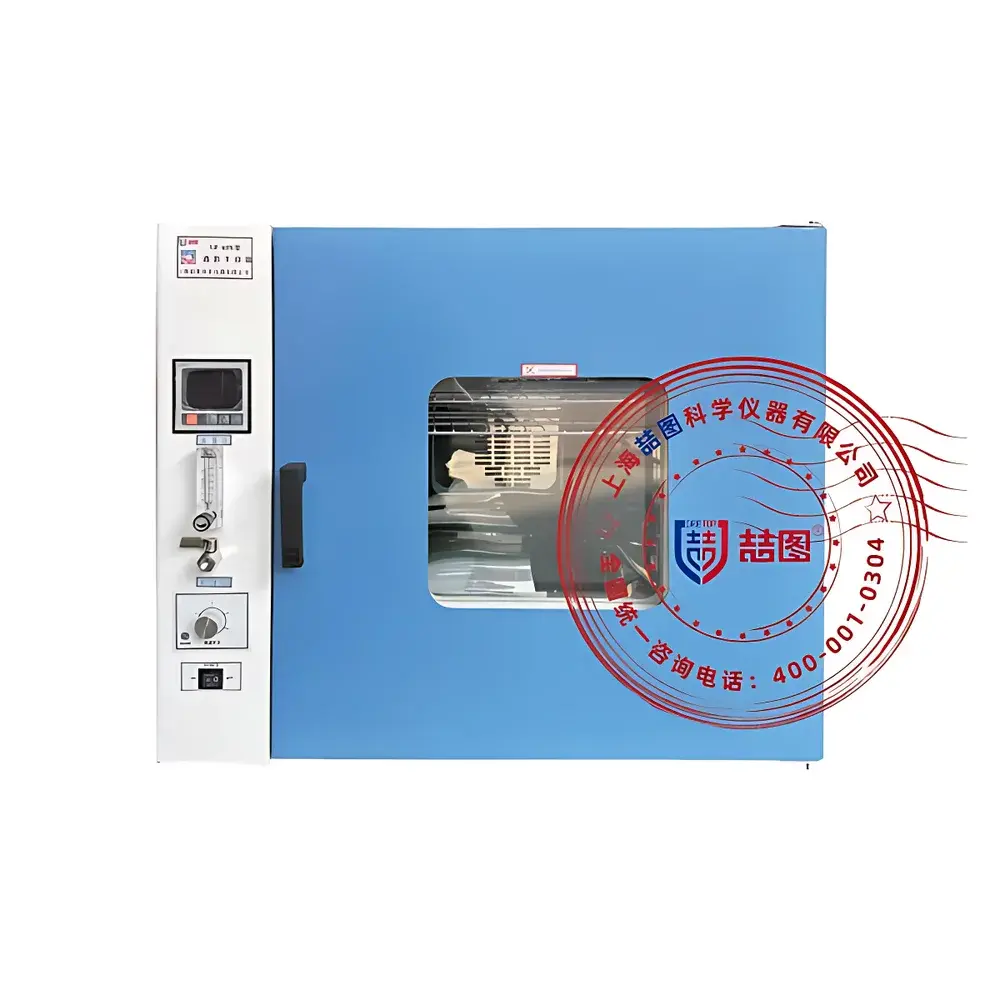
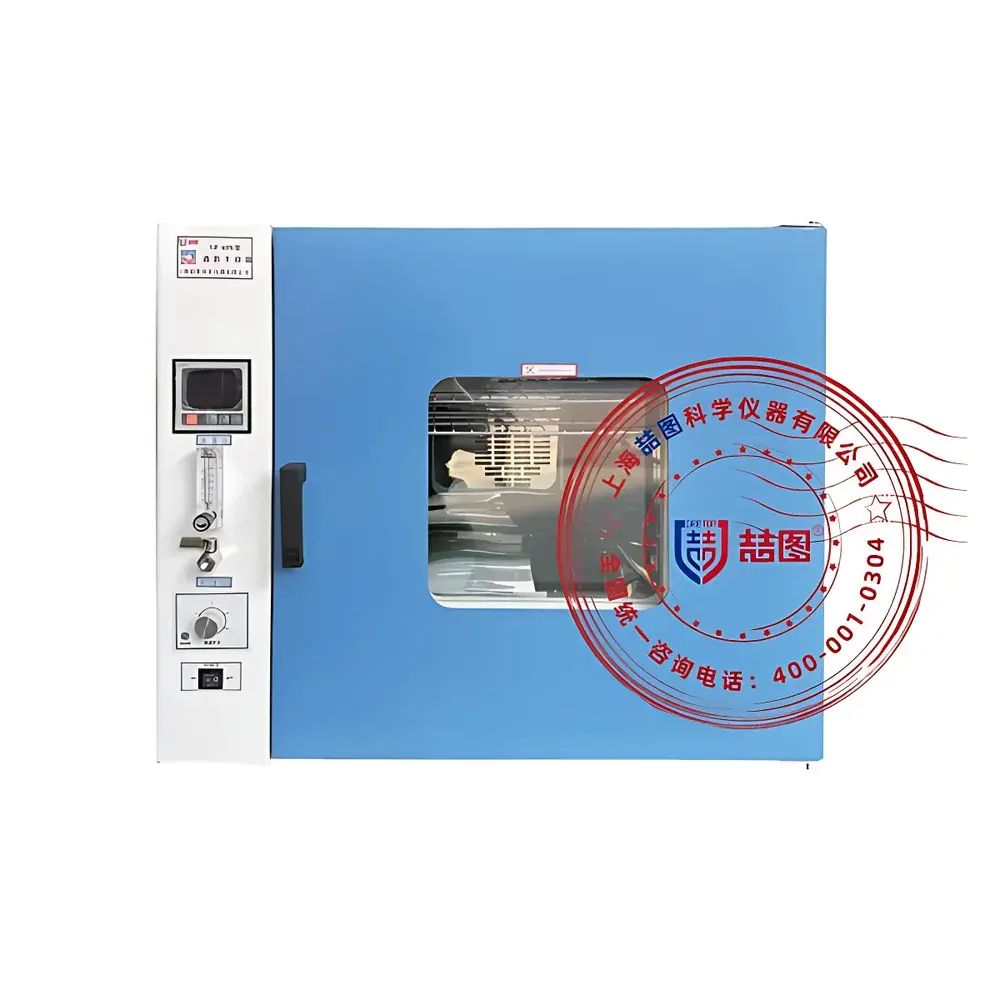
DRETOP TDG Series Nitrogen-Purged Vacuum Drying Oven (No-Air, Constant-Flow, High-Purity Inert Atmosphere)
| Brand | DRETOP |
|---|---|
| Origin | Shanghai, China |
| Model | TDG Series |
| Type | Vacuum Drying Oven |
| Temperature Range | RT+5°C to 250°C |
| Temperature Uniformity | ±0.5°C |
| Chamber Material | Stainless Steel (304) |
| Heating Method | Convection-Free Resistive Heating with Dual-Stage Nitrogen Flow Control |
| External Dimensions | 600 × 600 × 600 mm (W×D×H) |
| Compliance | GB 474–2008, JB/T 5520–91, GB/T 212–2008, GB/T 211–2017 |
Overview
The DRETOP TDG Series Nitrogen-Purged Vacuum Drying Oven is an engineered solution for thermal processing under ultra-low oxygen and controlled inert atmospheres. Unlike conventional convection ovens, the TDG series operates without internal air movement—eliminating forced airflow while maintaining precise, uniform temperature distribution through passive thermal conduction and magnetically assisted natural convection. Its core functionality integrates vacuum evacuation (optional V-models), high-fidelity nitrogen mass flow control, and hermetic chamber integrity to achieve residual oxygen concentrations below 0.1% (v/v). This architecture supports applications where oxidation sensitivity, volatile loss, or structural degradation must be rigorously mitigated—such as drying photoactive compounds, sintering noble metal powders, stabilizing pharmaceutical intermediates, or conditioning moisture-sensitive electronic substrates. The system adheres to fundamental principles of inert-gas thermogravimetric processing, where thermal energy transfer occurs solely via radiation and conduction, and chemical stability is ensured by continuous nitrogen replenishment and leak-tight containment.
Key Features
- Zero-airflow chamber design: Eliminates mechanical fans and turbulent convection—reducing particle displacement, surface abrasion, and localized overheating.
- Laser-welded stainless steel (304) inner chamber with fluororubber gasket sealing: Achieves nitrogen leakage rate <0.5 mL/min under 0.1 MPa differential pressure—validated per ISO 10648-2.
- Dual-mode gas control: Standard models feature calibrated rotameter + solenoid valve; V-series adds integrated vacuum pump (ultimate vacuum ≤5 Pa) and real-time negative pressure monitoring.
- PID-based digital temperature controller with programmable multi-segment ramp/soak profiles (up to 32 segments): Enables compliance with ICH Q1A(R3) long-term stability protocols and ASTM E1510-20 thermal aging test sequences.
- Safety architecture: Independent overtemperature cut-off (mechanical bimetal switch), pressure relief valve (for nitrogen overpressure scenarios), and audible/visual alarm for door seal failure or flow deviation >±5% from setpoint.
- Energy-optimized thermal insulation: 100 mm thick mineral fiber layer with aluminum foil reflector—reducing standby heat loss to <0.8°C/h at 200°C ambient.
Sample Compatibility & Compliance
The TDG oven accommodates samples ranging from gram-scale analytical standards to 125 L industrial batches (TDZ-125V model), with compatibility across solid particulates, thin films, porous ceramics, hygroscopic salts, and organic-coated nanoparticles. Its inert atmosphere capability satisfies critical requirements in GMP-regulated environments: nitrogen purity ≥99.999% (verified via optional inline O₂ analyzer), traceability of gas consumption logs, and audit-ready calibration records for temperature sensors (PT100 Class A, certified per IEC 60751). The system conforms to national standards GB/T 211–2017 (total moisture in coal), GB/T 212–2008 (proximate analysis), and JB/T 5520–91 (industrial drying equipment performance testing), supporting method validation under ISO/IEC 17025 and FDA 21 CFR Part 11 when paired with compliant data acquisition software.
Software & Data Management
While the base TDG configuration uses a standalone LCD controller, optional Ethernet-enabled touch panels (DRETOP DCS-Link v3.2 firmware) provide full GLP-compliant data handling: time-stamped temperature/nitrogen flow logs, user access levels (admin/operator/auditor), electronic signatures, and automatic report generation in PDF/XLSX formats. All recorded parameters—including chamber pressure (V-models), cumulative N₂ volume, and PID tuning history—are stored with SHA-256 hash integrity verification. Raw data export supports third-party statistical process control (SPC) platforms and integration into LIMS via OPC UA or Modbus TCP protocols.
Applications
- Pharmaceutical R&D: Degradation studies of light- and oxygen-labile APIs under ICH Q5C conditions; residual solvent removal from lyophilized formulations.
- Advanced materials synthesis: Annealing of perovskite precursors, calcination of battery cathode materials (e.g., NMC, LFP), and passivation of quantum dot suspensions.
- Electronics manufacturing: Baking of PCB laminates prior to solder paste application; desiccation of MEMS packaging cavities.
- Academic research: Controlled pyrolysis of biomass feedstocks; thermal characterization of MOFs and covalent organic frameworks (COFs).
- Quality control labs: Moisture content determination per AOAC 952.03; ash content analysis per ASTM D3174–22.
FAQ
What distinguishes the TDG “no-air” mode from standard nitrogen-purged ovens?
The TDG series replaces forced convection with static thermal fields—removing fan-induced vibration, turbulence, and localized cooling effects that compromise morphology-sensitive samples.
Can the TDG series meet USP <660> requirements for glass container drying?
Yes—when operated with validated nitrogen purge cycles (≥3 chamber volume exchanges) and monitored O₂ levels <100 ppm, it satisfies USP <660> inert drying criteria for Type I borosilicate vials.
Is vacuum capability mandatory for oxygen reduction?
No—high-purity nitrogen purging alone achieves ≤0.1% O₂; vacuum pre-evacuation (V-models) accelerates deoxygenation and removes adsorbed moisture from chamber walls.
How is temperature uniformity verified across the chamber?
Per JB/T 5520–91, DRETOP performs 9-point mapping (center + 8 corners) at 100°C and 200°C using NIST-traceable PT100 probes; results are documented in出厂 calibration certificate.
Does the system support remote monitoring via network interface?
Optional DCS-Link controllers enable secure HTTPS web access, SNMP alerting, and RESTful API integration for enterprise-level lab infrastructure management.



