
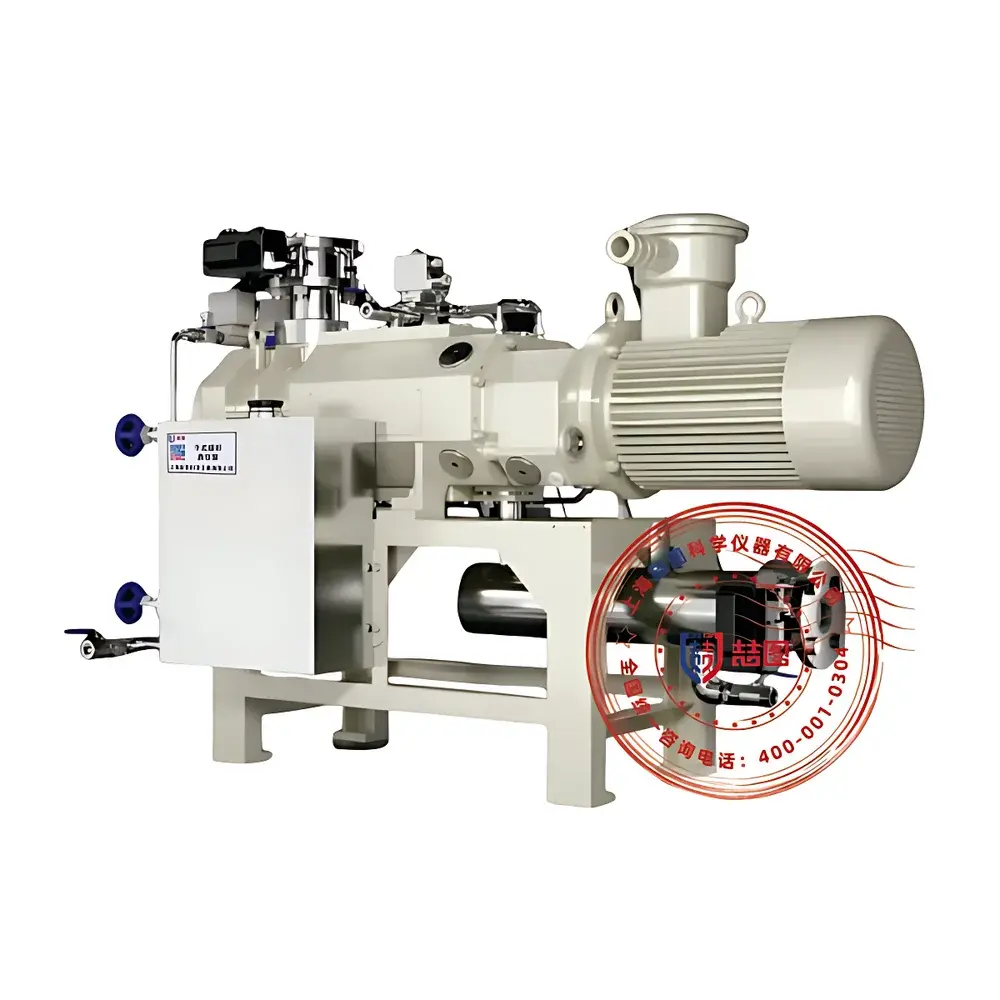
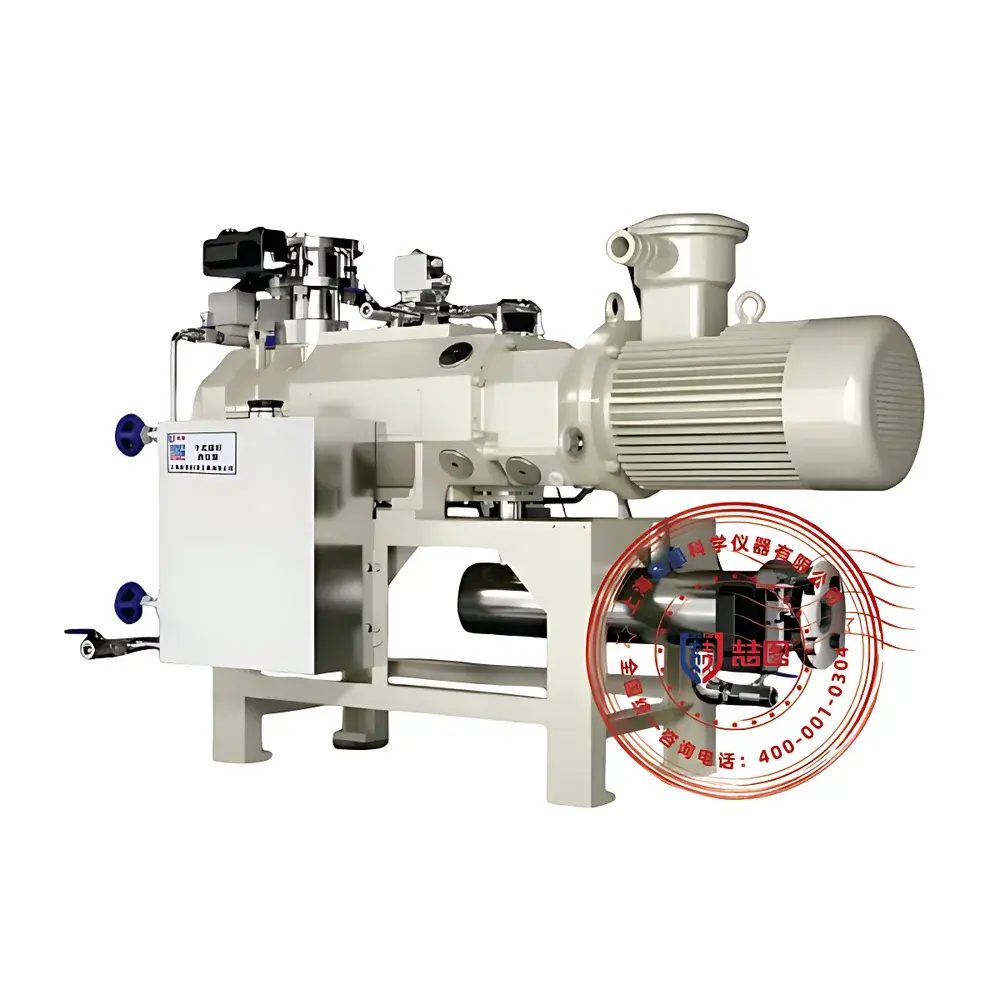
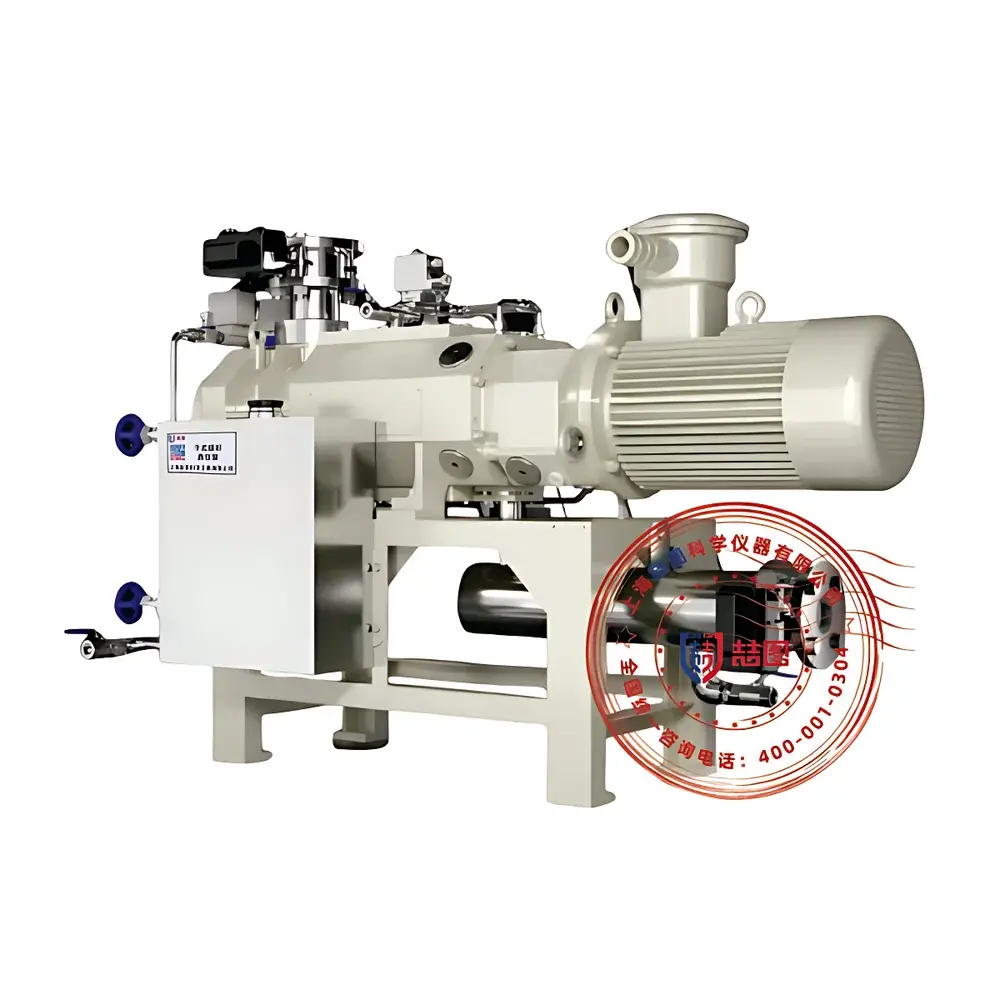
DRETOP GLJ-S20 Dry Screw Vacuum Pump
| Brand | DRETOP |
|---|---|
| Origin | Shanghai, China |
| Pump Type | Oil-Free Dry Screw Vacuum Pump |
| Pumping Speed | 20 m³/h |
| Ultimate Pressure | ≤5 Pa |
| Motor Power | 1500 W |
| Cooling Method | Air-Cooled |
| Rotor Design | Constant-Diameter Variable-Pitch |
| Optional Coatings | PTFE (Teflon®) or Hastelloy® |
| Standard Nitrogen Purge | 1.5–2 bar via 6 mm quick-connect fitting |
| Inlet/Outlet Port | KF40/KF25 |
| Electrical Supply | 380 V, 50 Hz (220 V optional) |
| Compliance | Designed for ISO 22057, ASTM F2413-18 vacuum system integration |
Overview
The DRETOP GLJ-S20 is an industrial-grade, oil-free dry screw vacuum pump engineered for continuous, contamination-free operation in demanding laboratory and pilot-scale process applications. It operates on the principle of positive displacement via intermeshing, non-contacting screw rotors rotating in precise synchronization—eliminating the need for lubricating oil in the pumping chamber. This architecture ensures absolute hydrocarbon-free vacuum generation, making it suitable for processes where trace oil vapor would compromise sample integrity, catalytic activity, or surface cleanliness. The GLJ-S20 delivers stable base pressure down to ≤5 Pa with a nominal pumping speed of 20 m³/h at atmospheric inlet, and is optimized for handling condensable vapors (e.g., solvents, water), mildly corrosive gases (e.g., HCl, SO₂ traces), and low-concentration particulate-laden streams—common in freeze-drying, thermal processing, vacuum metallurgy, and thin-film deposition workflows.
Key Features
- Oil-free operation: No internal lubrication required; eliminates risk of backstreaming hydrocarbons into vacuum chambers or process lines.
- Constant-diameter variable-pitch rotor design: Ensures uniform compression ratio across operating range, enhancing volumetric efficiency and reducing thermal load during high-throughput evacuation.
- PTFE or Hastelloy® optional surface coatings: Provide enhanced chemical resistance against acidic, alkaline, and halogenated process gases—extending service life in aggressive environments such as semiconductor etch residue handling or pharmaceutical solvent recovery.
- Integrated nitrogen purge system (standard): Delivers regulated 1.5–2 bar N₂ through a 6 mm quick-connect port to prevent particle ingress at shaft seals and inhibit condensate accumulation in the discharge path.
- Air-cooled thermal management: Eliminates dependency on external cooling water circuits; reduces infrastructure complexity while maintaining rotor temperature below 85 °C under continuous duty at rated speed.
- Low-vibration, low-noise architecture: Precision dynamic balancing and multi-stage mechanical damping suppress structural resonance—typical sound pressure level <68 dB(A) at 1 m distance—enabling deployment in shared lab spaces or noise-sensitive cleanrooms.
Sample Compatibility & Compliance
The GLJ-S20 is validated for use with chemically heterogeneous gas loads including water vapor, ethanol, acetone, chlorinated hydrocarbons, and low-level particulates (e.g., silicon dust, graphite fines). Its dry, non-reactive pumping chamber avoids catalytic decomposition or polymerization of reactive species—a critical advantage over oil-sealed rotary vane pumps. The pump meets functional requirements for ISO 22057 (vacuum equipment safety), conforms to CE electromagnetic compatibility directives (2014/30/EU), and supports audit-ready documentation for GLP-compliant laboratories. When integrated into vacuum systems serving FDA-regulated pharmaceutical manufacturing, its oil-free nature aligns with USP analytical instrument qualification and 21 CFR Part 11 data integrity expectations when paired with compliant PLC controllers.
Software & Data Management
While the base GLJ-S20 operates as a standalone unit with manual start/stop and analog pressure monitoring, optional PLC-integrated configurations enable full digital supervision. These include real-time vacuum level feedback (via connected Pirani or capacitance manometers), dynamic speed modulation via 0–10 V or 4–20 mA analog input, and event-triggered logging of operational parameters (motor current, temperature, purge flow status). All control interfaces comply with Modbus RTU over RS485, facilitating integration into LabVantage, DeltaV, or Siemens PCS7 SCADA architectures. Audit trails—including user login, setpoint changes, and fault events—are timestamped and exportable in CSV format, supporting 21 CFR Part 11 electronic record compliance when deployed with validated firmware and role-based access controls.
Applications
- Vacuum drying and freeze-drying of heat-sensitive biomolecules and APIs, where residual oil contamination must be avoided per ICH Q5C guidelines.
- Thermal processing—including vacuum brazing, sintering, and annealing—where oxygen-free, hydrocarbon-free atmospheres preserve material microstructure.
- Thin-film coating (PVD/CVD) pre-chamber evacuation and roughing, ensuring substrate cleanliness prior to high-vacuum deposition.
- Environmental simulation chambers requiring rapid, repeatable evacuation cycles without oil mist carryover.
- Multi-pump systems: Used as a primary roughing pump upstream of roots blowers (e.g., RZ series) or molecular pumps (e.g., MFX series) to extend ultimate vacuum performance while maintaining oil-free integrity throughout the cascade.
FAQ
Is the GLJ-S20 suitable for pumping solvent vapors in rotary evaporation systems?
Yes—the dry screw architecture tolerates condensable vapors without oil dilution or emulsification. For optimal longevity in high-solvent-load applications, we recommend pairing with a chilled trap and using the optional Hastelloy® rotor coating.
Can the pump operate continuously at its maximum pumping speed?
Yes—rated for continuous duty at 20 m³/h under ambient temperatures ≤40 °C and relative humidity ≤80%. Derating is only required above 40 °C ambient or when inlet gas temperature exceeds 60 °C.
What maintenance intervals are recommended?
No routine oil changes are required. Annual inspection includes checking nitrogen purge line integrity, verifying belt tension (if belt-driven variant), inspecting inlet filter, and validating motor insulation resistance per IEC 60034-1.
Does the GLJ-S20 meet explosion-proof requirements for Class I, Division 1 environments?
The standard model is not certified for hazardous locations. However, ATEX-certified variants (II 2G Ex db IIB T4 Gb) are available upon request with modified motor housings and sealed electrical enclosures.
How does the GLJ-S20 compare to traditional oil-sealed rotary vane pumps in terms of lifecycle cost?
Though initial acquisition cost is higher, total cost of ownership is typically 30–45% lower over 5 years due to eliminated oil purchases, disposal fees, filter replacements, and reduced downtime from oil-related failures—particularly in regulated GMP settings where oil contamination incidents trigger costly investigations and batch rejections.



