
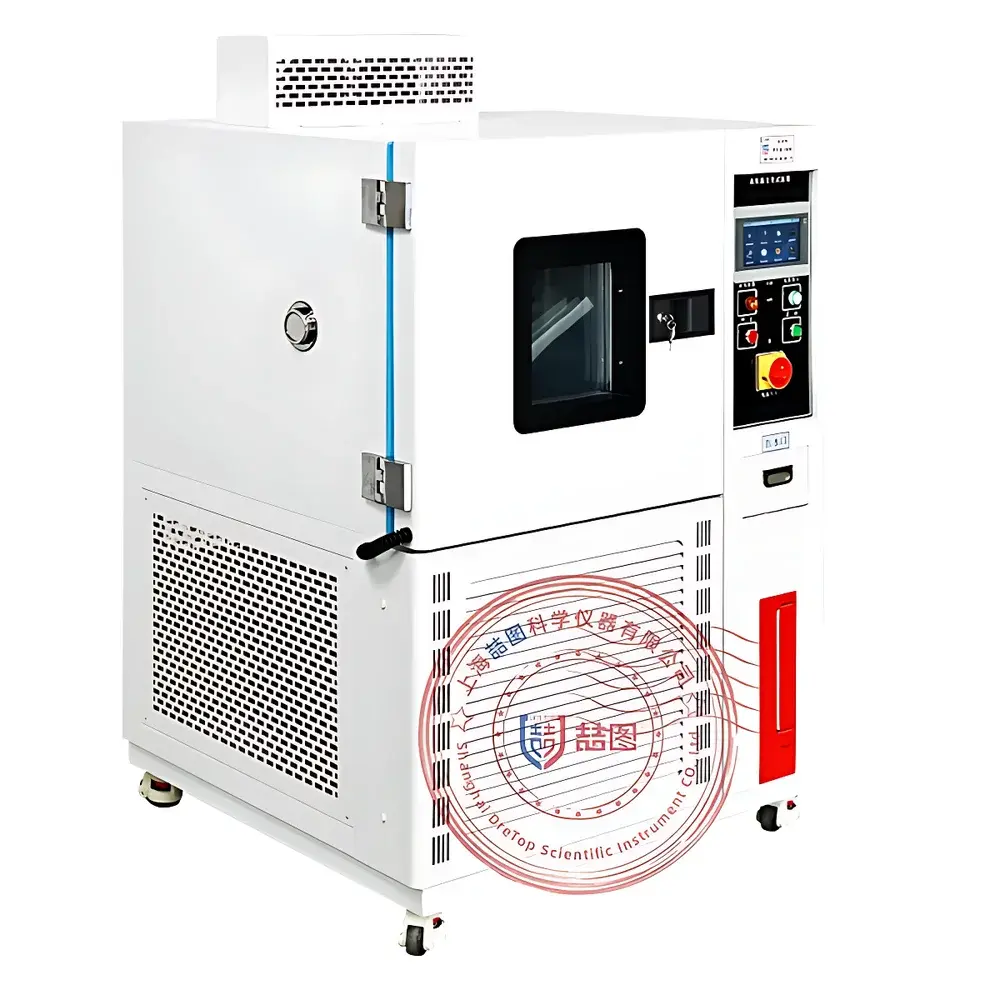
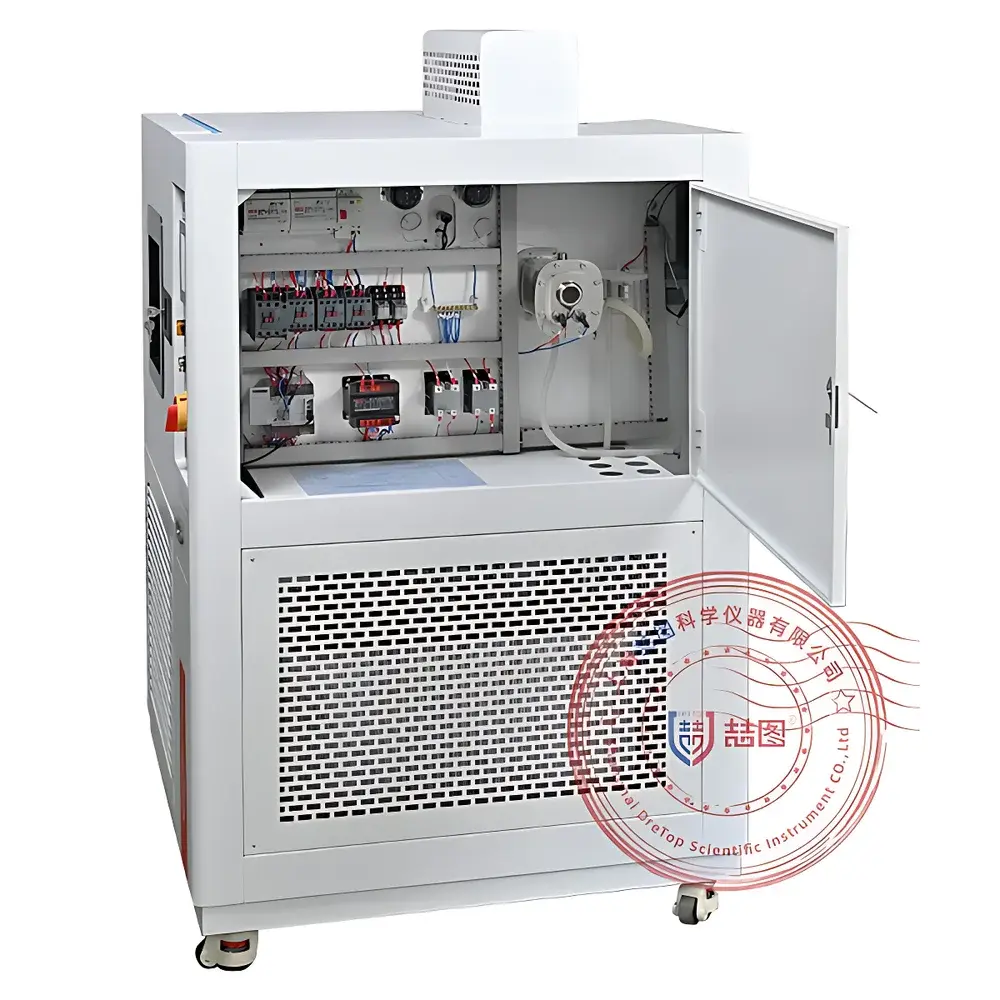
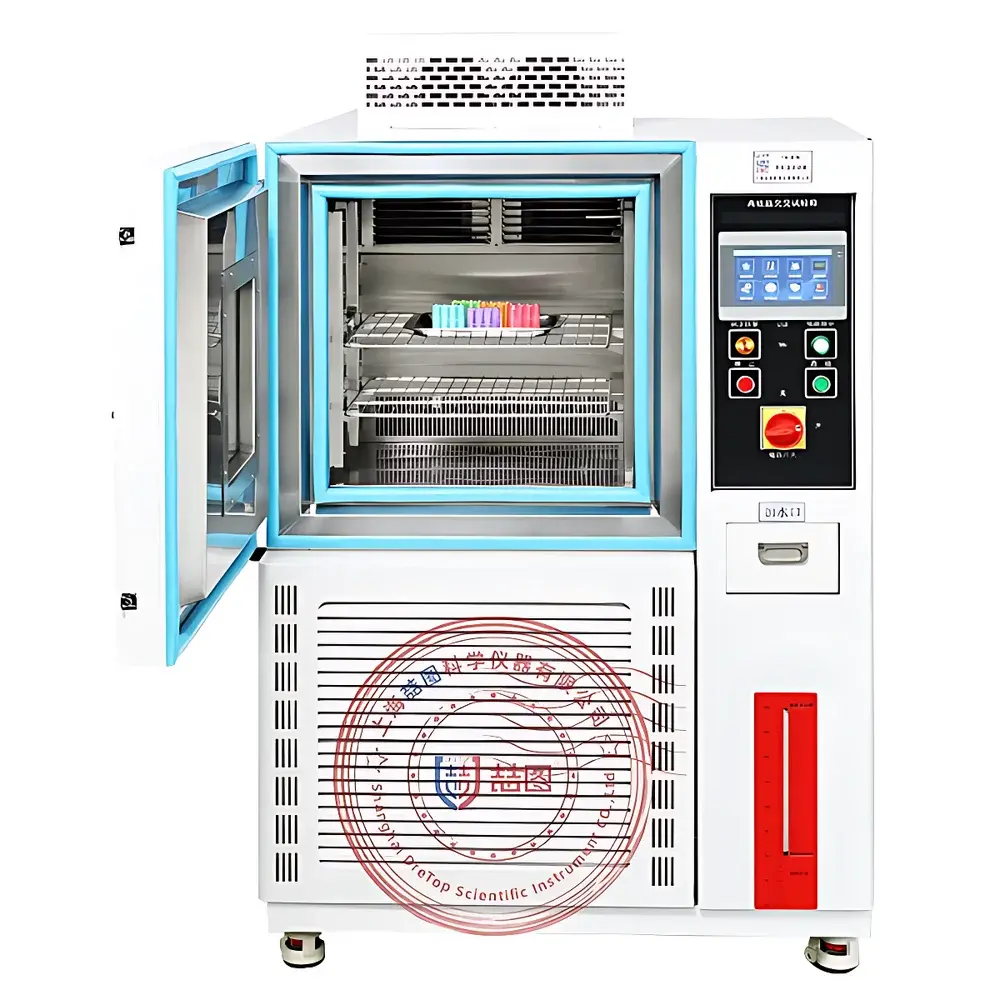
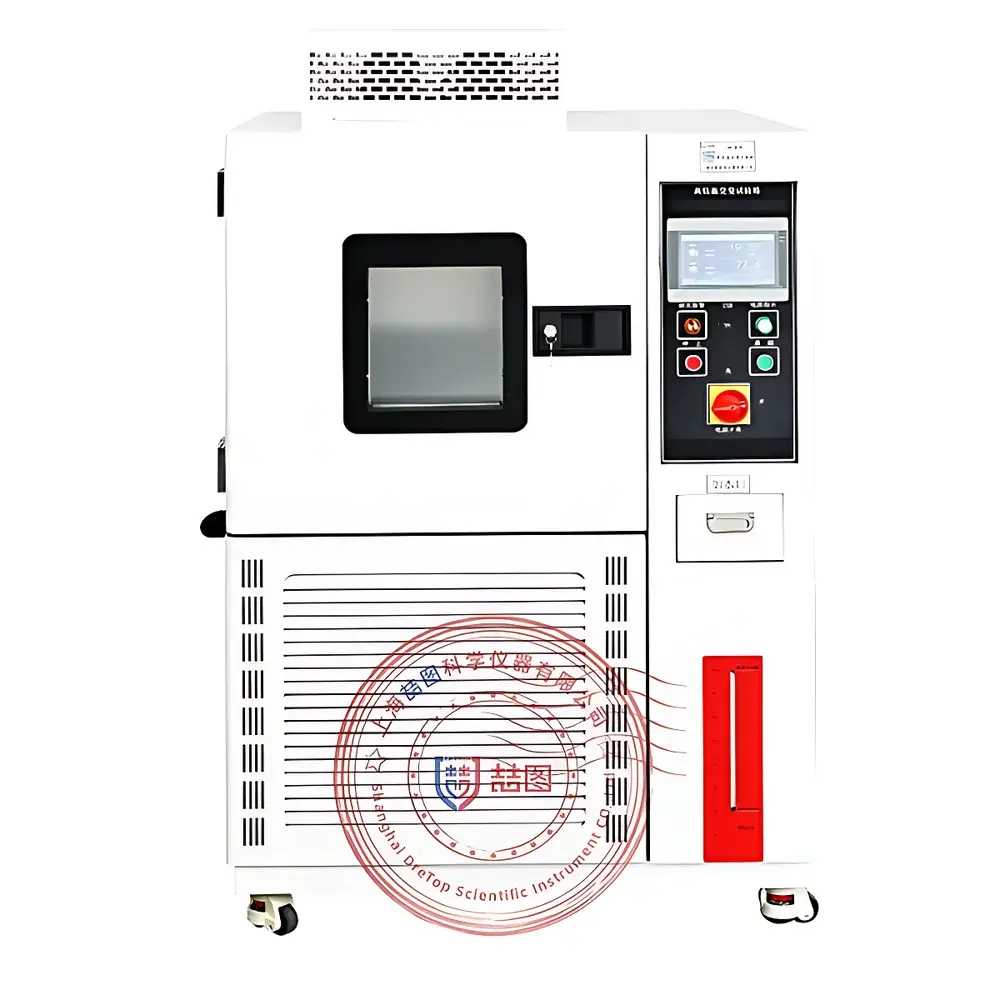
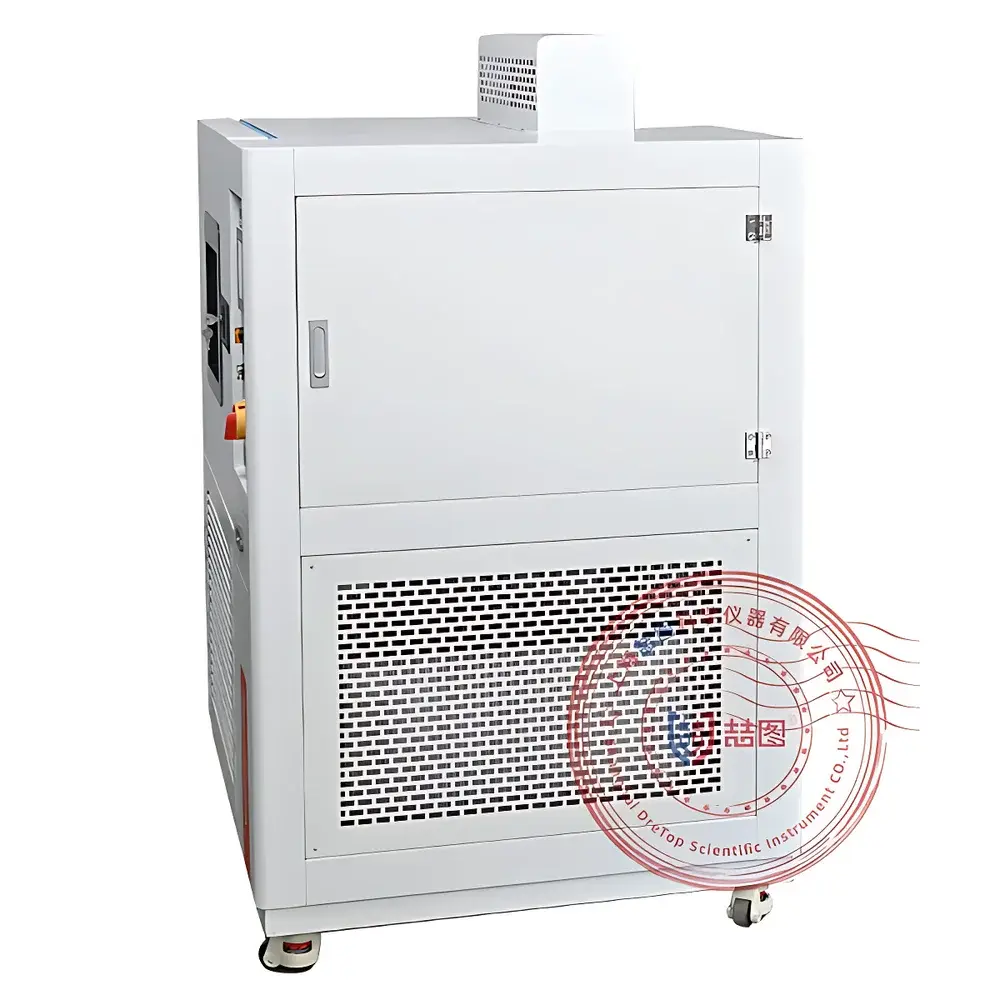
DRETOP THL-C24J High-Low Temperature Environmental Test Chamber
| Brand | DRETOP |
|---|---|
| Origin | Shanghai, China |
| Model | THL-C24J |
| Temperature Range | −70 °C to 120 °C |
| Refrigeration Method | Compressor-based Cooling |
| Explosion-Proof Design | Yes |
| Temperature Fluctuation | ±0.5 °C |
| Temperature Uniformity | ≤2 °C |
| Internal Chamber Dimensions (W×D×H) | 500×400×500 mm to 1495×1550×2110 mm |
Overview
The DRETOP THL-C24J High-Low Temperature Environmental Test Chamber is an engineered precision system designed for controlled thermal stress testing across wide temperature extremes. Based on forced-air convection and dual-stage compressor refrigeration architecture, it replicates real-world atmospheric thermal cycling conditions—enabling evaluation of material integrity, dimensional stability, electrical performance, and mechanical reliability under sustained or cyclic exposure to temperatures ranging from −70 °C to 120 °C. Its robust thermal management system complies with fundamental requirements of IEC 60068-2-1 (cold), IEC 60068-2-2 (dry heat), and ISO 16750-4 (road vehicles—environmental conditions). The chamber supports both static temperature hold and dynamic ramp-and-soak profiles, making it suitable for qualification testing in R&D, production validation, and regulatory compliance workflows.
Key Features
- Intelligent control interface featuring a 7-inch full-color TFT touchscreen with multilingual (English/Chinese) UI, hierarchical password-protected access levels, and up to 1000 programmable test sequences—each supporting up to 100 individual segments.
- Dual-stage refrigeration system using hermetically sealed imported compressors; evaporator-condenser cascade configuration ensures stable low-temperature performance down to −70 °C while maintaining energy efficiency and low-GWP refrigerant compatibility.
- Optimized air circulation architecture: high-efficiency centrifugal blower, nickel-chromium alloy heating elements, and aerodynamically tuned ductwork deliver ≤2 °C temperature uniformity across the working volume per IEC 60068-3-5.
- Explosion-proof certified construction (optional configuration) compliant with IEC 60079-0 and GB 3836.1–2010 standards, including intrinsically safe wiring conduits, flameproof enclosure joints, and non-sparking internal components.
- Double-layer tempered glass observation window with integrated anti-frost heater and LED illumination—designed to prevent condensation-induced short circuits during rapid thermal transitions.
- Modular insulation: high-density polyurethane foam (≥100 mm thickness) with vacuum-sealed aluminum foil vapor barrier minimizes thermal leakage and improves ramp rate consistency.
Sample Compatibility & Compliance
The THL-C24J accommodates diverse sample geometries and electrical configurations through standardized 50 mm diameter test ports (standard), optionally configurable for signal, power, or pneumatic feedthroughs with silicone gasket sealing. Internal chamber dimensions are scalable across seven standard variants (500×400×500 mm to 1495×1550×2110 mm), with custom configurations available—including top-opening lid design, epoxy- or PTFE-lined stainless steel interiors for dielectric isolation, and reinforced floor-mounting with locking casters. The system meets structural and operational requirements for GLP-compliant laboratories and supports audit-ready documentation per FDA 21 CFR Part 11 when paired with optional data logging software. It is routinely deployed in validation protocols aligned with ASTM D3418, MIL-STD-810H Method 502.7, and AEC-Q200 stress testing schedules.
Software & Data Management
Equipped with embedded PID auto-tuning algorithm and real-time deviation compensation, the controller maintains ±0.5 °C temperature stability during steady-state operation. Data acquisition includes time-stamped temperature logs at user-defined intervals (1–60 s), runtime statistics (power-on cumulative hours), and alarm event history with timestamped cause codes. Export functionality supports CSV and Excel-compatible formats; optional PC-based software enables graphical trend analysis, report generation (PDF/HTML), and integration into LIMS environments. All critical parameters—including setpoints, ramp rates, soak durations, and safety thresholds—are stored with immutable audit trails, satisfying traceability demands under ISO/IEC 17025 and GMP Annex 11.
Applications
- Electronics reliability assessment: solder joint fatigue, capacitor leakage current drift, PCB warpage, and semiconductor package delamination under thermal cycling.
- Automotive component validation: battery module thermal runaway propagation studies, sensor calibration drift analysis, and elastomer seal compression set evaluation.
- Aerospace materials qualification: composite resin glass transition monitoring, adhesive bond strength degradation, and thermal expansion coefficient mapping.
- Pharmaceutical packaging integrity testing: blister foil peel strength variation, vial stopper extraction force shifts, and cold-chain container thermal lag characterization.
- Academic research: polymer crystallinity kinetics, phase-change material hysteresis profiling, and nanomaterial thermal conductivity temperature dependence.
FAQ
What is the standard temperature ramp rate specification for the THL-C24J?
Standard ramp rates are programmable between 0.5 °C/min and 5 °C/min, with overshoot suppression maintained within ±5 °C during transition phases.
Can the chamber be configured for continuous operation under explosion-hazardous conditions?
Yes—explosion-proof variants are certified to Class I, Division 1, Group D (North America) and Zone 1, IIB T4 (ATEX/IECEx) with full documentation provided upon order.
Is remote monitoring and control supported via Ethernet or RS485?
Standard Ethernet (TCP/IP) and optional RS485 Modbus RTU interfaces enable integration with SCADA systems, building management platforms, and centralized lab automation networks.
Does the system support automated calibration verification with external reference sensors?
Yes—the controller accepts up to four external PT100 inputs for multi-point chamber mapping and NIST-traceable calibration validation against internal thermistors.
What maintenance intervals are recommended for the refrigeration system?
Compressor oil and filter replacement is advised every 12 months or 5,000 operating hours; annual leak detection and refrigerant charge verification are required for ISO 17025 accreditation.



