
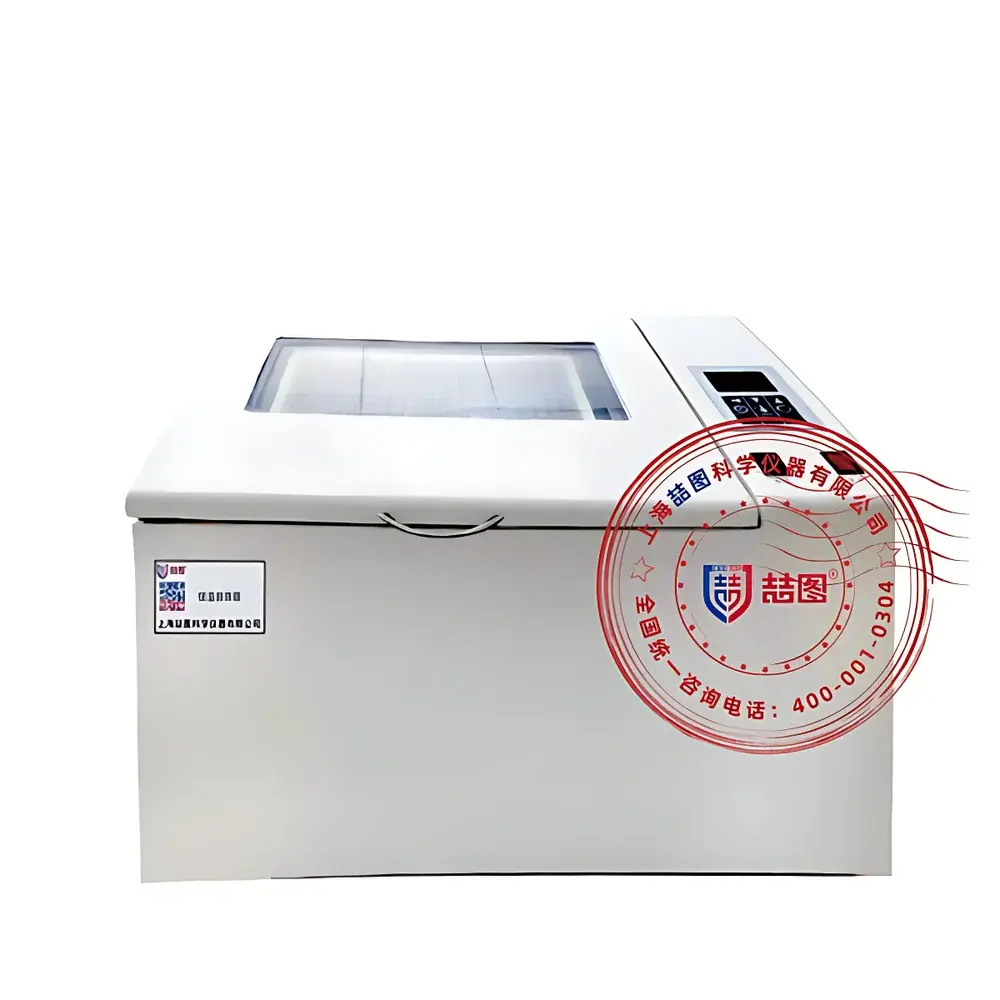
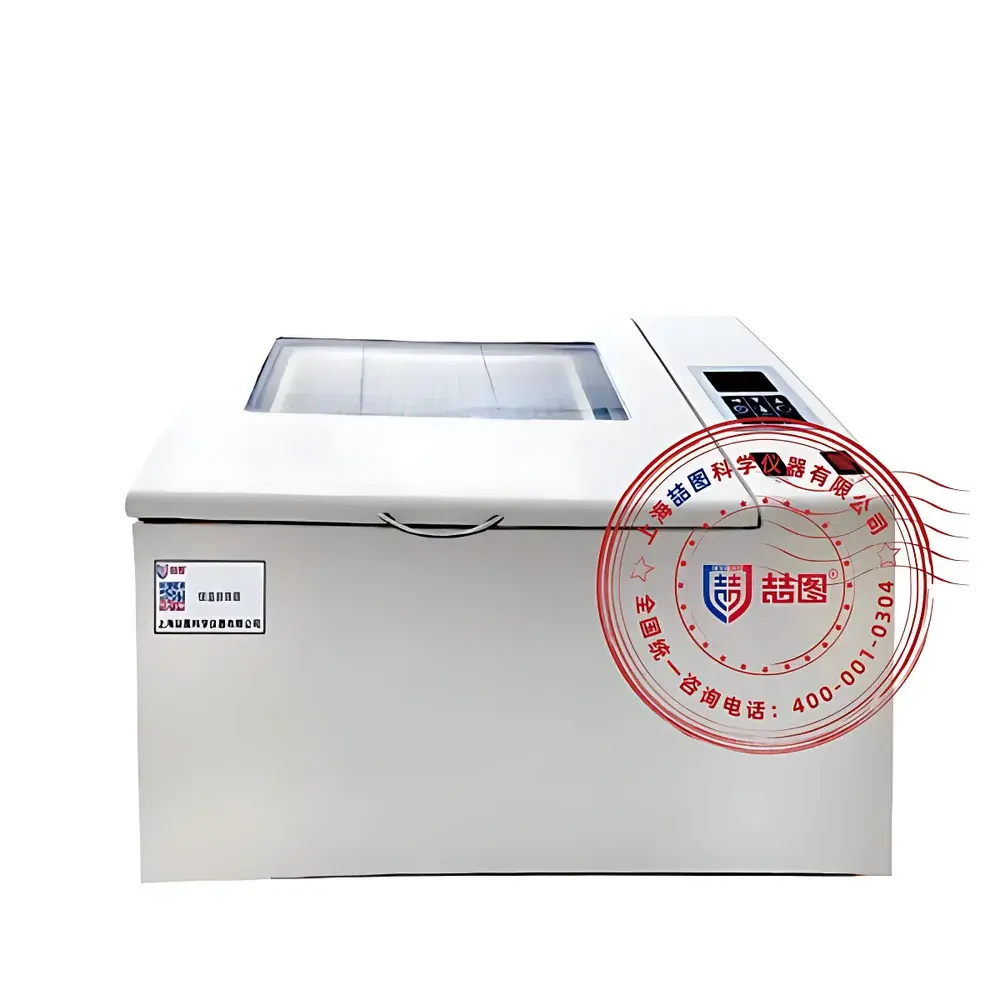
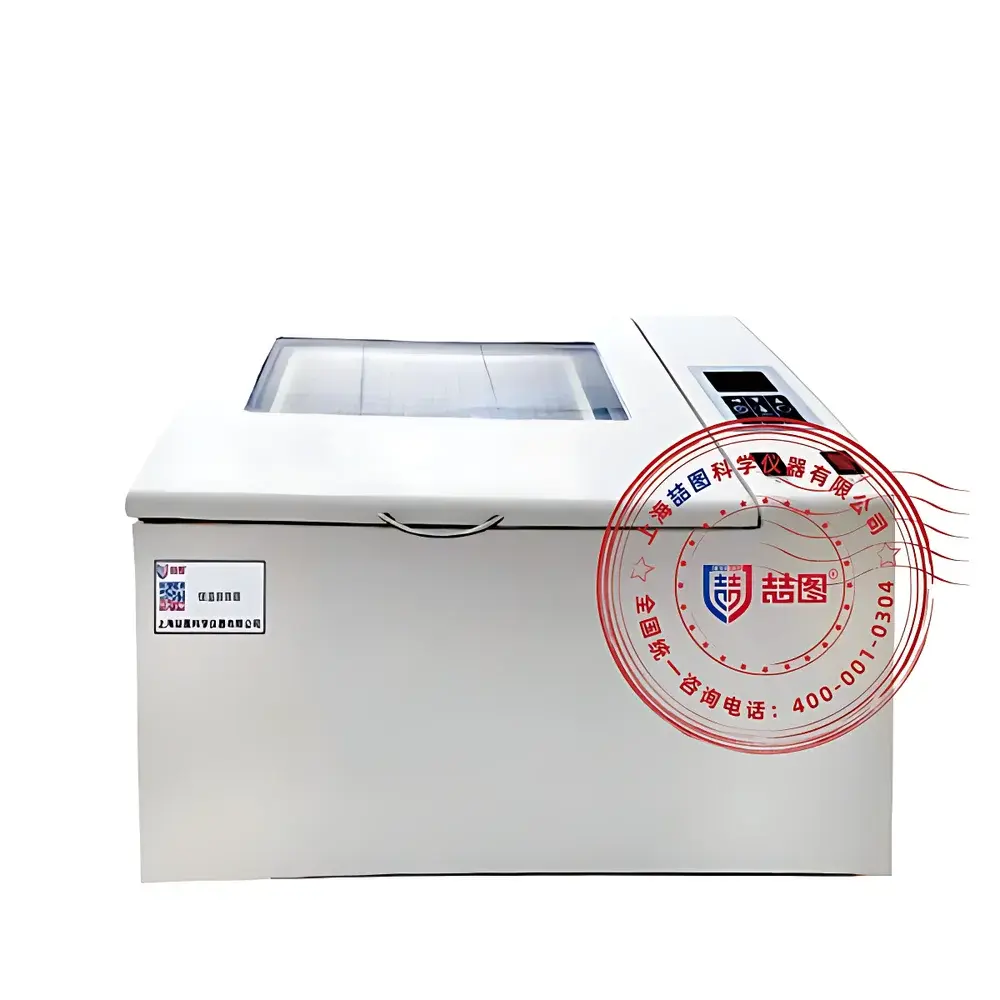
DRETOP QSK-4433WH Air-Bath Constant-Temperature Orbital Shaker
| Brand | DRETOP |
|---|---|
| Origin | Shanghai, China |
| Model | QSK-4433WH |
| Instrument Type | Air-bath constant-temperature orbital shaker |
| Timer Range | 0–9999 min |
| Oscillation Speed | 0–300 rpm |
| Oscillation Amplitude | 26 mm |
| Temperature Range | RT+5°C to 65°C |
| Number of Shaking Platforms | 1 |
| Display | LED LCD |
| Temperature Control Accuracy | ±0.1°C |
| Temperature Uniformity (Fluctuation) | ±0.5°C |
| Platform Dimensions (W×D) | 440 × 330 mm |
| Input Power | 1000 W |
| Power Supply | 220 V, 50 Hz |
Overview
The DRETOP QSK-4433WH Air-Bath Constant-Temperature Orbital Shaker is an integrated benchtop bioreactor platform engineered for precise temperature-controlled agitation of liquid and semi-solid culture media in life science and bioprocessing laboratories. Unlike water-bath shakers, this air-bath design employs forced-air convection via a high-efficiency centrifugal blower and optimized internal airflow channels—ensuring rapid thermal equilibration and uniform temperature distribution across the entire shaking platform. Its orbital motion (circular trajectory with fixed center point) generates gentle yet effective mixing ideal for aerobic microbial growth, suspension cell culture, enzyme kinetics assays, and solubility studies. The unit operates within a validated ambient-plus range of +5°C to 65°C, making it suitable for mesophilic bacterial cultivation (e.g., E. coli, Bacillus subtilis), yeast fermentation, and biochemical incubation protocols requiring simultaneous thermal regulation and mechanical agitation.
Key Features
- PID-Controlled Thermal Management: Integrated Pt100 resistance temperature detector (RTD) coupled with adaptive PID algorithm delivers ±0.1°C setpoint accuracy and ±0.5°C chamber uniformity under steady-state conditions; dynamic compensation algorithms mitigate drift during power interruption or door opening.
- Orbital Motion System: Brushless DC motor drives a robust eccentric cam mechanism, enabling continuous operation from 0 to 300 rpm with repeatable amplitude of 26 mm—optimized for oxygen transfer efficiency in shake flasks without inducing excessive shear stress on sensitive cells.
- Intelligent Human-Machine Interface: Backlit LED LCD panel displays real-time temperature, speed, elapsed time, and remaining timer duration; supports parameter offset calibration, power-failure memory retention, and automatic restart upon recovery.
- Universal Platform Configuration: Standard 440 × 330 mm spring-loaded platform accommodates up to twelve 250 mL Erlenmeyer flasks (or equivalent vessels); adjustable tension springs ensure secure clamping across diverse container geometries including round-bottom flasks, test tubes, and multi-well plates.
- Robust Construction & Safety Architecture: Interior chamber fabricated from electropolished 304 stainless steel; exterior housing constructed from cold-rolled steel with epoxy-polyester powder coating; dual-layer thermal insulation minimizes external surface temperature rise during prolonged operation at elevated setpoints.
- Comprehensive Protection Suite: Triple-tier safety logic includes independent overtemperature cutoff (mechanical bimetal switch), short-circuit protection, motor overload sensing, and audible/visual alarm activation upon fault detection—fully compliant with IEC 61010-1:2010 requirements for laboratory equipment safety.
Sample Compatibility & Compliance
The QSK-4433WH supports standard microbiological and molecular biology workflows involving aqueous suspensions, buffered solutions, and viscous culture broths. It is routinely deployed in applications aligned with ISO 11133:2014 (microbiological culture media preparation), ASTM D5766 (oxygen transfer rate validation), and USP <1043> (cell culture process qualification). The unit’s construction materials meet RoHS Directive 2011/65/EU restrictions on hazardous substances. While not certified for GMP environments out-of-the-box, its audit-ready operational logs (via optional RS232/USB data export) support GLP documentation practices and FDA 21 CFR Part 11-compliant electronic record retention when paired with validated third-party software.
Software & Data Management
The shaker operates as a standalone instrument with no embedded firmware-based data logging. However, analog output signals (0–5 V DC for temperature and speed) are accessible via rear-panel terminals, enabling integration into centralized lab monitoring systems (e.g., LabVIEW, SCADA). Optional USB-to-serial adapters allow connection to Windows-based PCs running custom Python or MATLAB scripts for time-series acquisition. All parameter changes—including setpoint adjustments, timer resets, and calibration offsets—are timestamped internally and retained through power cycles, satisfying basic traceability requirements for method validation and internal quality audits.
Applications
- Aerobic cultivation of recombinant E. coli and Pichia pastoris strains for protein expression
- Preparation of standardized inocula for antimicrobial susceptibility testing (AST)
- Extraction optimization of plant secondary metabolites using solvent-based agitation
- Enzyme immobilization studies involving covalent binding onto magnetic beads under controlled thermal agitation
- Development and verification of dissolution profiles for solid oral dosage forms per USP <711>
- Environmental microbiology—enrichment of heterotrophic plate count (HPC) bacteria from water samples
FAQ
What is the maximum flask loading capacity for standard 250 mL Erlenmeyer flasks?
The unit accommodates up to twelve 250 mL flasks simultaneously on the 440 × 330 mm platform when arranged in a staggered grid pattern.
Does the shaker support programmable ramping of temperature or speed?
No—this model provides only static setpoint control for both temperature and rotational speed; multi-step gradient protocols require external controller integration.
Is the interior chamber humidity-controlled?
No—this is a dry-air circulation system; condensation management relies on ambient lab RH levels and user-initiated periodic desiccation if operating near dew point thresholds.
Can the unit be operated inside a CO₂ incubator cabinet?
Not recommended—the device is not rated for elevated CO₂ concentrations or humidified atmospheres; structural corrosion and sensor drift may occur outside specified environmental limits.
What maintenance intervals are recommended for long-term reliability?
Biannual inspection of fan filter integrity, annual verification of Pt100 calibration against NIST-traceable reference, and quarterly lubrication of camshaft bearings using food-grade silicone grease.





