
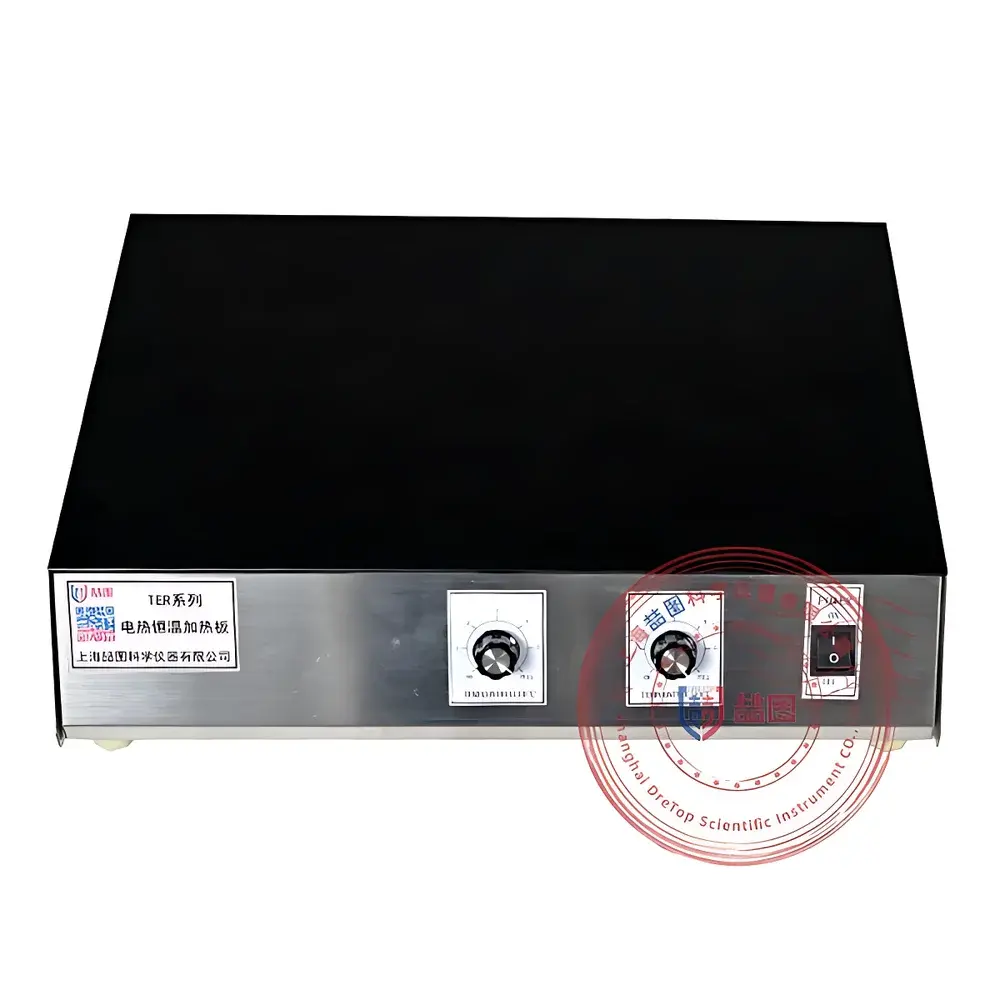
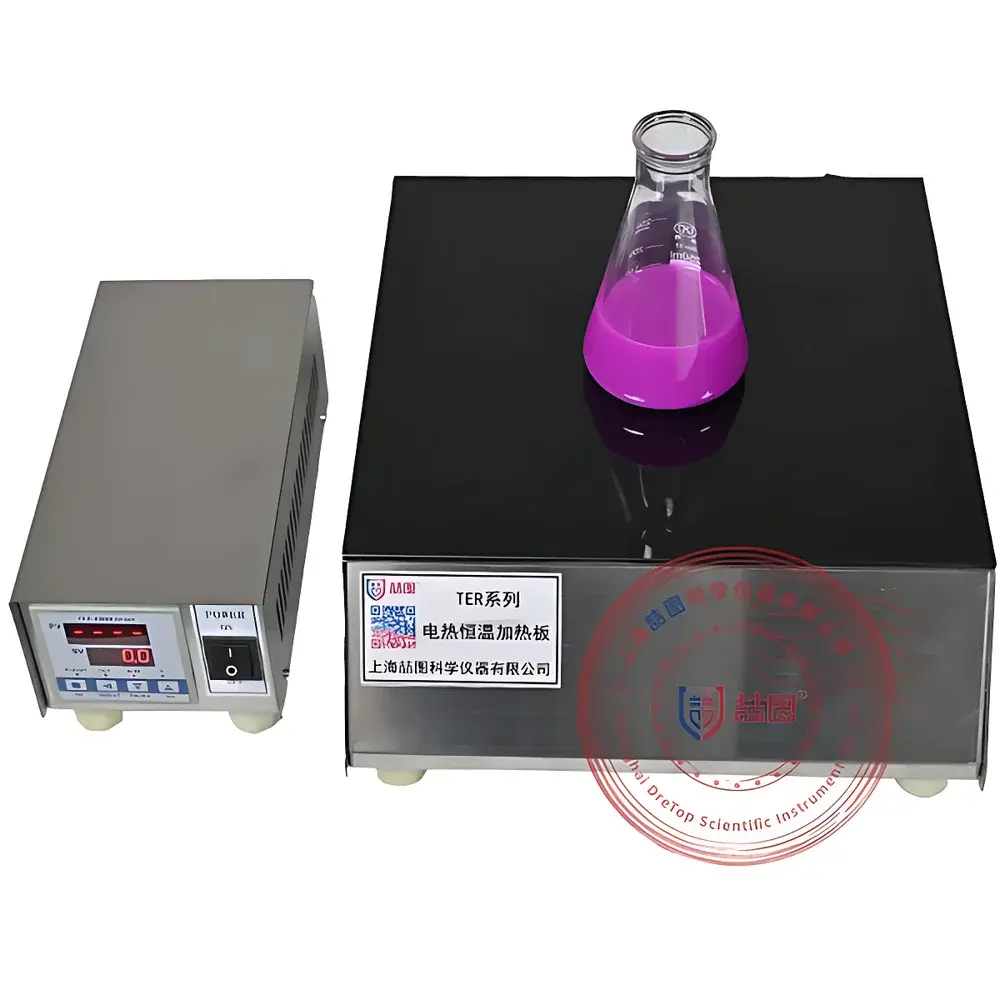
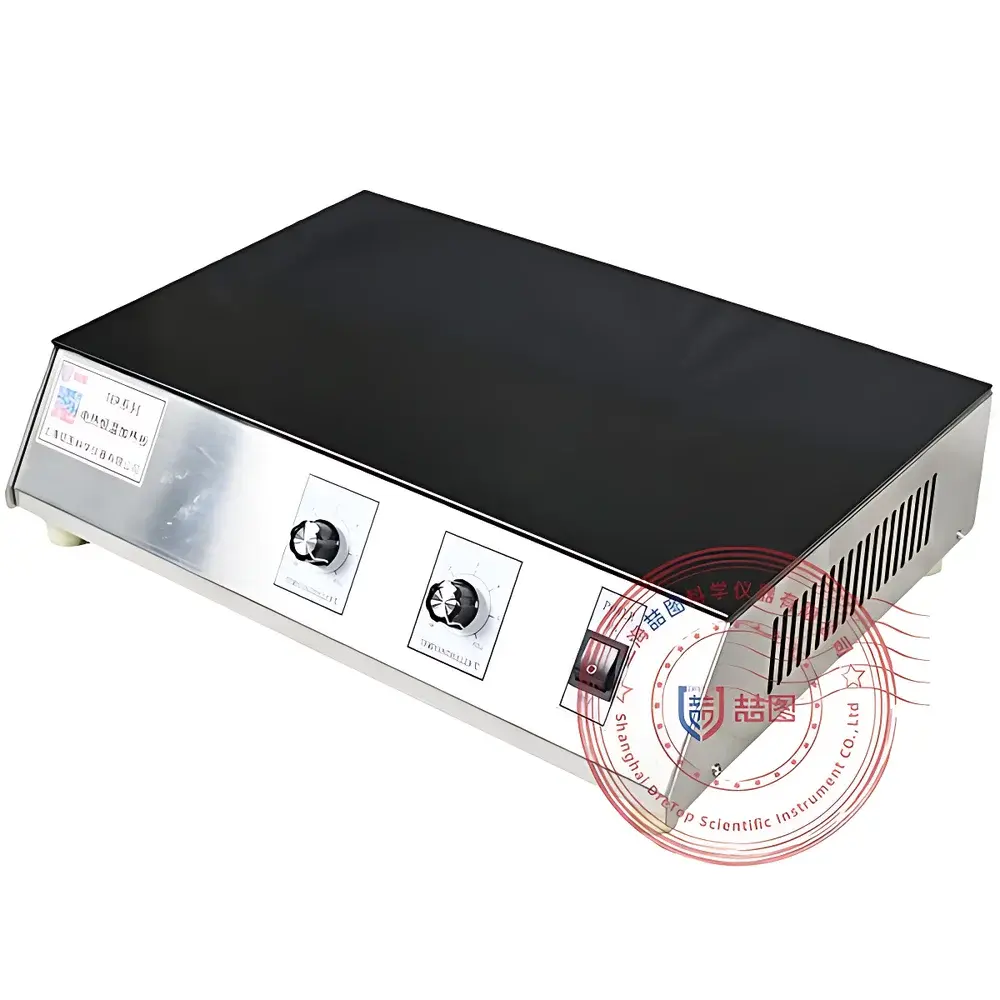
DRETOP TER Series Compact Electric Heating Plate with Ceramic-Glass Surface
| Brand | DRETOP |
|---|---|
| Origin | Shanghai, China |
| Model | TER Series |
| Price Range | USD 280–1,270 (FOB) |
| Heating Power | 1.2 kW – 2.4 kW |
| Max Operating Temperature | 450 °C |
| Temperature Uniformity | ±3 °C |
| Hotplate Surface Dimensions | 170 × 170 mm |
Overview
The DRETOP TER Series Compact Electric Heating Plate is a precision-engineered laboratory heating platform designed for reproducible, contamination-free thermal treatment of samples in analytical, preparatory, and synthetic workflows. Built around a high-purity ceramic-glass (microcrystalline glass) top surface—fabricated via controlled vitrification and crystallization—the unit delivers exceptional thermal stability, chemical inertness, and mechanical resilience. Unlike conventional metal-surface hotplates, the ceramic-glass interface eliminates reactive surface oxidation, prevents sample adhesion during high-temperature digestion or evaporation, and withstands repeated exposure to aggressive reagents including concentrated HNO₃, HF, HCl, and H₂SO₄. Its operating principle relies on resistive heating elements embedded beneath the ceramic layer, coupled with closed-loop PID temperature regulation to maintain setpoint accuracy across the entire active zone. The device is engineered for continuous duty in regulated environments where trace-metal integrity, thermal repeatability, and operator safety are critical—such as EPA Method 3050B/3052 soil digestion, AOAC 984.27 fat extraction, or USP heavy metal testing.
Key Features
- PID-controlled microprocessor thermostat with ±0.1 °C setpoint stability (digital models) or robust analog knob-based control (standard models), ensuring long-term thermal consistency under variable ambient loads.
- Integrated heating module and control electronics housed in a single, sealed chassis; fully encapsulated internal circuitry protects against acid vapor infiltration and condensation-induced corrosion.
- Ceramic-glass surface (170 × 170 mm active area) with low coefficient of thermal expansion (≈0.1 × 10⁻⁶/K), enabling rapid thermal ramping (up to 10 °C/s) and resistance to thermal shock up to 600 °C ΔT.
- 316L stainless steel perimeter frame (corrosion-resistant variants) and non-porous surface geometry prevent reagent wicking and simplify decontamination between samples—critical for GLP-compliant trace analysis.
- Human-centered design includes a 3–5 mm peripheral thermal buffer zone to minimize accidental contact burns; bottom-mounted anti-slip, heat-insulating feet elevate the unit 20 mm above the benchtop for passive airflow and component cooling.
- Zero-open-flame operation with fully enclosed heating elements satisfies IEC 61010-1 safety requirements for laboratory electrical equipment; no radiant IR emission or electromagnetic interference beyond Class B limits (EN 55011).
Sample Compatibility & Compliance
The TER Series accommodates standard laboratory vessels—including borosilicate glass beakers (50–500 mL), PTFE digestion cups, quartz crucibles, and ceramic evaporation dishes—without surface degradation or catalytic side reactions. Its chemical resistance profile conforms to ISO 8501-1 for acid exposure endurance and meets ASTM C1171 criteria for thermal-shock-resistant glass-ceramics. For regulated applications, the digital variants support audit-ready data logging (via optional RS-232/USB interface) compliant with FDA 21 CFR Part 11 when paired with validated software. All models are CE-marked and comply with RoHS 2011/65/EU restrictions on hazardous substances.
Software & Data Management
Digital models (TER-F, TER-S-I) feature a backlit LCD display with real-time temperature readout, programmable ramp-hold profiles (up to 5 segments), and auto-tuning functionality. Logged temperature history (timestamped at 1-second intervals) can be exported as CSV via USB mass storage mode. Optional PC software enables remote monitoring, calibration certificate generation, and integration into LIMS environments through Modbus RTU protocol. Full audit trail capability—including user login, parameter changes, and system events—is retained for ≥30 days onboard memory.
Applications
- Environmental Testing: Acid digestion of soil/sediment per EPA 3050B and 3052; reflux evaporation in wastewater nutrient analysis (e.g., Kjeldahl nitrogen).
- Food & Agriculture: Fat extraction (Soxhlet preheating), protein hydrolysis (Kjeldahl digestion support), pesticide residue concentration (AOAC 2007.01).
- Materials Science: Catalyst calcination, polymer melt rheology pre-conditioning, thin-film solvent annealing under inert atmosphere.
- Pharmaceutical QC: Residue-on-ignition (USP ), loss-on-drying (USP ), and heavy metal screening (USP ) sample prep.
- Academic Research: Nanoparticle synthesis reflux control, ligand exchange kinetics, and thermogravimetric sample staging prior to TGA-MS coupling.
FAQ
What is the maximum safe operating temperature for continuous use?
The ceramic-glass surface is rated for sustained operation at 450 °C; however, for optimal longevity under aggressive chemical exposure, we recommend limiting prolonged use to ≤400 °C.
Can the TER Series be used under fume hoods with high humidity and acid vapor concentrations?
Yes—corrosion-resistant models (TER-F, TER-S-I) feature full potting of PCBs and 316L housing, validated for 90-day continuous exposure to 10 ppm HNO₃ vapor per ASTM G124.
Is calibration traceable to NIST standards?
Each unit ships with a factory calibration certificate referencing Pt100 reference probes calibrated against NIST-traceable standards (NIST SRM 1750a); field recalibration is supported via front-panel offset adjustment.
Does the heating plate meet GLP documentation requirements?
Digital variants support electronic signature, change history logging, and exportable raw data files—fully compatible with GLP audit protocols when deployed with validated software and procedural SOPs.
What vessel types are recommended for optimal heat transfer and chemical compatibility?
Borosilicate glass (Duran®/Pyrex®), PTFE, quartz, and high-purity alumina crucibles demonstrate minimal thermal lag and zero leaching; avoid aluminum or zinc-coated containers due to galvanic corrosion risk.



