LYS220/10kW Emergency Power Supply (EPS) System
| Origin | Tianjin, China |
|---|---|
| Manufacturer Type | Authorized Distributor |
| Origin Category | Domestic (China-made) |
| Model | LYS220/10kW |
| Pricing | Available Upon Request |
| Input Voltage | AC 220 V ±25%, 50 Hz ±5% |
| Charging Voltage | DC 220–240 V |
| Charging Current | 3–10 A |
| Charging Modes | Automatic Equalization & Float Charge Conversion |
| Battery Type | Maintenance-Free Sealed Lead-Acid |
| Battery Nominal Voltage | DC 200–240 V |
| Backup Duration | Standard 90 min (configurable) |
| Full Recharge Time | < 20 h |
| Output Voltage | AC 380 V ±3% |
| Output Frequency | 50 Hz ±0.01% |
| Output Waveform | Pure Sine Wave (THD ≤5%) |
| Overload Capacity | 120% for 10 s |
| Transfer Time | < 0.20 s |
| Operating Temperature | –20 °C to +40 °C |
| Relative Humidity | 0–90% non-condensing |
| Altitude Limit | < 2500 m |
| Noise Level | 0 dB (mains mode) |
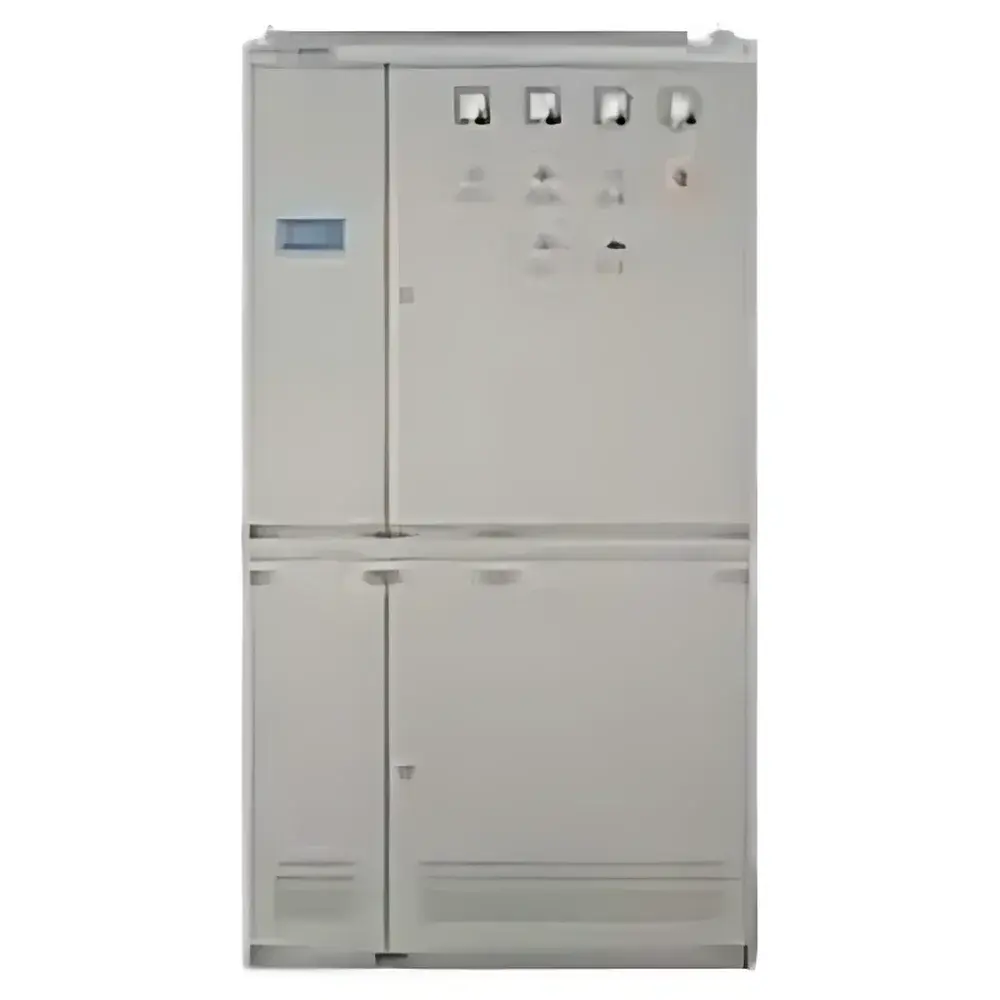
| Dimensions (W×D×H) | 800 × 600 × 2200 mm |
| Weight | 1000 kg |
| Communication Interfaces | RS232 / RS485 |
| Fire Alarm Interface | Yes |
| Control Architecture | Intel Microprocessor with SPWM Modulation |
| Display | LCD with Visual & Audible Fault Alerts |
Overview
The LYS220/10kW Emergency Power Supply (EPS) system is a static, battery-backed, single-phase or three-phase AC uninterruptible power solution engineered for critical life-safety and emergency lighting applications in commercial, industrial, and public infrastructure facilities. Unlike UPS systems optimized for IT load protection, this EPS complies with GB 17945–2010 (Chinese National Standard for Fire Emergency Lighting and Evacuation Indication Systems) and aligns with IEC 62040-1 and EN 50171 requirements for centralized emergency power sources. It operates on a dual-mode architecture: in normal utility-supplied operation, the unit maintains battery charge while delivering zero-conversion-loss power directly from the mains; during grid failure, it executes a sub-200 ms transfer to inverter-synthesized AC output—ensuring continuity for fire-rated exit signage, emergency lighting circuits, smoke exhaust fans, and fire alarm control panels without interruption. The system employs intelligent IPM-based inverter topology and digital microprocessor control to guarantee waveform fidelity, thermal stability, and long-term operational integrity under variable load conditions.
Key Features
- True pure sine wave output (THD ≤5%) compliant with EN 61000-3-2 harmonic emission limits, ensuring compatibility with electromagnetic-sensitive emergency luminaires and electronic ballasts.
- Automatic dual-stage charging algorithm (equalization followed by float) optimized for sealed lead-acid battery longevity and capacity retention over 500+ charge/discharge cycles.
- Integrated fire alarm interface supporting dry-contact signaling per GB 50116, enabling coordinated shutdown or forced activation during fire alarm events.
- RS232/RS485 serial communication ports for remote monitoring, event logging, and integration into building management systems (BMS) or fire alarm control panels (FACP).
- LCD human-machine interface with real-time status display (input voltage, battery SOC, output load %, fault codes), audible alarms, and LED indicators for immediate diagnostics and preventive maintenance.
- Passive cooling design with temperature-compensated thermal management ensures silent operation (<50 dB) during emergency mode and zero acoustic footprint during normal operation.
Sample Compatibility & Compliance
The LYS220/10kW EPS is certified for use with Class I and Class II emergency lighting loads rated up to 10 kVA at 380 V AC, including LED, fluorescent, and HID emergency fixtures meeting GB 17945, EN 60598-2-22, and IEC 61347-2-7 standards. Its output voltage regulation (±3%), frequency stability (±0.01 Hz), and rapid transfer time (<0.2 s) satisfy mandatory requirements for emergency egress illumination per NFPA 101 (Life Safety Code), ISO 21542 (Accessibility and usability of the built environment), and local fire department acceptance protocols. All internal wiring and structural components meet UL 94 V-0 flame-retardant classification, and the enclosure conforms to IP2X ingress protection per GB/T 4208.
Software & Data Management
While the unit operates autonomously without external software dependency, its RS485 interface supports Modbus RTU protocol for bidirectional data exchange. Compatible BMS platforms can retrieve runtime parameters—including battery voltage decay curves, historical fault timestamps, charge cycle counts, and ambient temperature logs—for predictive maintenance planning. Event records are stored with GLP-compliant timestamping and non-volatile memory retention. Optional firmware updates (via secure USB or serial download) maintain alignment with evolving national fire safety directives and cybersecurity best practices for industrial control systems.
Applications
This EPS system serves as the primary emergency power source for high-occupancy buildings including hospitals, subway stations, airports, shopping malls, educational campuses, and government complexes. It is specifically deployed in circuits powering emergency exit signs, photoluminescent pathway markings, stairwell lighting, fire pump controllers, pressurization fan systems, and voice evacuation annunciators. Its robust thermal design and wide operating temperature range (–20 °C to +40 °C) support deployment in unconditioned mechanical rooms, rooftop plant areas, and underground utility vaults.
FAQ
What is the maximum allowable backup duration, and can it be extended beyond 90 minutes?
Standard configuration provides 90 minutes of runtime at full rated load (10 kW). Extended runtime options (up to 180 min) are available via additional battery string configuration—subject to cabinet space, ventilation, and thermal derating validation per GB/T 19666.
Does the EPS support parallel operation for redundancy or higher capacity?
No—this model is designed as a standalone unit. Parallel configurations require factory-engineered master-slave synchronization hardware and are not supported in field retrofit.
Is the unit suitable for outdoor installation?
It is rated for indoor use only (IP2X). Outdoor deployment requires NEMA 3R or IP54-rated climate-controlled enclosures with active ventilation and condensation management.
How frequently should battery health verification be performed?
Per GB 17945, monthly visual inspection and quarterly functional discharge testing (to 30% depth-of-discharge) are recommended. Annual full-capacity verification (to 90 min at rated load) is required for fire code compliance.
Can the EPS be integrated with a SCADA system?
Yes—via RS485 Modbus RTU, enabling read-only access to 40+ real-time and historical parameters, including battery impedance trends, inverter efficiency metrics, and alarm history with UTC timestamps.