
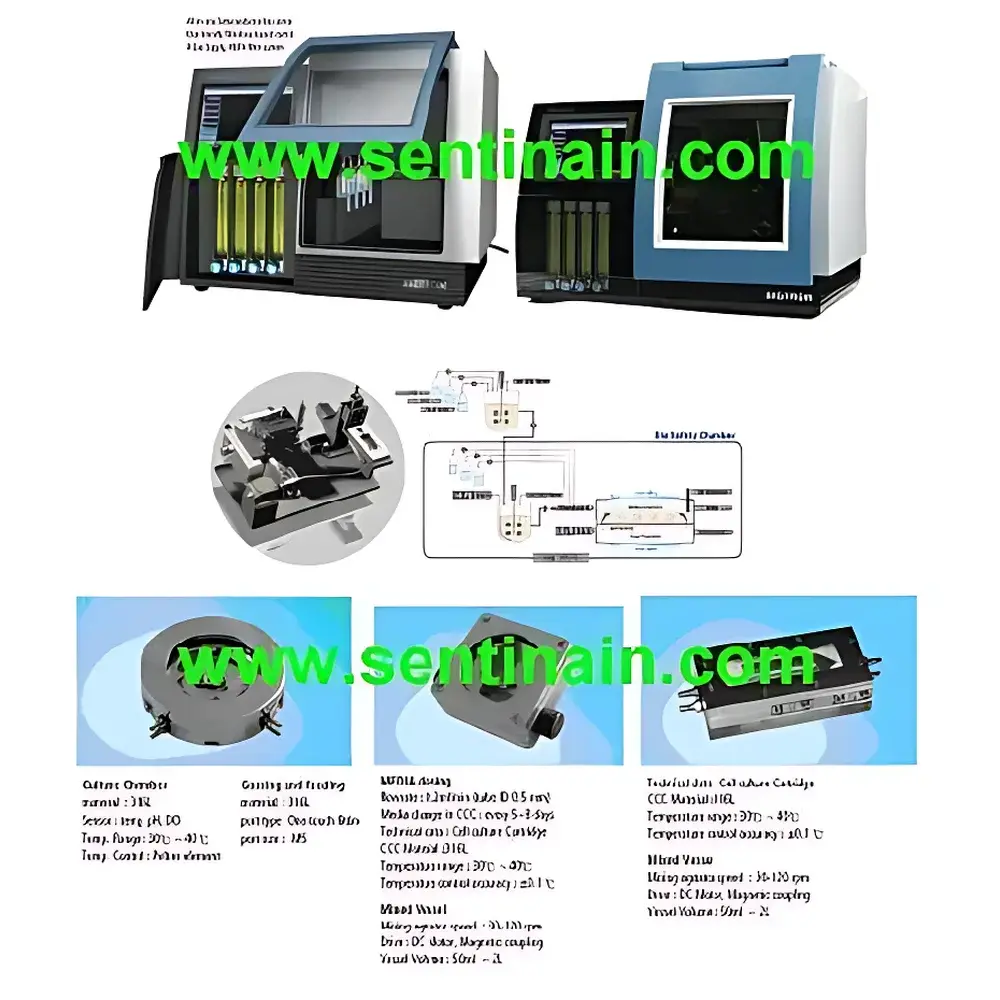
TotiCell Bioreactor System for Stem Cell Culture and Live-Cell Observation
| Origin | South Korea |
|---|---|
| Manufacturer Type | Authorized Distributor |
| Origin Category | Imported |
| Model | TotiCell Bioreactor |
| Pricing | Available Upon Request |
Overview
The TotiCell Bioreactor System is an integrated, GMP-aligned bioprocessing platform engineered specifically for scalable, physiologically relevant stem cell culture under strictly controlled sterile conditions. It operates on the principle of dynamic microenvironment regulation—combining precise gas blending (O₂, CO₂, N₂, air), real-time multi-parameter monitoring (pH, dissolved oxygen [DO], temperature, foam), and programmable perfusion to emulate in vivo niche signaling. Unlike conventional static flask or spinner-flask systems, the TotiCell architecture incorporates a closed-loop recirculation design capable of delivering pulsatile mechanical stimulation—mimicking hemodynamic shear stress or cardiac-like rhythmic cues—to enhance lineage-specific differentiation fidelity. This system supports both adherent and suspension cultures across pluripotent (e.g., human embryonic stem cells, iPSCs) and multipotent (e.g., mesenchymal, hematopoietic, neural progenitor) populations, with operational scalability from 1 mL to 10 mL working volumes—enabling high-fidelity translational modeling at early-stage process development.
Key Features
- Modular bioreactor vessels: Customizable for adherent (surface-coated microcarriers or scaffold-integrated chambers) or suspension (glass or polymer-based) culture modes.
- Integrated ISFET-based sensor suite: Simultaneous real-time measurement of pH, DO, and temperature within each vessel—no calibration drift, no membrane replacement, sub-second response time.
- Multi-gas blending station: Independently programmable delivery of O₂ (0.01–21%), CO₂ (0–10%), N₂, and compressed air; up to 24 branch outputs with mass flow control per line.
- Dual-stage perfusion architecture: Primary mixing reservoir (sterile biosafety cabinet-integrated) enables bulk media formulation; secondary precision dosing via 16 variable-speed and 24 fixed-speed peristaltic pumps for growth factor, cytokine, or nutrient bolus/continuous addition.
- In-situ live-cell imaging module: Sterile-mounted optical, confocal, or holographic microscopy—fully compatible with long-term time-lapse acquisition without breach of containment.
- Dynamic stimulation capability: Programmable pulsatile flow profiles (0.1–5 Hz), optional ultrasonic or mechanical strain modules for mechanobiological cue integration.
- Class 100–100,000 cleanroom-compatible biosafety cabinet: HEPA/ULPA filtration, laminar airflow, and adjustable differential pressure control to maintain ISO 5–8 environments.
Sample Compatibility & Compliance
The TotiCell system accommodates a broad spectrum of human and murine primary and immortalized cell types—including embryonic stem cells (ESCs), induced pluripotent stem cells (iPSCs), mesenchymal stromal cells (MSCs), hematopoietic stem/progenitor cells (HSPCs), differentiated pancreatic β-cells, chondrocytes, myoblasts, neurons, dendritic cells, T lymphocytes, macrophages, and tumor-derived organoids. All fluid-contact components comply with USP Class VI and ISO 10993-5 biocompatibility standards. The system supports adherence to GLP/GMP documentation requirements through audit-trail-enabled software (21 CFR Part 11 compliant), and is validated for use in protocols aligned with ASTM F2974 (stem cell expansion), ISO 20387 (biobanking), and ICH Q5D (cell substrate characterization).
Software & Data Management
The TotiCell Control Suite provides deterministic, event-driven automation with full traceability: all sensor readings, pump actuations, gas setpoints, and imaging timestamps are logged with user ID, electronic signature, and immutable hash tagging. Data export conforms to ASTM E1384 and CDISC SDTM standards. Integrated Python API enables custom algorithm deployment for adaptive feeding strategies (e.g., glucose-triggered insulin analog infusion) or real-time morphometric analysis via third-party image processing libraries (e.g., CellProfiler, QuPath). Raw image datasets are stored in OME-TIFF format with embedded metadata (acquisition parameters, environmental conditions, passage number), facilitating FAIR (Findable, Accessible, Interoperable, Reusable) data stewardship.
Applications
- Preclinical optimization of xeno-free, serum-free stem cell expansion protocols under cGMP-like conditions.
- Functional maturation of cardiomyocytes and hepatocytes via cyclic mechanical loading and oxygen gradient modulation.
- Immunomodulatory potency assays using dendritic cell–T cell co-culture under controlled cytokine perfusion.
- Tissue engineering scaffold seeding and perfusion conditioning for vascularized constructs (e.g., endothelialized microvessels).
- High-content screening of small-molecule inducers of directed differentiation—leveraging synchronized multi-vessel parallelization (up to 32 vessels).
- Process analytical technology (PAT) implementation for Quality-by-Design (QbD) workflows in ATMP (Advanced Therapy Medicinal Product) development.
FAQ
What minimum culture volume does the TotiCell system support?
The system is validated for reliable operation down to 1 mL working volume, with ISFET sensors maintaining accuracy and reproducibility across the full 1–10 mL range.
Can the system be configured for fully closed, single-use processing?
Yes—vessels, tubing sets, and sensor cartridges are available as gamma-irradiated, pre-sterilized disposable kits compliant with ISO 13485 and EU Annex 1 requirements.
Is remote monitoring and control supported?
The Control Suite includes secure TLS 1.3-enabled web interface with role-based access control, enabling real-time oversight and intervention from off-site locations without compromising data integrity.
How is sterility maintained during long-term culture (e.g., >14 days)?
All fluid paths are sterilized-in-place (SIP) using saturated steam (121°C, 20 min); gas lines incorporate redundant 0.2 µm hydrophobic filters; biosafety cabinet integrity is verified daily via aerosol challenge testing per ISO 14644-3.
Does the system support integration with downstream analytics (e.g., metabolite sampling, off-gas analysis)?
Yes—dedicated sampling ports with septum-sealed valves enable aseptic withdrawal for HPLC, LC-MS, or blood gas analysis; optional integrated FTIR-based off-gas monitoring module is available for real-time CO₂/O₂ consumption rate calculation.




