
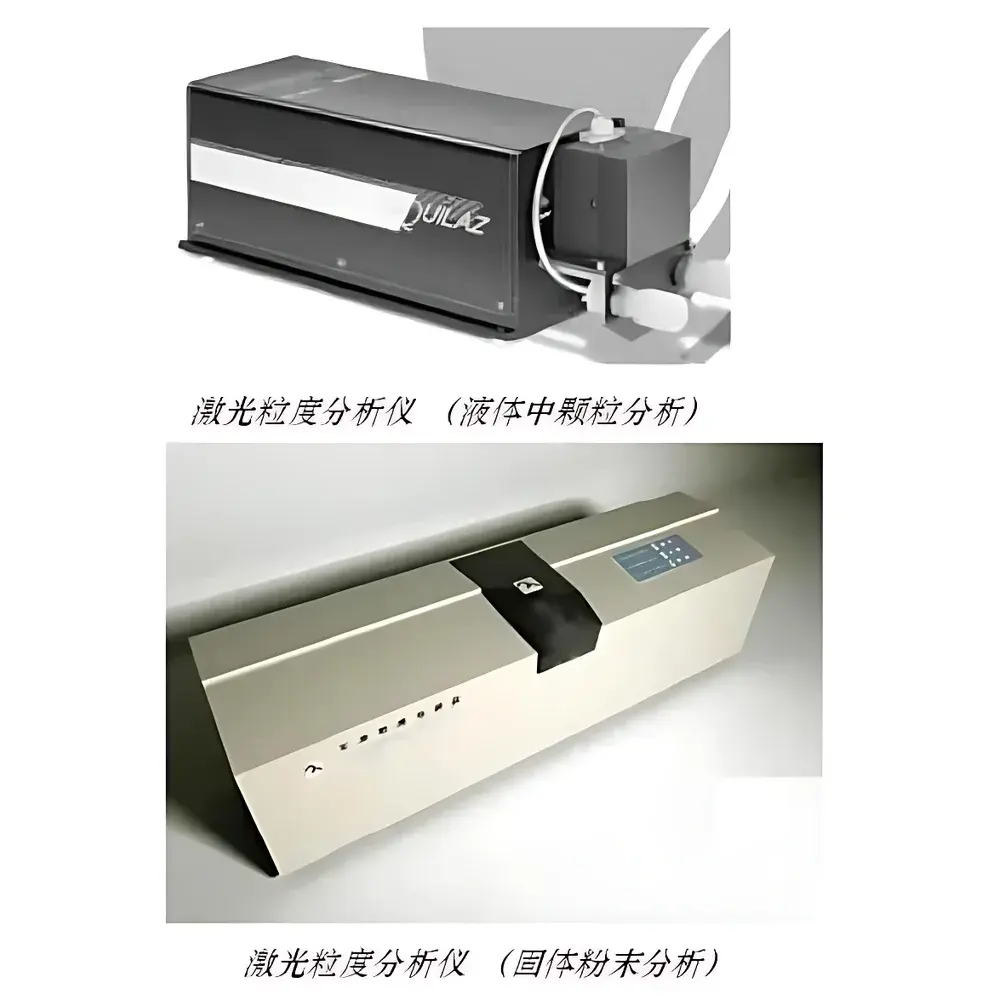
PCSLE20WN/2000 Series Online & Laboratory Laser Diffraction Particle Size Analyzer for Aqueous Suspensions and Dry Powders
| Measurement Principle | Mie Scattering Theory (Full-Range) |
|---|---|
| Particle Size Range | 0.1–450 µm (Lab Mode) |
| Detection Channels | 70 Main + 24 Side Array (Lab), 15 User-Configurable Channels (Online) |
| Laser Source | Semiconductor Diode, 760 nm, 5 mW, >20,000 h Lifetime |
| Sample Flow Rate | 70 mL/min (Online) |
| Operating Temperature | 10–50 °C |
| Max Pressure | 100 psi (0.675 MPa) |
| Power Supply | 85–250 VAC, 50–60 Hz |
| Communication Interface | RS-485 |
| Compliance | ISO 13320, NIST-Traceable Calibration |
| Enclosure Materials | Teflon®, Stainless Steel, Borosilicate Glass, BUNA-N |
| Dimensions (Online Unit) | 320 × 110 × 110 mm |
| Weight (Online Unit) | 3 kg |
Overview
The PCSLE20WN/2000 Series Laser Diffraction Particle Size Analyzer is a dual-mode instrumentation platform engineered for high-fidelity particle characterization in both laboratory and industrial process environments. It operates on the physical principle of Mie scattering theory—fully implemented across its entire measurement range—to quantitatively determine particle size distribution (PSD) by analyzing the angular intensity pattern of laser light scattered by dispersed particles suspended in liquid or presented as dry aerosols. Unlike sedimentation-based methods, this system requires no gravitational settling time, enabling rapid, statistically robust measurements with minimal operator intervention. The analyzer is optimized for two distinct operational configurations: (1) benchtop laboratory analysis of powders and slurries using integrated ultrasonic dispersion, mechanical stirring, and recirculating flow cells; and (2) real-time online monitoring of aqueous suspensions in closed-loop process streams via direct inline or sidestream sampling. Its optical architecture—featuring a fixed-focus single-lens design, high-stability semiconductor laser source, and multi-angle photodetector array—ensures long-term repeatability and eliminates recalibration drift associated with mechanical lens switching or gas-laser degradation.
Key Features
- Full-range Mie scattering modeling compliant with ISO 13320, incorporating user-defined refractive index and absorption coefficient inputs for accurate inversion of scattering data.
- Dual-mode operation: seamless transition between offline batch analysis (0.1–450 µm) and online continuous monitoring (2–125 µm) without hardware modification.
- High-resolution detection system comprising 70 main-axis and 24 side-scatter photodiodes (lab mode) or 15 programmable size channels (online mode), delivering granular resolution across broad dynamic ranges.
- Integrated sample conditioning: built-in 100 W ultrasonic transducer (0–10 min adjustable), touch-controlled stirrer (0–3000 rpm), and peristaltic circulation pump (0–5000 rpm) ensure complete deagglomeration and homogeneous presentation to the laser beam.
- Robust process interface: IP65-rated compact online sensor head (320 × 110 × 110 mm, 3 kg) with RS-485 digital output, pressure-rated to 100 psi, and wetted parts constructed from chemically inert materials (Teflon®, 316 stainless steel, borosilicate glass).
- NIST-traceable calibration protocol using certified reference standards; zero-count filter performance <50 particles/L ensures baseline integrity for ultra-low-concentration applications.
Sample Compatibility & Compliance
The PCSLE20WN/2000 series accommodates a wide spectrum of particulate systems without requiring method revalidation. It is routinely deployed for non-metallic minerals (e.g., calcium carbonate, kaolin, talc), metallic powders (Al, Zn, Mo, rare-earth alloys), catalysts, pharmaceutical excipients, ceramic precursors, river sediments, and emulsions. In online configuration, it supports continuous monitoring of deionized water purity, chemical bath stability, component cleaning efficacy, and slurry transport consistency. All measurement protocols adhere to internationally recognized metrological frameworks: ISO 13320 (laser diffraction standards), ASTM E799 (particle sizing terminology), and FDA 21 CFR Part 11 requirements for electronic records and signatures when paired with audit-trail-enabled software deployment. Instrument validation documentation—including IQ/OQ/PQ templates—is provided to support GLP and GMP-regulated environments.
Software & Data Management
The proprietary Particle Analysis Suite (PAS) v5.x runs natively on Windows OS (7 through 11) and provides full control over acquisition, processing, and reporting workflows. Key capabilities include real-time PSD visualization with overlay comparison, statistical aggregation across multiple runs (mean, standard deviation, CV%), customizable grading schemes (R-R, log-normal, user-defined bins), and export of D10/D50/D90, specific surface area (volume- or mass-weighted), and span metrics. Reports are generated in bilingual (English/Chinese) format with optional color rendering, PDF/image export (PNG, TIFF), and Word-compatible metadata embedding. For online deployments, PAS includes configurable alarm thresholds, automated trend logging, and integration-ready APIs for SCADA/MES platforms. Audit trails record all parameter changes, calibration events, and user actions—meeting 21 CFR Part 11 data integrity requirements when deployed with electronic signature modules.
Applications
This analyzer serves critical quality assurance and process optimization functions across multiple sectors. In pharmaceutical manufacturing, it verifies micronization efficiency of active ingredients and monitors suspension stability during formulation development. In specialty chemicals, it controls pigment dispersion homogeneity and tracks catalyst attrition in fixed-bed reactors. In water treatment facilities, it detects early-stage fouling via real-time turbidity-correlated particle count spikes in ultrapure water loops. In mineral processing, it validates grinding circuit output fineness and enables closed-loop mill feed adjustment. Additional use cases include battery electrode slurry QC, food powder flowability assessment, and environmental monitoring of colloidal contaminants in effluent streams.
FAQ
What distinguishes the PCSLE20WN online module from the laboratory models?
The PCSLE20WN is a dedicated flow-through sensor designed for permanent installation in pressurized piping networks; it lacks ultrasonics and stirring but delivers real-time, 100% volumetric sampling at 70 mL/min. Lab models (e.g., GSL-101BII, PCSLE2000 series) integrate dispersion subsystems and larger detector arrays for broader range and higher resolution.
Can the same software manage both online and offline instruments?
Yes—PAS v5.x supports concurrent connection to multiple analyzers across networked workstations, enabling centralized fleet monitoring and unified database archiving.
Is NIST traceability provided with each instrument shipment?
Each unit ships with a certificate of calibration referencing NIST SRM 1963 (10.0 µm) and SRM 2800 (2.0 µm), along with documented uncertainty budgets per ISO/IEC 17025 guidelines.
How is temperature variation handled during online measurement?
An internal thermistor continuously monitors sample temperature (10–50 °C operating range); Mie model parameters are auto-compensated in real time using preloaded dispersion medium properties (e.g., water viscosity vs. temp).
What maintenance intervals are recommended for long-term reliability?
No scheduled consumables exist—the semiconductor laser has >20,000 h lifetime, and wetted components require only periodic visual inspection and ultrasonic cleaning per SOP. Annual verification against reference standards is advised for regulated environments.



