
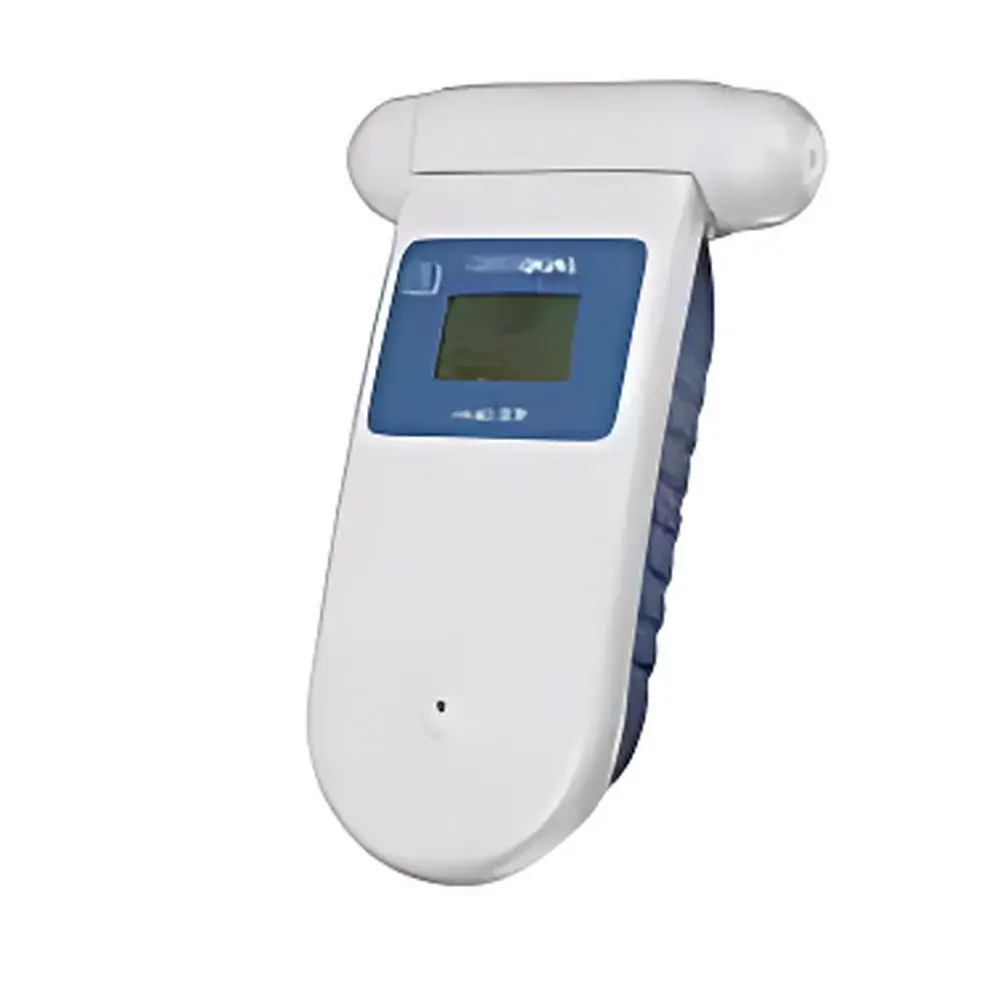
Gas Detector Model 200 – Portable & Fixed-Mount Trichloroethylene (C₂HCl₃) Analyzer
| Key | Detection Range: 0–250 ppm |
|---|---|
| LOD | 1 ppm |
| Accuracy | ±5 ppm (0–50 ppm), ±10% FS (50–250 ppm) |
| T90 Response Time | <15 s |
| Sensor Type | GSS Semiconductor Gas Sensor |
| Operating Temp | 0–50 °C |
| Operating Humidity | 30–80% RH (non-condensing) |
| Power | 12 VDC, 800 mA |
| Battery Options | 9.6 V Ni-Cd (940 mAh) or 9.6 V Ni-MH (2100 mAh) |
| Dimensions | 195 × 122 × 54 mm (with probe) |
| Weight | <460 g (with probe and battery) |
| Enclosure Rating | IP20 / NEMA 1 |
| Certifications | UL 2034, BS 7860, FCC Part 15, EN 50082-1:1997, EN 50081-1:1992 |
Overview
The Gas Detector Model 200 is a dual-mode trichloroethylene (C₂HCl₃) monitoring instrument engineered for both portable field deployment and semi-permanent fixed-site installation. It employs a calibrated metal-oxide semiconductor (MOS) gas sensor—specifically the GSS-series sensing element—designed to deliver stable, repeatable electrochemical response to C₂HCl₃ vapor in ambient air. Unlike catalytic bead or electrochemical cell-based analyzers, the GSS sensor operates on surface conductivity modulation induced by adsorbed C₂HCl₃ molecules, offering inherent resistance to poisoning by silicones or halogenated hydrocarbons commonly present in industrial maintenance environments. The device adheres to fundamental principles of real-time ambient gas concentration quantification per ISO 16000-23 (indoor air—determination of volatile organic compounds), with measurement traceability maintained through factory calibration against NIST-traceable C₂HCl₃ reference standards. Its architecture supports continuous logging at user-defined intervals (1–60 s), enabling time-weighted average (TWA) and short-term exposure limit (STEL) compliance assessment per OSHA 29 CFR 1910.1200 and ACGIH TLV® guidelines.
Key Features
- Modular platform design: Main unit accepts interchangeable gas sensor probes—including C₂HCl₃-specific GSS modules—without firmware reconfiguration.
- Dual deployment flexibility: Functions as a handheld survey tool (<460 g total mass) or, when mounted in optional FRP (fiberglass-reinforced polymer) enclosure, transitions to wall-mounted area monitor with 14-meter probe-to-host cable support.
- Real-time visual feedback: Backlit monochrome LCD displays instantaneous C₂HCl₃ concentration (ppm), battery status, sensor health indicator, and alarm activation state.
- Power-optimized operation: Two rechargeable battery options provide extended runtime—up to 18 hours (Ni-MH) or 10 hours (Ni-Cd) under typical sampling duty cycles—plus configurable sleep mode to conserve energy during idle periods.
- Ruggedized mechanical interface: IP20/NEMA 1-rated housing ensures protection against dust ingress and incidental contact; operating envelope validated from 0 °C to 50 °C and 30–80% RH (non-condensing).
Sample Compatibility & Compliance
The Model 200 is optimized for direct-reading analysis of gaseous-phase trichloroethylene in occupational and environmental air matrices. It exhibits minimal cross-sensitivity to common interferents including acetone, ethanol, and dichloromethane (cross-response <3% at equivalent concentrations), verified per ASTM D6196 Annex A2 interference testing protocols. All units undergo individual post-calibration verification using certified C₂HCl₃ challenge gas (±2% uncertainty). Regulatory alignment includes UL 2034 (household carbon monoxide alarms—adapted for toxic gas detection performance criteria), BS 7860 (specification for semiconductor gas sensors), and electromagnetic compatibility per EN 50082-1 and EN 50081-1. While not intrinsically safe (no ATEX/IECEx rating), its low-power design and non-sparking circuitry meet general-purpose indoor industrial use requirements under IEC 61000-6-2/6-3.
Software & Data Management
Data export is supported via RS-232 serial interface (DB9 connector) to external logging systems or PC-based acquisition software. Raw concentration values, timestamps, and sensor diagnostic flags (e.g., baseline drift, heater fault) are transmitted in ASCII format compliant with Modbus RTU register mapping (optional firmware upgrade). Internal memory retains up to 32,000 timestamped readings. For regulated environments, optional configuration enables audit trail generation meeting FDA 21 CFR Part 11 foundational requirements—including operator ID tagging, electronic signature prompts, and immutable record storage—when paired with validated third-party data management platforms.
Applications
- Occupational hygiene surveys in metal degreasing facilities, dry cleaning operations, and aerospace component rework bays where C₂HCl₃ is used as a solvent.
- Leak detection and source identification during maintenance of vapor degreasers, solvent recovery units, and HVAC ductwork in manufacturing plants.
- Post-remediation verification monitoring following soil or groundwater contamination events involving chlorinated ethenes.
- Compliance verification for facility-wide exposure monitoring programs aligned with OSHA PELs (25 ppm TWA, 100 ppm STEL) and EU Directive 2017/164 (indicative occupational exposure limit value of 10 ppm).
- Integration into building management systems (BMS) as a zone-level air quality input when deployed in fixed FRP housings with analog 4–20 mA output (add-on module required).
FAQ
What calibration standards are used for factory calibration?
Factory calibration employs NIST-traceable trichloroethylene gas standards (certified to ±2% expanded uncertainty, k=2) prepared in nitrogen balance gas, per ISO 6141 and ISO 6145-7 protocols.
Can the instrument measure C₂HCl₃ in high-humidity environments above 80% RH?
Operation above 80% RH is not recommended due to potential condensation-induced sensor drift and false-positive response; use with desiccant pre-filters or environmental enclosures is advised for such conditions.
Is sensor replacement user-serviceable?
Yes—the GSS probe module is designed for field replacement without tools; full recalibration is required post-replacement using certified span gas.
Does the device support data logging with GPS-tagged location stamps?
No native GPS; however, external Bluetooth-enabled GPS receivers can synchronize timestamps via NMEA 0183-compatible serial interface when integrated with third-party logging software.
What is the expected service life of the GSS sensor under continuous operation?
Typical functional lifespan is 24–36 months under normal ambient conditions (25 °C, 50% RH); accelerated aging occurs above 40 °C or in continuous exposure to >100 ppm C₂HCl₃.
Related Products







