
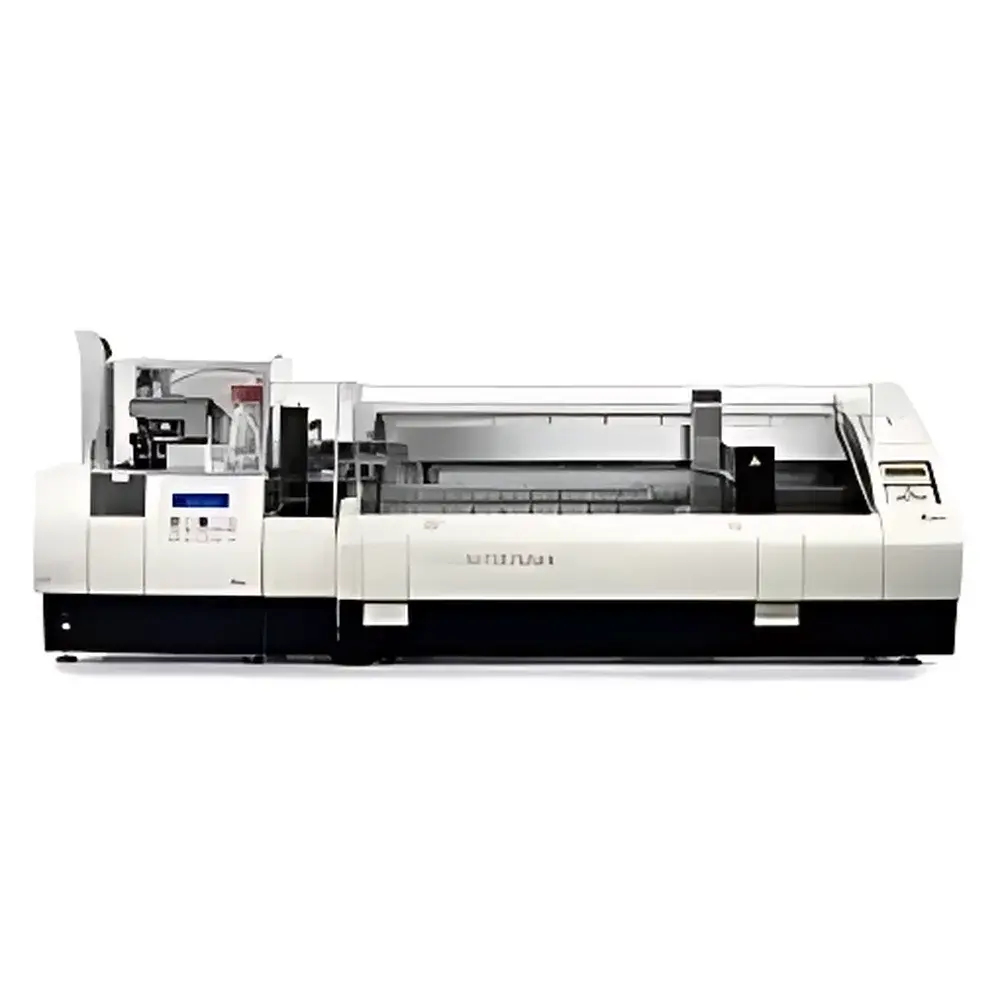
Leica Autostainer XL ST5010 & CV5030 Integrated Automated Staining and Coverslipping System
| Brand | Leica |
|---|---|
| Origin | Germany |
| Model | ST5010 / CV5030 |
| Configuration | Integrated with TS5015 Transport Station |
| Compliance | CE-IVD, ISO 13485 certified |
| Software Platform | Leica Application Suite (LAS) v4.x |
| Throughput | Up to 3 slide racks (72 slides) per cycle |
| Automation Level | Fully unattended staining + coverslipping workflow |
Overview
The Leica Autostainer XL ST5010 and CV5030 integrated system—orchestrated by the TS5015 transport station—represents a validated, closed-loop solution for high-volume histopathology laboratories requiring reproducible, traceable, and regulatory-compliant tissue processing. Engineered for precision automation, this platform combines Leica’s proven ST5010 automated stainer—capable of executing complex hematoxylin-eosin (H&E), special stains (e.g., Masson’s trichrome, PAS), and immunohistochemistry (IHC) protocols—with the CV5030 automated coverslipper, enabling end-to-end slide preparation without manual intervention. The system operates on a programmable fluidics architecture with temperature-controlled reagent dispensing, precise dwell-time control, and gravimetric waste monitoring. Its core principle is sequential, protocol-driven immersion-based staining followed by optical alignment and adhesive-based coverslipping—ensuring consistent coverage, minimal bubble formation, and archival-grade slide integrity.
Key Features
- TS5015 Transport Integration: Unidirectional, motorized slide rack transfer between ST5010 and CV5030 eliminates cross-contamination risk and operator-dependent handling.
- Three-Rack Capacity: Accommodates up to 72 standard 1″ × 3″ glass slides per batch; racks are automatically indexed, recognized via RFID tags, and tracked through each process stage.
- Transparent Process Monitoring: Polycarbonate viewing window enables real-time visual verification of rack movement, reagent aspiration, and coverslip application—critical for troubleshooting and GLP/GMP adherence.
- Reagent Management System: Onboard barcode scanning validates reagent lot numbers, expiry dates, and concentration; software logs all consumables used per protocol run.
- Temperature-Stabilized Staining: ST5010 maintains bath temperatures within ±0.5°C across all staining modules (deparaffinization, hydration, staining, dehydration); CV5030 applies controlled thermal curing (40–60°C) for optimal mounting medium polymerization.
- Regulatory-Ready Architecture: Full audit trail generation—including user logins, protocol modifications, error events, and timestamped process steps—supports compliance with FDA 21 CFR Part 11, ISO 15189, and CAP checklist requirements.
Sample Compatibility & Compliance
The system processes standard FFPE (formalin-fixed paraffin-embedded) tissue sections mounted on charged or silanized glass slides (25 × 75 mm, 1.0–1.2 mm thickness). It supports routine H&E, Alcian Blue, Giemsa, and IHC workflows using both polymer-based and enzyme-linked detection systems. All wet chemistry modules comply with CLSI EP23-A and ISO/IEC 17025 validation guidelines. Reagent compatibility includes Leica Bond Polymer Refine Detection kits, Dako EnVision, and Ventana UltraView systems when configured with appropriate interface adapters. The entire platform carries CE marking under IVDR (In Vitro Diagnostic Regulation 2017/746) and conforms to IEC 61010-1 for laboratory equipment safety.
Software & Data Management
Controlled via Leica Application Suite (LAS) v4.12 or later, the system employs a role-based access interface with configurable user permissions (Operator, Supervisor, Administrator). Protocols are stored as encrypted XML files with version control and digital signature capability. Data export supports CSV, PDF, and HL7-compatible structured reports for LIS integration. All process metadata—including rack ID, start/end times, reagent usage, temperature logs, and error codes—is archived in an embedded SQL database with optional network backup to PACS or LIMS. Audit trails meet ALCOA+ principles (Attributable, Legible, Contemporaneous, Original, Accurate, Complete, Consistent, Enduring, Available) for regulatory inspections.
Applications
This integrated system is deployed in centralized pathology labs, academic medical centers, and contract research organizations performing >500 slides/day. Primary use cases include diagnostic H&E screening for surgical pathology, high-throughput IHC scoring in oncology biomarker studies (e.g., ER/PR, HER2, PD-L1), and standardized special stain workflows for renal or neuropathology panels. Its reproducibility reduces inter-operator variability in staining intensity and background—directly improving pathologist confidence in digital image analysis pipelines. In biobanking environments, it ensures long-term slide stability required for retrospective molecular correlation studies.
FAQ
Does the ST5010/CV5030 system support custom staining protocols?
Yes—users can create, validate, and archive custom protocols via LAS software; all parameters (dwell time, temperature, agitation, rinse cycles) are fully programmable and subject to change control.
Is third-party reagent validation supported?
Leica provides a reagent qualification toolkit including test protocols and acceptance criteria; validation documentation must be generated per ISO 15189 section 5.5.2 before clinical deployment.
What maintenance intervals are recommended?
Daily: Waste container emptying, fluid level checks. Weekly: Nozzle cleaning, transport rail lubrication. Quarterly: Pressure calibration, RFID reader verification. Annual: Full fluidics system performance verification per Leica Service Bulletin SB-ST5010-2023.
Can the system integrate with existing LIS or digital pathology platforms?
Yes—via HL7 v2.5.1 messaging or direct DICOM-SR export; API documentation and interface configuration guides are provided under NDA.
Is remote diagnostics available?
Leica Remote Support (LRS) enables secure, encrypted technician access for real-time fault diagnosis and firmware updates—subject to customer IT security policy approval.






