
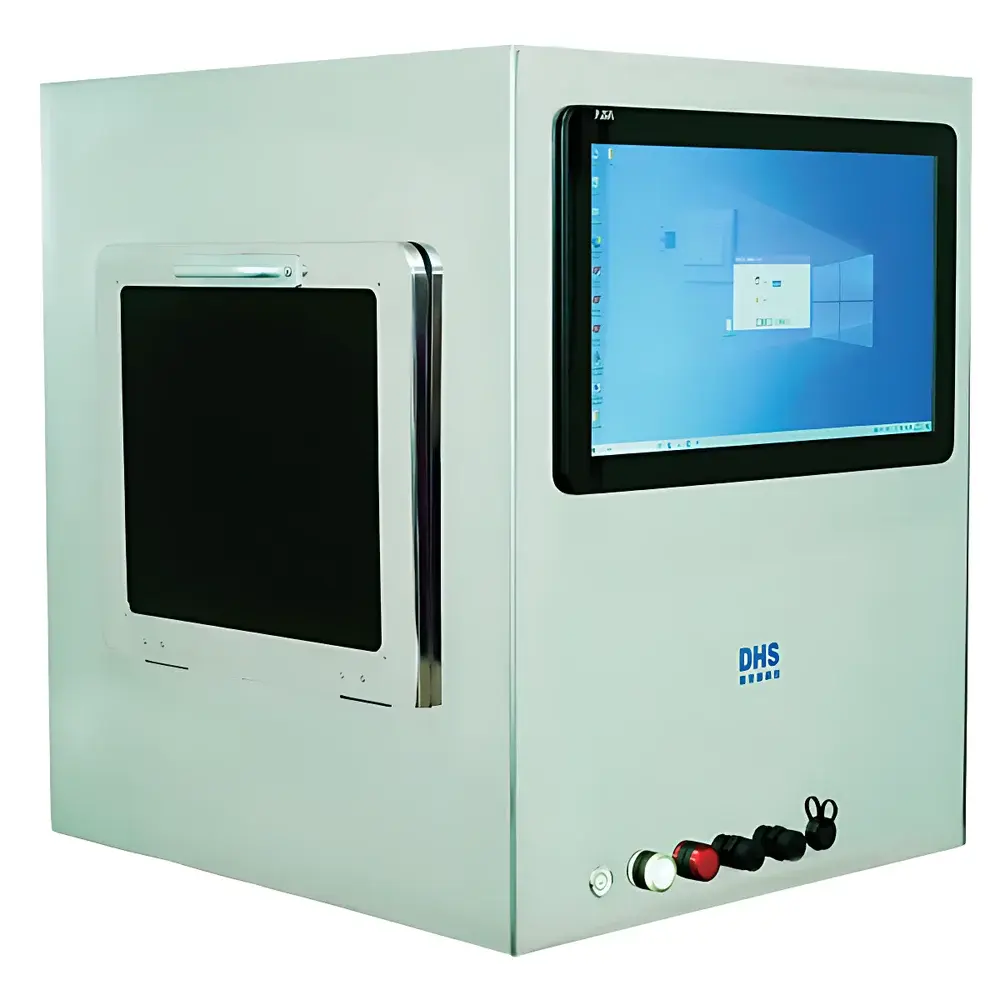
DHS BCM200 In Situ Cell Factory Monitoring System
| Brand | DHS |
|---|---|
| Origin | Tianjin, China |
| Manufacturer Type | Authorized Distributor |
| Product Origin | Domestic (China) |
| Model | BCM200 |
| Pricing | Upon Request |
| Observation Capacity | Up to 10-layer cell factories |
| Observation Layers | Bottom 3 layers + Top 2 layers |
| Field Coverage per Layer | ≥80% |
| Optical Magnification | 10× (customizable) |
| Imaging Sensor | Imported high-resolution color CMOS camera |
| Illumination | LED cold light source |
| Control Architecture | Closed-loop automated motion control |
| Software | Role-based three-tier user permissions (Admin/Operator/Viewer), full audit trail for images & videos, 21-inch integrated display |
| Structural Material | 304 stainless steel (mirror-finished, dustproof, splash-resistant) |
| Dimensions | 544 mm × 605 mm × 670 mm |
| Compliance | Designed to meet GMP cleanroom environmental requirements (ISO 14644 Class 7–8 compatible installation) |
| Application Scope | Real-time morphological and confluence monitoring of adherent mammalian cells in stacked multi-layer cell factory vessels |
Overview
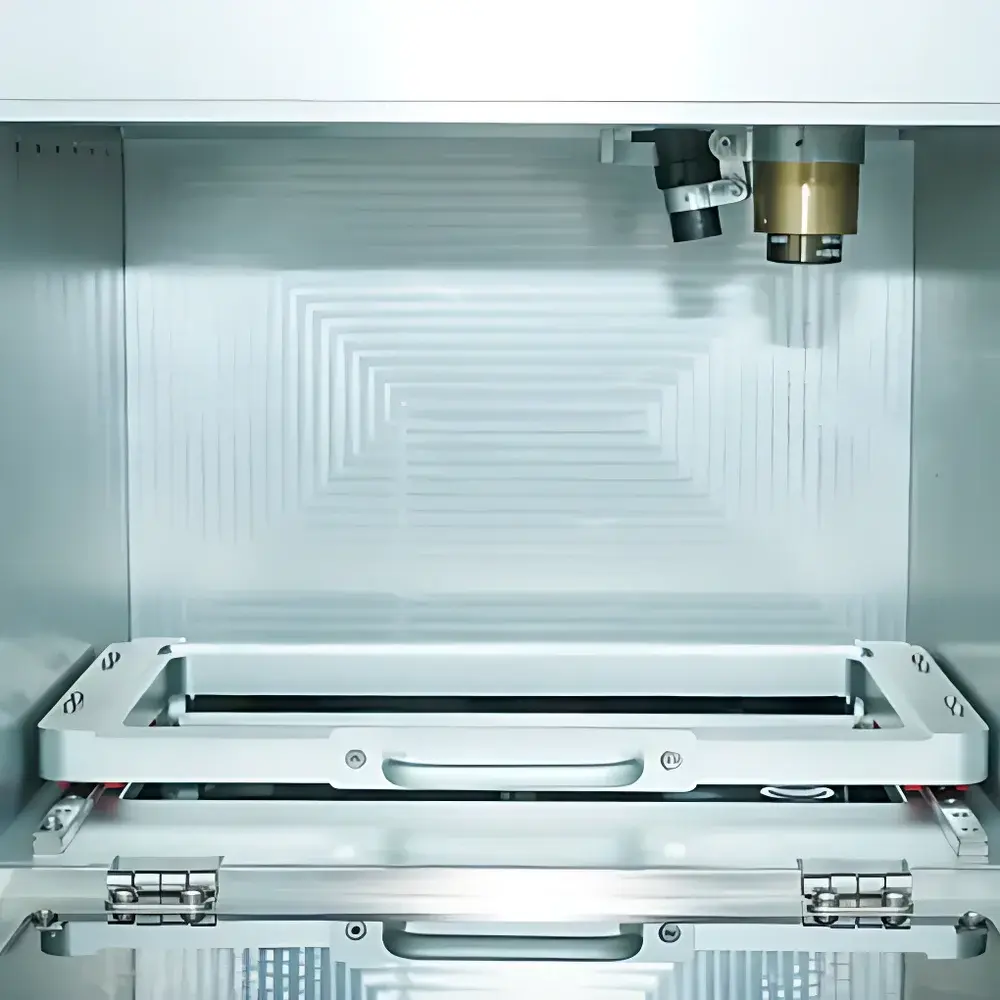
The DHS BCM200 In Situ Cell Factory Monitoring System is an integrated optical instrumentation platform engineered for non-invasive, real-time visual surveillance of adherent cell cultures within standardized multi-layer cell factory vessels. Unlike conventional benchtop inverted microscopes requiring vessel removal and manual repositioning—processes introducing contamination risk, workflow interruption, and morphological artifacts—the BCM200 employs a fixed-stage, top-down optical path architecture aligned with the vertical stacking geometry of commercial cell factories (e.g., Nunc™ Cell Factory®, Corning® CellSTACK®). Its core optical design follows infinity-corrected, telecentric beam path principles with ultra-flat field correction, ensuring consistent focus and minimal distortion across the entire observation zone. The system utilizes a high-sensitivity, progressive-scan color CMOS imaging sensor coupled with uniform LED cold illumination to minimize phototoxicity and thermal drift during prolonged acquisition cycles. Designed explicitly for bioprocess monitoring in cGMP-compliant environments, the BCM200 enables continuous, operator-independent documentation of cell attachment, spreading, confluence progression, and morphological anomalies without disrupting gas exchange, media perfusion, or incubator integrity.
Key Features
- Optical architecture optimized for 10-layer cell factory stacks, delivering simultaneous focus stability across variable substrate thicknesses (0.17 mm ±0.01 mm coverglass-equivalent bottom plates)
- Automated Z-axis traversal with closed-loop stepper motor control, enabling precise layer-to-layer transitions with repeatability ≤±1.5 µm
- Dual-zone observation capability: Full-field imaging of the bottom three layers (primary growth interface) and top two layers (gas-exchange and surface morphology assessment)
- ≥80% effective field-of-view coverage per observed layer, eliminating manual stage repositioning and ensuring statistically representative sampling
- 21-inch integrated industrial-grade touchscreen display with glove-compatible UI, supporting touch gestures and programmable monitoring protocols
- 304 stainless steel monocoque chassis with electropolished mirror finish, IP54-rated enclosure, and zero crevice design for autoclave-compatible surface decontamination
- Embedded real-time image processing engine supporting optional on-device cell counting algorithms (configurable per customer validation requirements)
Sample Compatibility & Compliance
The BCM200 accommodates industry-standard cell factory formats including 1-layer, 2-layer, 5-layer, and 10-layer configurations (total height up to 125 mm). Vessel compatibility extends to polycarbonate and PETG substrates with nominal base thicknesses ranging from 0.8 mm to 1.2 mm. All optical components are calibrated per ISO 10934-1 (Microscopy — Calibration of magnification) and validated against NIST-traceable step gauges. The system’s software architecture supports ALCOA+ data integrity principles: attributable, legible, contemporaneous, original, accurate, complete, consistent, enduring, and available. Audit trails comply with FDA 21 CFR Part 11 requirements for electronic records and signatures when deployed with networked authentication servers. Mechanical design conforms to ISO 14644-1 Class 7 cleanroom operational standards; surface roughness (Ra) ≤0.8 µm ensures low particle shedding during operation in controlled environments.
Software & Data Management
The BCM200 runs on a deterministic real-time OS with embedded database management. The proprietary DHS VisionTrack™ software implements role-based access control (RBAC) with three defined permission tiers: Administrator (system configuration, user management, calibration), Operator (routine monitoring, image capture, report generation), and Viewer (read-only access to historical sessions). Every image frame and video clip is automatically timestamped, geotagged (if connected to facility LAN), and linked to the active vessel ID, operator login, and environmental log (optional integration with incubator CO₂/O₂ sensors). Export formats include DICOM-SR (Structured Reporting), TIFF (uncompressed), and MP4 (H.264, CRF 18). All metadata are stored in SQLite with SHA-256 hash integrity verification. Backup policies support scheduled encrypted offsite replication via SFTP or network-attached storage (NAS) with retention configurable per ICH-GCP and EU Annex 11 guidelines.
Applications
- Real-time confluence quantification during monoclonal antibody production in CHO-K1 or SP2/0 cell lines
- Early detection of morphological deviations indicative of mycoplasma contamination or metabolic stress
- Process validation support for regulatory submissions (FDA BLA, EMA MAA) requiring objective, traceable cell growth documentation
- In-process decision-making for harvest timing in viral vaccine manufacturing (e.g., Vero, MDCK cultures)
- Quality-by-Design (QbD) implementation for cell culture process characterization studies
- Training and SOP standardization across QC/QA teams through synchronized remote viewing and annotation sharing
FAQ
Can the BCM200 be integrated into existing bioreactor control systems (e.g., DeltaV, Siemens Desigo)?
Yes—via OPC UA or Modbus TCP gateways; DHS provides documented API specifications and PLC communication templates for seamless integration.
Is the 10× magnification fixed, or can higher-resolution objectives be added?
The base optical train is optimized for 10× wide-field surveillance; optional 20× plan-apochromat objectives are available as field-upgrade kits with recalibrated Z-step profiles.
Does the system support automated focus stacking across multiple focal planes per layer?
Focus stacking is supported in manual mode; automated z-stack acquisition requires optional firmware license (VisionTrack™ Pro module).
How is calibration maintained under routine cleaning with ethanol or hydrogen peroxide vapor?
All optical mounts use kinematic alignment; a quarterly verification protocol using NIST-traceable grid targets is included in the service agreement.
Can raw image data be exported without watermarking or proprietary compression?
Yes—TIFF export preserves full 12-bit dynamic range and spatial metadata; no lossy compression or digital watermarking is applied by default.





