
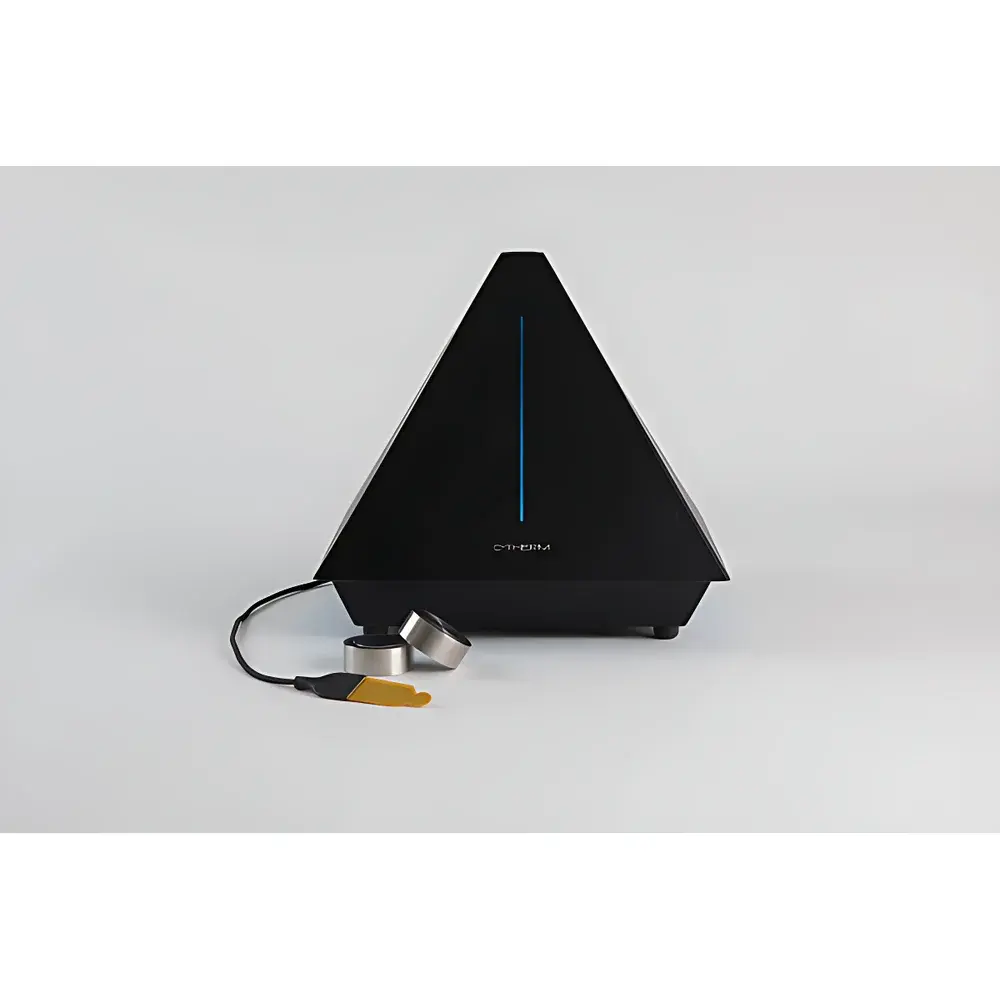
C-Therm Trident HotDisk Transient Plane Source Thermal Conductivity Analyzer
| Brand | C-Therm |
|---|---|
| Origin | Canada |
| Model | Trident HotDisk |
| Measurement Principle | Transient Plane Source (TPS) |
| Dimensions (L×W×H) | 40 × 40 × 40 cm |
| Accuracy | Better than 5% |
| Thermal Conductivity Range | 0 – 2000 W/m·K |
| Repeatability | Better than 1% |
| Standards Compliance | ISO 22007-2, ASTM D7984, ASTM D5334, ASTM D5930, GB/T 32064 |
Overview
The C-Therm Trident HotDisk Transient Plane Source Thermal Conductivity Analyzer is an advanced, multi-method thermal property characterization platform engineered for precision and versatility in materials science laboratories. At its core, the instrument implements the transient plane source (TPS) technique—a well-established, absolute method for determining thermal conductivity, thermal diffusivity, and volumetric heat capacity in a single, non-destructive measurement. Unlike steady-state or guarded-hot-plate methods, TPS relies on a symmetric, double-sided sensor that acts both as a heat source and temperature sensor. A short-duration current pulse heats the sensor, and the resulting temperature rise is monitored in real time. Thermal properties are derived directly from the transient thermal response using analytical solutions to the heat conduction equation—eliminating calibration dependencies and contact resistance artifacts common in comparative techniques. The Trident HotDisk extends this foundation by integrating three complementary measurement modes: standard TPS (for solids, powders, and gels), Modified Transient Plane Source (MTPS) for thin films and low-conductivity insulators (e.g., aerogels), and Transient Line Source (TLS) via needle probe for liquids, pastes, and in-situ applications. This tri-modal architecture enables consistent, traceable data across heterogeneous material classes without hardware reconfiguration.
Key Features
- Triple-mode operation: TPS, MTPS, and TLS—each optimized for distinct sample geometries and thermal regimes
- Double-sided, Kapton-insulated nickel spiral sensor with integrated thermistor for simultaneous thermal conductivity and thermal diffusivity determination
- No requirement for thermal contact agents—ideal for low-adhesion, porous, or reactive samples
- Measurement duration per test: typically 1–10 seconds, enabling high-throughput screening
- Robust architecture designed for benchtop stability; compact footprint (40 × 40 × 40 cm) suitable for controlled-environment labs
- Temperature-controlled stage option available for measurements between −40 °C and +150 °C (optional accessory)
- Self-calibrating sensor design with NIST-traceable reference materials included for routine verification
Sample Compatibility & Compliance
The Trident HotDisk accommodates a broad spectrum of physical forms and thermal behaviors: rigid and flexible solids (polymers, composites, ceramics), anisotropic laminates, phase change materials (PCMs), aerogels and other ultra-low-conductivity insulators (<0.02 W/m·K), powders, granular media, slurries, viscous liquids, and thin films down to 10 µm thickness (via MTPS mode). Its methodology satisfies the physical assumptions underlying ISO 22007-2 (Plastics — Determination of thermal conductivity and thermal diffusivity — Part 2: Transient plane heat source method), ASTM D7984 (Standard Test Method for Thermal Conductivity of Polymer Matrix Composites Using a Transient Plane Source Technique), ASTM D5334 (Standard Test Method for Thermal Conductivity of Soil and Soft Rock by Thermal Needle Probe Procedure), and ASTM D5930 (Standard Test Method for Thermal Conductivity of Plastics). It supports GLP-compliant workflows through audit-trail-enabled software and meets essential requirements for FDA 21 CFR Part 11 when configured with electronic signature and user access controls.
Software & Data Management
The proprietary ThermTest™ software provides full instrument control, real-time data visualization, automated curve fitting, uncertainty propagation analysis, and customizable reporting. Each measurement generates raw voltage-vs.-time data, fitted thermal response curves, and calculated parameters with associated confidence intervals. Batch processing, statistical comparison across sample sets, and export to CSV, Excel, or PDF formats are supported. Data integrity is ensured via timestamped logs, operator ID tagging, and version-controlled method files. For regulated environments, optional 21 CFR Part 11 compliance packages include electronic signatures, role-based permissions, and immutable audit trails—all validated per IQ/OQ protocols.
Applications
This system serves critical R&D and QA/QC functions across aerospace (thermal interface materials, ablative composites), automotive (battery thermal management, lightweight structural foams), energy (geothermal grouts, insulation for LNG storage), additive manufacturing (metal/polymer powder bed characterization), construction (aerogel glazing, PCM-integrated wallboards), and defense (energetic materials safety assessment). Researchers use it to validate multiscale thermal models, benchmark computational simulations, and support patent filings requiring metrologically defensible thermal property data.
FAQ
What sample preparation is required for TPS testing?
Minimal preparation is needed: flat, parallel surfaces are recommended for standard TPS; no surface polishing or coating is necessary. Powders and granules may be lightly compacted into a cylindrical die; liquids require containment in a shallow cup.
Can the Trident HotDisk measure anisotropic materials?
Yes—by orienting the sensor normal to principal axes and performing orthogonal measurements, in-plane and through-thickness thermal conductivities can be resolved independently.
Is calibration required before each test?
No. The TPS method is absolute and self-referencing. Routine verification using certified reference materials (e.g., Pyroceram 9606, graphite) is recommended daily or per shift.
How does MTPS differ from standard TPS for thin-film measurements?
MTPS employs a single-sided, insulated sensor configuration with reduced power and shorter test duration, minimizing lateral heat loss and enabling accurate measurement of films as thin as 10 µm on substrates with known thermal properties.
Does the system support automated temperature-dependent measurements?
Yes—when paired with the optional Peltier-controlled stage or external environmental chamber, the software executes programmed temperature ramps and collects thermal property vs. temperature profiles with full uncertainty quantification.



