
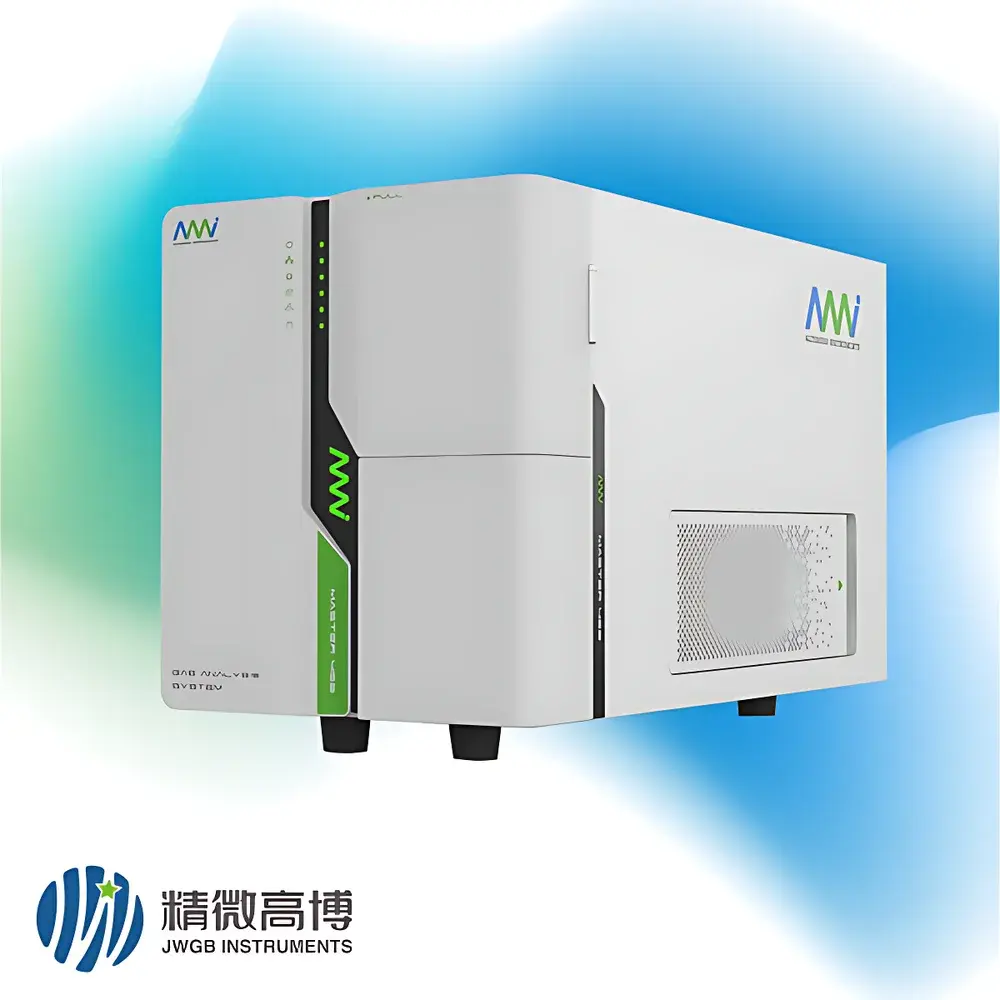
AMI-Master 400 Quadrupole Mass Spectrometer
| Brand | Altamira Instruments (USA) |
|---|---|
| Origin | USA |
| Model | AMI-Master 400 Quadrupole Mass Spectrometer |
| Configuration | Benchtop Process Mass Spectrometry System |
| Ion Source | Electron Impact (EI), 70 eV standard |
| Mass Range | 1–300 amu |
| Detection Modes | Faraday Cup & Electron Multiplier (dual-mode) |
| Scan Speed | <10 ms per decade |
| Response Time | <100 ms (full-spectrum acquisition) |
| Operating Pressure (Ion Source) | 1×10⁻⁶ to 5×10⁻⁵ Torr |
| Vacuum System | Turbo-molecular pump (200 L/s) + Oil-free diaphragm backing pump |
| Inlet Temperature Control | Ambient to 200 °C (capillary + filter assembly, independently regulated) |
| Chamber Bake-out Capability | Up to 200 °C |
| Software Platform | Windows 7/10-compatible multi-channel gas analysis suite with real-time quantitation, spectral library matching, and audit-trail-enabled data logging |
Overview
The AMI-Master 400 Quadrupole Mass Spectrometer is a benchtop process mass spectrometry system engineered by Altamira Instruments (USA) for high-fidelity, real-time gas-phase compositional analysis in research, development, and industrial process environments. Based on quadrupole mass filtering technology operating under controlled high-vacuum conditions, the instrument employs electron impact (EI) ionization at standardized 70 eV energy to generate reproducible fragmentation patterns—enabling robust qualitative identification and quantitative trace-level monitoring of volatile and semi-volatile species. Its architecture integrates a thermally regulated capillary inlet, bakeable stainless-steel mass analyzer chamber, dual-mode detection (Faraday cup for high-concentration stability and electron multiplier for sub-ppb sensitivity), and synchronized vacuum management—making it suitable for both online coupling with catalytic reactors, TGA, chemisorption analyzers, and offline laboratory gas analysis workflows.
Key Features
- Thermally isolated, temperature-controlled capillary inlet (ambient to 200 °C) with integrated particulate filtration—prevents condensation and adsorption losses for accurate analysis of polar, reactive, or high-boiling-point gases.
- Bakeable stainless-steel mass spectrometer chamber (rated to 200 °C), enabling routine outgassing protocols to minimize background contributions from water, hydrocarbons, and residual solvents—critical for low-noise baseline stability and long-term measurement reproducibility.
- Dual-detection architecture: switchable Faraday cup (linear dynamic range up to 100% abundance) and discrete-dynode electron multiplier (detection limit down to low-ppt levels), supporting seamless transition between bulk composition verification and trace impurity screening.
- Sub-100 ms full-spectrum response time and <10 ms/decade scanning capability—optimized for transient process monitoring, such as catalyst activation cycles, reaction kinetics profiling, or purge-and-trap desorption events.
- Independent dual-zone temperature control for inlet and analyzer chamber—ensures thermal equilibration integrity across variable ambient conditions and eliminates thermal gradients that compromise mass peak shape or intensity calibration.
- Integrated filament pressure interlock logic—automatically deactivates the EI source when chamber pressure exceeds safe operational thresholds, significantly extending filament service life and reducing unscheduled maintenance intervals.
Sample Compatibility & Compliance
The AMI-Master 400 accommodates gaseous samples delivered via stainless-steel or quartz capillaries, compatible with common process gas streams including H₂, CO, CO₂, CH₄, NH₃, O₂, N₂, H₂O vapor, light hydrocarbons (C₁–C₄), and halogenated compounds. Optional inlet modifications support reactive or corrosive matrices (e.g., Cl₂, HCl, SO₂) through passivated surfaces and chemically resistant filters. The system meets mechanical and electrical safety requirements per UL 61010-1 and CE EN 61326-1. Data acquisition and reporting functions are structured to support GLP-compliant workflows, including user-access controls, electronic signatures, and audit-trail-enabled event logging aligned with FDA 21 CFR Part 11 principles where configured with validated software modules.
Software & Data Management
The instrument operates with a native Windows 7/10-compatible multi-channel gas analysis platform. The software provides real-time spectral display, mass calibration validation, isotopic ratio calculation, and quantitative analysis using internal or external standard referencing. It supports customizable sampling sequences, time-stamped batch logging, and export of raw .dat files alongside processed .csv reports. Spectral libraries (NIST/EPA/Altamira-custom) enable automated compound identification; calibration curves can be stored per channel and recalled for method-specific quantitation. All data modifications, user logins, and instrument state changes are recorded in an immutable audit trail—facilitating regulatory review and internal QA/QC documentation.
Applications
- In situ monitoring of heterogeneous catalytic reactions (e.g., Fischer–Tropsch synthesis, ammonia oxidation, CO₂ hydrogenation) coupled to microreactors or fixed-bed systems.
- Gas evolution profiling during thermal analysis (TGA-MS), including decomposition onset temperatures, evolved species identification, and kinetic modeling inputs.
- Surface science studies—quantitative tracking of adsorption/desorption isotherms, competitive binding behavior, and surface reaction intermediates in chemisorption and pulse titration experiments.
- High-purity gas certification and impurity verification in semiconductor manufacturing supply chains (e.g., dopant gases, etchants, carrier gases).
- Environmental emission testing—real-time stack gas analysis for NOₓ, SO₂, VOCs, and greenhouse gases under ASTM D6348 or ISO 12039-compliant sampling protocols.
FAQ
What vacuum level is required for stable operation of the AMI-Master 400?
The quadrupole mass analyzer requires an operating pressure between 1×10⁻⁶ and 5×10⁻⁵ Torr in the ion source region, maintained continuously by the integrated turbo-molecular pump and oil-free backing pump.
Can the system be integrated with third-party analytical instruments?
Yes—the AMI-Master 400 provides analog I/O (0–10 V, ±10 V), digital TTL triggers, and RS-232/RS-485 interfaces for hardware synchronization with TGA, microreactors, GC ovens, and gas chromatographs.
Is bake-out functionality included, and how is it controlled?
The mass spectrometer chamber and inlet capillary each feature independent PID-controlled heating elements with programmable ramp/soak profiles, accessible via the front-panel controller or remote software interface.
What is the typical detection limit for common gases like CO or CH₄?
Using electron multiplier detection and optimized dwell times, typical limits of detection (S/N = 3) range from 10–50 ppt for small molecules under static vacuum conditions; performance varies with sample matrix, flow rate, and integration time.
Does the software support compliance with 21 CFR Part 11?
The base software includes audit trail generation and user role management; full 21 CFR Part 11 compliance—including electronic signatures and system validation documentation—is available upon request with IQ/OQ/PQ protocol support.






