
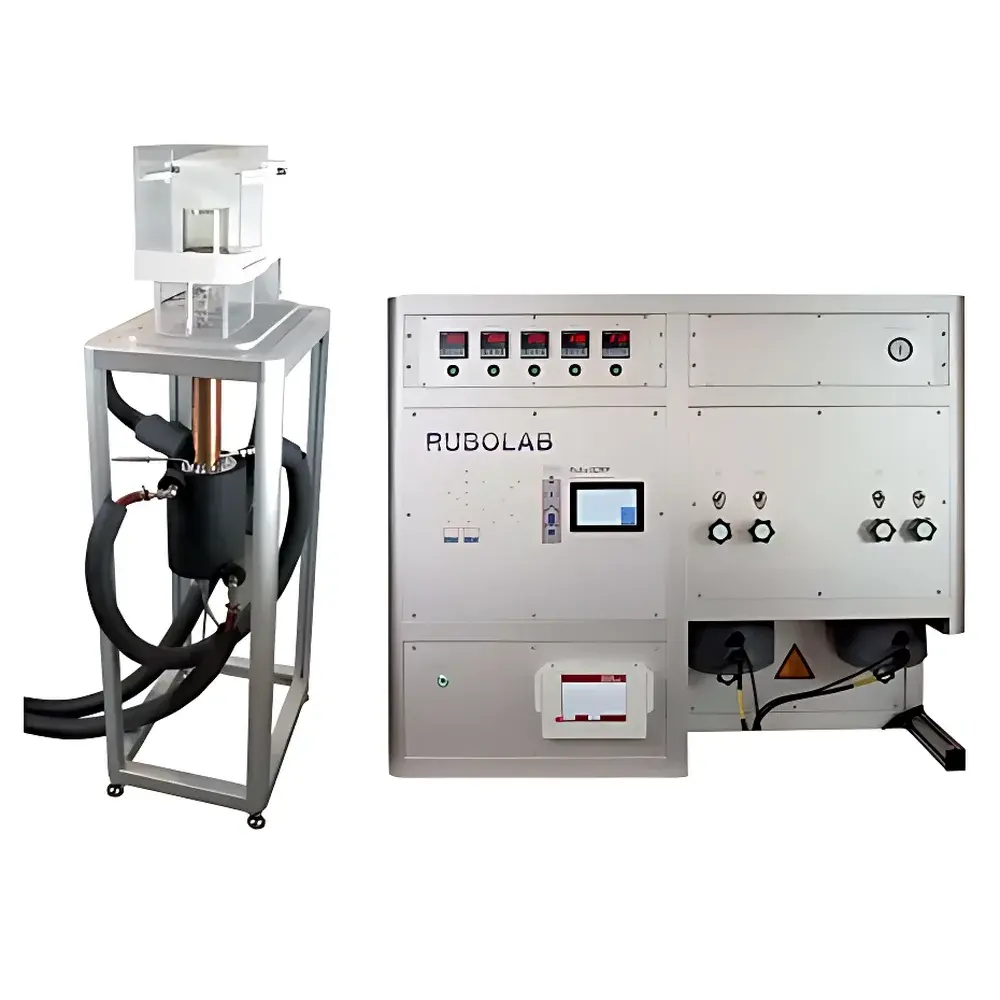
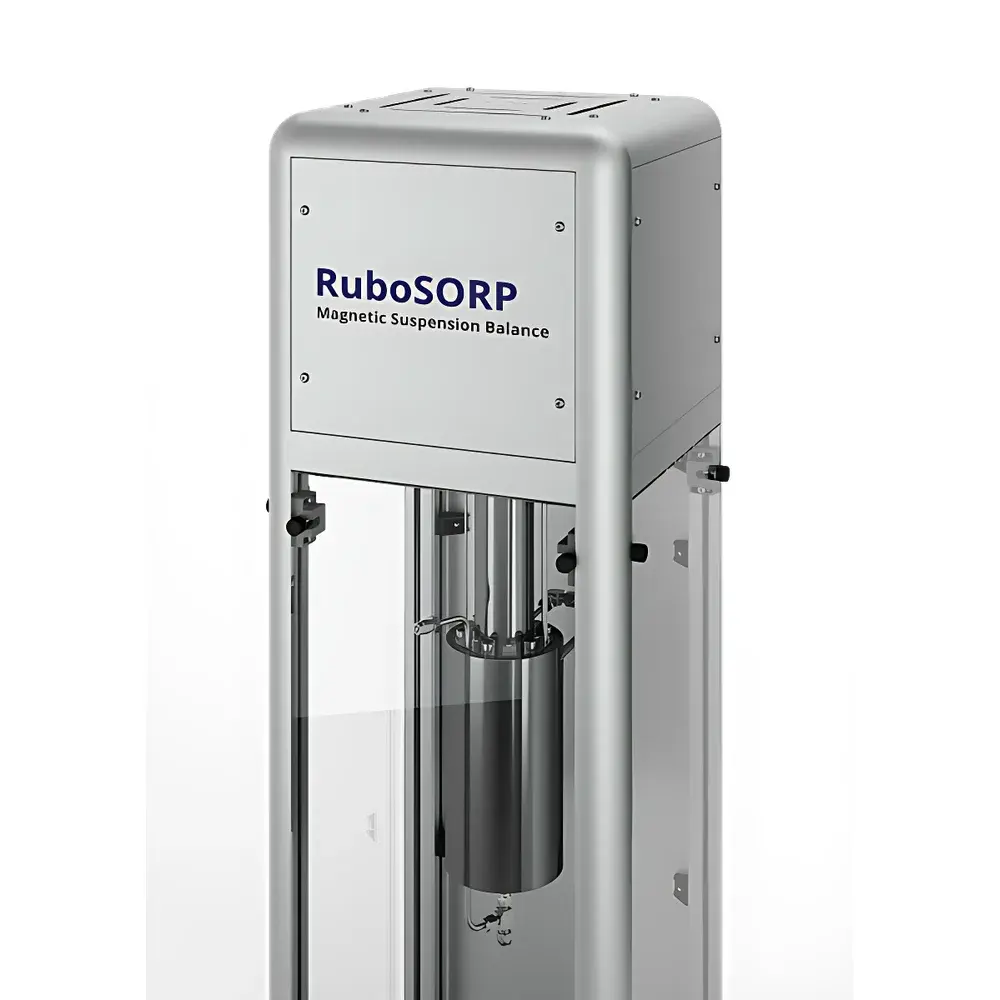
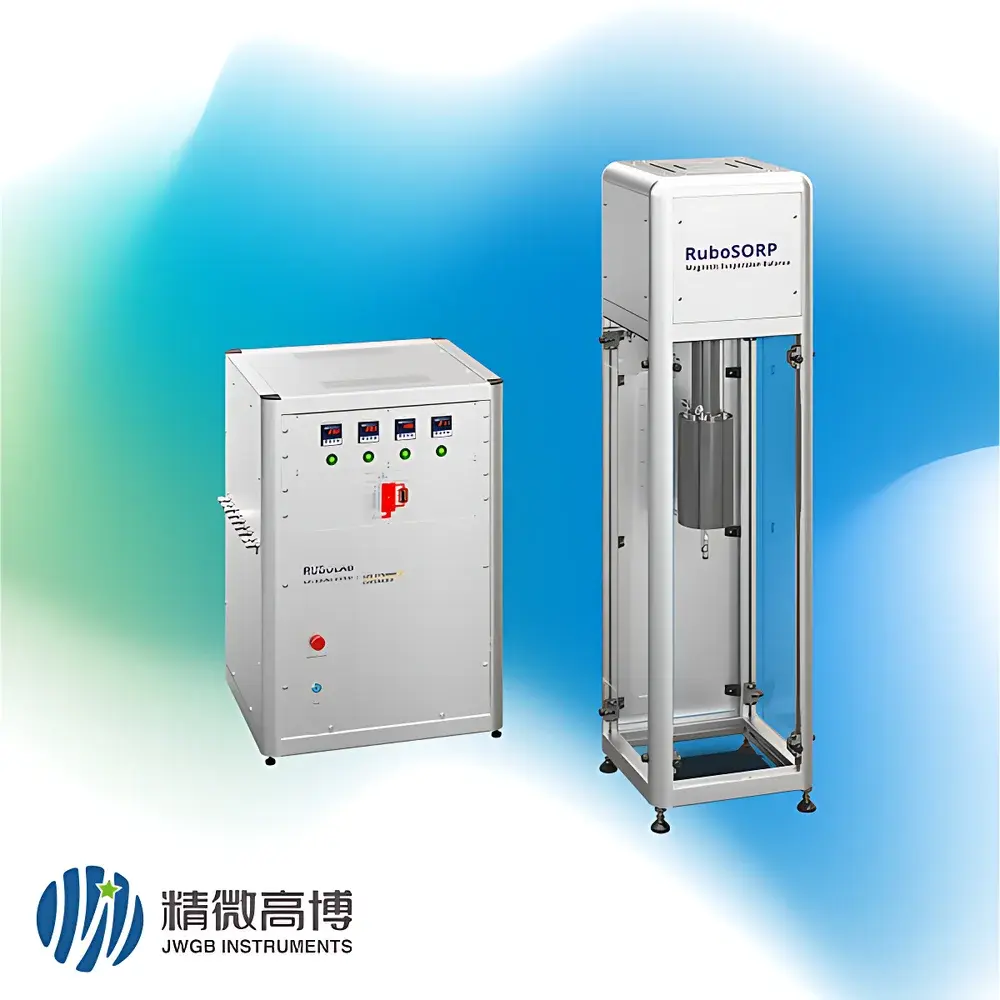
RuboLab RuboSORP MSB Magnetic Suspension Balance – High-Pressure Adsorption Analyzer (700 bar)
| Brand | RuboLab |
|---|---|
| Origin | Germany |
| Model | RuboSORP MSB |
| Measurement Principle | Gravimetric (High-Temperature/High-Pressure Weight Method) |
| Temperature Range | –10 °C to 400 °C (model-dependent |
| Pressure Range | Up to 700 bar |
| Mass Resolution | 1 μg (standard), 10 μg (high-load variant) |
| Maximum Sample Load | 10 g or 20 g (depending on configuration) |
| Compatible Fluids | Inert gases, corrosive/toxic gases, flammable/explosive gases, supercritical fluids, vapors, and gas mixtures |
| Compliance | Designed for GLP/GMP-aligned workflows with audit-trail-capable software |
Overview
The RuboLab RuboSORP MSB Magnetic Suspension Balance is a precision gravimetric high-pressure adsorption analyzer engineered for quantitative gas and vapor sorption measurements under extreme thermodynamic conditions. Unlike conventional microbalances constrained by mechanical suspension limitations, the MSB employs contactless magnetic levitation to isolate the weighing sensor from thermal, pressure, and chemical stressors—enabling stable, drift-free mass detection in environments where conventional balances fail. Its core measurement principle relies on real-time, high-resolution weight change monitoring during controlled gas dosing across defined isotherms and isobars, adhering to the ASTM D3663 and ISO 15901–2 standards for physisorption and chemisorption characterization. The system operates across a broad operational envelope: pressures up to 700 bar, temperatures ranging from –10 °C to 400 °C (with model-specific upper limits enforced for safety and material integrity), and compatibility with aggressive media including H₂S, NH₃, Cl₂, H₂, CH₄, CO₂, and organic vapors.
Key Features
- Contactless magnetic suspension architecture eliminates mechanical hysteresis, thermal conduction paths, and seal-induced drift—ensuring long-term baseline stability and reproducibility <0.1% RSD over multi-day isotherm series.
- Modular pressure vessel design with multiple certified variants: RuboSORP-700-10 (700 bar / –10–150 °C / 20 g max load / 10 μg resolution) and RuboSORP-700-1 (700 bar / –10–150 °C / 10 g max load / 1 μg resolution), each optimized for specific fluid classes (inert, corrosive, flammable, or supercritical).
- Integrated temperature-controlled furnace with dual-zone heating and active cooling, enabling precise ramp rates (0.1–5 K/min) and isothermal hold stability ±0.1 K.
- Redundant pressure control via piezoresistive transducers and calibrated reference cells, supporting both static (volumetric equilibrium) and dynamic (flow-through) adsorption protocols.
- Hermetically sealed, all-metal wetted path constructed from Hastelloy C-276, Inconel 718, and sapphire viewports—certified to PED 2014/68/EU and ASME BPVC Section VIII Div. 3 for ultra-high-pressure service.
Sample Compatibility & Compliance
The RuboSORP MSB accommodates heterogeneous solid samples—including catalysts, MOFs, activated carbons, zeolites, polymers, and metal oxides—in powder, pellet, or monolith form. Sample holders are exchangeable and compatible with in situ activation (e.g., vacuum dehydration at 400 °C). Fluid compatibility spans inert gases (Ar, He, N₂), reactive species (H₂, CO, NOₓ), corrosive agents (SO₂, HCl, HF), and condensable vapors (H₂O, ethanol, acetone), with dedicated configurations validated per EN 14470-1 (flammable storage) and IEC 60079–0 (explosion protection). All hardware and firmware comply with EU Machinery Directive 2006/42/EC and electromagnetic compatibility requirements per EN 61326–1. Data acquisition meets FDA 21 CFR Part 11 requirements when operated with optional electronic signature and audit trail modules.
Software & Data Management
RuboControl v5.x provides full instrument orchestration, from automated pressure ramping and temperature profiling to real-time mass correction (buoyancy, thermal expansion, convection compensation). Raw data streams are timestamped, digitally signed, and stored in vendor-neutral HDF5 format with embedded metadata (sample ID, operator, calibration logs, environmental conditions). Isotherm fitting supports Langmuir, BET, Dubinin–Astakhov, and Toth models; uncertainty propagation is calculated per GUM (JCGM 100:2018). Export options include CSV, Excel, and direct integration with MATLAB, Python (via REST API), and LIMS platforms. Software validation documentation (IQ/OQ/PQ protocols) and 21 CFR Part 11 compliance packages are available upon request.
Applications
- Catalysis research: Quantifying active site density, adsorption enthalpy, and competitive co-adsorption behavior under realistic reactor conditions (e.g., Fischer–Tropsch synthesis, hydrodesulfurization).
- Carbon capture materials screening: CO₂ uptake isotherms at flue-gas-relevant partial pressures (0.1–1 bar) and geological sequestration conditions (100–300 bar, 40–100 °C).
- Hydrogen storage development: Physisorption kinetics and reversible capacity assessment in porous carbons and complex hydrides up to 700 bar.
- Polymers & foaming agents: Solubility and diffusivity of blowing agents (e.g., CO₂, N₂) in thermoplastics under processing-relevant T–P states.
- Calibration gas generation: Traceable mass-based preparation of certified reference mixtures for metrology labs and sensor validation.
FAQ
What distinguishes magnetic suspension from conventional microbalance-based HPAA systems?
Magnetic suspension decouples the weighing element from the pressure vessel, eliminating mechanical linkages that introduce thermal drift, vibration coupling, and seal leakage—resulting in superior long-term stability and accuracy under cycling T–P conditions.
Can the RuboSORP MSB perform kinetic adsorption measurements?
Yes. Equipped with fast-response pressure actuators and sub-second mass sampling, it supports transient uptake analysis, diffusion coefficient estimation, and breakthrough curve modeling using flow-through or step-dosing protocols.
Is in situ sample activation possible inside the measurement cell?
Yes. Integrated vacuum pumping (<10⁻⁵ mbar), resistive heating (up to 400 °C), and gas purging allow full thermal/chemical pretreatment without sample transfer—minimizing contamination and exposure risks.
How is data integrity ensured for regulated environments?
With optional 21 CFR Part 11-compliant software, the system provides role-based access control, electronic signatures, immutable audit trails, and automatic backup to network-attached storage—fully aligned with GLP and GMP documentation requirements.
Related Products



