
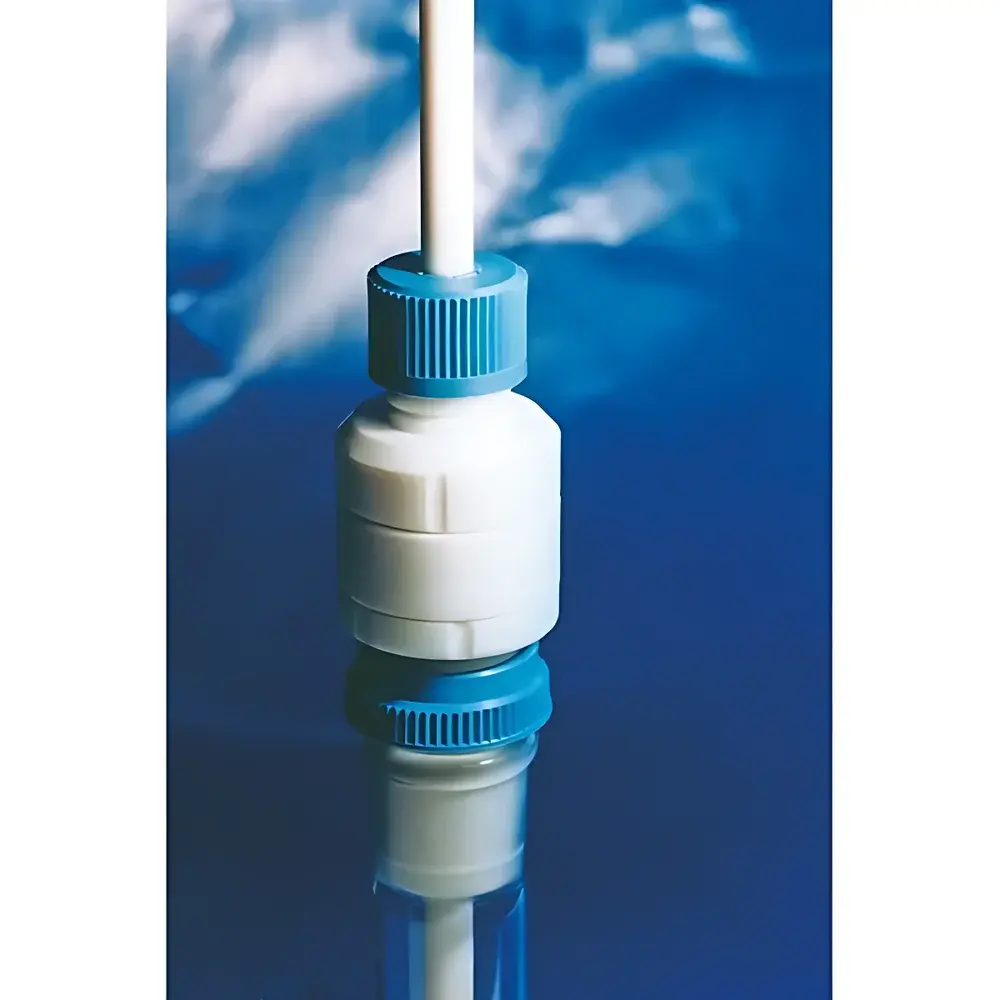
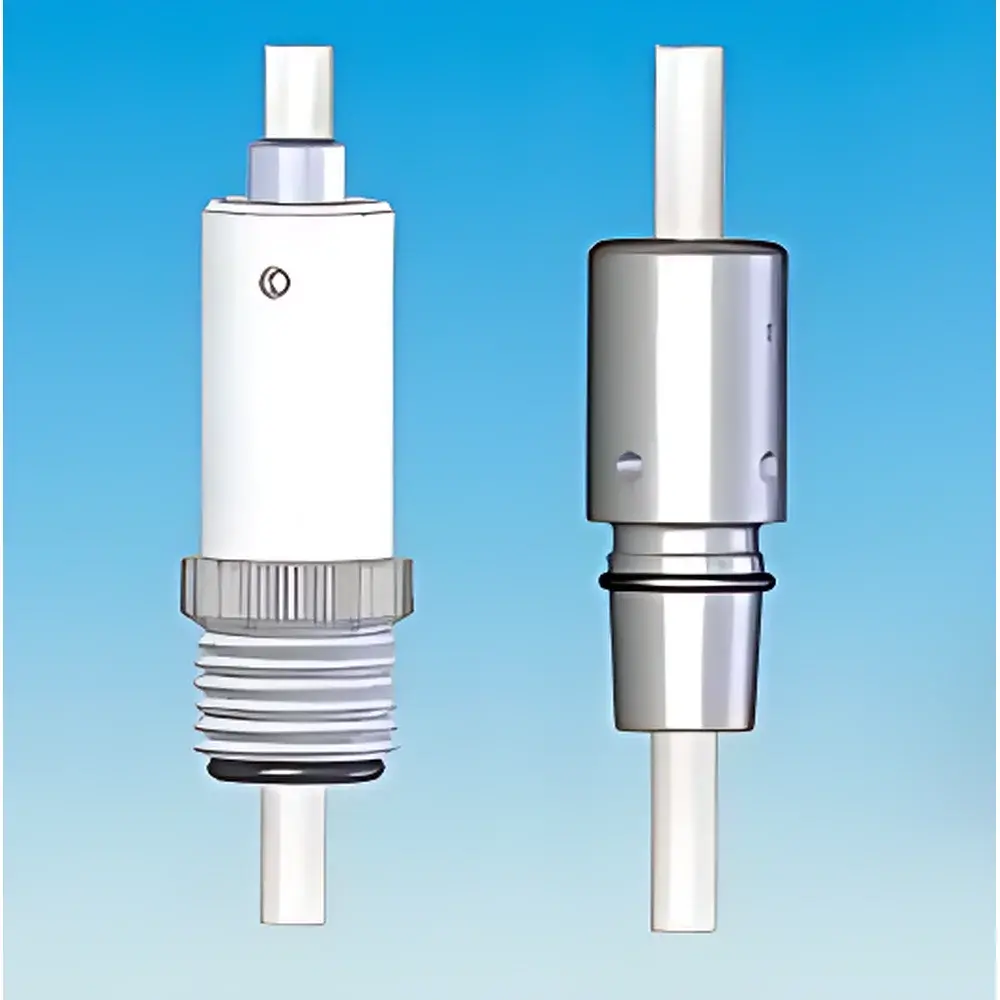
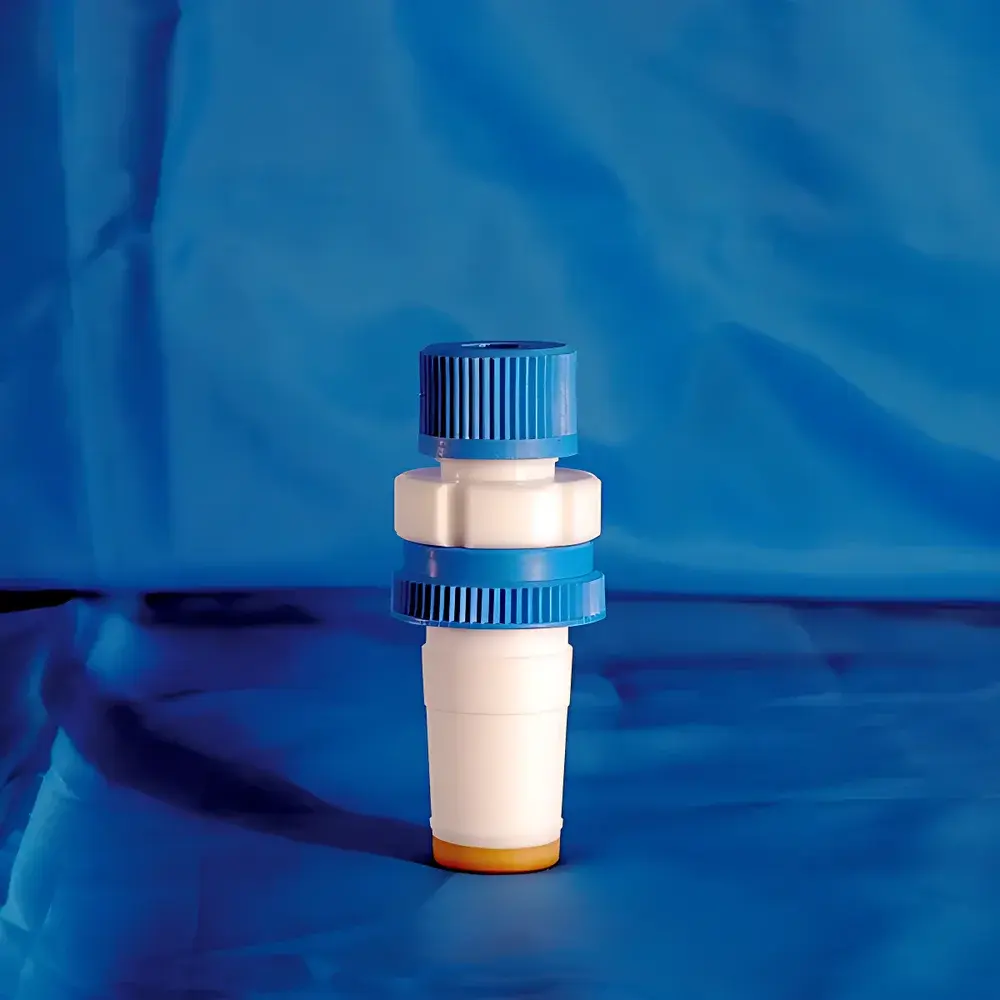
WIGGENS PTFE Stirring Bearing Assembly
| Brand | WIGGENS |
|---|---|
| Origin | Germany |
| Distributor Type | Authorized Distributor |
| Import Status | Imported |
| Model | PTFE Stirring Bearing Assembly |
| Price | Upon Request |
Overview
The WIGGENS PTFE Stirring Bearing Assembly is an engineered mechanical sealing solution designed for laboratory-scale reactors, jacketed vessels, and vacuum/pressure-rated glassware systems. It operates on the principle of dynamic rotary sealing at the shaft–vessel interface, utilizing a precision-machined, self-lubricating PTFE/PEEK composite seal element coupled with a fused borosilicate glass bearing race. This architecture eliminates metal-to-metal contact and ensures consistent torque transmission while maintaining integrity under sustained vacuum (down to 0.6 Torr) or low positive pressure (up to 5 psi). Unlike elastomeric O-ring-based seals, this design avoids compression set, thermal creep, and chemical swelling—critical for long-term reproducibility in corrosive, high-purity, or ultra-dry synthesis environments. The assembly complies with standard ISO 3585 (borosilicate glass) and ASTM D4894 (PTFE material specifications), and its geometry conforms to common international ground-glass joint standards (e.g., 19/22, 24/40, 29/42, 34/45, 45/50).
Key Features
- Full-body construction from virgin, USP Class VI-certified PTFE with reinforced PEEK fiber matrix for enhanced creep resistance and dimensional stability
- Integrated fused borosilicate glass bearing race (ISO 3585 compliant) enabling low-friction, non-galling rotation and minimal vibration (<0.02 mm radial runout at 500 rpm)
- Mechanical coupling seal geometry—no reliance on axial compression—ensuring stable performance across thermal cycles and vacuum ramping
- Chemical resistance validated against concentrated acids (H₂SO₄, HNO₃, HF ≤ 40%), alkalis (NaOH ≤ 50%), halogenated solvents, and peroxide-forming ethers
- No particle shedding: zero extractables confirmed per USP and EP 3.1.1; suitable for GMP pilot synthesis and catalyst-sensitive reactions
- Modular design supports field replacement of O-rings (FKM or FFKM options available) without disassembly of the main bearing housing
Sample Compatibility & Compliance
The bearing assembly accommodates standard laboratory stirring rods made of borosilicate glass (polished surface recommended), 316 stainless steel, or Hastelloy C-276. PTFE or Rulon-coated rods are not recommended due to insufficient rigidity and risk of eccentric wear. All variants meet DIN EN ISO 14644-1 Class 5 cleanroom handling requirements when packaged. Vacuum performance has been verified per ASTM E595 outgassing testing (TML <0.5%, CVCM <0.1%). Device configurations comply with IEC 61010-1 for laboratory equipment safety and support GLP audit trails when integrated with compatible stirrer controllers.
Software & Data Management
While the bearing itself is a passive mechanical component, it is fully interoperable with digital stirrer systems supporting RS-485 or analog 0–10 V control inputs (e.g., WIGGENS WS-3000 series, IKA RV 10 digital). When used with FDA 21 CFR Part 11-compliant controllers, full operational parameters—including speed profile, duration, vacuum level, and timestamped maintenance logs—can be recorded and electronically signed. Replacement O-ring lot traceability is maintained via QR-coded packaging labels aligned with ISO 9001 documentation protocols.
Applications
- High-vacuum distillations and fractional crystallizations (e.g., organometallic purification under ≤1 Torr)
- Anhydrous Grignard and lithium–halogen exchange reactions requiring inert-atmosphere integrity
- Catalytic hydrogenations in Parr-style reactors operating at 3–5 psi H₂ overpressure
- Photochemical synthesis in quartz-jacketed vessels where metallic contamination must be excluded
- Long-duration batch polymerizations (>72 h) demanding zero seal drift or lubricant migration
- GMP intermediate synthesis where particulate control and extractables validation are mandated
FAQ
What is the maximum continuous rotational speed rating?
Continuous operation is rated at 500 rpm; intermittent duty (≤15 min/h) supports up to 800 rpm. Speed limits assume proper shaft alignment (≤0.1° angular misalignment) and balanced load conditions.
Can this bearing be used with PTFE-coated stir bars?
No. PTFE or soft polymer-coated rods lack the torsional stiffness required and may induce eccentric wear, compromising seal life and vacuum integrity.
Is replacement O-ring material specified?
Standard assemblies ship with FKM (Viton®) O-rings rated to 200 °C; FFKM (Kalrez®) variants are available for >250 °C or aggressive fluorinated media upon request.
Does the bearing require periodic lubrication?
No. The PTFE/PEEK composite and glass race are inherently self-lubricating; introduction of external lubricants voids chemical compatibility guarantees and risks contamination.
How is vacuum integrity verified during installation?
A helium leak test at 1 × 10⁻⁶ mbar·L/s sensitivity is recommended post-installation. Visual inspection for uniform O-ring seating and absence of joint galling is mandatory prior to system evacuation.



