
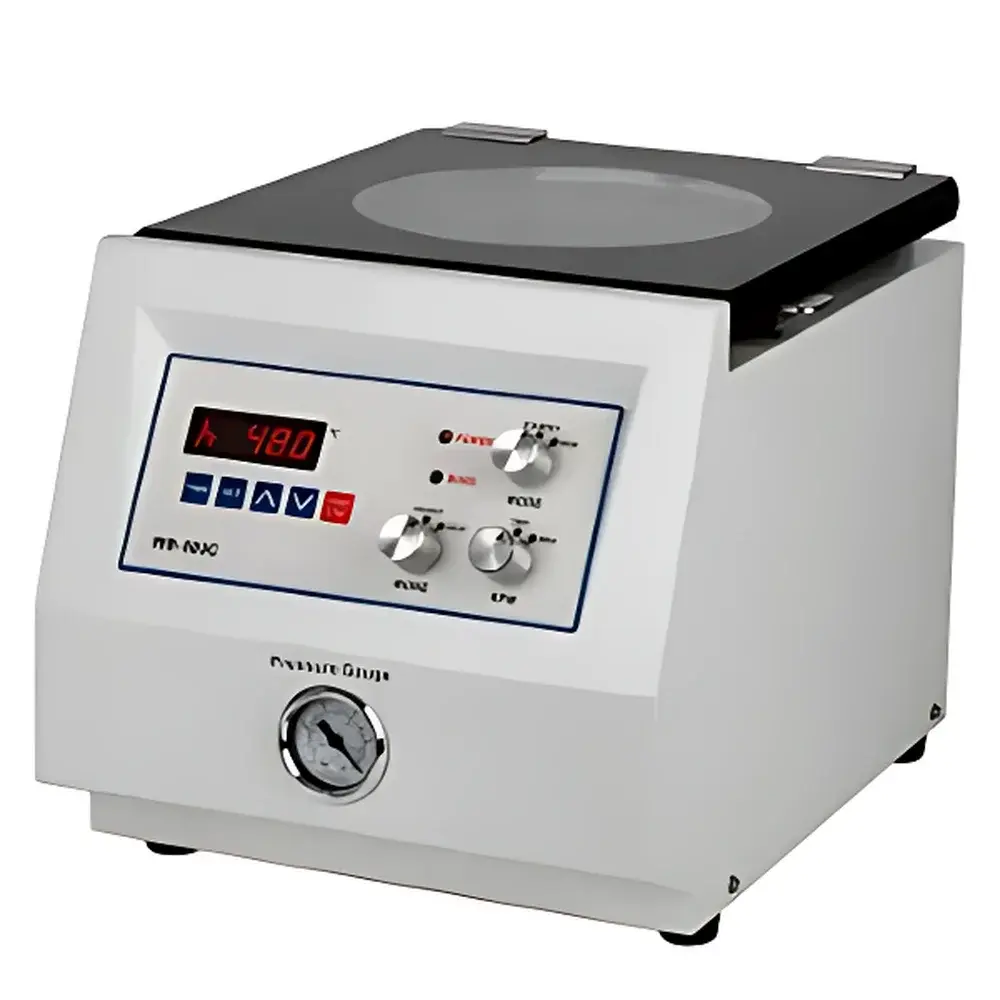
WIGGENS WB-503C Vacuum Centrifugal Concentrator
| Brand | WIGGENS |
|---|---|
| Origin | Germany |
| Model | WB-503C |
| Temperature Range | 35–65 °C |
| Temperature Control Accuracy | ±0.1 °C |
| Rotational Speed Options | 1700 / 2500 / 5000 rpm |
| Heating Modes | Infrared Only / Infrared + Conductive / Conductive Only |
| Vacuum Source | PTFE-Coated Corrosion-Resistant Diaphragm Pump |
| Ultimate Vacuum | 100 mbar |
| Chamber Capacity | 0.5 mL × 50 |
| Timer Range | 0–99 h 59 min |
| Power Supply | 220 V, 50/60 Hz, 200 W |
| Dimensions (W×D×H) | 213 × 255 × 255 mm |
| Certifications | CE, RoHS 5 |
Overview
The WIGGENS WB-503C Vacuum Centrifugal Concentrator is an engineered solution for gentle, efficient solvent removal from biological and chemical samples under reduced pressure and controlled thermal conditions. It integrates centrifugal force, vacuum-assisted evaporation, and precisely regulated infrared-conductive heating to accelerate concentration while minimizing thermal degradation of heat-labile analytes—particularly critical in nucleic acid recovery, peptide purification, metabolite enrichment, and pre-analytical sample preparation for LC-MS or NMR. Unlike conventional rotary evaporators or nitrogen blow-down systems, the WB-503C maintains sample integrity through simultaneous rotation (to prevent bumping and promote uniform film formation), active vacuum control (to lower boiling points), and non-contact infrared irradiation (for rapid, homogeneous energy transfer across sealed tubes). Its compact footprint and integrated pump architecture make it suitable for benchtop deployment in core facilities, academic labs, and regulated QC environments where space, reproducibility, and compliance readiness are prioritized.
Key Features
- Triple-mode heating system: Selectable infrared-only, infrared + conductive, or conductive-only heating enables method optimization for diverse solvents (e.g., ethanol, acetonitrile, ethyl acetate) and sample matrices (aqueous buffers, organic extracts, enzymatic digests).
- PID-controlled temperature regulation with ±0.1 °C stability across the 35–65 °C range ensures precise thermal management during sensitive workflows such as RNA precipitation or post-digestion peptide concentration.
- Three programmable rotational speeds (1700, 2500, 5000 rpm) support scalable protocols—from low-shear concentration of fragile plasmid preps to high-speed evaporation of volatile solvents—adjustable in real time without interrupting operation.
- PTFE-coated diaphragm vacuum pump delivers oil-free, corrosion-resistant performance with maintenance-free operation; achieves stable 100 mbar ultimate vacuum under continuous load, compatible with acidic or halogenated solvents.
- Internally coated chamber with PTFE finish resists chemical attack and facilitates cleaning; includes built-in LED illumination and external inspection port with integrated flashlight for non-invasive visual monitoring during active runs.
- Intuitive touch-panel interface with LED display shows real-time temperature, elapsed time, setpoint, and speed; supports timer-based shutdown up to 99 h 59 min for unattended overnight processing.
Sample Compatibility & Compliance
The WB-503C accommodates standard microcentrifuge tube formats (0.5–30 mL) including PCR strips, skirted plates, and conical-bottom vials—enabling parallel processing of up to 50 × 0.5 mL samples per run. Its design conforms to ISO 13485-aligned manufacturing practices and carries CE marking per Directive 2014/30/EU (EMC) and 2014/35/EU (LVD), as well as RoHS 5 compliance for restricted hazardous substances. While not a GMP-certified instrument per se, its stable PID control, audit-ready parameter logging (via optional software integration), and absence of lubricants or consumable filters align with GLP principles for method validation in regulated life science laboratories. The unit meets IEC 61010-1 safety requirements for laboratory electrical equipment operating under vacuum and elevated temperature.
Software & Data Management
The WB-503C operates as a standalone instrument with no embedded data logging; however, its analog/digital I/O interface (optional RS-232 or USB-to-serial adapter) supports integration into centralized lab automation platforms. When connected to compliant LIMS or ELN systems, users may record start/stop timestamps, setpoints, and runtime parameters for traceability. For full 21 CFR Part 11 compliance—including electronic signatures, audit trails, and user access controls—a validated third-party software layer (e.g., LabArchives or Thermo Fisher SampleManager) must be deployed externally. All firmware updates are distributed via WIGGENS’ secure technical portal and require manual installation by authorized service personnel.
Applications
- Molecular biology: DNA/RNA pellet reconstitution, cDNA library cleanup, restriction digest concentration, and CRISPR guide RNA formulation.
- Proteomics & metabolomics: Desalting and concentration of tryptic digests prior to LC-MS/MS; solvent exchange of lipid extracts; stabilization of phosphorylated peptides.
- Pharmaceutical development: Pre-formulation sample prep for dissolution testing, residual solvent removal from synthetic intermediates, and lyophilization precursor concentration.
- Clinical diagnostics: High-throughput concentration of plasma-derived exosomes, urinary biomarkers, and CSF analytes prior to immunoassay or digital PCR quantification.
- Environmental analysis: Pre-concentration of pesticide residues in water extracts and PAHs in soil leachates prior to GC-MS analysis.
FAQ
Is the WB-503C compatible with acidic or chlorinated solvents?
Yes—the PTFE-coated vacuum pump and fluoropolymer-lined chamber provide resistance to HCl, TFA, DCM, and other aggressive solvents commonly used in peptide synthesis and extraction workflows.
Can cold traps be retrofitted to the WB-503C?
Yes—two optional cold trap configurations are available: a 2 L glass Dewar-style trap (W7012001) and a thermoelectric (Peltier) condenser (W7012002), both interfacing via standard ISO-KF 16 vacuum flanges.
Does the instrument support remote monitoring or network connectivity?
No native Ethernet or Wi-Fi capability is included; remote status interrogation requires external hardware gateways and custom scripting via the serial command protocol documented in the Technical Manual Rev. 3.2.
What maintenance intervals are recommended for routine operation?
The diaphragm pump requires no scheduled maintenance under normal use; annual verification of O-ring integrity, chamber seal compression, and heater calibration is advised per WIGGENS Service Bulletin SB-WB503C-2023-04.
Is validation documentation (IQ/OQ/PQ) available?
Factory-issued IQ/OQ templates are provided with purchase; PQ protocols must be developed in-house using certified reference standards (e.g., NIST-traceable thermistors, calibrated vacuum gauges) and aligned with internal SOPs.



