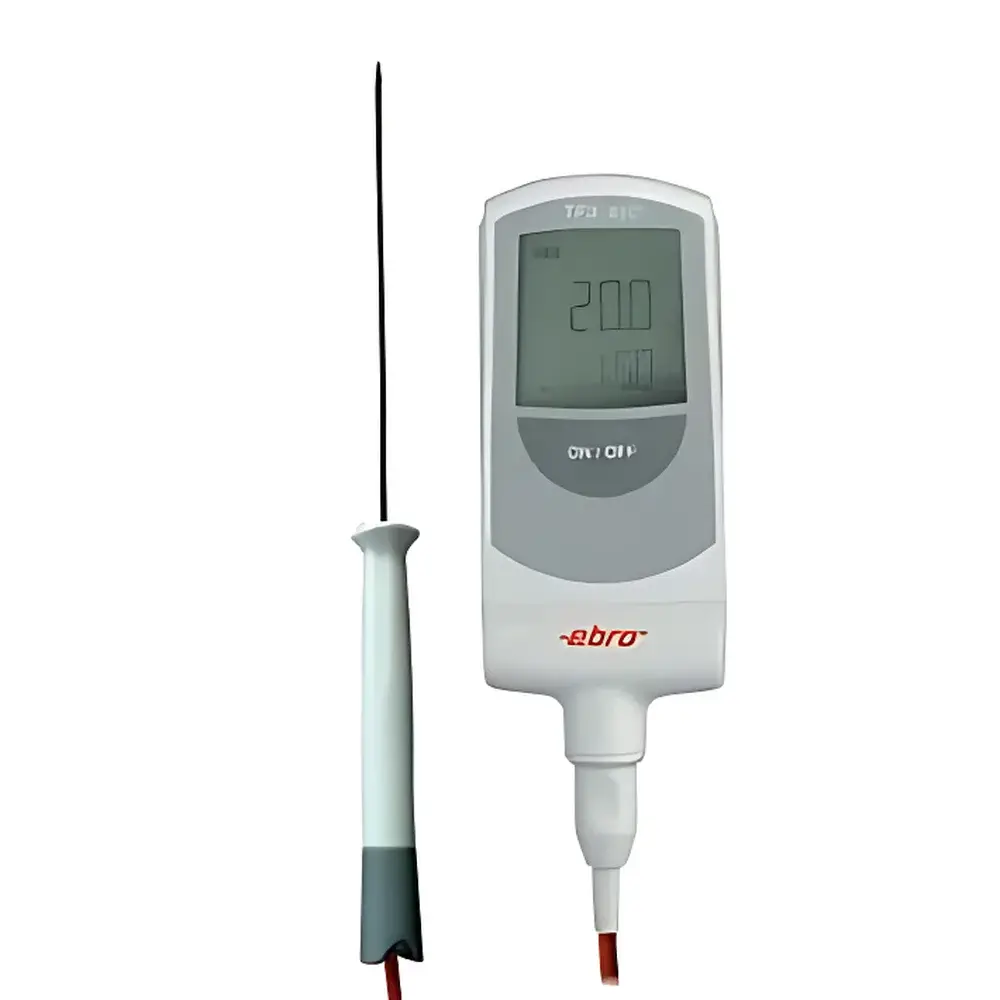
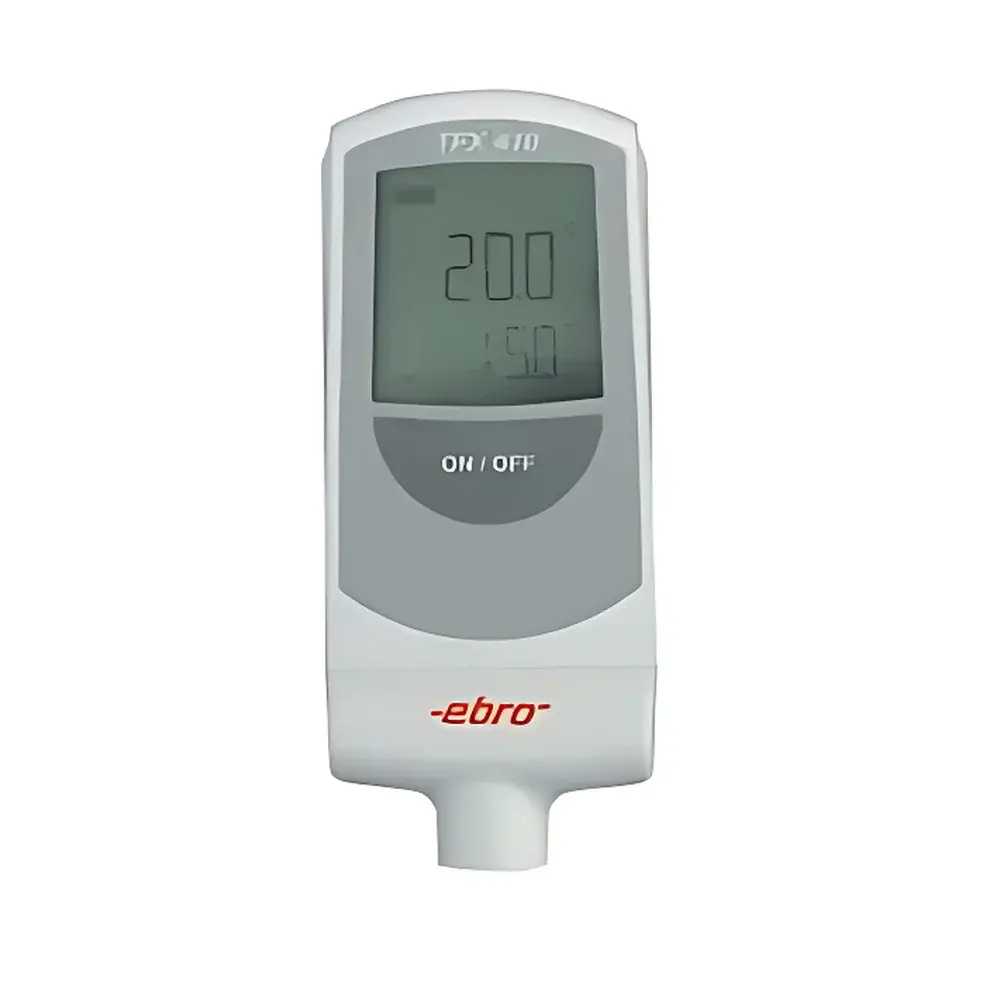
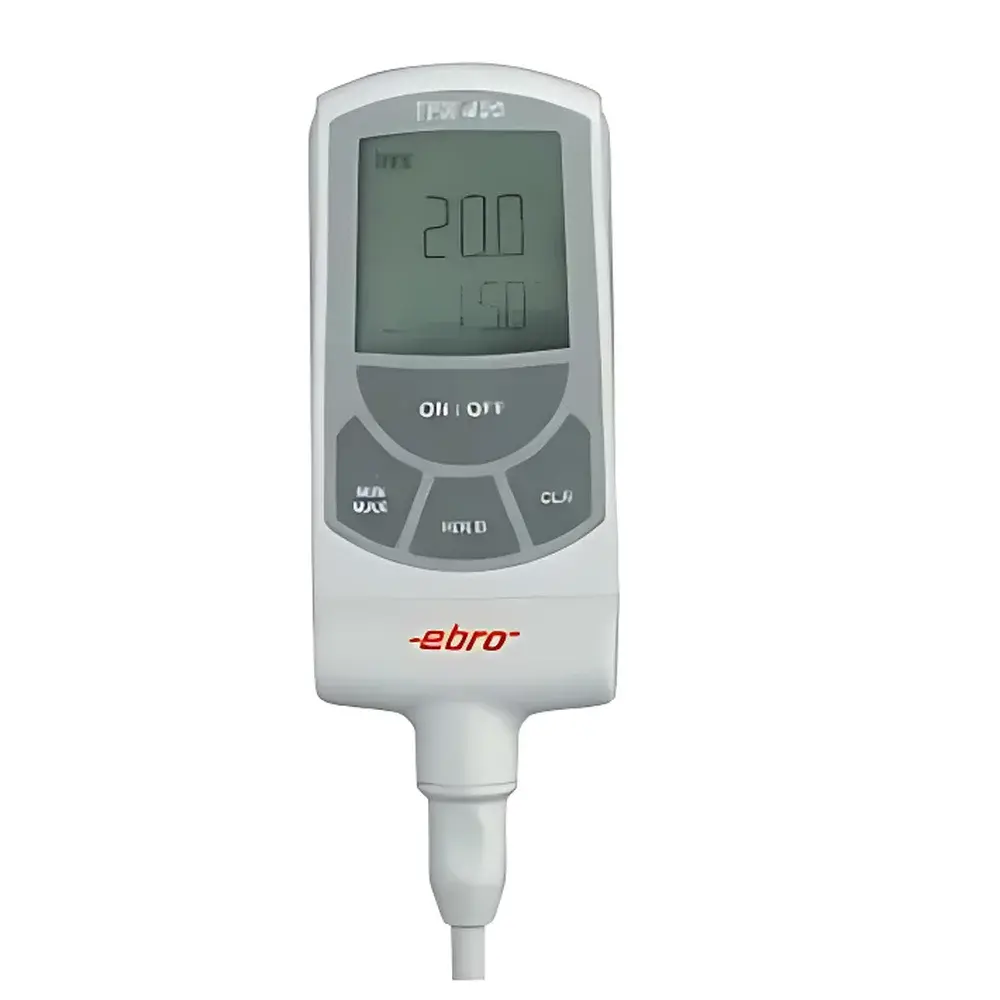
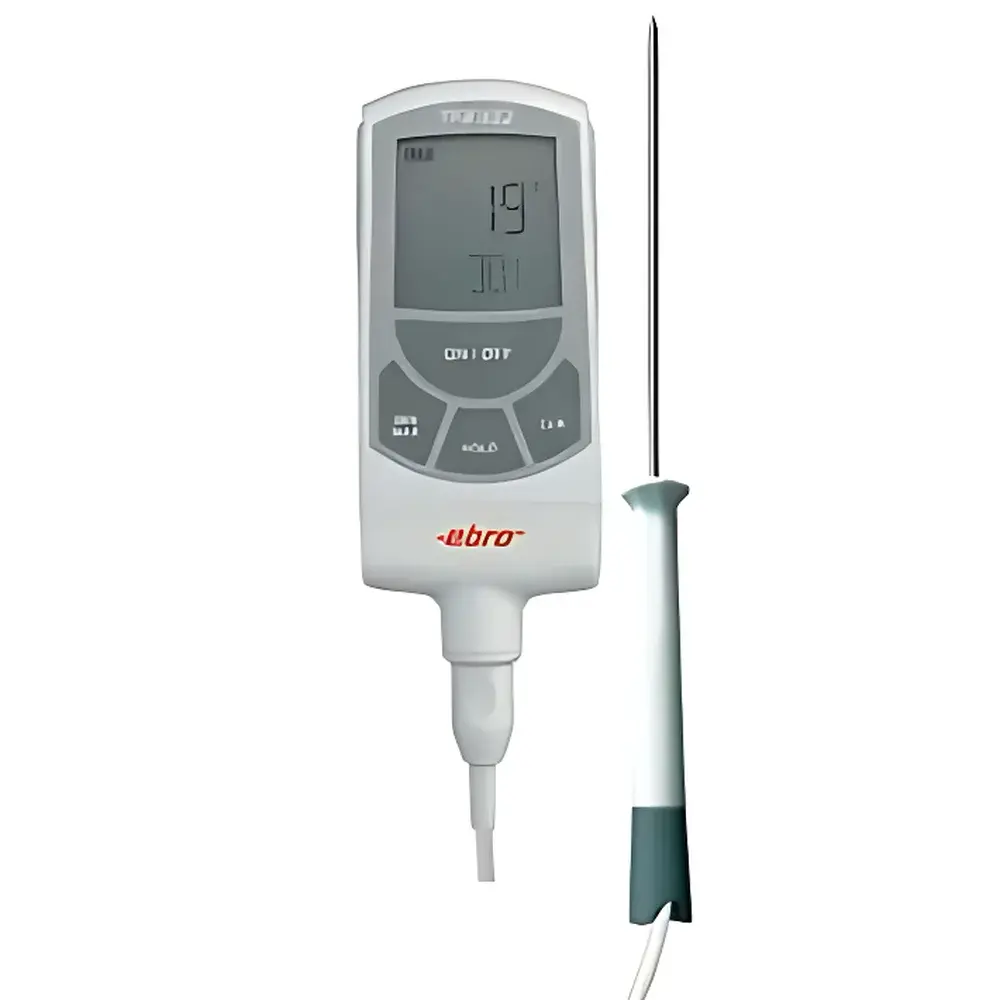
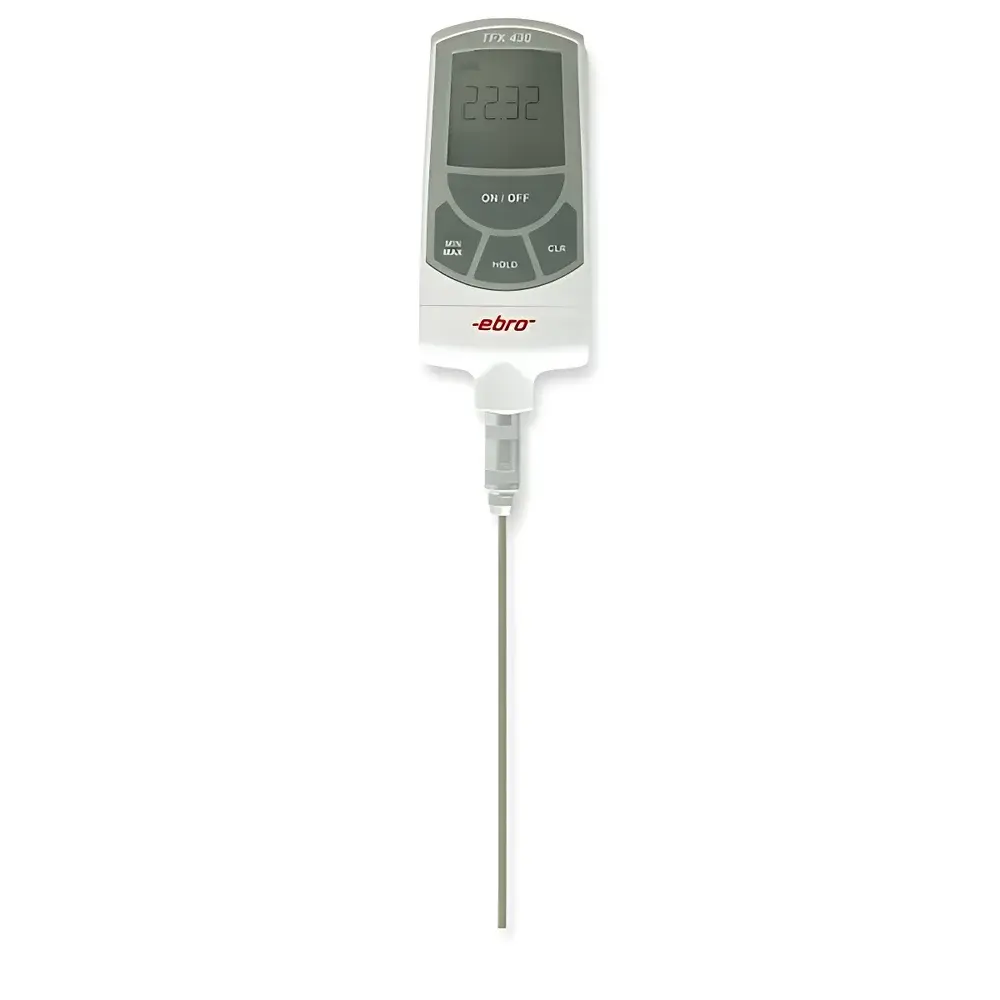
WIGGENS TFX Series Precision Digital Thermometers
| Brand | WIGGENS |
|---|---|
| Origin | Germany |
| Model | TFX410 / TFX410-1 / TFX420 / TFX422 / TFX430 |
| Temperature Range | –100 °C to +500 °C |
| Resolution | ±0.05 °C (–50 °C to +199.99 °C), ±0.2 °C (other ranges) |
| Accuracy | ±0.1 °C |
| Weight | 90 g |
| IP Rating | IP67 |
| Sensor Type | Pt100 or Pt1000 |
| Battery | 3.0 V CR2477 lithium, user-replaceable, 1 Ah, ~5-year life |
| Dimensions (L×W×H) | 109 × 54 × 22 mm (TFX430) |
| Certifications | DAkkS-accredited calibration (TFX430), factory 3-point calibration (others), GFA-compliant, compliant with DIN EN ISO/IEC 17025 requirements for accredited calibration labs |
Overview
The WIGGENS TFX Series Precision Digital Thermometers are high-stability, handheld temperature measurement instruments engineered for laboratory, pharmaceutical, food processing, and industrial quality control environments where traceable accuracy and operational robustness are critical. Built on platinum resistance sensor technology—Pt100 (IEC 60751 Class A) for the TFX430 and Pt1000 for other models—the series delivers metrologically sound measurements across an extended thermal range from –100 °C to +500 °C. Unlike thermocouple-based devices, these thermometers rely on the predictable, highly linear resistance–temperature relationship of platinum elements, ensuring long-term stability and minimal drift. The TFX430 variant is supplied with a DAkkS-accredited calibration certificate issued by an ISO/IEC 17025-accredited laboratory, satisfying regulatory expectations for audit-ready documentation under GLP, GMP, and FDA 21 CFR Part 11 frameworks. Its IP67-rated enclosure guarantees dust-tight operation and resistance to temporary immersion, making it suitable for wet-process monitoring in cleanrooms, fermentation tanks, and sterilization validation.
Key Features
- Modular sensor architecture: Interchangeable probe options—including sharp-tip (TPX230), blunt-tip (TPX130), and glass-sheathed (TPX330) Pt100 sensors—enable optimized contact geometry for surface, immersion, or semi-solid matrix measurements.
- High-resolution digital display with dual-range capability: 0.01 °C resolution within –50 °C to +199.99 °C; automatic range switching ensures optimal signal-to-noise ratio across full operating span.
- Extended battery life: CR2477 lithium cell provides >5 years of typical use (based on 10 measurements/day), with low-battery indicator and user-accessible compartment for field replacement.
- Rugged, chemical-resistant ABS housing with ergonomic grip and recessed display—designed for glove-compatible operation in controlled environments.
- Factory-traceable calibration: All units include documented 3-point verification at –20 °C, 0 °C, and +100 °C (or equivalent reference points per model); TFX430 includes DAkkS certificate meeting DIN EN ISO/IEC 17025 requirements.
- Integrated data logging interface (via optional USB adapter): Enables timestamped export of measurement sequences for electronic record retention and compliance reporting.
Sample Compatibility & Compliance
The TFX Series accommodates diverse physical sample states: gaseous (ambient air, incubator chambers), liquid (aqueous solutions, oils, solvents), semi-solid (gels, pastes, food matrices), and solid surfaces (stainless steel, glass, polymer). Probe configurations support direct insertion into media (e.g., bioreactor broth), surface contact (e.g., sterilization tray validation), or non-invasive spot checks (e.g., HVAC ducts). Regulatory alignment includes conformity with EU Regulation (EC) No 852/2004 (food hygiene), ASTM E2877-22 (standard guide for thermometer calibration), and USP Analytical Instrument Qualification. The DAkkS certificate for TFX430 satisfies national metrological traceability requirements in Germany and is recognized across EU member states under the Mutual Recognition Agreement (MRA).
Software & Data Management
While the TFX hardware operates as a standalone instrument, its digital output supports integration into validated data ecosystems. When paired with the optional WIGGENS USB interface cable and WIGGENS DataLink software (v3.2+), users can configure automated measurement intervals (1–60 s), assign sample IDs, append location metadata, and export CSV-formatted datasets with ISO 8601 timestamps. Audit trail functionality records operator ID, calibration date, and sensor serial number per session—meeting ALCOA+ principles (Attributable, Legible, Contemporaneous, Original, Accurate, Complete, Consistent, Enduring, Available) required for 21 CFR Part 11 compliance. Raw data files retain cryptographic hash signatures to prevent post-acquisition modification.
Applications
- Pharmaceutical manufacturing: Monitoring autoclave chamber temperature profiles during steam sterilization cycles (ISO 17665-1), lyophilizer shelf temperature mapping, and environmental monitoring of cold chain storage.
- Food safety laboratories: Verification of HACCP-critical control points—including refrigeration units (–25 °C), blast chillers (–40 °C), and retort processes (+121 °C).
- Chemical R&D: Reaction calorimetry support, catalyst bed temperature profiling, and distillation column reflux monitoring.
- Academic research: Calibration reference for IR thermography systems, validation of environmental test chambers, and thermal characterization of nanomaterials.
- Regulatory auditing: Serving as a portable reference standard during third-party GMP inspections, where documented traceability and uncertainty budgets are mandatory.
FAQ
What is the difference between DAkkS calibration and factory 3-point calibration?
DAkkS calibration is performed by an external, nationally accredited laboratory under ISO/IEC 17025, providing legally recognized traceability to PTB (Physikalisch-Technische Bundesanstalt) standards. Factory calibration verifies performance at three fixed points but does not confer metrological equivalence to national standards.
Can the TFX430 be used for surface temperature measurement of stainless steel equipment?
Yes—when equipped with the TPX130 blunt-tip probe and applied with thermal interface compound, it achieves stable contact with polished metal surfaces, minimizing air-gap error per ASTM E2877 Annex A3.
Is the battery replacement procedure compliant with IEC 62366-1 usability requirements?
Yes—the battery compartment features tactile indicators, tool-free access, and clear polarity markings, validated through summative usability testing per IEC 62366-1:2015.
Does the TFX series support multi-point temperature mapping?
Not natively—but up to four TFX units (with synchronized time stamps via NTP-enabled host PC) can be deployed concurrently using WIGGENS DataLink for spatial thermal profiling.
How often should recalibration be performed in a GxP environment?
Per USP , recalibration frequency depends on risk assessment; typical intervals range from 6 months (high-use QA labs) to 24 months (low-frequency reference use), with intermediate verification using NIST-traceable dry-block calibrators.