
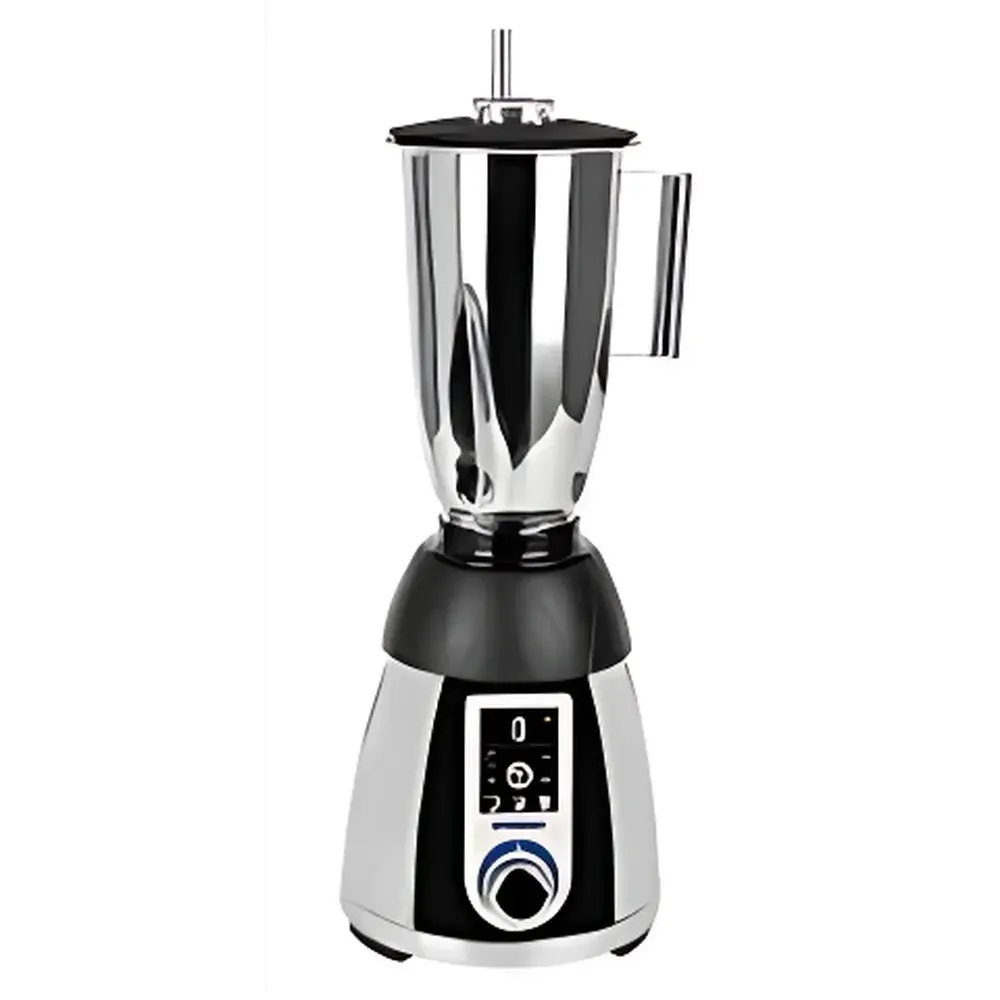
WIGGENS WMD950 High-Performance Benchtop Tissue Homogenizer
| Brand | WIGGENS |
|---|---|
| Origin | Germany |
| Model | WMD950 |
| Type | Benchtop Tissue Homogenizer |
| Output Power | 950 W |
| Display | TFT High-Brightness LCD |
| Control | Rotary Knob + Touch Interface |
| Speed Range | 1,000–17,000 rpm (10-step adjustment) |
| Timer | 1 s–60 min |
| Operating Modes | Continuous, Pulse, Momentary, Programmable |
| Safety Interlock | Lid-actuated motor cutoff |
| Noise Level | 76 dB(A) at 17,000 rpm |
| Operating Temperature | 10–40 °C |
| Voltage | 230 V AC, 50 Hz |
| Dimensions | Ø194 × 516 mm |
| Weight | 4.4 kg |
| Compliance | EN 60335-1:1988, EN 60335-2-64:1993, EN 55014:1993, EN 61000-3-2:1995, EN 61000-3-3:1995 |
| Protection Class | IP20 (Class I) |
Overview
The WIGGENS WMD950 is a high-torque, benchtop tissue homogenizer engineered for reproducible mechanical disruption of biological, botanical, and chemical samples under controlled laboratory conditions. Utilizing high-shear rotor-stator principle—where a rapidly rotating stainless-steel cutting head generates intense hydrodynamic forces within a fixed chamber—the WMD950 achieves efficient cell lysis, emulsification, suspension homogenization, and particle size reduction. Its 950 W brushless motor delivers consistent torque across the full speed range (1,000–17,000 rpm), enabling reliable processing of viscous, fibrous, or temperature-sensitive materials including animal tissues, plant roots, microbial cultures, pharmaceutical suspensions, and food matrices. Designed and manufactured in Germany, the unit adheres to stringent EU safety and electromagnetic compatibility standards (EN 60335 series, EN 55014, EN 61000), ensuring operational integrity in regulated environments such as GLP-compliant labs, clinical research facilities, and QC laboratories.
Key Features
- High-efficiency six-blade stainless-steel cutting head with dual sealed ball bearings—optimized for uniform shear distribution and minimal heat generation during extended operation.
- TFT high-brightness LCD display with intuitive rotary knob and capacitive touch interface for precise parameter input and real-time status feedback.
- Four operational modes: continuous run, momentary activation, programmable pulse sequence, and fully customizable timed programs—supporting method reproducibility and SOP compliance.
- Integrated lid-safety interlock system that automatically disables motor activation unless the sample vessel is fully seated and secured—meeting EN 60335-2-64 mechanical hazard requirements.
- Load-compensated electronic speed control ensures stable rotational velocity even under variable viscosity or sample mass, minimizing torque drop and preserving process consistency.
- Soft-start electronics eliminate mechanical shock during startup, reducing vibration transmission and extending drive train longevity.
Sample Compatibility & Compliance
The WMD950 supports a broad range of sample vessels—including glass (MTG series: 125–1000 mL) and stainless-steel containers (MTS series: 2000–4000 mL)—all featuring chemically resistant, autoclavable materials and precision-machined sealing interfaces. All cutting heads, shafts, and vessel lids are constructed from medical-grade AISI 316 stainless steel, compliant with ISO 8536-4 for pharmaceutical container-closure integrity. The system meets essential safety directives for laboratory equipment in the European Economic Area, including Low Voltage Directive 2014/35/EU and Electromagnetic Compatibility Directive 2014/30/EU. While not inherently 21 CFR Part 11 compliant, audit-ready operation is achievable when integrated with validated LIMS or ELN platforms supporting electronic signatures and change-controlled protocols.
Software & Data Management
The WMD950 operates as a standalone instrument with no embedded firmware-based data logging; however, its programmable timer and mode selection enable repeatable method execution without external software dependency. For traceability in regulated workflows, users may document parameters manually or integrate via external time-stamped video capture or digital lab notebook entries. Optional accessories—including MTH-series acrylic safety shields and MBH-series containment hoods—enhance operator protection during volatile or aerosol-generating procedures. All firmware updates (if applicable) are distributed exclusively through WIGGENS-certified service centers to maintain calibration stability and regulatory alignment.
Applications
- Pre-analytical sample preparation for molecular biology (DNA/RNA extraction, protein solubilization).
- Homogenization of pharmacopeial reference standards per USP <711> and EP 2.9.35 dissolution testing protocols.
- Particle size reduction and dispersion stabilization in nutraceutical and functional food R&D.
- Cell disruption for enzyme activity assays and metabolite profiling in academic and industrial biotechnology labs.
- Routine QC homogenization of creams, ointments, and suspensions in cosmetic and pharmaceutical manufacturing.
FAQ
What is the maximum recommended sample volume for the WMD950 using glass vessels?
Standard glass mixing units (MTG series) support up to 1000 mL; stainless-steel vessels (MTS 2000/4000) extend capacity to 4000 mL with enhanced thermal and mechanical stability.
Is the WMD950 suitable for cryogenic homogenization?
No—operating temperature range is specified at 10–40 °C; sub-zero applications require specialized dry-ice or liquid nitrogen–compatible systems with insulated housings and low-temperature lubricants.
Can the cutting head be sterilized in an autoclave?
Yes—stainless-steel cutting assemblies (including shaft, blades, and bearing housings) are fully autoclavable at 121 °C, 15 psi for 20 minutes; verify O-ring integrity post-sterilization.
Does the WMD950 include FDA 21 CFR Part 11–compliant audit trail functionality?
No—this is a stand-alone analog/digital hybrid instrument without built-in electronic records; compliance requires integration with validated third-party data management systems.
What maintenance intervals are recommended for optimal performance?
Inspect blade sharpness and bearing smoothness every 200 operating hours; replace cutting head assemblies after 1000 hours or upon visible wear; clean all wetted parts immediately after each use per ISO 13485 cleaning validation guidelines.



