
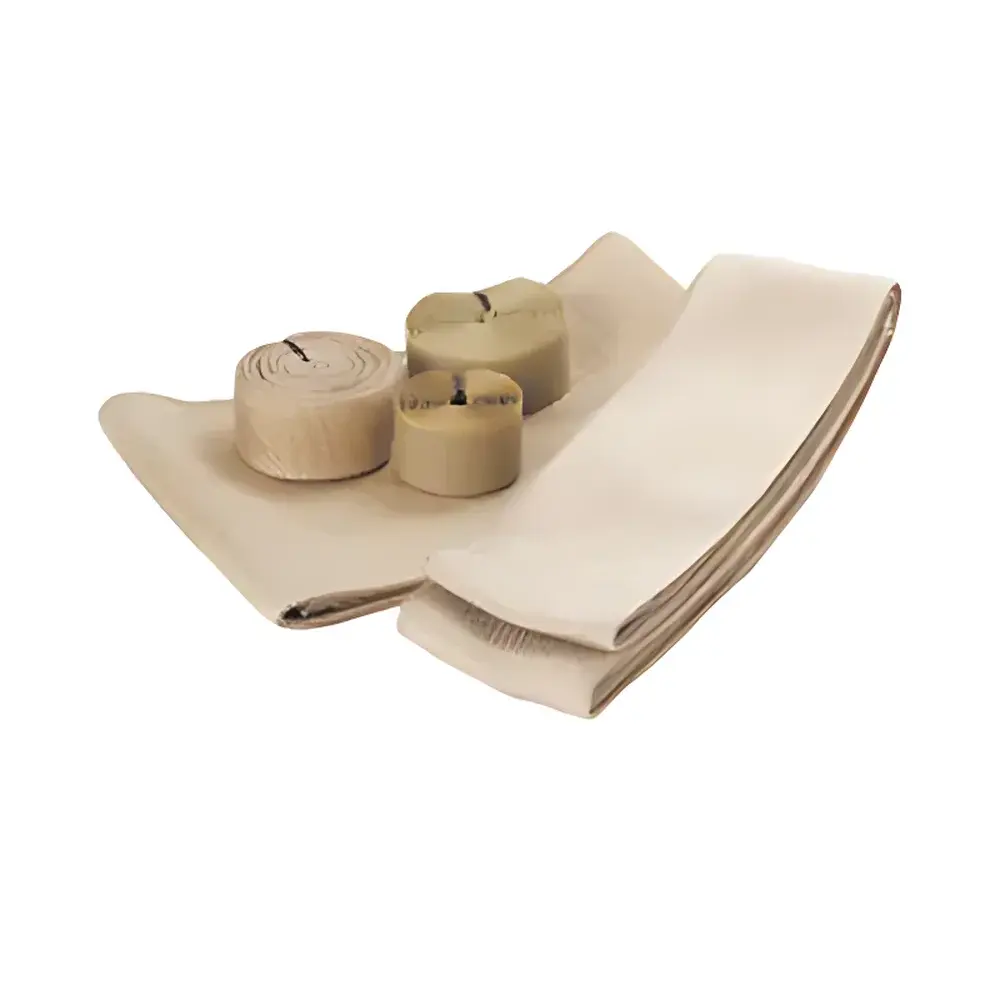
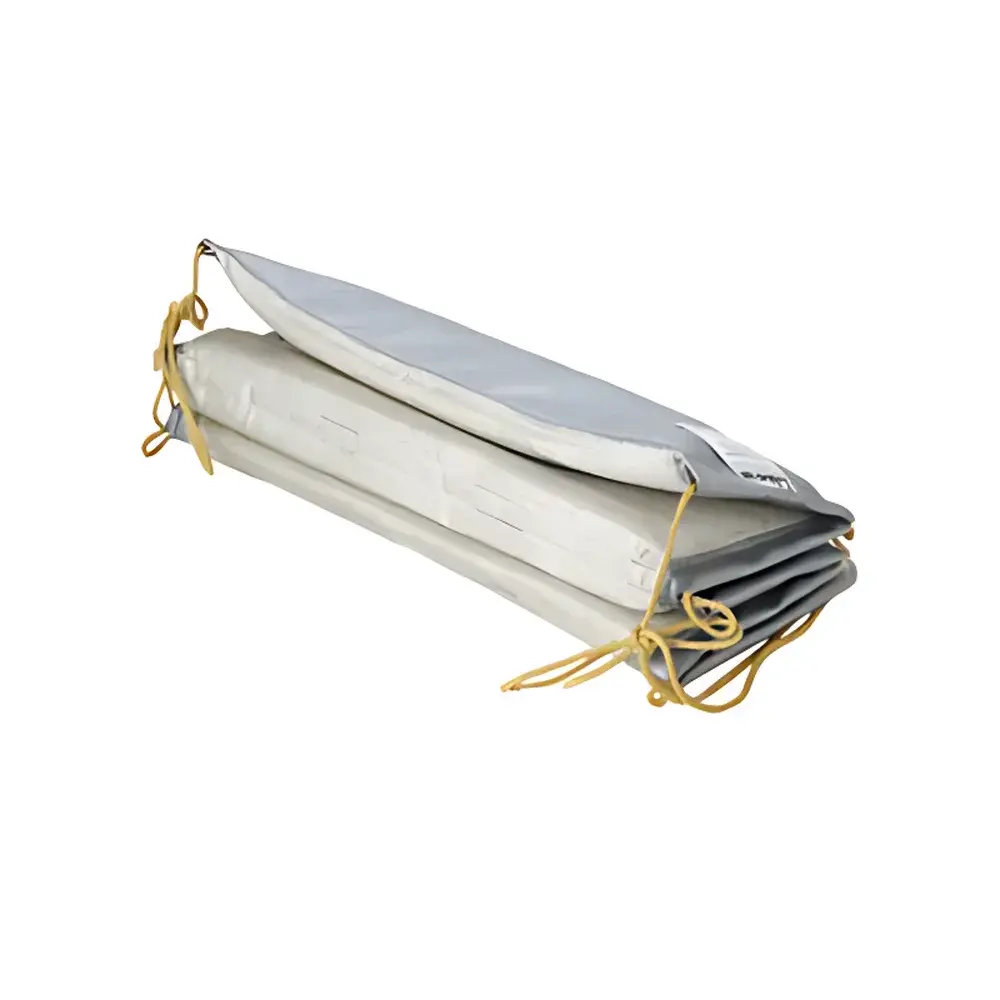
WIGGENS INSULEZE IK220 High-Temperature Insulation Sleeve Kit
| Brand | WIGGENS |
|---|---|
| Origin | Germany |
| Manufacturer Type | Authorized Distributor |
| Origin Category | Imported |
| Model | INSULEZE IK220 |
| Price | Upon Request |
| Max Operating Temperature | 250 °C |
| Dimensions | 76 cm × 38 cm × 1.3 cm |
| Construction | Dual-Sided Glass Fiber Fabric — One Side Plain Woven, Opposite Side Silicone-Impregnated & Moisture-Resistant |
| Fastening | Two 1.8 m Heat-Resistant Straps |
| Chemical Resistance | Broad Inorganic & Organic Solvent Compatibility |
| Flame Retardancy | Non-Combustible (ASTM E84 Class A) |
| Compliance | Meets EN 13501-1 for Fire Classification, RoHS 2015/863/EU Compliant |
Overview
The WIGGENS INSULEZE IK220 is a high-performance, dual-layer thermal insulation sleeve kit engineered specifically for laboratory-scale reactors, jacketed vessels, condensers, and other temperature-sensitive glassware or metal apparatus. It operates on the principle of conductive and convective thermal resistance enhancement—leveraging low thermal conductivity (< 0.15 W/m·K at 25 °C), high specific heat capacity, and structural integrity across repeated thermal cycling. Unlike conventional foam or ceramic blankets, the IK220 employs a reinforced glass fiber substrate with asymmetric surface functionalization: one side retains standard woven texture for mechanical grip and conformability, while the opposite side is impregnated with a platinum-cured, food-grade silicone elastomer that delivers moisture barrier properties, washability, and enhanced dimensional stability under thermal load. Its design supports both exothermic containment (e.g., preventing heat loss during reflux or synthesis) and cryogenic isolation (e.g., minimizing ambient heat ingress during dry ice or liquid nitrogen cooling). The material exhibits zero smoke development and no halogen emission when exposed to elevated temperatures up to its rated 250 °C continuous service limit—making it suitable for use in ISO 17025-accredited testing labs and GMP-compliant pilot-scale process development environments.
Key Features
- Dual-surface architecture: Uncoated glass fiber side ensures secure adhesion and friction-based retention on curved vessel surfaces; silicone-impregnated side provides hydrophobicity, cleanability, and resistance to condensation-induced delamination.
- Structural resilience: Maintains shape retention and compressive recovery after repeated installation/removal cycles—even after exposure to thermal shocks between –70 °C and +250 °C.
- Chemical inertness: Resistant to concentrated acids (HCl, HNO₃), alkalis (NaOH ≤ 40 wt%), common organic solvents (acetone, ethanol, THF, toluene), and oxidizing agents (H₂O₂ ≤ 30 wt%). Not recommended for prolonged contact with molten alkali metals or fluorinated acids (HF, F₂).
- Non-combustible core: Certified per ASTM E84 with flame spread index ≤ 25 and smoke-developed index ≤ 50—classified as Class A fire-rated material per NFPA 101 and EN 13501-1.
- Modular integration: Designed for interoperability with IK210 (high-temp strip kits), IK230 (long-format strapable sleeves), and IK240 bulk configurations—enabling custom-fit assemblies for round-bottom flasks (50–5000 mL), jacketed reactors (1–20 L), and distillation columns.
Sample Compatibility & Compliance
The INSULEZE IK220 is compatible with borosilicate glass (Duran®, Pyrex®), stainless steel (316L), Hastelloy C-276, and PTFE-lined vessels. It does not adhere chemically to substrates and requires mechanical fastening only—eliminating risk of residue transfer or surface etching. All raw materials comply with EU Regulation (EC) No 1907/2006 (REACH), Directive 2015/863/EU (RoHS 2), and are free from asbestos, formaldehyde, and heavy-metal catalysts. Documentation includes full Declaration of Conformity (DoC), Material Safety Data Sheet (MSDS/SDS), and third-party test reports for thermal aging (ISO 11357-2), vertical burn (UL 94 V-0 equivalent), and outgassing (NASA ASTM E595 < 1.0% TML).
Software & Data Management
As a passive physical safety component, the IK220 requires no firmware, calibration, or software interface. However, its performance parameters—including thermal attenuation curves, time-to-failure under sustained load, and degradation thresholds—are documented in WIGGENS’ Lab Safety Integration Toolkit (LSIT), a web-accessible resource for lab managers conducting risk assessments per ISO/IEC 17025 Clause 8.5.2 and OSHA 1910.1200. Users may download application-specific thermal modeling templates (Excel-based, validated against ASTM D5470) to quantify expected surface temperature reduction under defined ambient and process conditions. Audit trails for procurement, installation, and replacement intervals can be integrated into existing CMMS platforms via standardized CSV export protocols.
Applications
- Thermal stabilization of exothermic Grignard or lithiation reactions in 1–5 L jacketed reactors.
- Minimizing heat gain during low-temperature hydrogenation (–20 °C to –40 °C) using cryostats or recirculating chillers.
- Secondary containment for glassware subjected to ultrasonic agitation or magnetic stirring—reducing microfracture propagation and splash hazards.
- Shielding of thermocouple ports, pressure relief valves, and sight glasses from radiant heat during high-temperature digestions (e.g., EPA Method 3050B).
- Complementing fume hood safety protocols by reducing localized hot surface exposure in open-bench synthesis workflows.
FAQ
Can the IK220 be autoclaved?
No. Autoclaving (121 °C, saturated steam, 15–20 psi) exceeds the material’s moisture tolerance threshold and may compromise silicone crosslink density. Dry heat sterilization at ≤ 180 °C for ≤ 2 hours is permissible but not routinely recommended.
Is cutting or trimming the IK220 sleeve permitted?
Yes—using ceramic-blade scissors or tungsten-carbide shears. Edges do not fray; however, cut surfaces must remain unsealed to preserve vapor-permeable functionality. Avoid abrasive grinding tools that generate airborne glass fiber particulates.
Does IK220 meet FDA requirements for pharmaceutical manufacturing?
While not an FDA-listed device, its base materials comply with USP Class VI biological reactivity standards and extractables profile per ICH Q5C. It is widely deployed in API pilot plants operating under FDA 21 CFR Part 211 and EU GMP Annex 11 for non-product-contact thermal management.
How often should IK220 sleeves be replaced?
Under normal lab use (≤ 5 thermal cycles/week, max 250 °C), replacement is recommended every 24 months—or immediately if visible charring, silicone cracking, or >10% thickness compression is observed.
Can IK220 be used with microwave-assisted synthesis reactors?
No. The glass fiber substrate is conductive and poses arcing risk in microwave fields. It is strictly prohibited for use in closed-vessel microwave systems (e.g., CEM MARS, Biotage Initiator+).



