
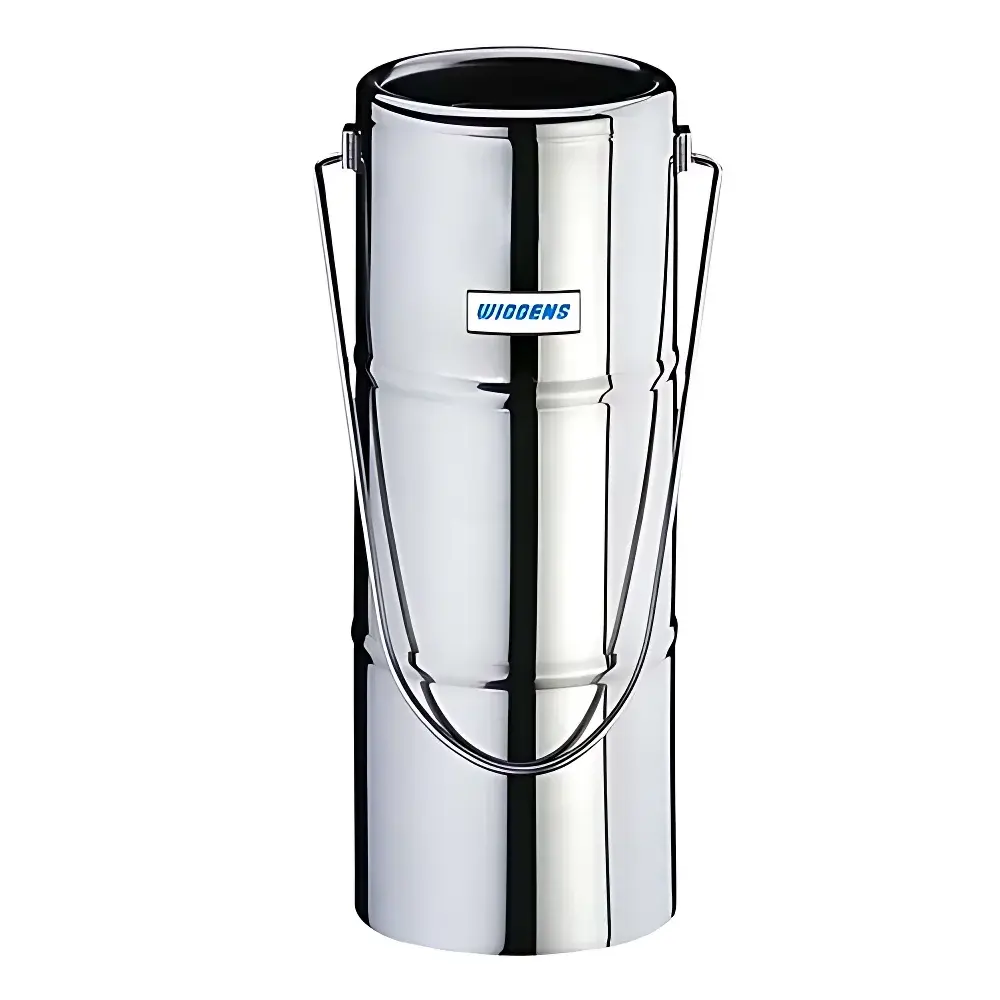
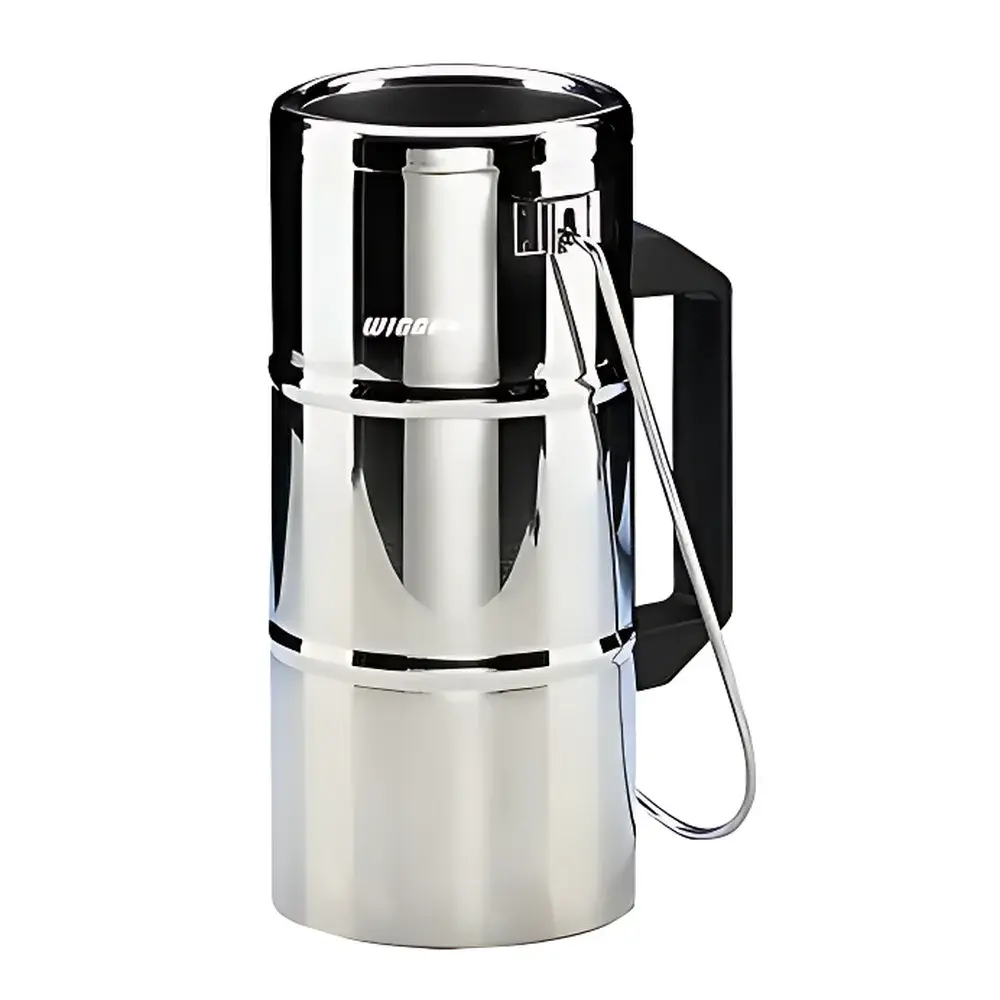
WIGGENS GSS/DSS Series Stainless Steel Dewar Flasks
| Brand | WIGGENS |
|---|---|
| Origin | Germany |
| Manufacturer Type | Authorized Distributor |
| Import Status | Imported |
| Model | GSS/DSS |
| Price Range | USD 1,400 – 2,800 |
Overview
The WIGGENS GSS/DSS Series Stainless Steel Dewar Flasks are engineered for reliable, long-term cryogenic storage and transport of liquid nitrogen (LN₂), dry ice, and other low-temperature biological or material science samples. Constructed from high-grade austenitic stainless steel (AISI 304), these double-walled vacuum-insulated vessels operate on the fundamental principle of high-vacuum thermal isolation—minimizing conductive, convective, and radiative heat transfer to maximize hold time and minimize boil-off. Designed specifically for laboratory environments where sample integrity, operator safety, and regulatory traceability are critical, the series complies with ISO 21670:2020 (Cryogenic Vessels — Vacuum-Insulated Transfer Vessels) and meets mechanical safety requirements per EN 13445-3 (Unfired Pressure Vessels — Design). Unlike single-walled containers or polymer-based alternatives, the GSS/DSS flasks deliver consistent thermal performance across repeated thermal cycling, supporting GLP-compliant workflows in biobanking, cell therapy, and reproductive medicine laboratories.
Key Features
- Vacuum-insulated double-wall construction with helium leak-tested integrity (≤1×10⁻⁹ mbar·L/s), ensuring stable thermal resistance over >10 years of service life
- Ergonomic handling system: GSS models feature integrated side handles and top carrying handles (excluding GSS 500); DSS models include top-only lifting handles optimized for vertical stability during transport
- Stainless steel body and neck tube resist corrosion, thermal shock, and mechanical abrasion—validated for ≥50,000 LN₂ fill cycles under routine lab use
- Low-profile, wide-mouth aperture (≥157 mm diameter across all models ≥1 L) enables unobstructed access for cryovials, straws, canes, and automated retrieval tools
- Modular lid compatibility: Standard aluminum lids provide basic vapor-phase sealing; optional anti-evaporation insulated lids (Order No. 2680–2683) reduce daily LN₂ loss by up to 40% via multi-layer reflective foil and closed-cell polyurethane foam integration
- Traceable manufacturing: Each unit carries a permanent laser-engraved serial number linked to factory calibration records and vacuum decay test reports
Sample Compatibility & Compliance
The GSS/DSS series supports vapor-phase and liquid-phase storage of cryopreserved biological materials including human oocytes, embryos, hematopoietic stem cells, and microbial cultures per ISBER Best Practices (2023). All models are certified for use with standard 2 mL cryovials (Nunc, Corning), 0.5 mL straws (Minitube), and 10–25 cm cryocanes (Thermo Fisher). The flasks meet IATA Packing Instruction 206 for ground and air transport of non-pressurized cryogenic liquids and conform to FDA 21 CFR Part 11 requirements when used in conjunction with validated electronic logging systems for temperature and fill-level monitoring. No internal coatings or adhesives are used—eliminating leachables that could compromise sensitive biological assays.
Software & Data Management
While the GSS/DSS flasks are passive storage devices, they integrate seamlessly with third-party digital infrastructure. Compatible with Bluetooth-enabled LN₂ level sensors (e.g., CryoTel Pro, MVE SmartLink), the flasks support real-time monitoring via cloud platforms compliant with ISO/IEC 27001:2022. Audit trails—including date/time-stamped fill events, temperature excursions, and lid-open duration—are exportable in CSV or PDF formats for internal QA review or regulatory submissions. Optional RFID tag mounting points (on lid or base ring) enable asset tracking within LIMS environments aligned with ISO/IEC 17025:2017 clause 8.9.
Applications
- Long-term biobanking of primary human tissues and induced pluripotent stem cell (iPSC) lines at −196 °C
- Transport of CAR-T cell products between clinical manufacturing sites and infusion centers under chain-of-custody protocols
- Backup storage for ultra-low temperature freezers (−80 °C) during power outages or maintenance windows
- Cryopreservation workflow staging in IVF clinics—pre-chilling media, equilibrating vitrification solutions, and temporary holding post-warming
- Materials science applications: Low-temperature characterization of superconductors, quantum dot suspensions, and metal-organic frameworks (MOFs)
FAQ
What is the expected service life of the vacuum insulation?
Vacuum integrity is guaranteed for 10 years from date of manufacture, with annual verification recommended using a calibrated vacuum gauge (e.g., Pfeiffer TPR 280).
Can these dewars be used for liquid oxygen or liquid argon?
No—these units are certified exclusively for liquid nitrogen and solid carbon dioxide per EN 13445 Annex C. Use with other cryogens voids warranty and violates pressure vessel classification.
Is the anti-evaporation lid required for GLP compliance?
Not mandatory, but strongly recommended for audits requiring documented evidence of minimized sample temperature fluctuation; its use reduces LN₂ consumption and associated variability in vapor-phase gradients.
Do GSS/DSS models support automated filling systems?
Yes—neck dimensions and rim geometry comply with standard cryo-filler nozzles (e.g., Taylor-Wharton CryoFill Pro, Air Products CryoLogic). Custom adapter plates available upon request.
How is thermal performance verified at time of delivery?
Each unit ships with a Certificate of Conformance listing measured boil-off rate (L/day), vacuum level (mbar), and LN₂ hold time (hr) under ISO 21670 Clause 6.3 test conditions (23 °C ambient, 60% RH, sealed lid).




