
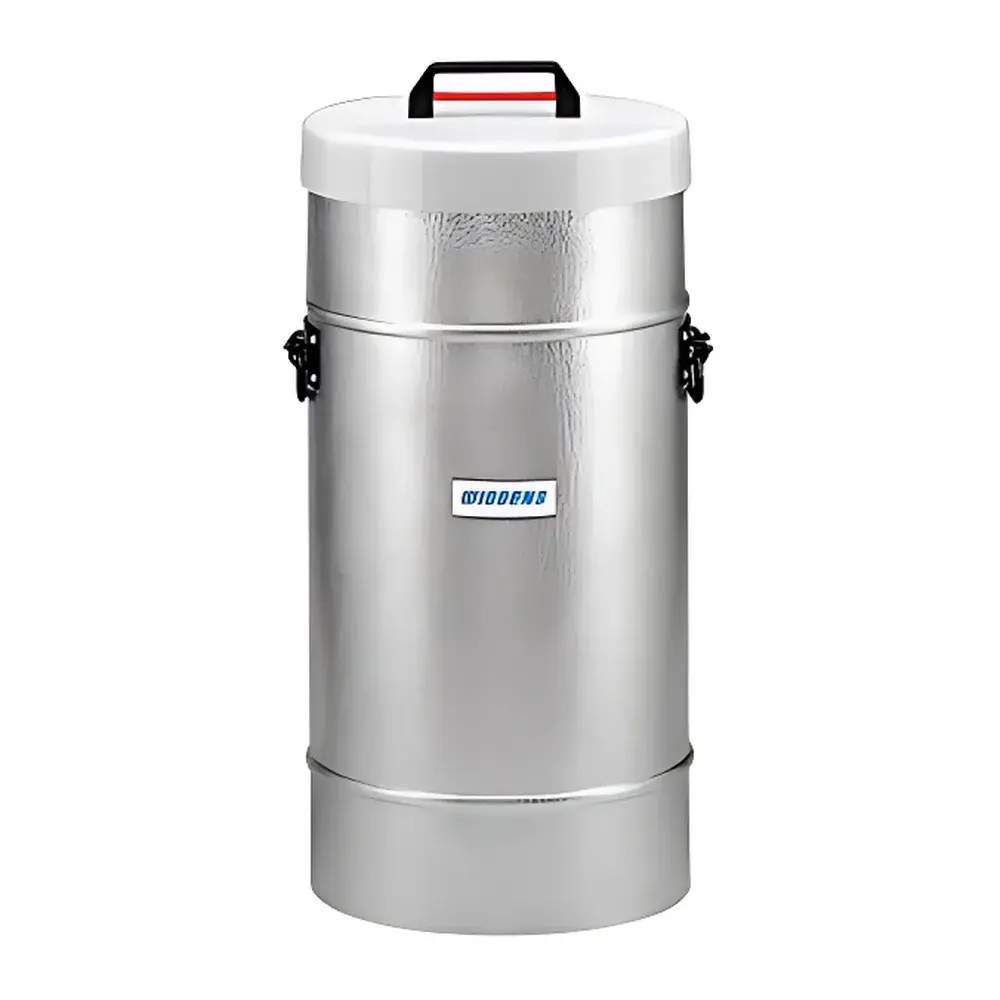
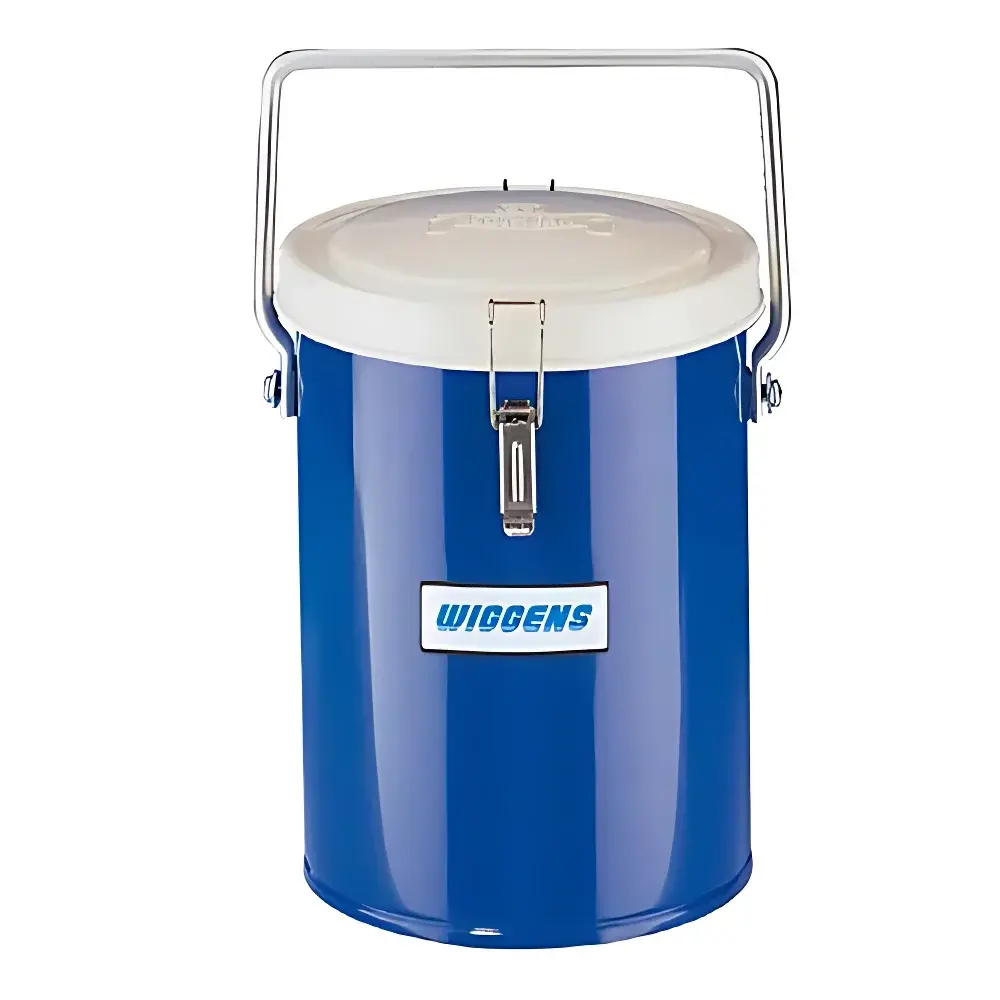
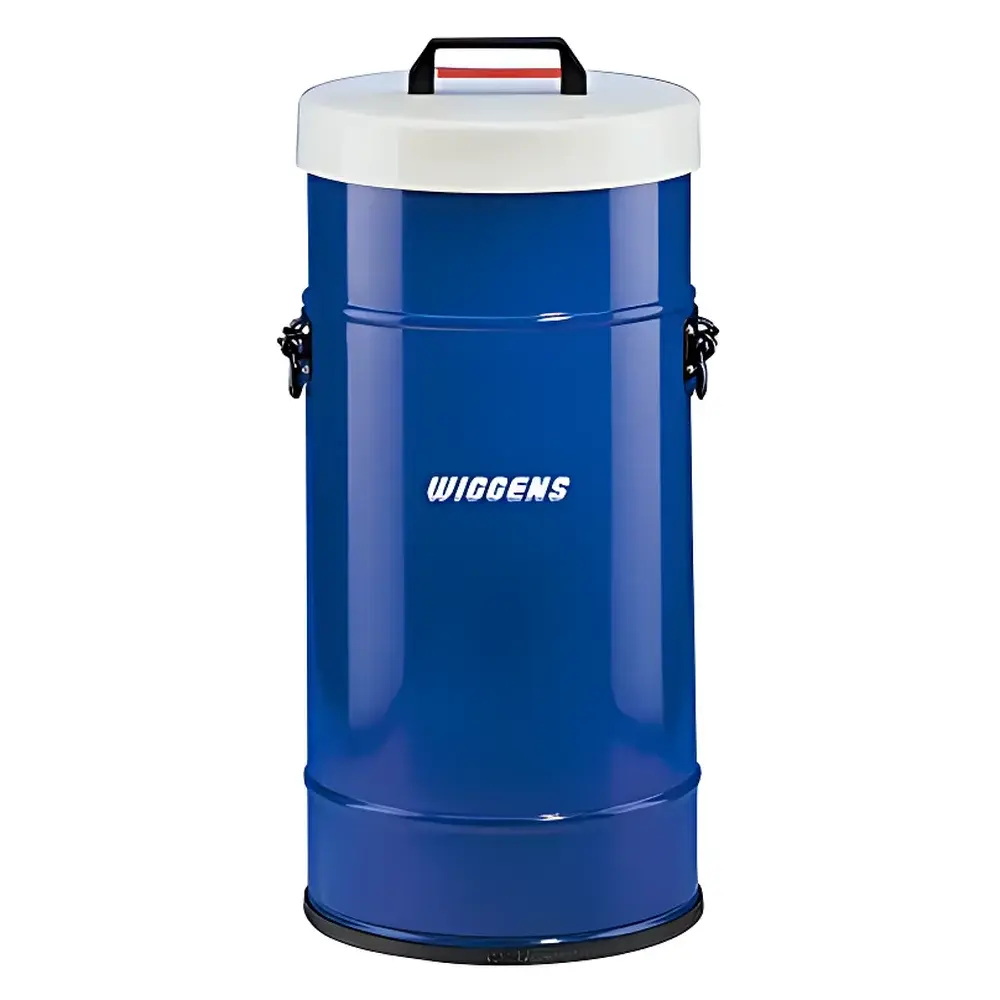
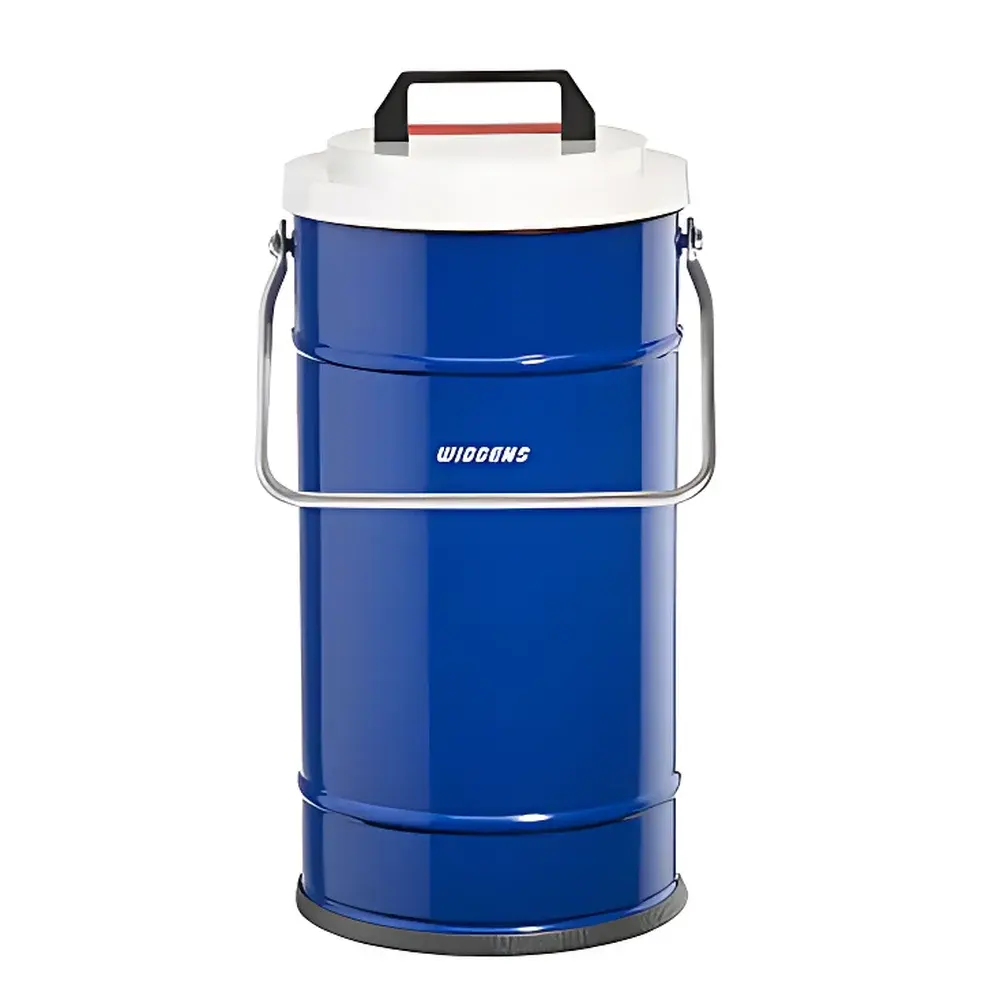
WIGGENS B/C/BE/CAL Series Portable & High-Capacity Dewar Flasks
| Brand | WIGGENS |
|---|---|
| Origin | Germany |
| Model Series | B / C / BE / CAL |
| Construction | Vacuum-insulated double-walled stainless steel or painted steel |
| Capacity Range | 2.6 L to 28 L |
| Liquid Nitrogen Holding Time | Up to 71 hours |
| LN₂ Evaporation Rate | 1.2–1.9 L/day |
| Dry Ice Consumption Rate | 0.4–0.6 kg/day |
| Outer Dimensions (L×W×H) | 120×132×150 mm to 250×280×750 mm |
| Net Weight | 1.5–16 kg |
| Compliance | Designed for ISO 13485-aligned laboratory cold chain workflows, compatible with GLP/GMP sample transport documentation |
Overview
The WIGGENS B/C/BE/CAL Series Portable & High-Capacity Dewar Flasks are vacuum-insulated, double-walled cryogenic containers engineered for reliable short- to medium-term storage and transport of temperature-sensitive biological materials. These flasks operate on the principle of high-vacuum thermal insulation—achieved via evacuated interstitial space between inner and outer walls—to minimize conductive and convective heat transfer. Unlike pressurized liquid nitrogen tanks, these passive dewars rely on controlled venting (via optional 2 mm center vent holes in B/BE series lids) to safely manage boil-off pressure during LN₂ storage. They are not intended for long-term static storage (>72 h), but rather for validated workflows involving specimen transfer between incubators, centrifuges, freezers, and analytical instruments—particularly where portability, ergonomic handling, and consistent sub-zero stability (−196 °C for LN₂; −78 °C for dry ice) are critical.
Key Features
- Vacuum-insulated construction with stainless steel (BE/CAL series) or epoxy-coated carbon steel (B/C series) outer shells ensures mechanical robustness and corrosion resistance in routine lab environments.
- Ergonomic handling options include aluminum lifting handles (B series), dual side-grip handles (C series), and spring-loaded vapor-tight lids with integrated clamping mechanisms to reduce evaporative losses.
- Modular lid configurations support both sealed operation (for dry ice applications) and controlled venting (for liquid nitrogen use), complying with standard safety protocols for cryogen handling per EN 13485 and OSHA 1910.101.
- Interchangeable accessories—including insulated top plates, flax fiber cooling belts, and custom-fit inner liners—enable application-specific adaptation without compromising thermal integrity.
- All models undergo factory vacuum integrity testing and are supplied with traceable batch documentation suitable for audit-ready GLP and GMP environments.
Sample Compatibility & Compliance
These dewars accommodate a broad spectrum of cryopreserved specimens: primary cell suspensions, stem cell vials, tissue biopsies, RNA/DNA extracts, and enzyme preparations. The B/BE series is certified for direct liquid nitrogen immersion and transient storage up to 71 hours (model-dependent); the C/CAL series is optimized for dry ice-based stabilization of temperature-labile reagents and diagnostics kits. All units meet material biocompatibility requirements per USP , and surface finishes comply with ISO 10993-5 cytotoxicity screening. Vent hole modifications (e.g., 2 mm central aperture) must be performed only by authorized service personnel to maintain vacuum integrity and avoid condensation-induced thermal bridging.
Software & Data Management
While inherently analog devices, WIGGENS B/C/BE/CAL dewars integrate seamlessly into digital cold-chain monitoring ecosystems. Each unit is uniquely identifiable via engraved serial numbers and supports third-party Bluetooth-enabled temperature loggers (e.g., LogTag®, DicksonOne) mounted externally on the neck tube. Data from such loggers can be exported in CSV or PDF format for inclusion in electronic lab notebooks (ELN) and aligned with 21 CFR Part 11-compliant audit trails when paired with validated timestamped acquisition software. Optional RFID tags (available upon request) enable automated inventory reconciliation within LIMS platforms.
Applications
- Transport of frozen PBMCs, CAR-T cells, and organoids between clinical collection sites and central processing labs.
- On-bench cryo-staging during single-cell sequencing library prep to prevent thermal cycling artifacts.
- Field-deployable storage of environmental microbiome samples requiring immediate −80 °C-equivalent stabilization.
- Backup containment for ultra-low temperature freezers during power outages or maintenance cycles (validated for ≤8 h hold time).
- Calibration reference vessels for infrared thermography validation across −80 °C to −196 °C ranges.
FAQ
Can the B series be used for long-term liquid nitrogen storage?
No. The B/BE series is designed for transport and short-term holding (≤71 h). Continuous static LN₂ storage requires active cooling or pressurized tanks compliant with PED 2014/68/EU.
Is the 2 mm vent hole mandatory for LN₂ use?
Yes—failure to install a properly sized vent prevents safe pressure release and risks lid ejection or vacuum collapse.
Are CAL-series dewars suitable for direct liquid nitrogen contact?
No. CAL models are optimized for dry ice and non-boiling cryogens only. Inner wall metallurgy and seal geometry do not support sustained LN₂ immersion.
Do these dewars require periodic vacuum reconditioning?
No. Factory-sealed vacuum insulation is rated for ≥10 years under normal handling conditions. Visual inspection for frost accumulation on outer walls indicates potential vacuum degradation.
Can I autoclave the inner liner or lid components?
No. Stainless steel liners are passivated but not autoclavable; repeated steam exposure compromises vacuum seal integrity and gasket elasticity.




