
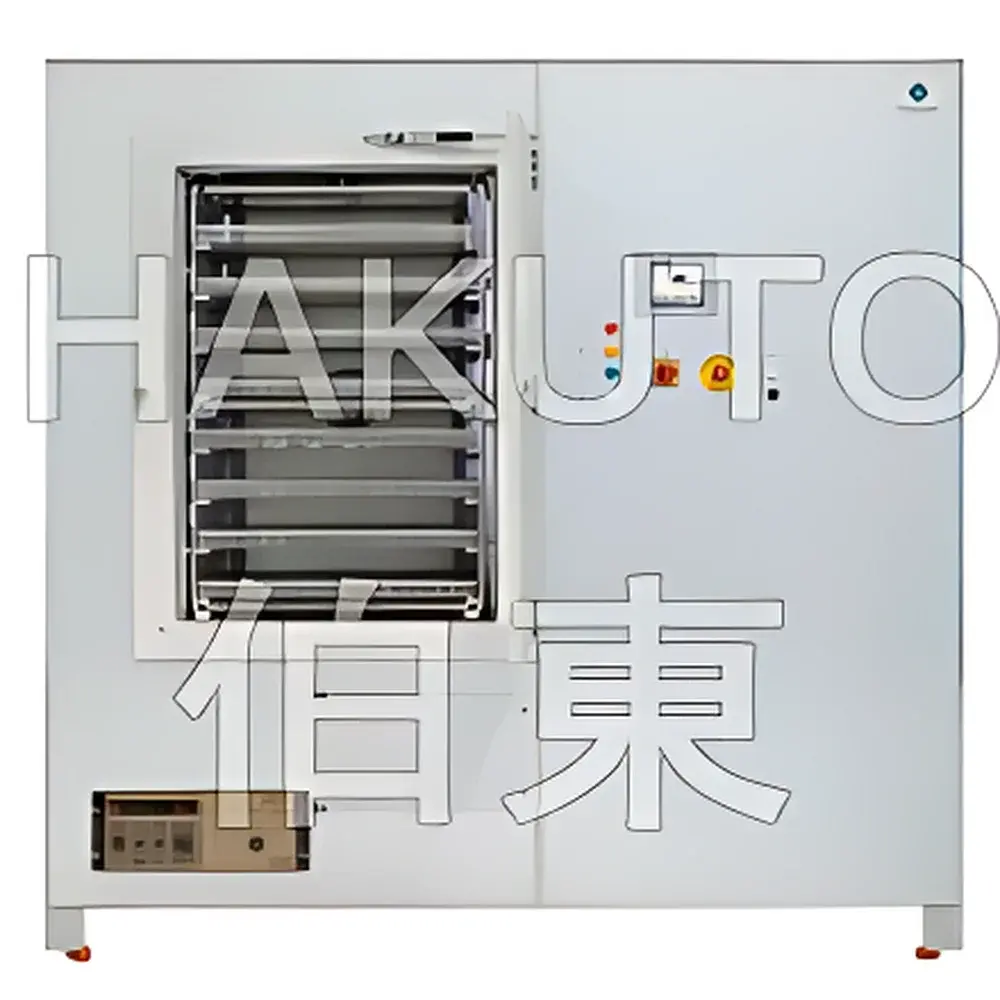
Europlasma CD1200PLC Plasma Surface Treater for Hydrophilic Modification and Activation of ELISA Microplates
| Brand | Europlasma |
|---|---|
| Origin | Belgium |
| Model | CD1200PLC |
| Power | 5 kW |
| Chamber Dimensions (Effective) | 700 × 700 × 1200 mm |
| Chamber Volume | 490 L |
| Chamber Material | Aluminum |
| Process Gases | Oxygen, Argon, Nitrogen |
| Control System | Fully Automated PLC-Based Interface |
| Equipment Category | Imported Plasma Surface Treatment System |
| Compliance | Designed for GLP-compliant lab environments |
Overview
The Europlasma CD1200PLC is a high-capacity, fully automated low-pressure radio-frequency (RF) plasma surface treater engineered for precise, reproducible hydrophilic modification and functional activation of polymeric microplate substrates—particularly polystyrene (PS)-based ELISA plates. Operating on the principle of reactive gas plasma discharge under controlled vacuum conditions, the system generates energetic oxygen, nitrogen, and argon plasma species that induce both physical sputtering and chemical grafting on material surfaces. This dual-mode interaction removes organic contaminants, reduces surface energy, and covalently anchors polar functional groups—including hydroxyl (–OH), carboxyl (–COOH), carbonyl (C=O), and hydroperoxy (–OOH)—to the substrate surface. The resulting surface exhibits water contact angles (WCA) consistently below 10°, enabling uniform liquid spreading, enhanced protein adsorption kinetics, and stable covalent immobilization of low-molecular-weight analytes under physiological or detergent-containing buffer systems (e.g., Triton X-100, Tween 20).
Key Features
- Industrial-grade RF plasma source delivering stable, uniform power output at 5 kW—optimized for batch processing of irregularly shaped, high-volume microplate arrays.
- Vacuum chamber constructed from anodized aluminum (490 L internal volume; effective dimensions: 700 × 700 × 1200 mm), ensuring corrosion resistance, thermal stability, and electromagnetic shielding during prolonged plasma operation.
- Multi-gas compatibility (O₂, N₂, Ar) with mass flow control, allowing process tuning for selective surface oxidation, nitridation, or inert cleaning—critical for preserving bulk mechanical integrity while maximizing surface reactivity.
- Integrated PLC-based automation with recipe-driven operation, real-time pressure monitoring, and interlocked safety protocols compliant with IEC 61000-6-2/6-4 EMC standards.
- Validated process repeatability across >10⁴ treatment cycles; chamber design supports rapid pump-down (<3 min to 10⁻² mbar) and gas exchange, enabling continuous 24-hour production scheduling.
Sample Compatibility & Compliance
The CD1200PLC accommodates standard 96-well, 384-well, and custom-format ELISA plates fabricated from PS, COP (cyclo-olefin polymer), or other plasma-responsive thermoplastics. Its large-format chamber enables simultaneous treatment of heterogeneous batches—including non-uniform geometries—without fixture redesign or manual repositioning. All plasma exposure parameters (pressure, gas composition, RF power, dwell time) are traceable and auditable, supporting compliance with ISO 13485 for medical device component manufacturing and GLP documentation requirements. While not a medical device itself, the system is routinely deployed in facilities adhering to FDA 21 CFR Part 11 principles for electronic records and signatures when integrated with validated LIMS or MES platforms.
Software & Data Management
The embedded HMI interface provides intuitive recipe management, real-time parameter logging (vacuum level, forward/reflected RF power, gas flow rates), and event-triggered data export via Ethernet (Modbus TCP). Process logs include timestamped metadata for each run—essential for root-cause analysis during QC investigations or regulatory audits. Optional integration with third-party SCADA or laboratory informatics systems allows centralized archiving of treatment history, linking specific microplate lots to corresponding plasma parameters and WCA validation reports.
Applications
- Surface activation of PS-based ELISA plates to enable high-affinity, orientation-controlled immobilization of small-molecule antigens (<10 kDa) via electrostatic interaction with newly introduced cationic amine groups.
- Pre-treatment of cell culture microplates to enhance adhesion and proliferation of primary neurons and stem cells through increased surface density of –OH and –COOH moieties.
- Functionalization of microplates intended for detergent-solubilized membrane protein assays, where conventional passive adsorption fails due to surfactant interference.
- Removal of mold-release agents and hydrocarbon residues from injection-molded consumables prior to sterilization or functional coating steps.
- Enabling inkjet-printed assay development by improving droplet wettability and reducing coffee-ring effects on hydrophobic plate surfaces.
FAQ
What plasma gases are recommended for achieving WCA <10° on PS microplates?
Oxygen plasma is primary for maximal hydrophilicity; nitrogen may be added in controlled ratios to promote amine group formation without excessive etching.
Can the CD1200PLC treat microplates pre-loaded with lyophilized reagents?
No—only empty, clean plates should be processed. Residual biomolecules would decompose under plasma, contaminating the chamber and compromising surface chemistry.
Is post-treatment aging a concern for functionalized surfaces?
Yes; hydrophilic functionality decays over 7–14 days in ambient air. For long-term storage, treated plates should be sealed under inert gas or used within 72 hours of processing.
Does the system support IQ/OQ/PQ validation documentation?
Europlasma provides base qualification templates; full protocol development and execution require collaboration with qualified validation partners per ISO 13485 or GAMP 5 guidelines.
How is chamber contamination managed between batches?
In situ O₂ plasma cleaning cycles (5–10 min at 100 W) effectively remove organic residue; aluminum chamber walls resist buildup and allow visual inspection after each maintenance interval.



