
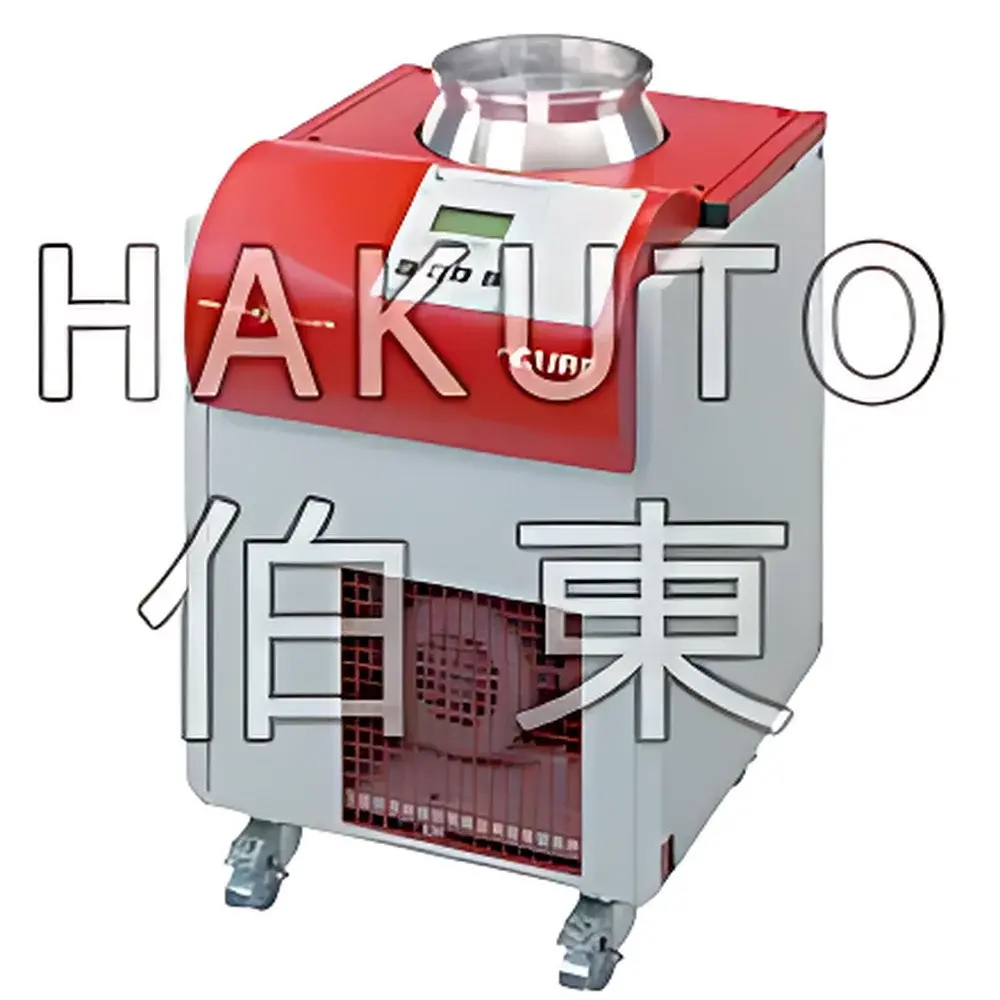
Pfeiffer Vacuum HiCube Classic Turbo Molecular Pump System
| Brand | Pfeiffer Vacuum |
|---|---|
| Origin | Germany |
| Pump Type | Turbo Molecular Pump (Oil-Free) |
| Model | HiCube Classic |
| Maximum Pumping Speed (N₂) | 685 L/s |
| Ultimate Pressure | < 1 × 10⁻⁷ hPa |
| External Dimensions | 1 unit (compact vertical configuration) |
| Weight | 50 kg |
| Motor Power | 1 kW |
| Compliance | CE, RoHS, ISO 9001-certified manufacturing |
Overview
The Pfeiffer Vacuum HiCube Classic is a fully integrated, oil-free turbo molecular pump system engineered for high vacuum (HV) and ultra-high vacuum (UHV) applications in research laboratories, analytical instrumentation, and industrial R&D environments. Based on proven Couette-flow turbomolecular pumping principles, the HiCube Classic combines a high-efficiency HiPace series turbomolecular pump (e.g., HiPace 300 H or HiPace 700 H) with a compatible forevacuum pump—either a dry membrane pump (MVP series) or an oil-sealed rotary vane pump (DuoLine series)—to deliver robust, contamination-free vacuum performance. Its vertical, space-saving architecture minimizes footprint while maximizing thermal stability and mechanical rigidity. The system achieves ultimate pressures down to < 1 × 10⁻¹⁰ hPa when configured with CF-flanged variants and appropriate forepump selection—meeting stringent requirements for surface science, residual gas analysis (RGA), electron microscopy, and thin-film deposition.
Key Features
- Modular, pre-aligned pump组 integration: Turbomolecular and forepump are factory-assembled and tested as a single unit, ensuring optimal alignment, vibration damping, and leak-tight integrity.
- Oil-free operation: Eliminates hydrocarbon backstreaming and reduces maintenance intervals—critical for UHV processes requiring ultra-clean environments (e.g., XPS, AES, molecular beam epitaxy).
- Plug-and-play control interface: Integrated SmartController supports RS-485/Modbus RTU and optional Ethernet/IP connectivity; enables seamless integration into LabVIEW, EPICS, or SCADA-based vacuum management systems.
- Intelligent safety functions: Optional foreline vacuum safety valve prevents backstreaming during power failure or abrupt shutdown—protecting sensitive chambers and samples from atmospheric ingress.
- Direct vacuum gauge compatibility: Built-in analog (0–10 V) and digital (RS-485) interfaces support real-time pressure monitoring via Pfeiffer’s TPG300, PKR251, or other calibrated gauges compliant with ISO 27893.
- Compliance-ready firmware: Supports audit trail logging and user-access-level configuration (admin/operator) per FDA 21 CFR Part 11 guidelines when deployed in regulated GMP/GLP environments.
Sample Compatibility & Compliance
The HiCube Classic accommodates standard vacuum flanges including ISO-KF (DN 40 to DN 160) and CF-F (DN 63 to DN 160), enabling direct integration with mass spectrometers, ion implanters, and vacuum coating systems. All wetted materials conform to ASTM F848 (cleanroom-compatible stainless steel 316L, aluminum alloys, and ceramic bearings). The system meets electromagnetic compatibility (EMC) requirements per EN 61326-1 and carries CE marking under the EU Machinery Directive 2006/42/EC and Low Voltage Directive 2014/35/EU. It is routinely specified in ISO/IEC 17025-accredited labs for vacuum calibration traceability and supports GLP documentation workflows through optional data export (CSV/Excel) and timestamped event logs.
Software & Data Management
Pfeiffer’s Vacuum Control Software (VCS) provides full remote operation, parameter logging, and alarm management for HiCube Classic systems. VCS supports automated pump-down sequences, multi-stage pressure ramping, and real-time trending of rotational speed, bearing temperature, and foreline pressure. Data export complies with ASTM E1382-17 (standard practice for electronic data interchange in laboratory information systems) and can be synchronized with LIMS platforms via OPC UA. Firmware updates are delivered via secure HTTPS and validated using SHA-256 checksums—ensuring integrity and regulatory compliance in validated environments.
Applications
- Surface analysis: X-ray photoelectron spectroscopy (XPS), Auger electron spectroscopy (AES), and low-energy electron diffraction (LEED).
- Electron optics: Transmission electron microscopes (TEM), scanning electron microscopes (SEM), and focused ion beam (FIB) systems.
- Thin-film processing: Physical vapor deposition (PVD), sputtering, and molecular beam epitaxy (MBE).
- Space simulation: Thermal vacuum testing of satellite components and cryogenic cooler systems.
- Analytical instrumentation: Residual gas analyzers (RGA), quadrupole mass spectrometers (QMS), and time-of-flight (TOF) systems.
- Research infrastructure: Ultra-low-temperature physics experiments, quantum computing testbeds, and atomic trap vacuum chambers.
FAQ
What forepump options are compatible with the HiCube Classic?
The system supports Pfeiffer’s MVP dry membrane pumps (e.g., MVP 040, MVP 070) and DuoLine rotary vane pumps (e.g., Duo 3, Duo 6, Duo 65), selected based on required forepressure and gas load.
Can the HiCube Classic achieve ultra-high vacuum (< 1 × 10⁻⁹ hPa)?
Yes—when equipped with CF-flanged configurations (e.g., DN 100 CF-F or DN 160 CF-F), paired with appropriate forepumps and baked-out vacuum chambers, ultimate pressures below 5 × 10⁻¹⁰ hPa are attainable.
Is the system suitable for corrosive gas applications?
Standard HiCube Classic units are rated for inert and mildly reactive gases; for aggressive chemistries (e.g., Cl₂, NH₃), optional corrosion-resistant coatings and fluoropolymer-sealed variants are available upon request.
Does it support integration with existing vacuum control networks?
Yes—the built-in SmartController offers Modbus RTU, RS-485, and optional Ethernet/IP, enabling interoperability with PLCs, DCS, and centralized vacuum monitoring platforms.
What is the typical service interval for preventive maintenance?
Under continuous operation at ambient conditions, Pfeiffer recommends inspection every 12 months; bearing life exceeds 30,000 hours under nominal load, per ISO 281 fatigue life calculations.
Related Products



