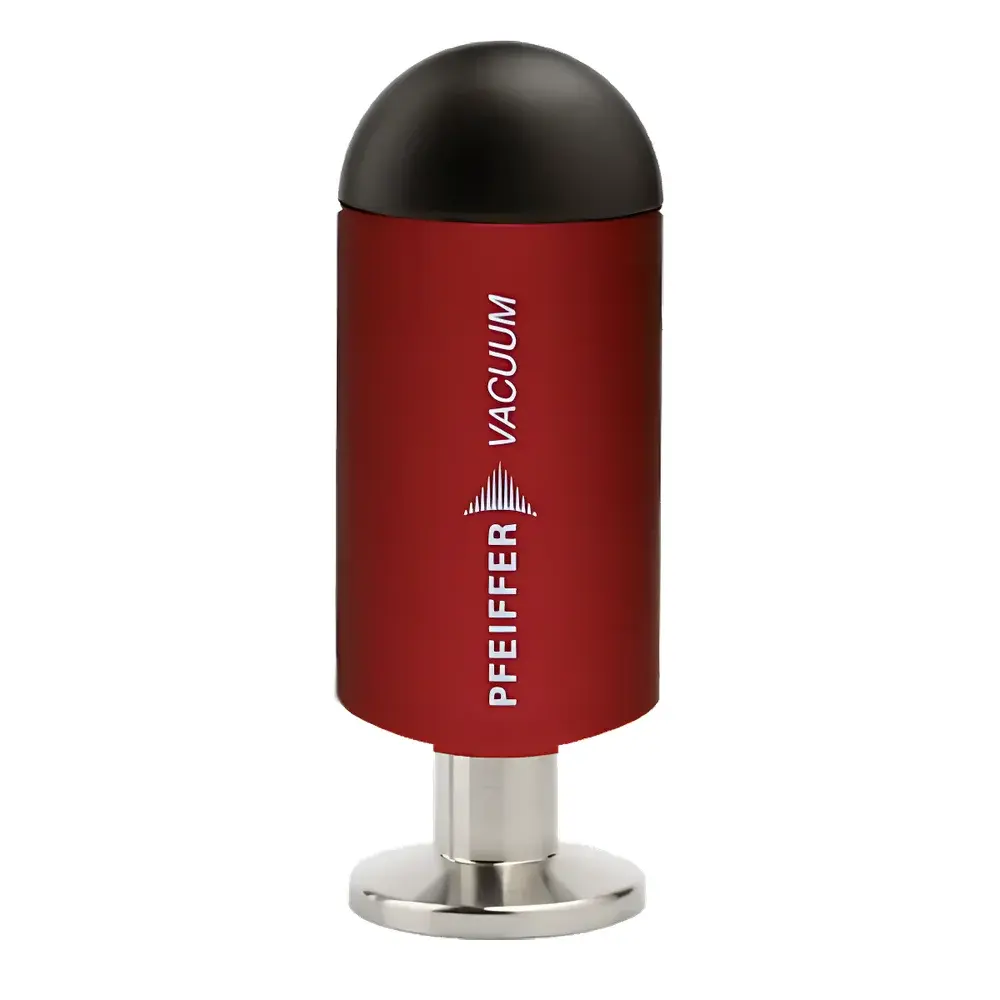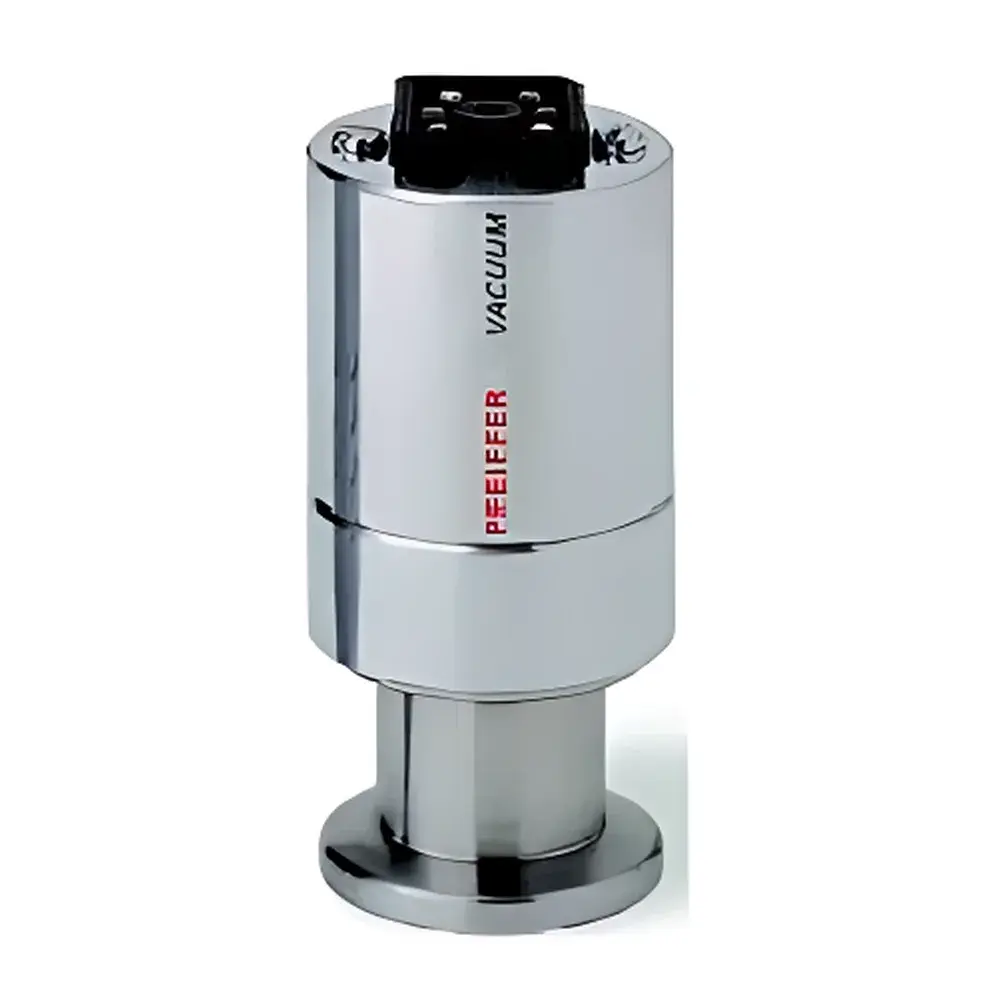
Pfeiffer TPR 270 Pirani Vacuum Gauge
| Brand | Pfeiffer Vacuum |
|---|---|
| Origin | Germany |
| Model | TPR 270 |
| Measurement Range | 1 × 10⁻⁴ to 1000 hPa |
| Accuracy | ±10 % |
| Operating Temperature | up to 80 °C |
| Maximum Pressure Resistance | 400 kPa |
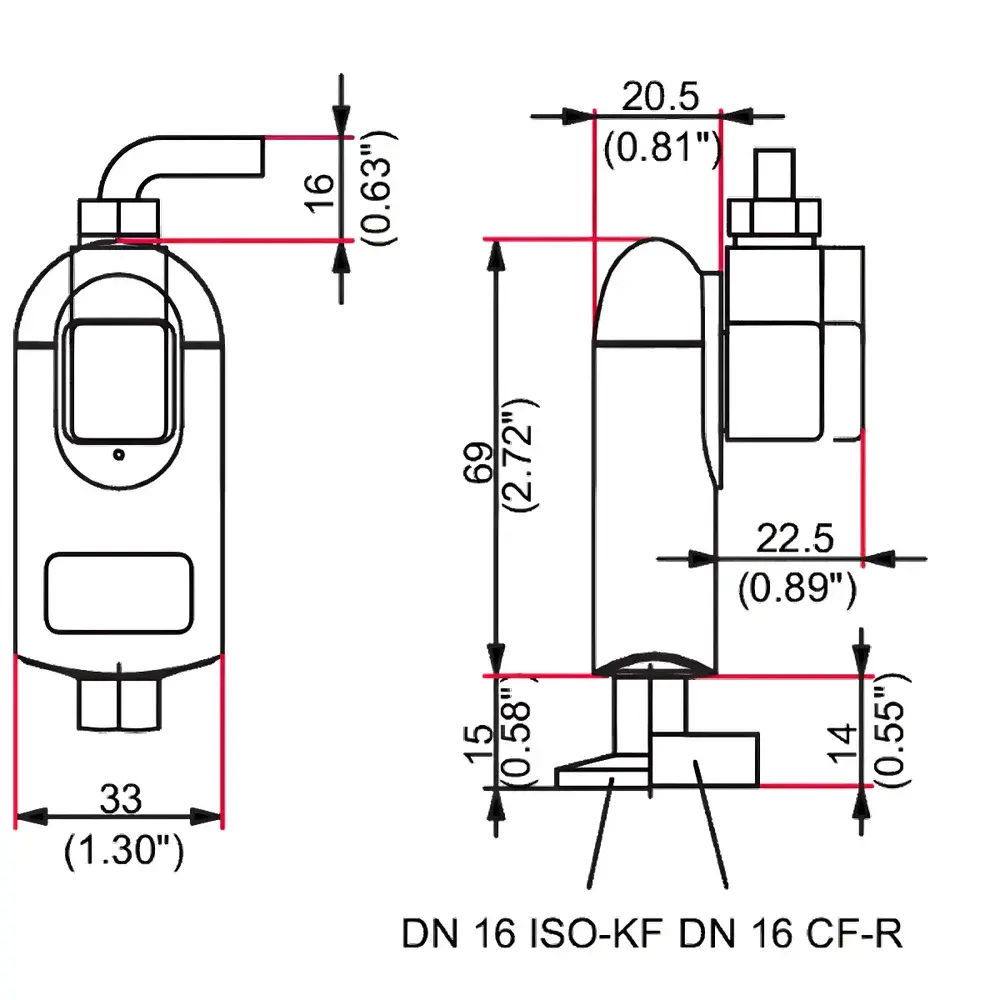
| Weight | 135 g |
| Flange Options | DN 16 ISO-KF, DN 16 CF-F |
Overview
The Pfeiffer TPR 270 is a high-performance, compact Pirani vacuum gauge engineered for reliable and stable pressure measurement in low-to-medium vacuum ranges (1 × 10⁻⁴ to 1000 hPa). Based on thermal conductivity principles, the TPR 270 employs a temperature-controlled heated filament whose heat loss varies predictably with gas density—enabling direct, real-time pressure determination in non-corrosive, dry gases such as N₂, O₂, Ar, and air. Designed and manufactured in Germany under stringent quality control protocols, the TPR 270 delivers enhanced thermal stability, faster response times, and improved long-term repeatability compared to earlier-generation Pirani sensors. Its robust stainless-steel housing and hermetically sealed sensor head ensure mechanical durability and resistance to vibration—critical for integration into OEM vacuum systems, industrial process chambers, and laboratory-scale vacuum setups.
Key Features
- Extended measurement range: 1 × 10⁻⁴ hPa to 1000 hPa (10 mPa to 100 kPa), covering rough and medium vacuum regimes with a single sensor
- Improved accuracy of ±10 % of reading across the full scale—validated per DIN EN 60770-1 and traceable to national metrological standards
- Thermally optimized sensor design minimizing zero drift and hysteresis, especially during ambient temperature fluctuations (operating range: −20 °C to +80 °C)
- Compact form factor (135 g) with dual flange compatibility: DN 16 ISO-KF and DN 16 CF-F, enabling flexible integration into existing vacuum manifolds
- High overpressure tolerance: rated for continuous operation up to 400 kPa absolute—suitable for venting sequences and rapid pump-down cycles without sensor damage
- OEM-optimized electronics: analog 0–10 V output with linearized signal scaling; optional digital interface (RS485/Modbus RTU) available via external controller module
Sample Compatibility & Compliance
The TPR 270 is calibrated for common technical gases (N₂, air, Ar) and exhibits predictable deviation behavior for other gases—gas-specific correction factors are provided in the calibration certificate and supported by Pfeiffer’s Gas Correction Software Suite. It is not intended for use with condensable vapors, corrosive media (e.g., Cl₂, NH₃, HF), or reactive plasmas without protective isolation. The device complies with CE marking requirements under the EU Electromagnetic Compatibility Directive (2014/30/EU) and Low Voltage Directive (2014/35/EU). Its construction meets IP40 ingress protection and conforms to RoHS 2011/65/EU and REACH (EC) No. 1907/2006 material restrictions. For regulated environments—including pharmaceutical manufacturing and semiconductor tool qualification—the TPR 270 supports GLP/GMP documentation packages, including factory calibration reports with uncertainty budgets and traceability to PTB (Physikalisch-Technische Bundesanstalt).
Software & Data Management
While the TPR 270 operates as a standalone analog gauge, it integrates seamlessly with Pfeiffer’s HiPace Control Suite and Vacuum Manager software platforms for centralized monitoring, logging, and alarm configuration. When paired with a compatible controller (e.g., VACUU·BUS or TPG300 series), users gain access to timestamped data export (CSV/Excel), configurable setpoint triggers, and audit-trail-enabled event logging compliant with FDA 21 CFR Part 11 requirements. Firmware updates and sensor diagnostics—including filament resistance trending and zero-point validation—are performed remotely via USB or Ethernet interfaces. All calibration data, service history, and operational logs are stored in encrypted internal memory, supporting ISO 9001:2015 quality record retention policies.
Applications
- Process monitoring in vacuum furnaces, coating systems (PVD, CVD), and freeze-dryers
- OEM integration into analytical instrumentation (mass spectrometers, electron microscopes, residual gas analyzers)
- Quality assurance in semiconductor front-end equipment and display panel fabrication tools
- Leak detection system pre-stage pressure verification (in conjunction with helium leak detectors)
- Research vacuum systems requiring cost-effective, high-reliability rough-vacuum feedback
- Education and training labs where robustness, ease of use, and clear signal linearity are prioritized
FAQ
What gases can the TPR 270 measure accurately?
The TPR 270 is factory-calibrated for nitrogen and air. For other gases—including H₂, He, CO₂, or hydrocarbons—correction factors must be applied using Pfeiffer’s published gas tables or integrated software tools.
Can the TPR 270 be used in high-temperature vacuum chambers?
The sensor head is rated for continuous operation at ambient temperatures up to +80 °C. For applications exceeding this limit, a cooled mounting adapter or remote installation with capillary extension is recommended.
Is the TPR 270 compatible with vacuum systems using aggressive process chemistries?
No. The standard TPR 270 is not corrosion-resistant. For halogenated, acidic, or solvent-rich environments, consider the TPR 281 variant with gold-plated sensor elements and ceramic insulation.
Does the TPR 270 require periodic recalibration?
Annual recalibration is recommended for critical applications. Pfeiffer-certified calibration services include full functional testing, zero/span adjustment, and issuance of an ISO/IEC 17025-accredited certificate.
How does the TPR 270 compare to capacitance manometers in terms of accuracy and range?
Capacitance manometers offer higher absolute accuracy (±0.25 %) and gas-independent measurement but are significantly more expensive and limited to ≤1000 hPa. The TPR 270 provides superior cost-efficiency and broader lower-range coverage (down to 10⁻⁴ hPa), making it ideal for general-purpose vacuum supervision where relative stability and repeatability outweigh absolute metrological precision.