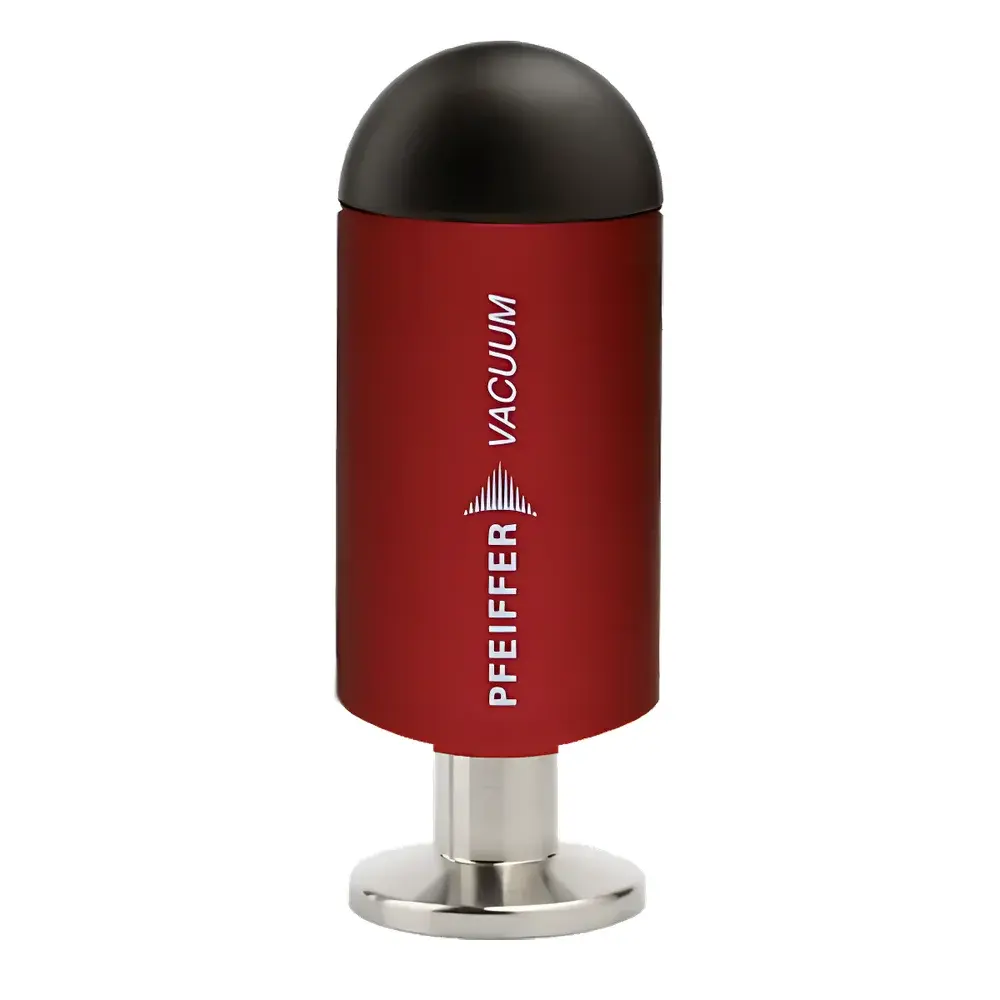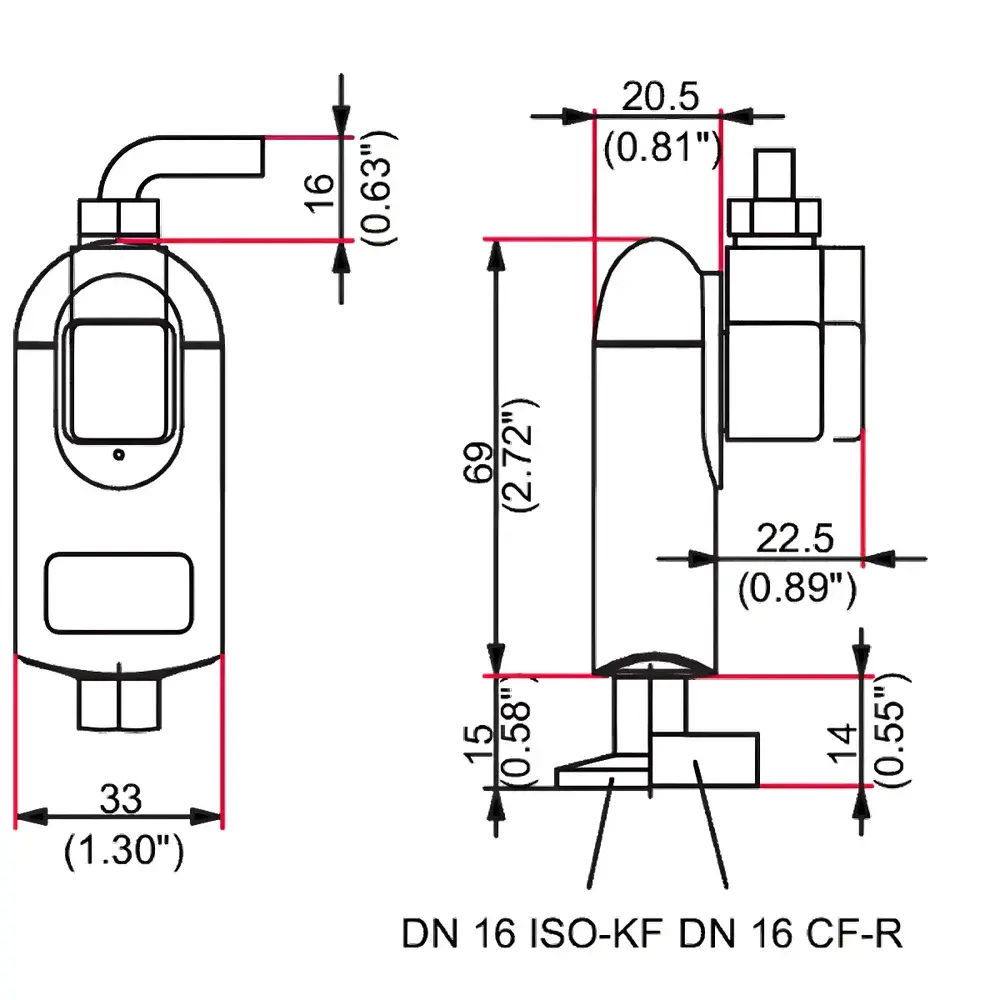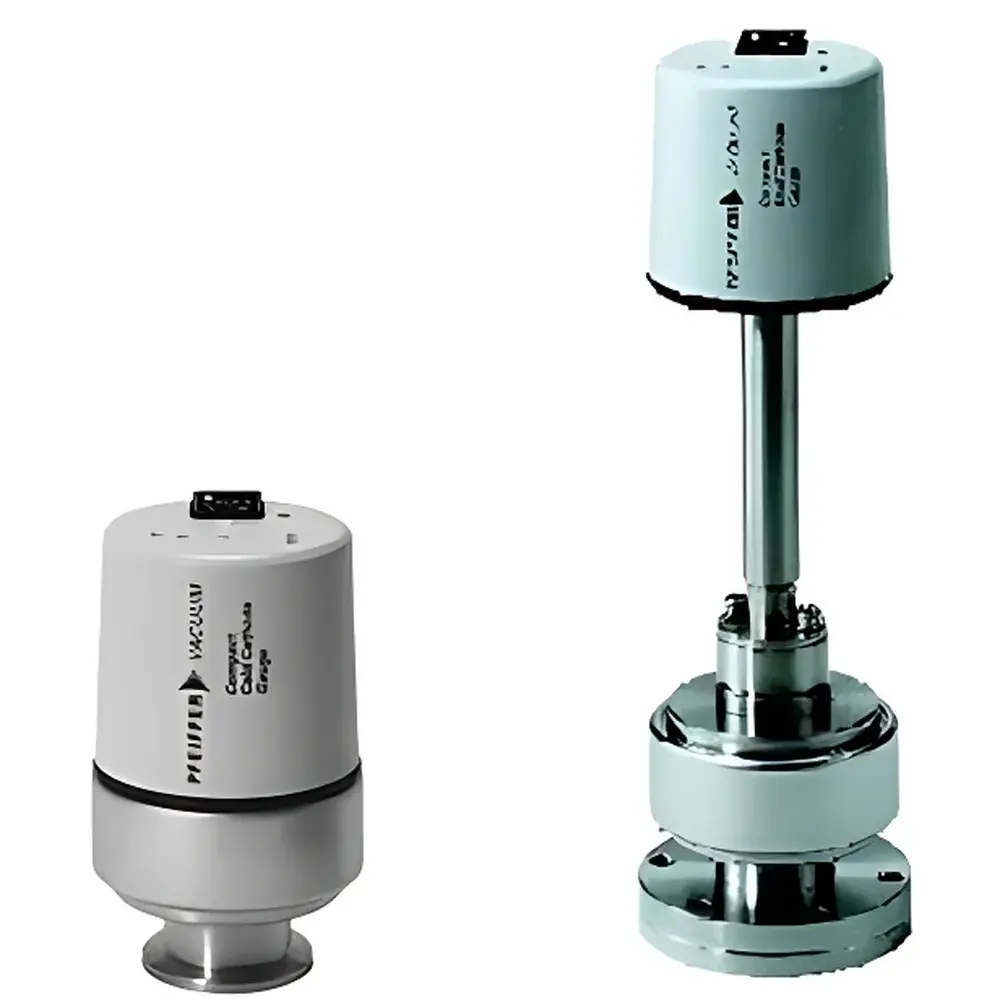
Pfeiffer Vacuum IKR 251 Cold Cathode Ionization Vacuum Gauge
| Brand | Pfeiffer Vacuum |
|---|---|
| Origin | Germany |
| Model | IKR 251 |
| Vacuum Interface | DN 25 ISO-KF, DN 40 ISO-KF, DN 40 CF-F |
| Measurement Range | 2 × 10⁻⁹ to 0.01 hPa |
| Operating Temperature | 5–55 °C |
| Bakeout Temperature | 150 °C |
| Accuracy | ±30 % |
| Ultimate Pressure | 10,000 hPa (atmospheric withstand) |
| Weight | 700 g |
| Output Signal | 0–10 V analog |
Overview
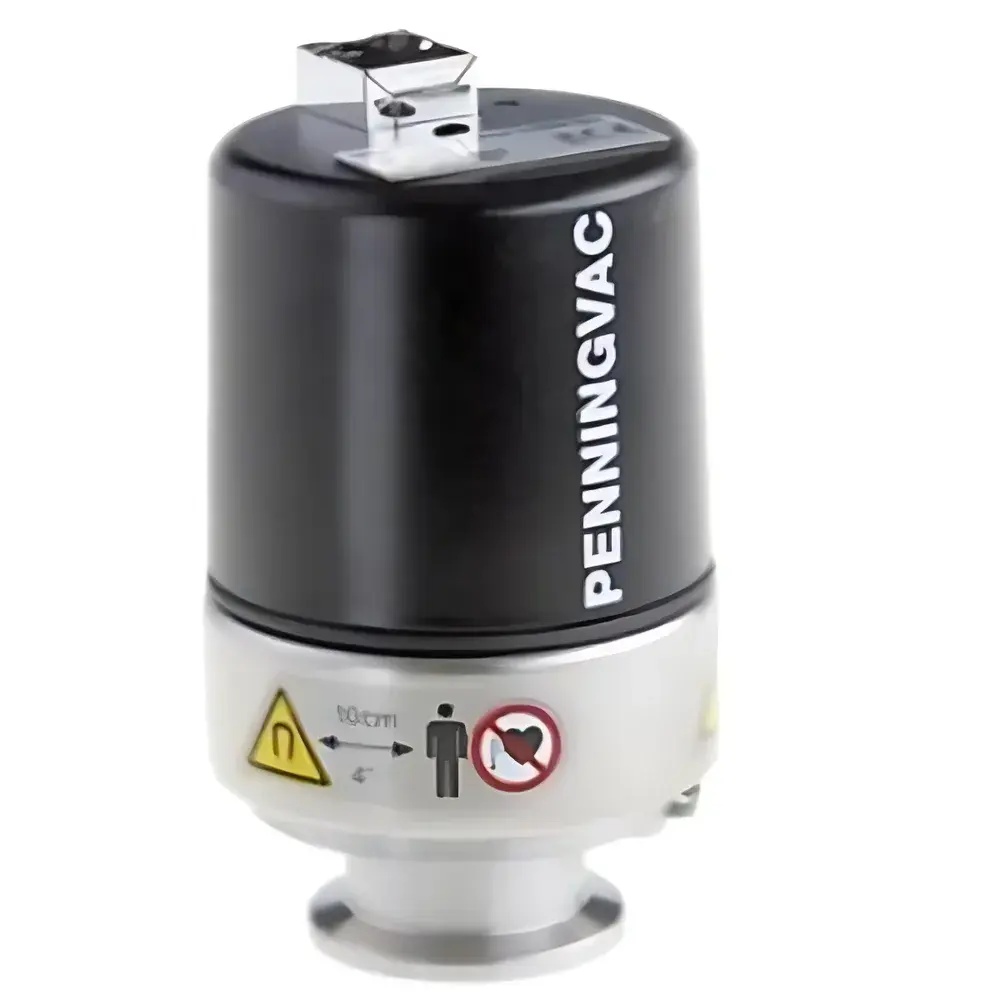
The Pfeiffer Vacuum IKR 251 is a high-reliability cold cathode ionization gauge engineered for continuous, stable pressure monitoring in ultra-high vacuum (UHV) and extreme high vacuum (XHV) environments. Based on the inverted magnetron principle, the IKR 251 operates without a heated filament—eliminating filament burnout, outgassing from thermionic sources, and sensitivity to accidental atmospheric exposure. This architecture delivers intrinsic resistance to pressure surges, chemical corrosion from reactive process gases (e.g., O₂, Cl₂, NH₃), and mechanical shock—making it particularly suited for industrial coating systems, UHV research chambers, particle accelerator beamlines, and space-simulation facilities where long-term unattended operation is required. Unlike hot-cathode gauges, the IKR 251 exhibits no measurable degradation in calibration stability over extended service intervals under typical UHV conditions (<1 × 10⁻⁷ hPa). Its measurement range spans 2 × 10⁻⁹ hPa to 0.01 hPa (2 × 10⁻¹⁰ mbar to 1 × 10⁻² mbar), bridging the critical transition zone between high vacuum (HV) and ultra-high vacuum (UHV) regimes.
Key Features
- Inverted magnetron design with permanent magnet array—no filament, no heater power supply, zero thermally induced drift
- Robust ceramic-metal sealed construction rated for bakeout up to 150 °C (DN 25/40 ISO-KF variants)
- Triple vacuum interface options: DN 25 ISO-KF, DN 40 ISO-KF, and DN 40 CF-F—enabling direct integration into standard UHV flange systems
- Analog output signal: 0–10 V DC, linearly proportional to logarithmic pressure across full range; compatible with industry-standard PLCs and data acquisition systems
- Atmospheric withstand capability: Designed to survive repeated exposure to ambient pressure without recalibration or performance loss
- Compliant with electromagnetic compatibility (EMC) requirements per EN 61326-1 for laboratory and industrial use
Sample Compatibility & Compliance
The IKR 251 is chemically inert toward common vacuum process gases—including oxygen, nitrogen, argon, hydrogen, water vapor, and moderately aggressive species such as chlorine and ammonia—due to its all-stainless-steel and ceramic sensor housing. It is not recommended for sustained exposure to halogenated solvents or fluorine-based plasmas without protective throttling. The gauge meets the mechanical and electrical safety requirements of IEC 61010-1 for measurement equipment. While not intrinsically calibrated to a primary standard, its performance aligns with secondary traceability protocols defined in ISO 3567 (vacuum metrology) and ASTM E1988 (practice for calibration of vacuum gauges). When paired with Pfeiffer’s TPG series digital controllers (e.g., TPG 366), the system supports audit-ready logging per GLP/GMP guidelines, including timestamped pressure records and configurable alarm thresholds.
Software & Data Management
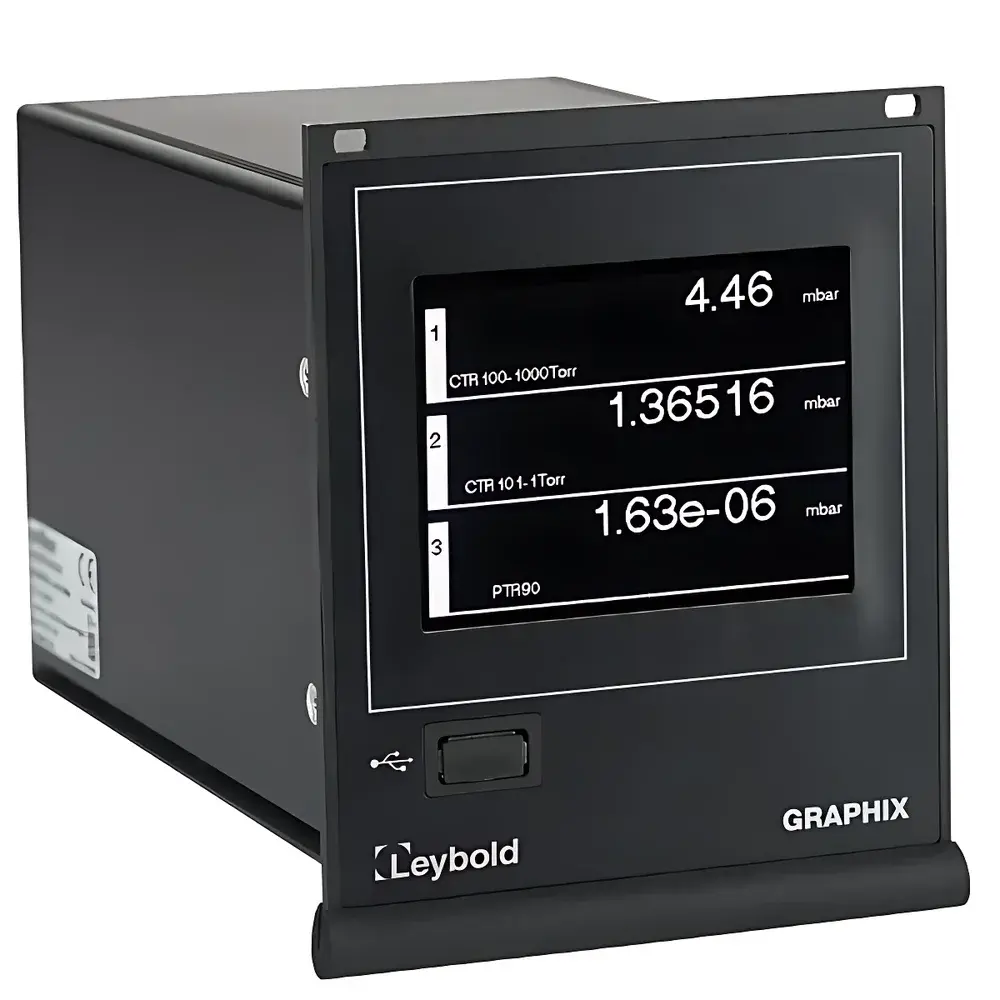
The IKR 251 functions as a standalone analog transducer and does not incorporate embedded firmware or digital communication protocols (e.g., RS-485, Ethernet/IP). Integration into automated vacuum control systems requires external analog-to-digital conversion via compatible DAQ hardware or Pfeiffer TPG controllers. The TPG 366 and TPG 266 display units provide real-time pressure readout, linearization correction, unit conversion (hPa, mbar, Torr, Pa), and relay-based interlock outputs. All TPG-series controllers maintain internal calibration tables traceable to Pfeiffer’s factory reference standards and support export of time-stamped CSV logs compliant with FDA 21 CFR Part 11 when configured with appropriate user access controls and electronic signature modules.
Applications
- Monitoring base pressure and process pressure in magnetron sputtering, electron-beam evaporation, and ion implantation systems
- UHV chamber qualification and leak-checking support in synchrotron light sources and surface science laboratories
- Pressure feedback control in cryogenic vacuum insulation panels (VIPs) and superconducting magnet test stands
- Long-duration vacuum integrity verification in satellite component testing and thermal vacuum chambers
- Backup or redundancy gauge in hybrid vacuum measurement systems combining Pirani, capacitance manometer, and cold cathode technologies
FAQ
What is the recommended mounting orientation for the IKR 251?
The gauge is designed for vertical installation (sensor axis perpendicular to gravity) to ensure optimal electron trajectory and ion collection efficiency. Horizontal mounting may reduce sensitivity below 1 × 10⁻⁸ hPa and is not covered by factory calibration.
Can the IKR 251 be used in oxygen-rich environments?
Yes—the inverted magnetron design eliminates filament oxidation risk. However, prolonged exposure to >10% O₂ at pressures above 1 × 10⁻³ hPa may accelerate cathode surface passivation; periodic cleaning via argon sputtering is advised.
Is the ±30% accuracy specification valid across the entire range?
Accuracy is specified relative to Pfeiffer’s reference calibration curve at 23 °C and applies within the linear operating region (5 × 10⁻⁹ to 5 × 10⁻³ hPa); deviations increase near range extremes due to statistical ion current limitations.
Does the IKR 251 require periodic recalibration?
No scheduled recalibration is mandated under normal UHV operation. However, users performing critical quantitative measurements should verify performance annually against a transfer standard traceable to national metrology institutes (e.g., PTB, NIST).