
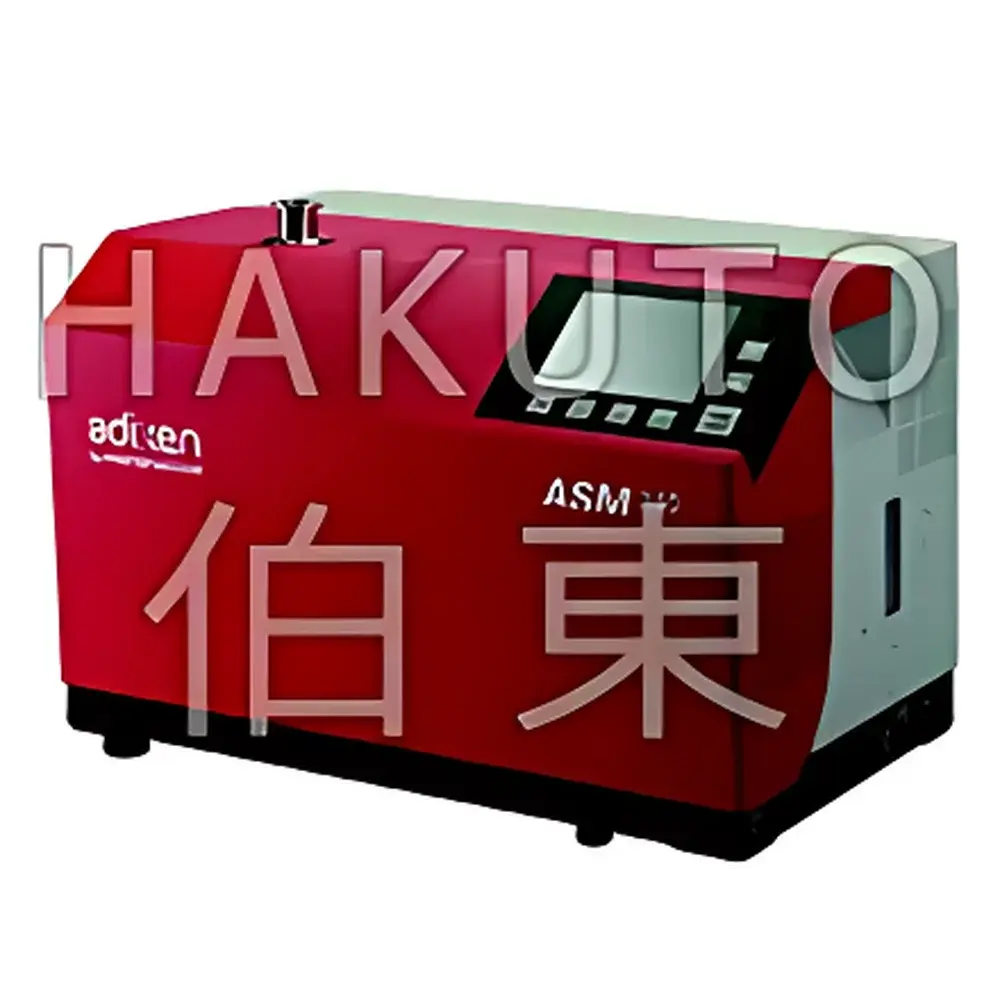
Pfeiffer Vacuum ASM340W+LP503 Helium Mass Spectrometer Leak Detector for Hydrogen Fuel Cell Vehicle On-Board Hydrogen Supply System Integrity Testing
| Brand | Pfeiffer Vacuum |
|---|---|
| Origin | France |
| Model | ASM340W + LP503 |
| Minimum Detectable Leak Rate (Vacuum Mode) | 5 × 10⁻¹³ Pa·m³/s |
| Detection Gases | ⁴He, ³He, H₂ |
| Detection Modes | Vacuum, Sniffer (Helium Absorption) |
| Helium Pumping Speed at Inlet | 2.5 L/s |
| Maximum Inlet Pressure | 25 hPa |
| Forepump Speed | 15 m³/h |
| Sniffer Probe | LP503 with LED Indication and 3 m Cable |
| Compliance | Designed for ISO 16000-8, ASTM E1778, and GLP/GMP-aligned leak integrity verification workflows |
Overview
The Pfeiffer Vacuum ASM340W+LP503 Helium Mass Spectrometer Leak Detector is a high-sensitivity, industrial-grade instrument engineered specifically for quantitative leak integrity verification of on-board hydrogen supply systems (HSS) in fuel cell electric vehicles (FCEVs). Operating on the principle of magnetic sector mass spectrometry, it selectively ionizes and separates helium atoms (mass-to-charge ratio m/z = 4) from background gases using a high-resolution mass filter, enabling detection of trace helium ingress at sub-10⁻¹² Pa·m³/s levels. This sensitivity is critical for validating the structural integrity of high-pressure hydrogen components—such as 35 MPa and 70 MPa Type IV composite cylinders, pressure regulators, solenoid valves, and welded manifold assemblies—where even minute leaks pose functional degradation risks and significant safety hazards under real-world operating conditions. Unlike non-quantitative methods such as bubble testing or pressure decay, the ASM340W delivers repeatable, calibrated leak rate data traceable to SI units, supporting regulatory documentation required for type approval, homologation, and post-production quality assurance per UNECE R134 and ISO 15869.
Key Features
- Magnetic sector mass spectrometer architecture with optimized ion optics for stable ⁴He signal amplification and low-noise baseline performance
- Dual-mode operation: high-vacuum mode for chamber-based testing and sniffer (absorption) mode for localized field inspection using the LP503 intelligent probe
- Integrated helium-specific pumping system with 2.5 L/s effective speed at the analyzer inlet, minimizing response time and improving detection limit stability
- LP503 sniffer probe featuring real-time LED status indication (green/yellow/red), ergonomic handheld design, and 3-meter shielded cable for EMI-resistant signal transmission
- Robust vacuum architecture compatible with forepumping via 15 m³/h dry scroll pump; no oil contamination risk to sensitive hydrogen system components
- Modular control interface supporting RS232, Ethernet, and digital I/O for seamless integration into automated test benches or PLC-controlled production lines
Sample Compatibility & Compliance
The ASM340W+LP503 is validated for use across all major hydrogen storage and delivery architectures deployed in FCEV platforms—including carbon-fiber-reinforced polymer (CFRP) tanks, aluminum-lined composite vessels, stainless-steel piping, and polymer-sealed connectors. Its helium-based detection methodology avoids interference from hydrogen’s inherent permeability through elastomers and metals, eliminating false positives common in H₂ sniffing approaches. The system conforms to key international standards governing leak testing of pressurized gas systems: ISO 16000-8 (indoor air—determination of leakage rates), ASTM E1778 (standard guide for helium mass spectrometer leak testing), and supports audit-ready documentation aligned with ISO/IEC 17025 and FDA 21 CFR Part 11 requirements when paired with compliant data acquisition software. All calibration procedures follow Pfeiffer’s certified traceability chain to national metrology institutes (LNE, PTB).
Software & Data Management
The ASM340W operates with Pfeiffer’s proprietary LeakTest Pro software suite, providing real-time spectral visualization, multi-point leak mapping, and automated pass/fail reporting with timestamped metadata. Each measurement record includes operator ID, test sequence number, ambient temperature/pressure, helium background level, and raw ion current values—enabling full traceability for internal QA audits and external certification bodies. Export functions support CSV, PDF, and XML formats compliant with laboratory information management systems (LIMS). Optional audit trail activation logs all parameter changes, user logins, and report generations, satisfying GLP and GMP documentation rigor for Tier-1 automotive suppliers and OEM validation labs.
Applications
- Final assembly line leak verification of complete on-board hydrogen supply systems prior to vehicle integration
- R&D-level failure analysis of prototype tanks and valve manifolds under thermal cycling and mechanical vibration stress
- Periodic maintenance screening of fleet vehicles in service centers using portable sniffer mode
- Supplier qualification testing for hydrogen-compatible O-rings, gaskets, and brazed joints per SAE J2579 requirements
- Calibration and validation of secondary leak standards used in metrology laboratories
FAQ
What is the minimum detectable leak rate in vacuum mode?
The ASM340W achieves a guaranteed minimum detectable leak rate of 5 × 10⁻¹³ Pa·m³/s for helium under standard vacuum conditions (≤1 × 10⁻⁴ hPa base pressure).
Can the system detect hydrogen directly, or is helium tracer mandatory?
While the mass spectrometer can resolve H₂ (m/z = 2), direct H₂ detection is not recommended due to high background interference and poor signal-to-noise ratio in ambient air. Helium (m/z = 4) provides superior specificity, sensitivity, and quantification accuracy.
Is the LP503 sniffer probe suitable for outdoor or under-hood inspections?
Yes—the LP503 is IP54 rated, features temperature-compensated electronics (-10 °C to +50 °C operating range), and maintains calibrated response up to 20 ppm helium concentration in turbulent airflow environments typical of engine bays.
Does the ASM340W support integration with existing factory MES or SCADA systems?
Yes—via Modbus TCP and OPC UA protocols, the instrument enables bidirectional communication for recipe loading, result upload, and remote diagnostic access without custom driver development.
What vacuum forepump configuration is required for continuous operation?
A dry scroll pump with ≥15 m³/h displacement and ≤0.1 Pa ultimate pressure is required; Pfeiffer recommends the DuoDry series to ensure hydrocarbon-free foreline gas handling compatible with hydrogen system cleanliness specifications.







