
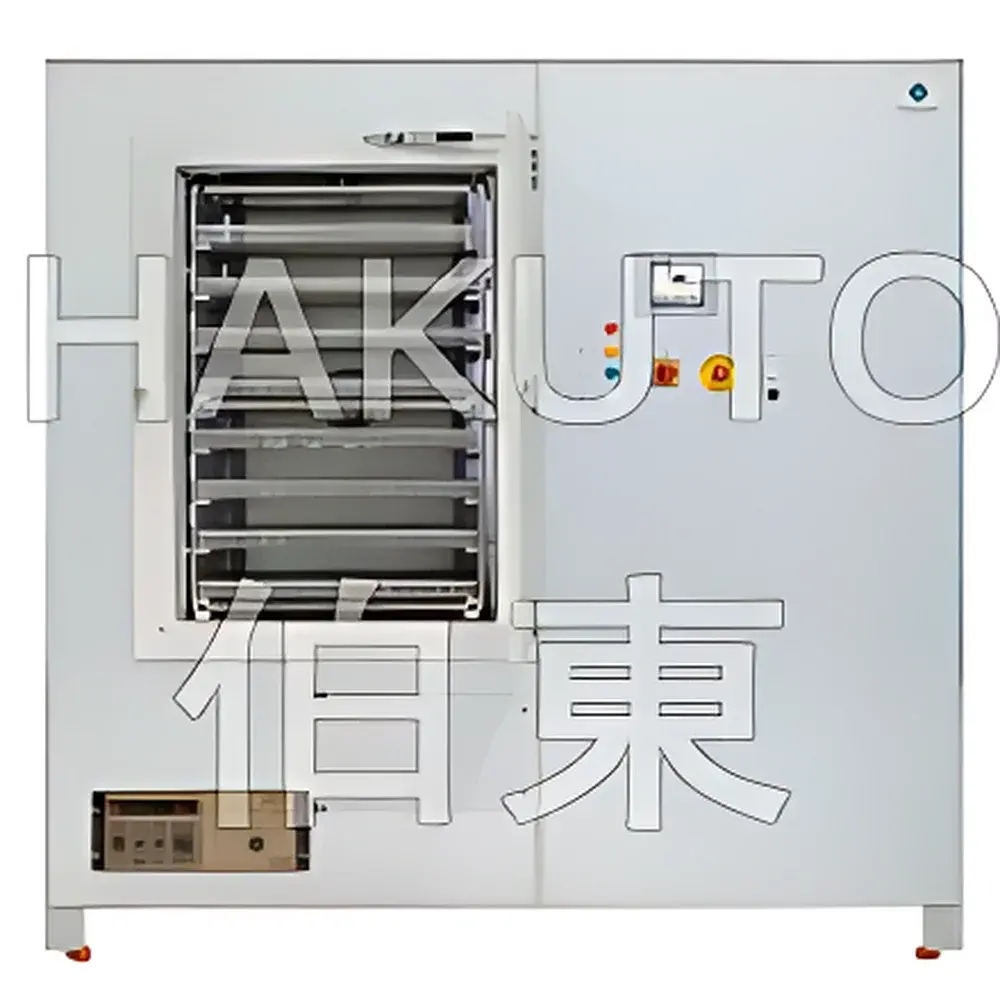
Europlasma CD1200PLC Plasma Surface Treater for Hydrophilic Modification of Deep-Well Microplates
| Origin | Belgium |
|---|---|
| Manufacturer Type | Authorized Distributor |
| Origin Category | Imported |
| Model | CD1200PLC |
| Power | 5 kW |
| Chamber Dimensions | 700 × 700 × 1200 mm |
| Chamber Volume | 490 L |
| Chamber Material | Anodized Aluminum |
| Process Gases | O₂, Ar, N₂, or gas mixtures |
| Control System | Fully Automated PLC-Based Interface |
| Instrument Type | Imported Industrial-Grade Low-Pressure RF Plasma System |
Overview
The Europlasma CD1200PLC is an industrial-scale, low-pressure radiofrequency (RF) plasma surface treatment system engineered for precise, repeatable hydrophilic functionalization of polymeric laboratory consumables—particularly deep-well microplates (e.g., 48-well and 96-well formats) fabricated from polystyrene (PS), polypropylene (PP), or cyclic olefin copolymer (COC). Unlike atmospheric plasma or corona treatments, this system operates under controlled vacuum conditions (typically 10–100 Pa), enabling uniform plasma density distribution and deep penetration into high-aspect-ratio microcavities. The core mechanism relies on reactive oxygen and nitrogen species (e.g., atomic O, NO•, excited O₂*, N₂⁺) generated via 13.56 MHz RF excitation. These species induce surface oxidation, ablation, and covalent grafting of polar functional groups—including hydroxyl (–OH), carboxyl (–COOH), carbonyl (C=O), and hydroperoxyl (–OOH)—thereby reducing water contact angle (WCA) to 70 mN/m). This transformation is critical for tissue-culture-treated (TC-treated) grade performance in cell adhesion, uniform seeding, and assay reproducibility.
Key Features
- Industrial-grade 5 kW RF generator with real-time impedance matching for stable plasma ignition and process consistency across batch loads
- Large-capacity 490 L aluminum vacuum chamber (700 × 700 × 1200 mm), optimized for high-throughput processing of stacked deep-well plates on custom carriers
- Multi-gas compatibility (O₂, N₂, Ar, or blended gases) with mass flow controllers (MFCs) enabling tunable surface chemistry—oxidative for hydrophilicity, reductive for amine grafting, or inert for cleaning-only cycles
- Full automation via integrated PLC control with recipe storage, step-by-step process logging, and alarm-triggered safety interlocks (e.g., pressure deviation, RF arc detection)
- Anodized aluminum chamber interior ensures corrosion resistance against reactive oxygen species and facilitates easy decontamination between biological batches
- Compliant with IEC 61000-6-3 (EMC) and IEC 61000-6-4 (industrial emission) standards; CE-marked for safe operation in ISO Class 7–8 cleanroom-adjacent environments
Sample Compatibility & Compliance
The CD1200PLC accommodates standard and custom-configured deep-well microplates (up to 150 mm height), PCR plates, cell culture flasks, and irregularly shaped polymer substrates without mechanical deformation or thermal degradation (<40 °C surface temperature rise during typical 3–5 min cycles). It supports materials including PS, PP, PET, COC, and PDMS—provided they are vacuum-compatible and non-outgassing. Process validation aligns with ASTM F2525 (Standard Guide for Plasma Treatment of Polymeric Materials) and ISO 11607-1 (Packaging for terminally sterilized medical devices), supporting GLP/GMP documentation requirements. Traceable process parameters (pressure, gas flow, RF power, duration) satisfy FDA 21 CFR Part 11 audit trail expectations when paired with optional data export modules.
Software & Data Management
The system employs a Windows-based HMI interface with password-protected user roles (Operator, Technician, Administrator). Each treatment cycle records timestamped metadata—including chamber pressure profile, forward/reflected RF power, gas composition, and end-point optical emission spectroscopy (OES) signatures (optional add-on). Data exports to CSV or SQL-compatible formats for integration into LIMS or QMS platforms. Audit logs capture all parameter modifications, user logins, and emergency stops, fulfilling ALCOA+ principles (Attributable, Legible, Contemporaneous, Original, Accurate, Complete, Consistent, Enduring, Available).
Applications
- Hydrophilic activation of PS/PP deep-well plates for enhanced protein adsorption and uniform cell monolayer formation in high-content screening (HCS)
- Pre-sterilization surface conditioning of diagnostic assay plates to improve antibody immobilization efficiency and reduce non-specific binding
- Functionalization of microfluidic device substrates prior to biomolecule patterning or hydrogel encapsulation
- Removal of mold-release agents and organic residues from injection-molded consumables without solvents or abrasives
- Enabling TC-treated equivalence for non-TC-grade polymers—reducing reliance on proprietary coating chemistries and associated lot-to-lot variability
FAQ
What is the typical water contact angle reduction achievable on polystyrene deep-well plates?
With optimized O₂/N₂ plasma exposure (3–4 min at 50–80 Pa, 2–3 kW), WCA consistently drops from >90° (native PS) to ≤8°, verified by sessile drop goniometry per ASTM D7334.
Can the system treat plates loaded with liquid or pre-coated reagents?
No. All samples must be dry and solvent-free prior to loading. Residual moisture or volatile organics compromise vacuum integrity and may cause arcing or uncontrolled polymer etching.
Is post-treatment aging a concern for hydrophilicity?
Yes. Surface hydrophilicity decays over time due to hydrophobic recovery; optimal use window is within 72 hours post-treatment. For long-term stability, immediate downstream coating (e.g., collagen, fibronectin) is recommended.
Does the system support IQ/OQ/PQ documentation packages?
Yes. Europlasma provides vendor-validated qualification protocols, including installation verification (IQ), operational range testing (OQ), and performance qualification templates aligned with ISO 13485 and ISO 9001 frameworks.



