
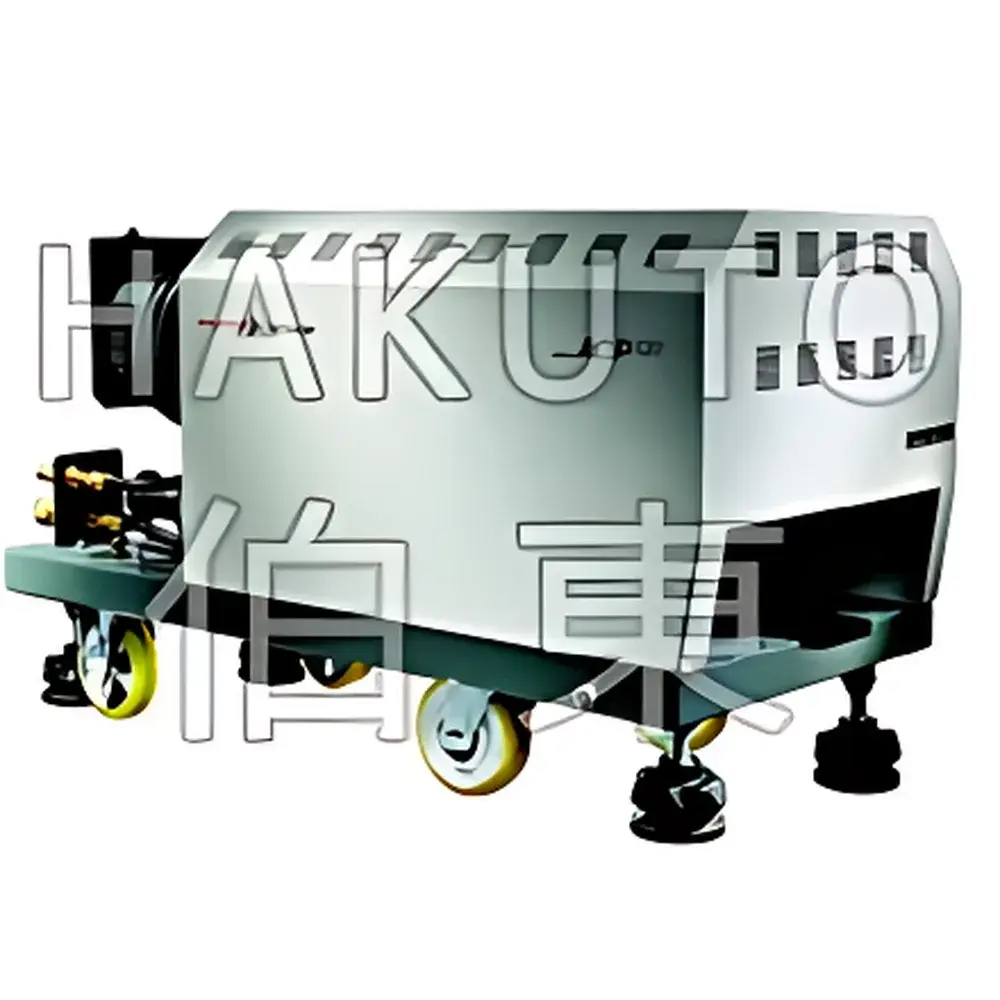
Pfeiffer ACP 120 Dry Scroll Vacuum Pump (Distributed by Bohong Instruments)
| Brand | Pfeiffer Vacuum |
|---|---|
| Origin | France |
| Model | ACP 120 |
| Pump Type | Oil-Free Dry Scroll Vacuum Pump |
| Ultimate Pressure | ≤3 × 10⁻² mbar |
| Pumping Speed | 95 m³/h |
| Motor Power | 3 kW |
| Noise Level | <65 dB(A) |
| Weight | 205 kg |
| Inlet Flange | DN 50 |
| External Dimensions (L×W×H) | 1000 × 600 × 700 mm |
| Maintenance Interval | ~17,000 operating hours |
| Compliance | CE, RoHS, ISO 9001-certified manufacturing |
Overview
The Pfeiffer ACP 120 is a high-performance, oil-free dry scroll vacuum pump engineered for continuous, contamination-free operation in demanding laboratory and industrial vacuum applications. Based on multi-stage roots technology with non-contacting rotor-stator geometry, the ACP 120 eliminates the need for lubricating oils or sealing fluids—ensuring a clean, particle-free vacuum environment critical for semiconductor R&D, thin-film deposition, analytical instrumentation (e.g., mass spectrometry, electron microscopy), and vacuum drying processes. Unlike conventional oil-sealed rotary vane pumps, the ACP 120 delivers stable ultimate pressure down to ≤3 × 10⁻² mbar while maintaining consistent pumping speed across its operational range (up to 95 m³/h at atmospheric inlet). Its robust cast-iron housing, precision-machined stainless-steel rotors, and thermally optimized cooling system support long-term reliability under variable load conditions—including intermittent duty cycles and exposure to mild condensables.
Key Features
- Oil-free, dry-scroll architecture ensures zero hydrocarbon backstreaming and eliminates particulate generation from lubricant degradation.
- Multi-stage roots design enables high volumetric efficiency and low ultimate pressure without sacrificial trade-offs in pumping speed.
- Corrosion-resistant variants (ACP 120 G series) feature electropolished stainless-steel internal surfaces and optional fluoropolymer-coated components for compatibility with mildly aggressive vapors (e.g., HCl, NH₃, organic solvents).
- Integrated thermal management maintains stable performance during extended operation; motor cooling via forced-air or optional water-cooling interface.
- Standard DN 50 ISO-KF inlet flange with optional integrated gas ballast valve and purge gas (N₂ or Ar) connection port for process flexibility.
- Low-noise operation (<65 dB[A]) suitable for shared laboratory environments and cleanroom-adjacent installations.
- Designed for use as a primary roughing pump for turbomolecular pumps or as a standalone vacuum source in medium-vacuum applications (10⁰ to 10⁻² mbar).
Sample Compatibility & Compliance
The ACP 120 is compatible with non-reactive and mildly corrosive process gases typical of materials science, pharmaceutical development, and vacuum metallurgy workflows. It meets ISO 8573-1 Class 0 air purity requirements for oil-free compression and complies with EU Machinery Directive 2006/42/EC, Electromagnetic Compatibility Directive 2014/30/EU, and RoHS 2011/65/EU. When deployed in regulated environments—such as GLP-compliant analytical labs or GMP-aligned pilot-scale vacuum drying systems—the pump supports audit-ready documentation packages including factory calibration certificates, material declarations (EN 10204 3.1), and traceable serial-number-based service logs. Optional analog/digital I/O (0–10 V, 4–20 mA, RS-485 Modbus RTU) enables integration into centralized SCADA or LIMS platforms compliant with FDA 21 CFR Part 11 data integrity standards.
Software & Data Management
While the ACP 120 operates as a stand-alone unit with local control panel (LED status indicators, manual start/stop, fault reset), it is fully compatible with Pfeiffer’s TPU (Technical Pump Unit) monitoring software suite via optional communication modules. TPU provides real-time visualization of vacuum level, motor current, temperature gradients, and runtime counters—enabling predictive maintenance scheduling based on accumulated operating hours (recommended service interval: ~17,000 h). All operational parameters are timestamped and exportable in CSV format for QA/QC reporting. For automated vacuum sequencing (e.g., timed roughing cycles or interlocked pump-down protocols), the ACP 120 supports programmable logic controller (PLC) integration through configurable digital inputs/outputs and safety-rated emergency stop circuitry.
Applications
- Roughing stage for high-vacuum systems using turbomolecular or cryogenic pumps in surface analysis (XPS, AES) and ultra-high vacuum (UHV) research chambers.
- Vacuum degassing and solvent removal in polymer synthesis, battery electrode coating, and lyophilization development.
- Process vacuum for physical vapor deposition (PVD), sputtering, and e-beam evaporation systems requiring hydrocarbon-free base pressure.
- Environmental testing chambers where oil contamination would compromise sensor calibration or test specimen integrity.
- Quality control laboratories performing ASTM E595-compliant outgassing tests for space-grade materials.
- Industrial R&D facilities transitioning from oil-lubricated pumps to meet ISO 14001 environmental management objectives.
FAQ
What is the recommended maintenance schedule for the ACP 120?
Preventive maintenance is advised every 17,000 operating hours or biannually—whichever occurs first—focusing on inspection of inlet filters, cooling fan functionality, and electrical connections. No oil changes or seal replacements are required.
Can the ACP 120 handle water vapor or solvent vapors?
Yes, when equipped with the optional gas ballast valve and operated within its specified condensable load limits (≤10 g/h H₂O equivalent). The ACP 120 G corrosion-resistant variant is preferred for repeated exposure to alcohols, acetone, or chlorinated solvents.
Is the ACP 120 suitable as a forepump for turbomolecular pumps?
Yes—it is widely deployed as a forepump for Pfeiffer HiPace and ATH series turbopumps, providing reliable backing down to ≤3 × 10⁻² mbar with sufficient throughput to maintain optimal compression ratios.
Does the pump include built-in vibration isolation?
The ACP 120 features elastomeric mounting feet and internal dynamic balancing; however, for sensitive instrumentation (e.g., electron microscopes), additional active or passive vibration damping platforms are recommended.
What certifications accompany the ACP 120 upon shipment?
Each unit ships with CE Declaration of Conformity, RoHS compliance statement, ISO 9001 manufacturing certificate, and factory test report documenting ultimate pressure, pumping speed, and noise emission measurements.



