
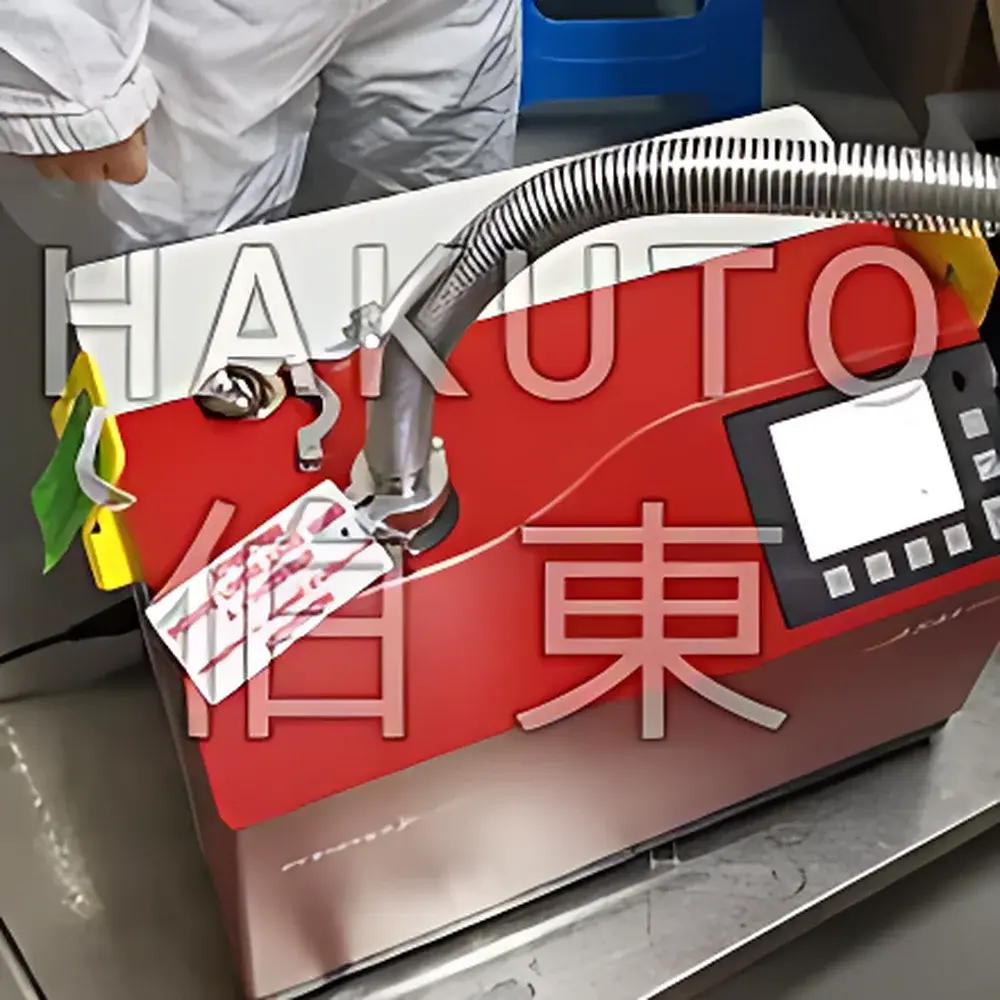
Pfeiffer Vacuum ASM 340 Helium Mass Spectrometer Leak Detector
| Brand | Pfeiffer Vacuum |
|---|---|
| Origin | France |
| Model | ASM 340 |
| Detection Limit (He) | 5×10⁻¹³ Pa·m³/s |
| Operating Modes | Vacuum Mode & Sniffer Mode |
| Detectable Gases | ⁴He, ³He, H₂ |
| Inlet Max Pressure | 25 hPa (WET/D) / 5 hPa (I) |
| Helium Pumping Speed | 2.5 L/s |
| Forepump Requirement | Oil-sealed pump (15 m³/h) or Diaphragm pump (3.4 m³/h) |
| Weight | 56 kg (WET), 45 kg (D), 32 kg (I) |
| Compliance | Designed for ISO 10110-7, ASTM E1514, and GLP/GMP-aligned leak testing workflows |
Overview
The Pfeiffer Vacuum ASM 340 Helium Mass Spectrometer Leak Detector is a high-sensitivity, laboratory-grade instrument engineered for quantitative and spatially resolved leak detection in ultra-high vacuum and controlled-pressure environments. It operates on the principle of magnetic sector mass spectrometry, selectively ionizing and separating helium atoms (⁴He⁺) via precise mass-to-charge (m/z = 4) discrimination. With a base detection limit of 5×10⁻¹³ Pa·m³/s under vacuum mode, the ASM 340 meets the stringent sensitivity requirements for validating integrity in pharmaceutical freeze-dryer refrigeration systems—where even sub-micron leaks in welded joints, flanged connections, or expansion valve housings can compromise thermal performance, process repeatability, and final product stability.
Key Features
- Triple-configuration platform: ASM 340 WET (water-cooled, high-duty cycle), ASM 340 D (dry-pumped, oil-free operation), and ASM 340 I (integrated compact design for OEM or inline integration)
- Dual-mode operation: Simultaneous support for vacuum-integrated testing (test object evacuated and connected directly to the analyzer) and sniffer-mode localization (helium tracer gas applied externally while the detector samples ambient air near suspect zones)
- Multi-gas capability: Calibrated response for ⁴He, ³He, and H₂ enables cross-validation and method flexibility—particularly valuable when helium supply logistics are constrained
- Robust front-end architecture: 2.5 L/s effective pumping speed at the analyzer inlet ensures rapid signal response and stable baseline recovery after helium pulses
- Modular forepump compatibility: Supports both oil-sealed rotary vane pumps (≥15 m³/h) and chemically resistant diaphragm pumps (≥3.4 m³/h), enabling deployment in cleanroom or solvent-exposed environments without oil contamination risk
Sample Compatibility & Compliance
The ASM 340 is routinely deployed for integrity verification of refrigerant circuits in lyophilization equipment—including R404A, R23, and cascade systems operating below –60 °C. Its validated detection range aligns with ISO 10110-7 Annex B for vacuum chamber leak rate quantification and satisfies ASTM E1514–22 criteria for helium-based tracer methods. For regulated pharmaceutical manufacturing, the instrument supports audit-ready documentation when paired with optional 21 CFR Part 11-compliant software modules (e.g., Pfeiffer’s HiPace Control Suite), including electronic signatures, user-level access control, and immutable audit trails for all calibration, test, and pass/fail records.
Software & Data Management
Pfeiffer’s proprietary TPG 300/TPG 500 series controller firmware provides real-time leak rate display (logarithmic scale from 10⁻⁶ to 10⁻¹³ Pa·m³/s), automatic zero stabilization, and programmable alarm thresholds. Data export is supported via RS232, USB, or Ethernet (Modbus TCP), facilitating direct integration into MES or SCADA platforms. Optional PC-based software enables automated test sequencing—ideal for routine qualification of multiple freeze-dryer units across production lines—and generates PDF reports compliant with ALCOA+ principles (Attributable, Legible, Contemporaneous, Original, Accurate, Complete, Consistent, Enduring, Available).
Applications
- Pharmaceutical lyophilizer refrigeration system validation: Quantitative assessment of compressor housing welds, condenser tube sheets, expansion valve manifolds, and cryo-coil brazed joints
- GMP facility HVAC ductwork and cleanroom envelope integrity testing
- High-vacuum process equipment commissioning (e.g., coating chambers, electron beam welders)
- Research-grade cryogenic system diagnostics (dilution refrigerators, superconducting magnet cryostats)
- OEM integration into automated leak-test stations for medical device packaging lines
FAQ
What leak rate threshold is required for pharmaceutical freeze-dryer refrigeration systems?
Typical acceptance criteria range from 1×10⁻⁸ to 1×10⁻⁹ mbar·L/s, depending on refrigerant type, system volume, and operational duty cycle—aligned with ISO 13370 and EU GMP Annex 15 guidelines.
Can the ASM 340 detect leaks in pressurized systems without evacuation?
Yes—via sniffer mode using calibrated helium spray; however, vacuum-mode testing delivers superior sensitivity and eliminates false positives from ambient helium background.
Is helium the only viable tracer gas for this application?
While helium remains the industry standard due to its inertness, low atmospheric concentration (5.2 ppm), and optimal mass spectrometric properties, the ASM 340’s multi-gas calibration allows method transfer to hydrogen (H₂) where helium handling restrictions apply.
How does the ASM 340 interface with existing plant automation infrastructure?
It supports Modbus TCP and analog 4–20 mA output for PLC integration, enabling real-time pass/fail status transmission to central monitoring systems without requiring custom driver development.
What maintenance intervals are recommended for long-term reliability?
Annual mass filter calibration and quarterly filament inspection are advised; the analyzer’s bake-out capability (up to 150 °C) ensures sustained sensitivity in high-humidity or solvent-laden environments.
Related Products





