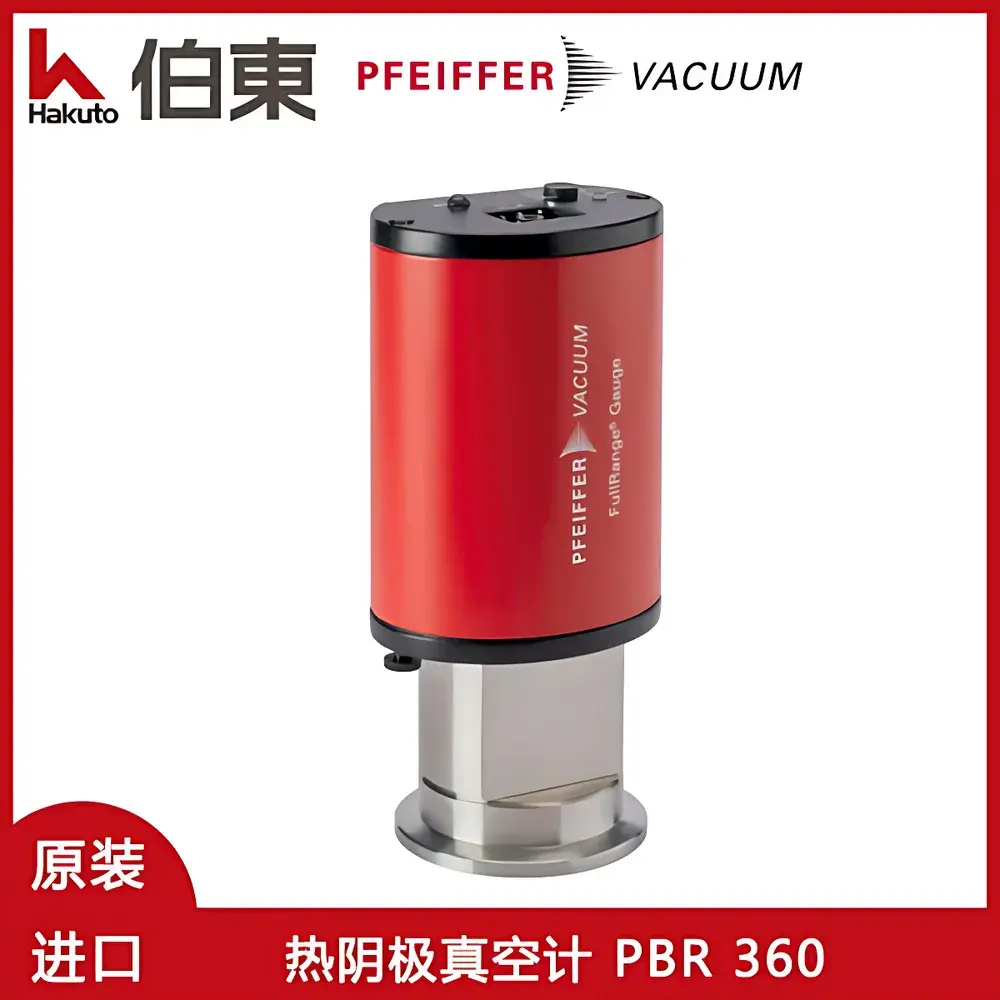
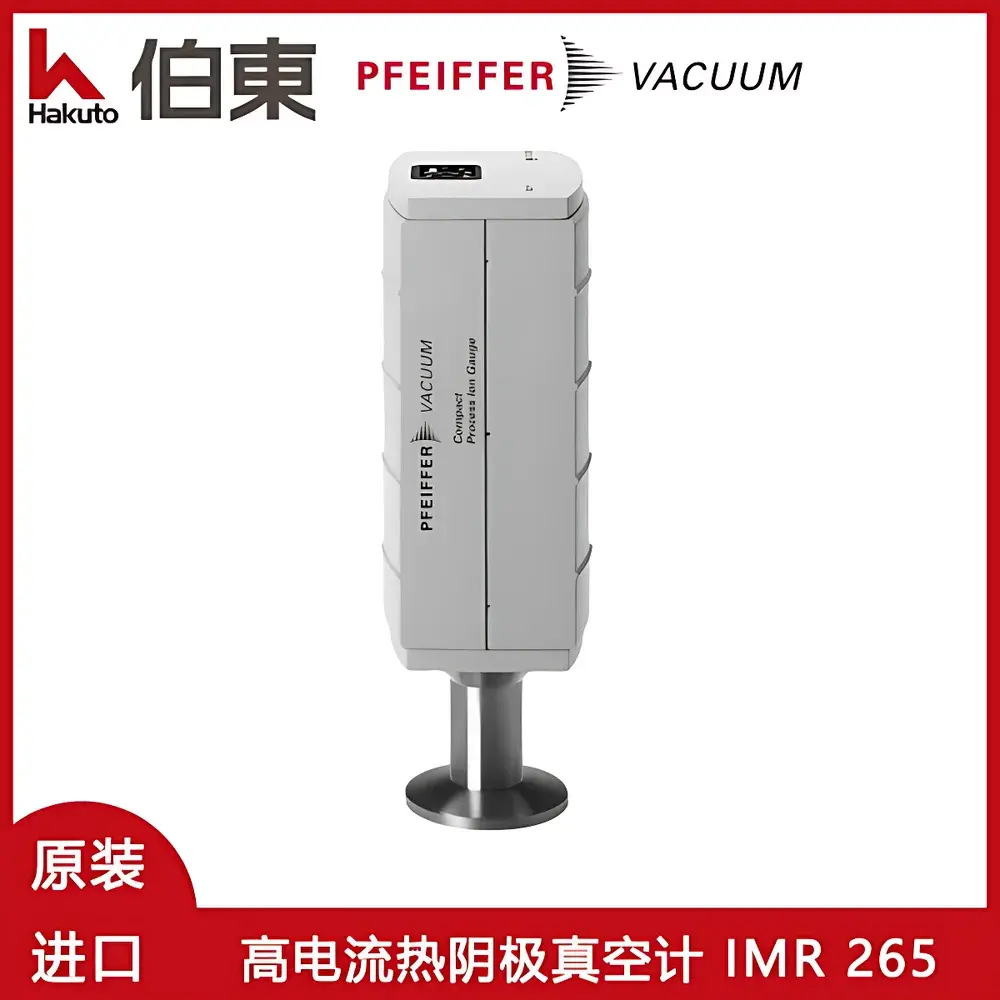
Pfeiffer Vacuum PBR 360 & IMR 265 Hot Cathode Vacuum Gauges
| Brand | Pfeiffer Vacuum |
|---|---|
| Origin | Germany |
| Model | PBR 360, IMR 265 |
| Measurement Range | 5×10⁻¹⁰ to 1000 hPa (PBR 360) |
| Operating Temperature | 5–60 °C (PBR 360), 0–50 °C (IMR 265) |
| Bakeout Temperature | 180 °C (PBR 360), 150 °C (IMR 265) |
| Accuracy | ±10–30 % (PBR 360), ±15 % (IMR 265, 1×10⁻⁵–1 hPa) |
| Repeatability | ±2–5 % (PBR 360), ±2 % (IMR 265, 1×10⁻⁵–1×10⁻¹ hPa) |
| Output Signal | 0.774–10 V |
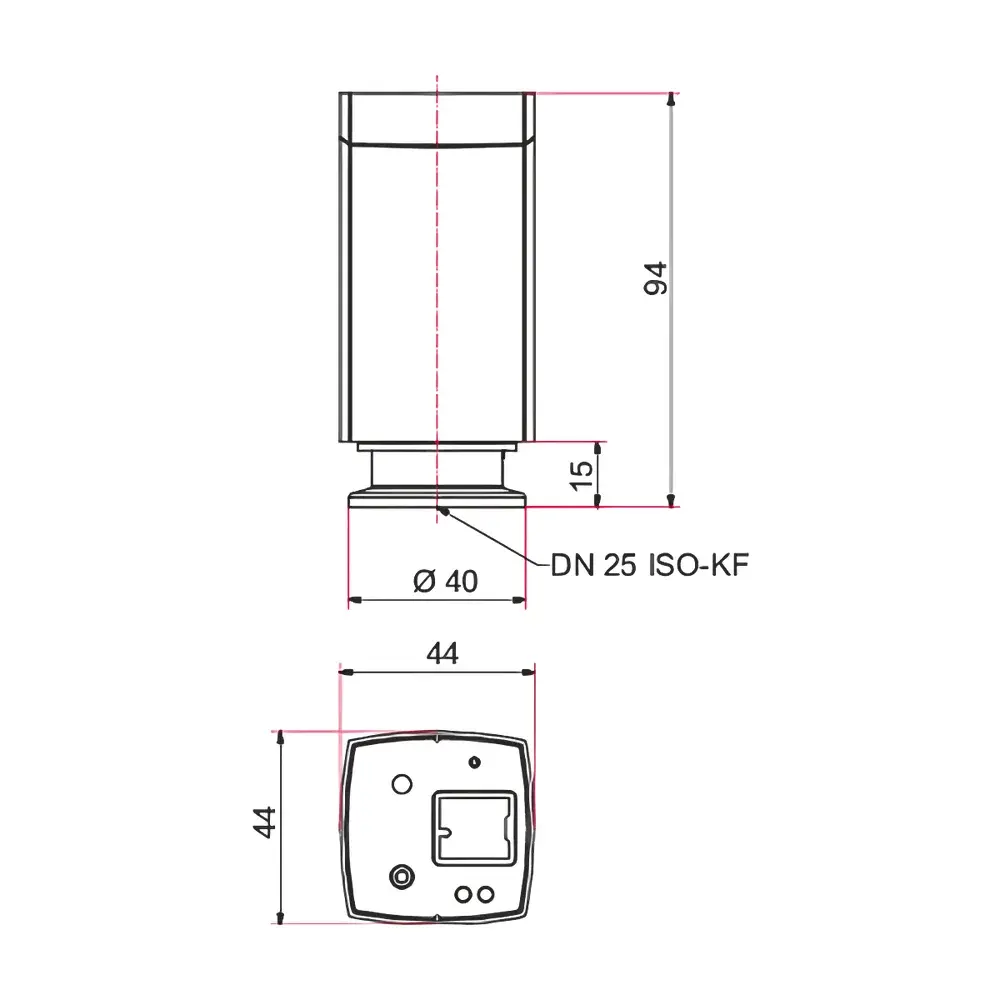
| Interface | DN 25/40 ISO-KF, DN 16/40 CF |
Overview
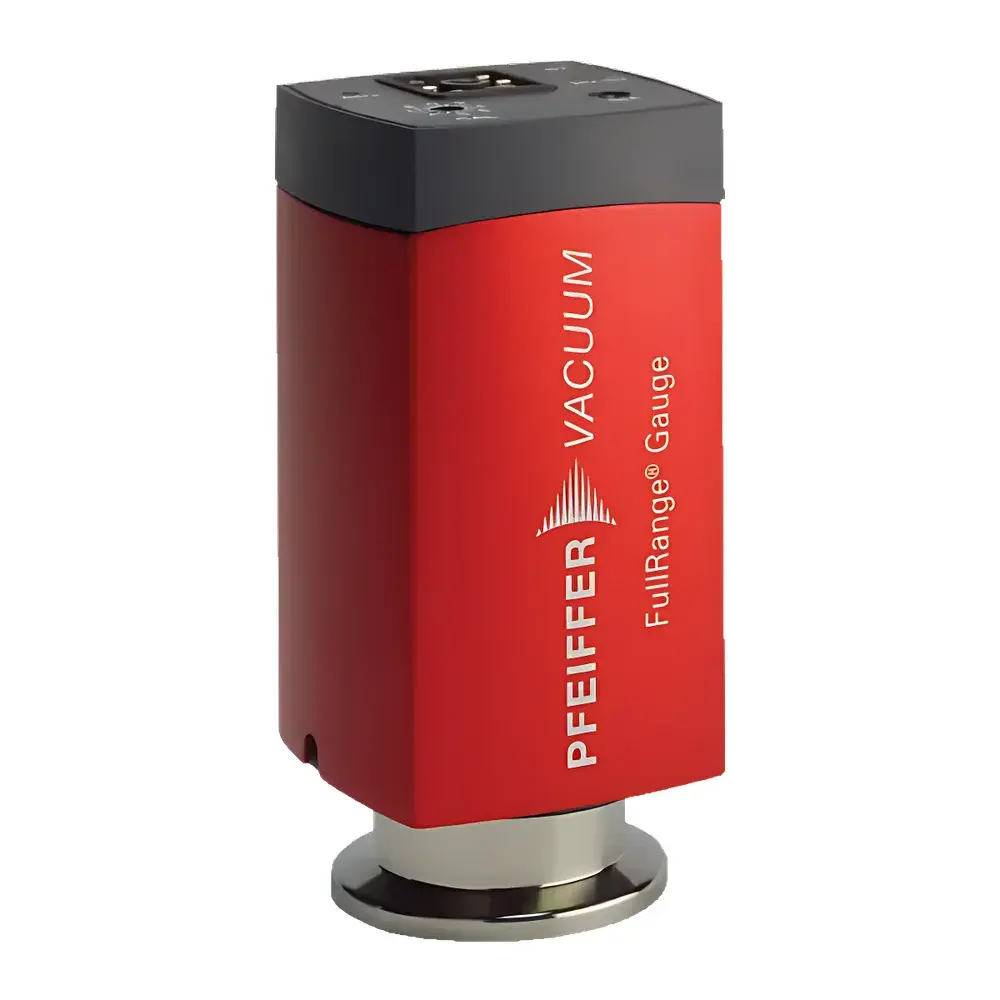
The Pfeiffer Vacuum PBR 360 and IMR 265 are high-reliability hot cathode vacuum gauges engineered for continuous, stable pressure monitoring across ultra-high vacuum (UHV) to rough vacuum regimes. The PBR 360 employs a dual-sensor FullRange® architecture—integrating a Pirani gauge for low-to-medium vacuum (1000 hPa to ~1×10⁻² hPa) and a Bayard-Alpert (B-A) hot cathode ionization gauge for high and ultra-high vacuum (down to 5×10⁻¹⁰ hPa). Its dual-filament design ensures operational redundancy and extended service life under demanding process conditions. The IMR 265 is a high-current hot cathode gauge with integrated Pirani and cold cathode elements, delivering robust measurement from 2×10⁻⁶ hPa to 1000 hPa. Unlike conventional B-A gauges, the IMR 265 features active cathode protection and optimized electron emission geometry, enabling stable operation in chemically aggressive or condensable environments—provided gas temperature remains below 55 °C and the medium is inert (e.g., N₂, Ar, He). Both instruments comply with fundamental vacuum metrology principles defined in ISO 3567 (vacuum technology — terminology) and support traceable calibration against national standards.
Key Features
- FullRange® dual-sensor architecture (PBR 360): automatic switching between Pirani and Bayard-Alpert modes without user intervention
- Dual-filament hot cathode design (PBR 360): enhances measurement continuity and extends filament lifetime during extended bakeout cycles
- Bakeable up to 180 °C (PBR 360) and 150 °C (IMR 265): electronics are fully removable for in-situ system bakeout; ceramic-metal sealed sensor heads maintain integrity at elevated temperatures
- Standardized flange interfaces: DN 25 and DN 40 ISO-KF, DN 16 and DN 40 CF variants available for UHV compatibility and leak-tight integration
- Linear analog output (0.774–10 V): directly compatible with industrial PLCs, SCADA systems, and vacuum controllers without signal conditioning
- Automatic cathode protection circuitry (IMR 265): prevents filament burnout during accidental exposure to atmospheric pressure or high partial pressures of reactive species
- Corrosion-resistant construction: stainless steel housing with ceramic insulators and tungsten/rhenium filaments suitable for non-oxidizing process gases
Sample Compatibility & Compliance
These gauges are validated for use with dry, inert, and non-condensable gases including nitrogen, argon, helium, hydrogen, and methane. Operation with oxidizing (e.g., O₂ above 10 hPa), corrosive (e.g., Cl₂, HF), or condensable vapors (e.g., H₂O, solvents) requires careful evaluation of filament lifetime and measurement drift. Neither gauge is rated for direct hydrocarbon vapor exposure without upstream cold traps or differential pumping. Both models meet electromagnetic compatibility (EMC) requirements per EN 61326-1 and carry CE marking for use within the European Economic Area. Their mechanical design conforms to ISO 286-2 (geometric tolerances) and ISO 16047 (vacuum flange dimensions), ensuring interoperability with standard vacuum hardware. While not intrinsically safe, they may be deployed in ATEX Zone 2 environments when installed with appropriate barrier-rated power supplies and signal isolators.
Software & Data Management
The PBR 360 and IMR 265 operate as standalone analog transducers and do not require proprietary software for basic functionality. However, they integrate seamlessly with Pfeiffer’s TPG300 series controllers and third-party vacuum management platforms via 0–10 V input channels. When paired with compliant data acquisition systems, measurements support 21 CFR Part 11–compliant audit trails if the host system implements electronic signatures, user access controls, and immutable record storage. Calibration certificates—including as-delivered sensitivity, zero offset, and linearity deviation—are provided per ISO/IEC 17025-accredited procedures. Firmware updates (where applicable) follow documented change control protocols aligned with GLP and GMP Annex 11 expectations for computerized systems used in regulated manufacturing.
Applications
- UHV systems in surface science (XPS, AES, molecular beam epitaxy)
- Industrial vacuum furnaces and heat treatment chambers requiring real-time pressure feedback for process ramping
- Leak detection systems using helium mass spectrometry, where stable base pressure monitoring precedes sniffing
- Coating and thin-film deposition tools (PVD, CVD) requiring precise pressure control across multiple process stages
- Accelerator beamlines and fusion research facilities demanding long-term stability and radiation-hardened sensor options
- Environmental test chambers and space simulation facilities operating across 12 decades of pressure
FAQ
What vacuum ranges do the PBR 360 and IMR 265 cover?
The PBR 360 measures from 5×10⁻¹⁰ hPa to 1000 hPa; the IMR 265 covers 2×10⁻⁶ hPa to 1000 hPa.
Can these gauges be baked in situ?
Yes—the PBR 360 supports bakeout up to 180 °C and the IMR 265 up to 150 °C, provided the electronics module is disconnected prior to heating.
Are calibration certificates included?
Each unit ships with a factory calibration report traceable to PTB (Physikalisch-Technische Bundesanstalt) standards; ISO/IEC 17025-accredited recalibration services are available.
Do they support digital communication protocols?
No—both models provide only analog voltage output (0.774–10 V); for digital interfaces (RS-485, EtherCAT), pairing with a TPG300-series controller is required.
Is operation in oxygen or water vapor permitted?
Short-term exposure to dry oxygen ≤10 hPa is acceptable for the PBR 360; prolonged exposure degrades filament life. Neither gauge is recommended for water vapor or other condensables without upstream trapping.