
Sierda NCY-C1 Automated Waste Disposal, Cleaning & Drying Unit for Capillary Viscometers
| Brand | Sierda |
|---|---|
| Origin | Shanghai, China |
| Manufacturer Type | Authorized Distributor |
| Regional Classification | Domestic (PRC) |
| Model | NCY-C1 |
| Instrument Category | Capillary Viscometer Accessory |
| Mounting Type | Fixed-Station Integrated Unit |
| Operating Environment | Ambient Temperature |
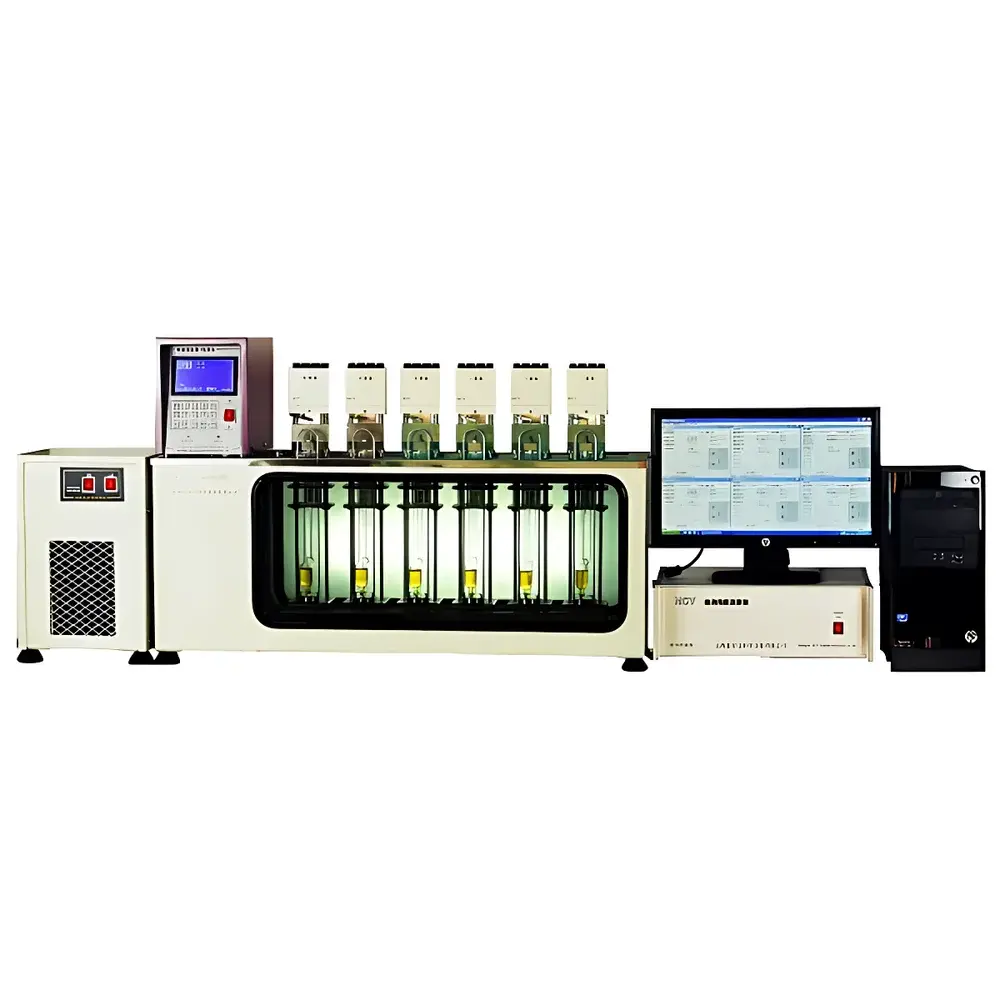
| Compatible Host | NCY Series Automatic Capillary Viscometers |
| Temperature Control Range | 0–80 °C |
| Temperature Resolution | 0.01 °C |
| Temperature Accuracy | ±0.01 °C |
Overview
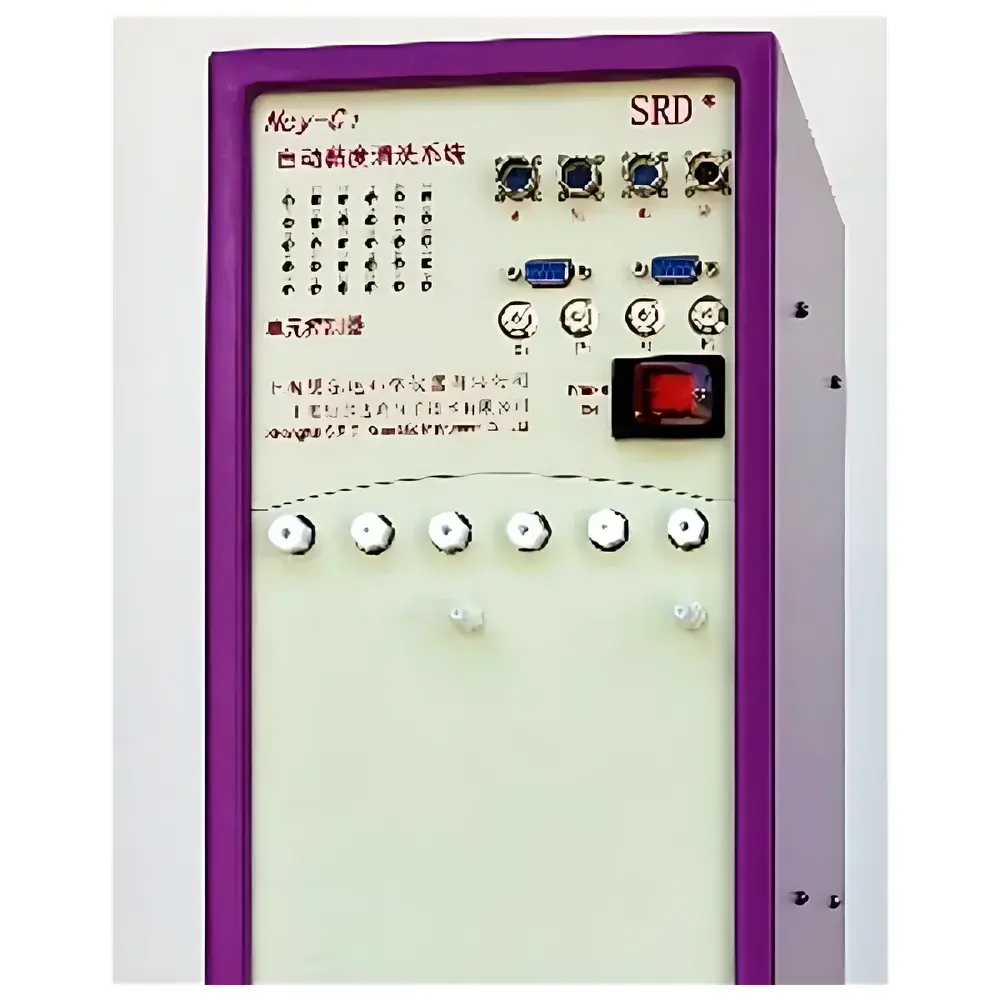
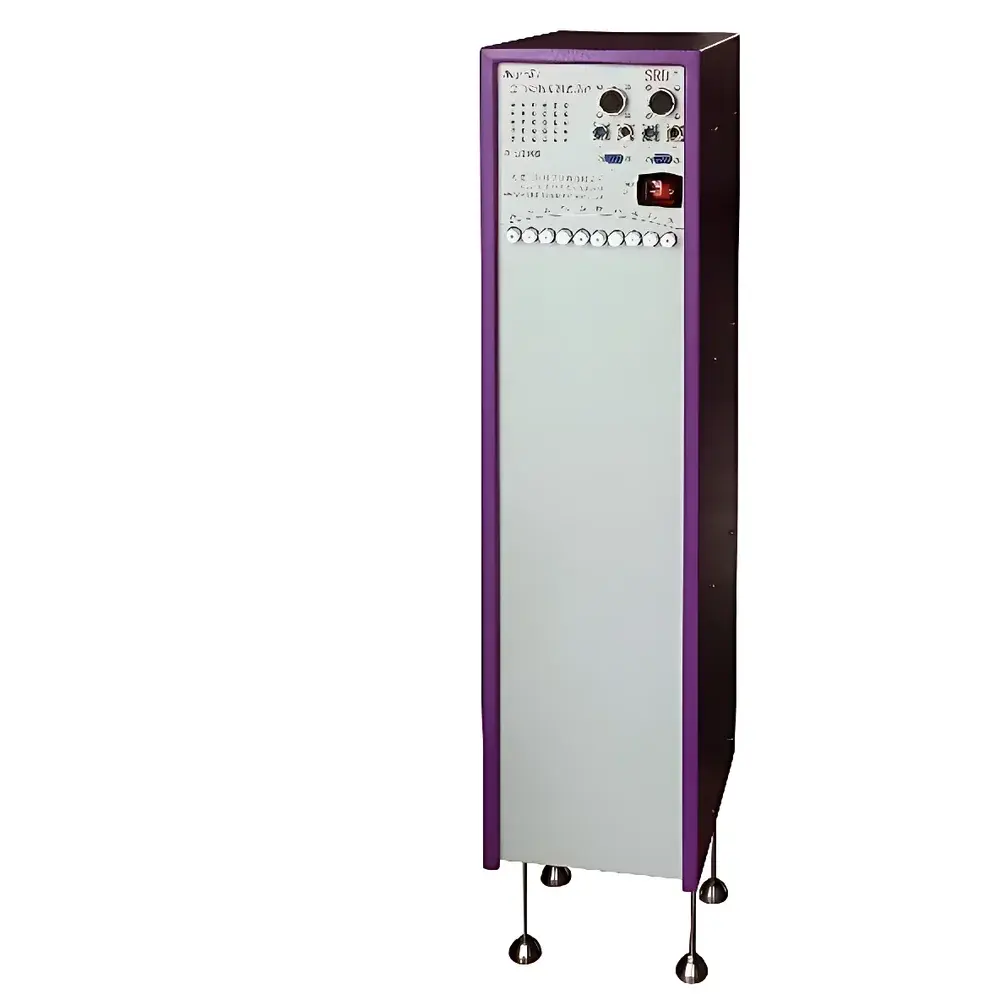
The Sierda NCY-C1 Automated Waste Disposal, Cleaning & Drying Unit is a dedicated auxiliary module engineered for integration with the NCY-series automatic capillary viscometers. It addresses critical post-measurement operational requirements in regulated and high-throughput laboratory environments—specifically automated waste effluent removal, solvent residue decontamination, and inert-gas-assisted drying of Ubbelohde or suspended-level capillary viscometry tubes. Unlike manual cleaning protocols, the NCY-C1 executes fully unattended sequences based on programmable time/step logic, eliminating operator exposure to hazardous solvents (e.g., chlorinated hydrocarbons, phenol-formaldehyde mixtures, or concentrated sulfuric acid used in polymer intrinsic viscosity assays). Its design adheres to core principles of capillary viscometry hygiene: maintaining geometric integrity of the capillary bore (typically 0.2–1.0 mm ID), preventing cross-contamination between samples, and preserving thermal equilibrium stability during subsequent viscosity runs. The unit operates as a closed-loop fluidic subsystem—separate from the viscometer’s primary timing and temperature control architecture—but synchronized via digital I/O handshake with the NCY host controller.
Key Features
- Two-channel parallel processing: Each NCY-C1 unit independently manages cleaning cycles for two capillary viscometer tubes, enabling staggered or simultaneous operation without cross-flow interference.
- Multi-stage automated protocol: Integrated sequence includes (a) vacuum-assisted waste aspiration, (b) precision metering of cleaning solvent into the capillary system, (c) programmable soak duration (adjustable from 30 min to 12 h), (d) high-efficiency waste evacuation, and (e) filtered dry-air or nitrogen purge drying with flow-rate and duration control.
- Thermal coordination: Built-in PT100 sensor and PID-regulated heater maintain bath-equivalent temperature stability (0–80 °C, ±0.01 °C) throughout cleaning and drying phases—critical for solvent volatility management and residual film removal.
- Material compatibility: Fluid-contact components (tubing, valves, manifolds) are constructed from PTFE, PEEK, and borosilicate glass to resist corrosion from aggressive organic solvents and acidic/basic wash media.
- Fail-safe interlocks: Pressure monitoring, liquid-level detection, and timeout safeguards prevent overflow, dry-run pump activation, or incomplete drying—ensuring GLP-compliant repeatability.
Sample Compatibility & Compliance
The NCY-C1 is compatible with all Sierda NCY-series capillary viscometers utilizing standard DIN/ISO 3104 or ASTM D445-compliant tube geometries (e.g., micro-Ubbelohde, Cannon-Fenske routine, and dilution viscometers). It supports common industrial solvents including toluene, THF, DMF, sulfuric acid (≤96%), and aqueous NaOH/KOH solutions. From a regulatory standpoint, its automated containment function directly supports compliance with ISO/IEC 17025 clause 7.2.2 (method validation), USP (viscosity measurement), and FDA 21 CFR Part 11 requirements when paired with NCY host systems equipped with audit-trail-enabled firmware. The absence of manual tube handling reduces variability linked to human factors—aligning with ICH Q5C stability testing guidance for biopharmaceutical viscosity monitoring.
Software & Data Management
Operation is coordinated through the NCY host software interface (v3.2+), where users define cleaning profiles—including solvent type, volume, soak time, drying gas pressure, and cycle repetition count. All execution logs (start time, step completion timestamps, temperature traces, pressure readings, and fault codes) are timestamped and stored locally in CSV/SQLite format. Optional Ethernet or RS-485 connectivity enables integration into LIMS environments via Modbus TCP or OPC UA gateways. Audit trails meet ALCOA+ criteria: attributable, legible, contemporaneous, original, accurate, complete, consistent, enduring, and available—supporting GMP documentation workflows in QC laboratories.
Applications
- Polymer characterization labs performing intrinsic viscosity (IV) or relative viscosity (RV) measurements per ISO 1628 or ASTM D1243.
- Pharmaceutical formulation units assessing solution viscosity of parenteral suspensions or polysaccharide-based excipients under accelerated stability conditions.
- Petrochemical QA/QC for kinematic viscosity screening of base oils and lubricants per ASTM D445.
- Academic rheology research groups requiring reproducible capillary conditioning between shear-thinning or thixotropic sample series.
- Contract testing organizations managing multi-client sample batches under strict chain-of-custody protocols.
FAQ
Is the NCY-C1 compatible with non-Sierda capillary viscometers?
No—it is mechanically and electronically designed exclusively for Sierda NCY-series hosts, utilizing proprietary tube-mounting interfaces and communication protocols.
Can the cleaning solvent type be changed between cycles?
Yes; users select from up to eight preconfigured solvent profiles stored in the controller memory, each with custom volume and soak parameters.
What maintenance intervals are recommended for the NCY-C1?
Daily visual inspection of tubing integrity; quarterly calibration of temperature and pressure sensors; annual replacement of peristaltic pump tubing and inline filters.
Does the unit support nitrogen purging for moisture-sensitive applications?
Yes—dry-air or nitrogen can be connected via standardized 6 mm push-to-connect fittings, with adjustable flow rate (0.5–5.0 L/min) and pressure (0.1–0.5 MPa) control.
How is validation documented for regulated environments?
A comprehensive IQ/OQ protocol package—including installation checklists, operational boundary testing, and traceable calibration certificates—is supplied with each unit and updated annually per ISO/IEC 17025 requirements.



