
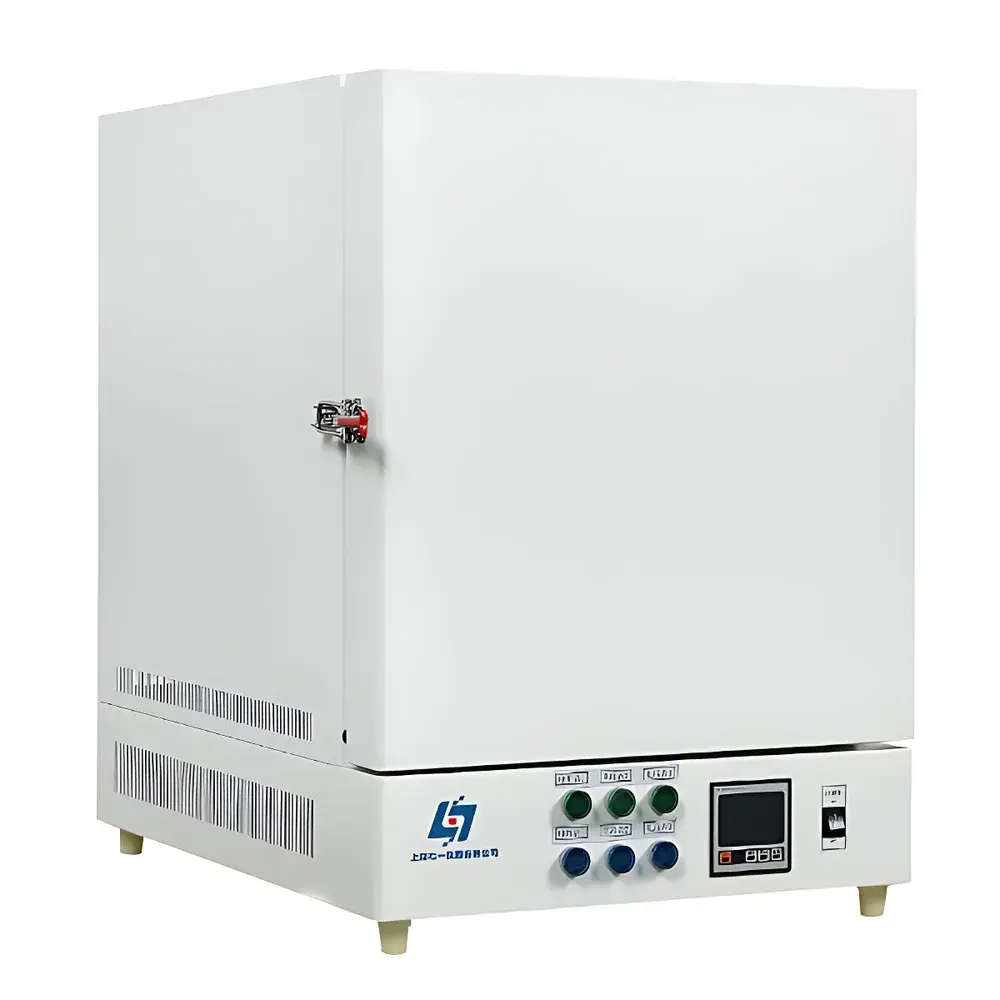
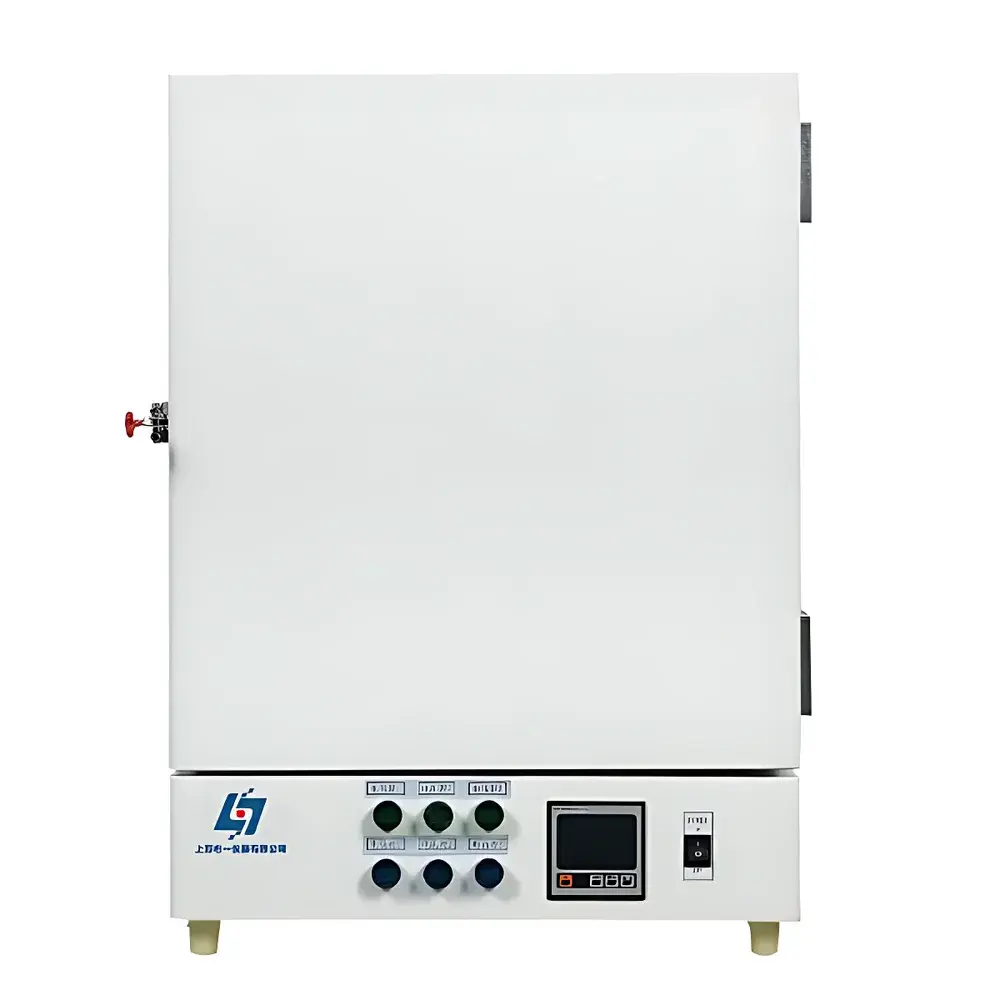
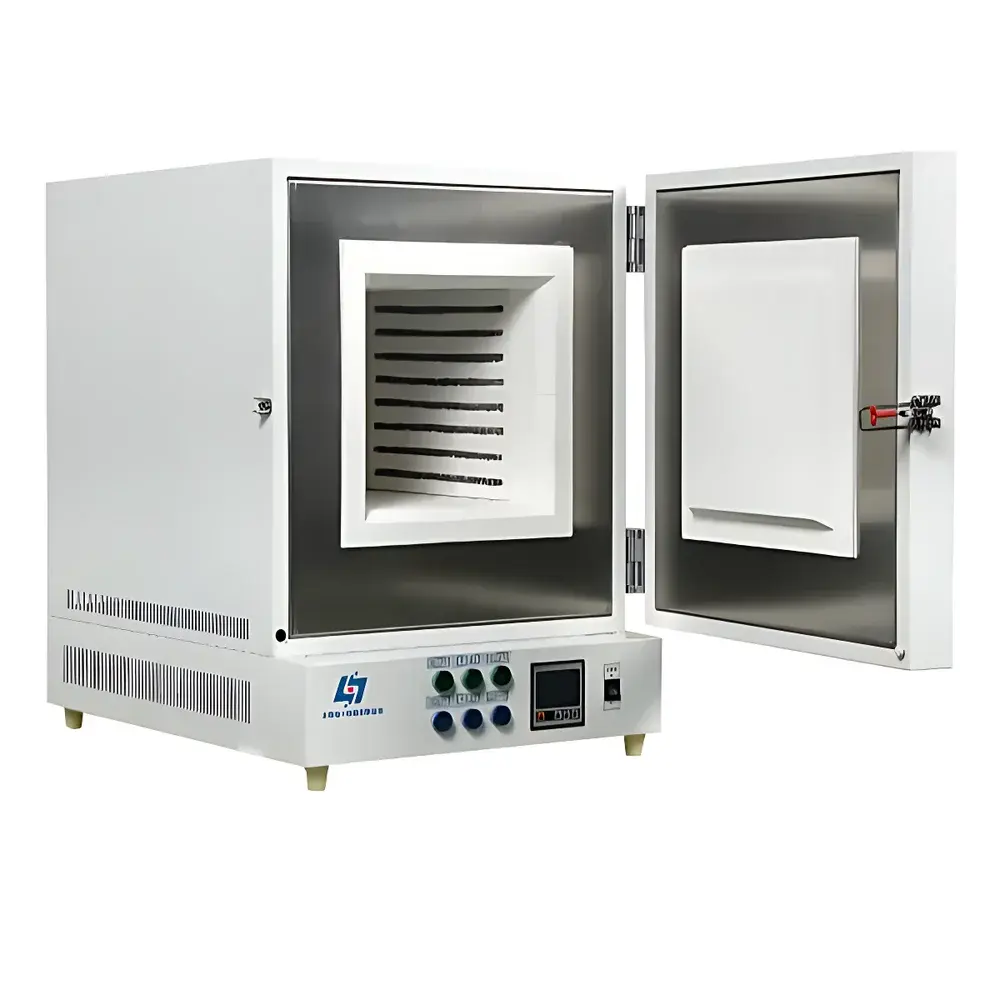
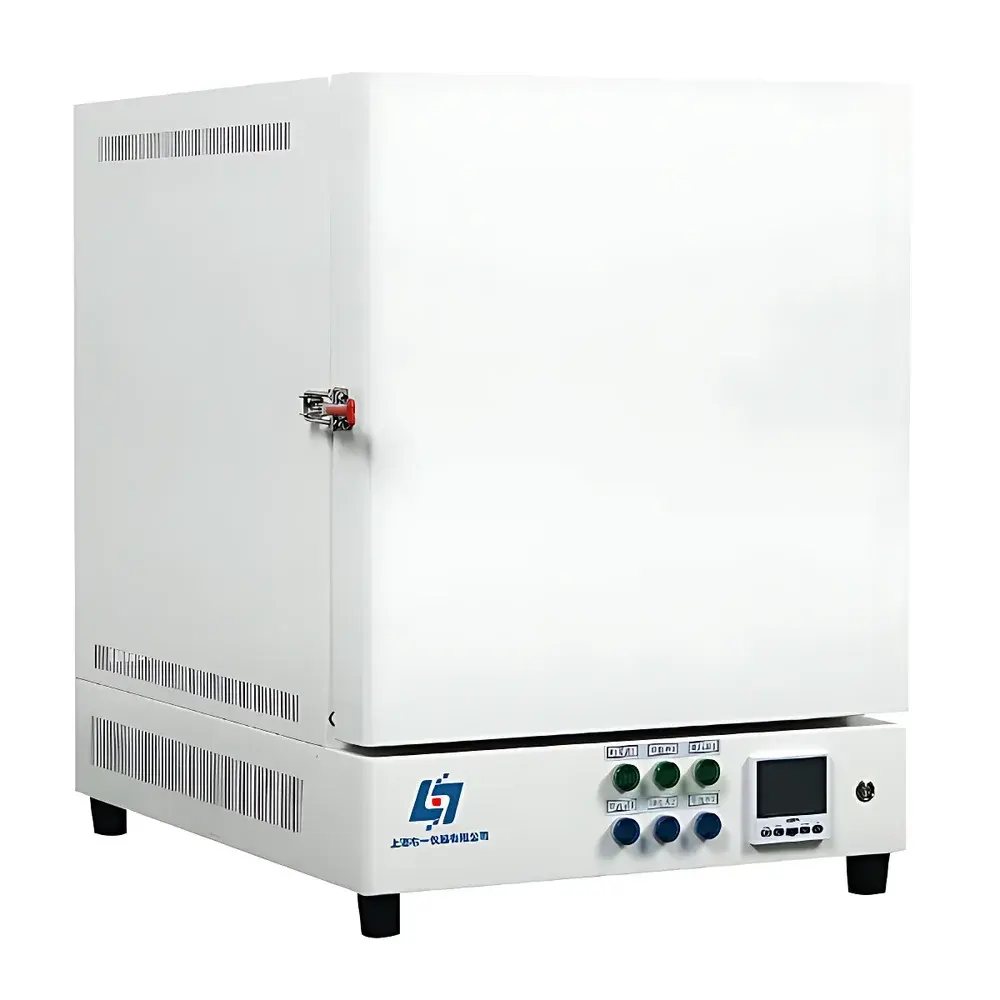
Yoyi SX2-8-13A Ceramic Fiber Muffle Furnace
| Brand | Yoyi |
|---|---|
| Origin | Shanghai, China |
| Manufacturer Type | Direct Manufacturer |
| Product Category | Domestic |
| Model | SX2-8-13A |
| Instrument Type | Box-Type Muffle Furnace |
| Maximum Temperature | 1300 °C |
| Temperature Control Accuracy | ±1 °C |
| Rated Power | 8 kW |
| Heating Element | Silicon Carbide Rod (SiC) |
| Internal Chamber Dimensions | 250 × 400 × 180 mm |
| Nominal Volume | 18 L |
Overview
The Yoyi SX2-8-13A is a high-performance ceramic fiber muffle furnace engineered for precision thermal processing in research laboratories, materials science facilities, and industrial quality control environments. Operating on the principle of resistive heating via silicon carbide (SiC) rods, this box-type furnace achieves stable, uniform temperature distribution across its insulated chamber—critical for applications demanding strict thermal reproducibility, such as ceramic sintering, powder metallurgy densification, ash content determination (per ASTM E1755), and controlled atmosphere annealing of advanced ceramics and nanomaterials. Its maximum operating temperature of 1300 °C places it within the Class III high-temperature furnace category per IEC 61000-4-30 and ISO/IEC 17025-compliant thermal equipment classifications. The furnace is not designed for continuous operation at peak temperature but supports sustained holding up to 1250 °C with thermal drift ≤±1.5 °C over 4-hour cycles under standard ambient conditions (20 °C, 50% RH, no vibration or EMI interference).
Key Features
- Ceramic fiber insulation (alumina-silica composition, ≥95% Al₂O₃ + SiO₂) with bulk density 128 kg/m³, providing thermal conductivity <0.09 W/(m·K) at 1000 °C—reducing standby heat loss by ~60% versus refractory brick-lined furnaces.
- Double-layer chamber wall construction: inner hot-face ceramic fiber board (25 mm thick) + outer structural steel casing with air-gap thermal break; surface temperature remains ≤50 °C at 1000 °C internal setpoint (measured per ISO 22866:2020).
- Microprocessor-based PID temperature controller with 0.1 °C resolution, programmable ramp-hold profiles (up to 30 segments), and auto-tuning capability; meets EN 60519-2 safety requirements for industrial electrothermal equipment.
- Integrated safety architecture: dual independent overtemperature cutoff (mechanical bimetallic switch + electronic thermocouple alarm), earth leakage protection (≤30 mA), current overload relay (80 A rated), and short-circuit protected power input.
- LCD graphical interface supporting multi-language menu navigation (English default), real-time display of setpoint, process temperature, elapsed time, and remaining hold duration; data logging enabled via optional RS485 interface.
- Lightweight design (net weight ≈ 85 kg) due to low-density insulation—facilitating floor-mounted installation without reinforced concrete foundations.
Sample Compatibility & Compliance
The SX2-8-13A accommodates crucibles and sample boats made from alumina (Al₂O₃), silicon carbide (SiC), quartz (for ≤1100 °C), and platinum (with appropriate flux compatibility). It complies with key regulatory frameworks applicable to laboratory thermal instrumentation: UL 61010-1 (2nd Ed.), CE marking per Directive 2014/35/EU (Low Voltage) and 2014/30/EU (EMC), and conforms to ISO/IEC 17025 clause 6.4.3 for equipment suitability in accredited testing labs. While not intrinsically safe for flammable atmospheres, optional inert gas purging (N₂ or Ar) can be implemented via 6 mm BSP inlet/outlet ports to meet ASTM C1171 requirements for reducing-oxidizing environment control during sintering.
Software & Data Management
When equipped with the optional RS485 communication module and PC software (Yoyi FurnaceLink v3.2), the furnace supports bidirectional parameter transfer, real-time temperature graphing, and audit-trail-enabled data export in CSV and XML formats. The software implements timestamped event logging—including power interruption recovery, manual override actions, and alarm triggers—in alignment with FDA 21 CFR Part 11 electronic record requirements for GxP environments. All firmware updates are performed via secure USB bootloader with SHA-256 signature verification to ensure integrity.
Applications
- Thermal gravimetric analysis (TGA) sample pre-conditioning and residue quantification (ASTM D3175, ISO 687).
- Sintering of zirconia, alumina, silicon nitride, and hydroxyapatite bioceramics under controlled dwell profiles.
- Heat treatment of metallic alloys: solution annealing, stress relieving, and tempering of tool steels per AMS 2750E pyrometry specifications.
- Preparation of calibration standards for XRF and ICP-OES via certified ashing protocols (USP , EP 2.2.24).
- Rapid thermal cycling tests for thermal barrier coating (TBC) adhesion evaluation (ISO 20567-1).
- Controlled oxidation studies of carbon-based composites and metal matrix nanocomposites.
FAQ
What thermocouple type is used for temperature sensing?
Type S (Platinum-10% Rhodium / Platinum) thermocouple, calibrated to NIST traceable standards, mounted in a protective ceramic sheath with direct contact to chamber wall near center plane.
Is the furnace suitable for vacuum operation?
No—this model is designed exclusively for atmospheric or inert-gas-purged operation. Vacuum-rated variants require modified door seals, reinforced chamber walls, and dedicated pumping interfaces.
Can multiple furnaces be networked for synchronized profiling?
Yes—via Modbus RTU over RS485 daisy-chain topology, supporting up to 32 units with unique node addressing and master-slave coordination through FurnaceLink software.
What maintenance intervals are recommended for the silicon carbide heating elements?
Visual inspection every 200 operational hours; resistance measurement quarterly; replacement advised when cold resistance increases >25% above nominal value (22 Ω ±5% at 25 °C).
Does the unit include GLP-compliant calibration documentation?
Factory calibration certificate (traceable to CNAS-accredited lab) is provided; on-site IQ/OQ/PQ validation support available upon request with additional service agreement.



