
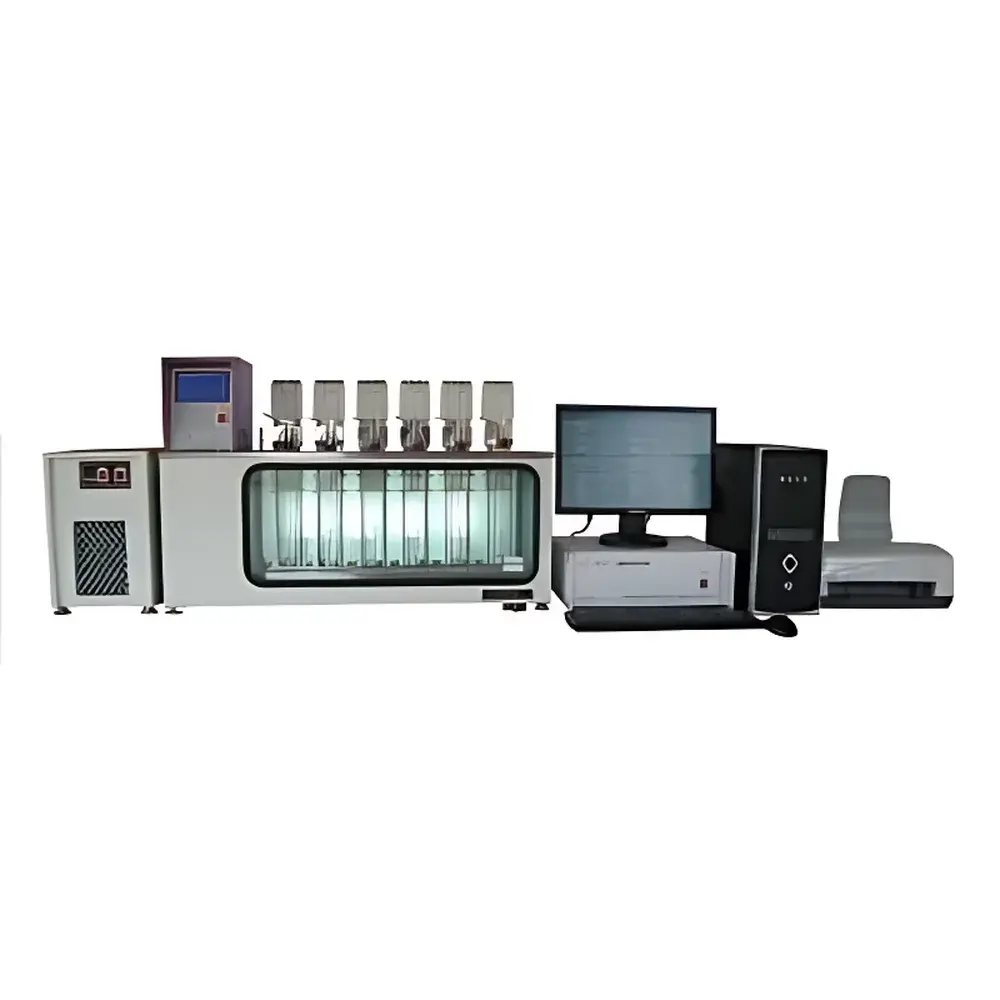
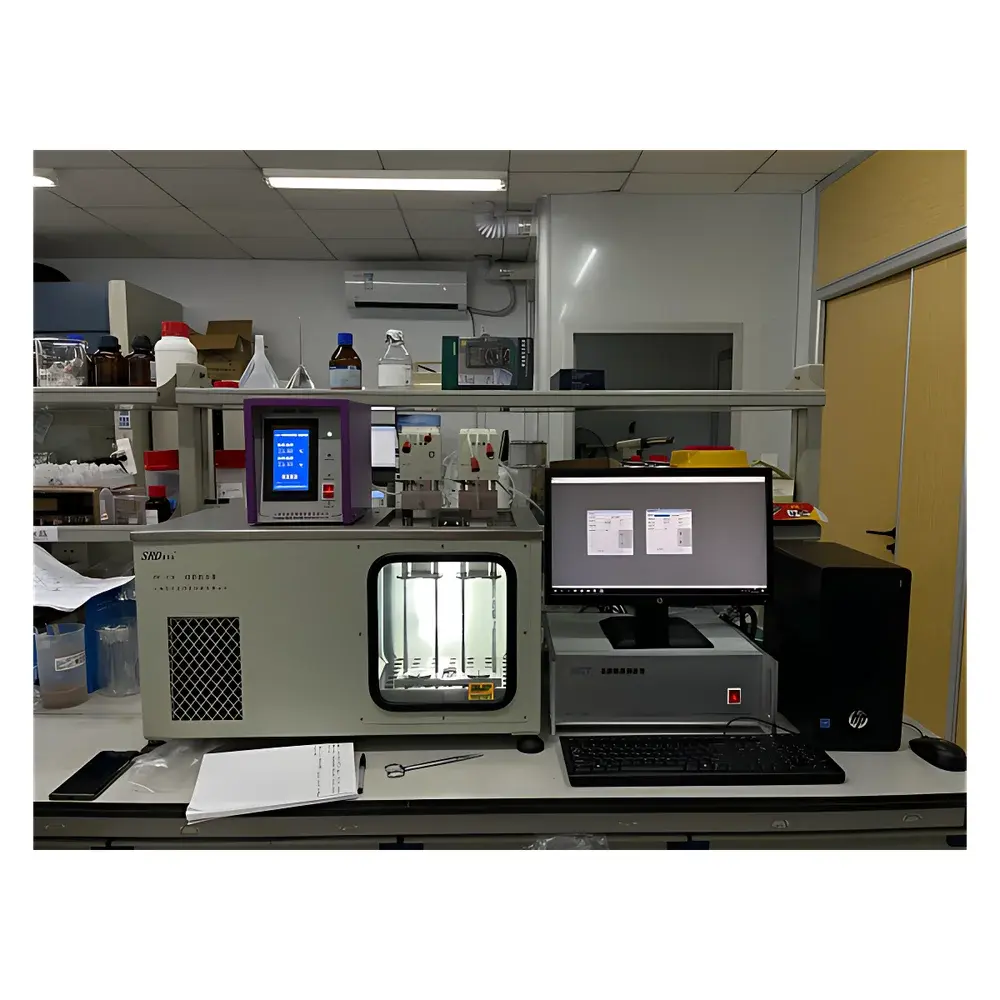
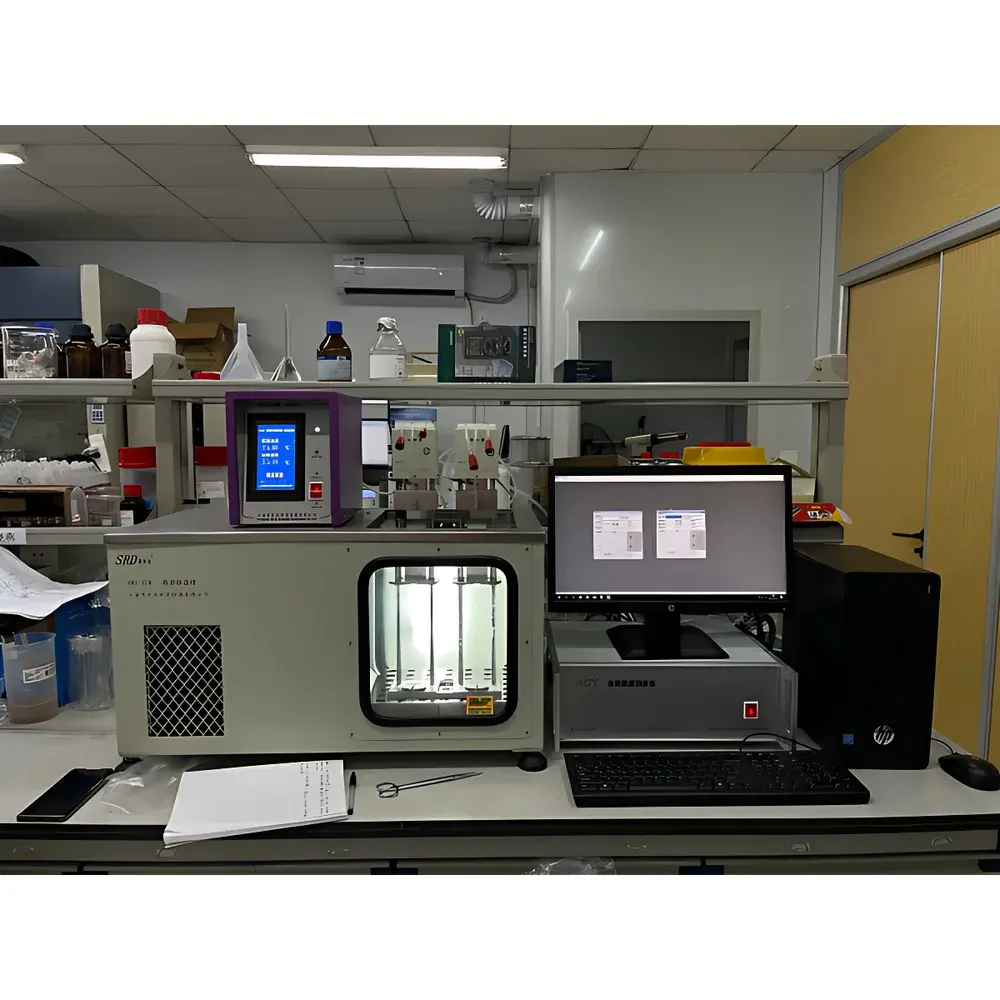
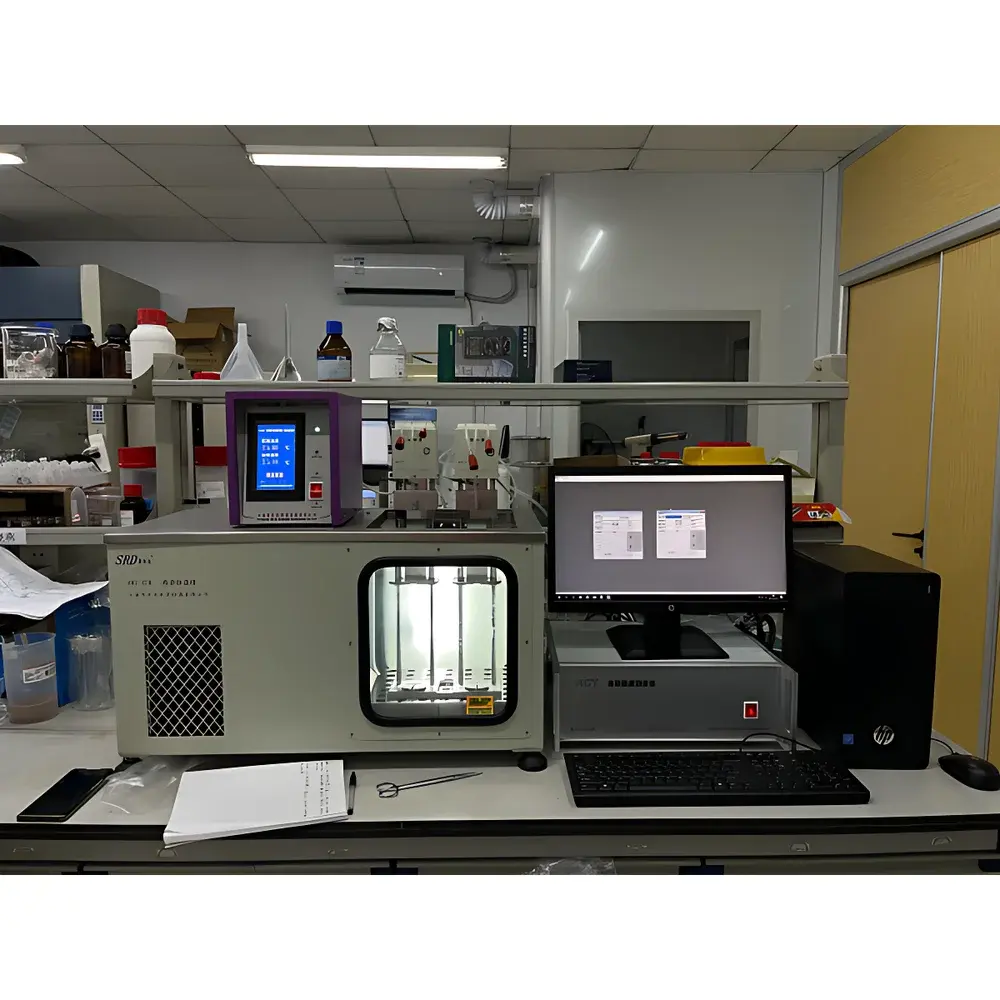
SRD NCY-PET Capillary Viscometer System
| Brand | SRD |
|---|---|
| Origin | Shanghai, China |
| Model | NCY-PET |
| Viscosity Range | 0.01–999.99 mPa·s |
| Temperature Range | 5–75 °C |
| Temperature Resolution | 0.01 °C |
| Temperature Accuracy | ±0.01 °C |
| Timing Range | 0.01–999.99 s |
| Timing Resolution | 0.01 s |
| Inherent Viscosity Range | 0.1–4.0 dL/g |
| Average Degree of Polymerization | 100–10,000 |
| Kinematic Viscosity Range | 0.1–300 mm²/s |
| Thermal Stability | ±0.01 °C (uniformity & fluctuation) |
| Power Supply | 220 V AC, 6–10 A |
| Heating Capacity | 1 kW |
| Cooling Capacity | 125/220 kcal/h |
Overview
The SRD NCY-PET Capillary Viscometer System is a precision-engineered, computer-controlled capillary viscometry platform designed for the accurate determination of inherent viscosity, kinematic viscosity, and average degree of polymerization in synthetic polymers and petrochemical products. It operates on the principle of gravity-driven capillary flow—governed by the Hagen–Poiseuille equation—where the efflux time of a precisely measured volume of solution through a calibrated glass capillary under controlled temperature conditions is used to calculate dynamic or intrinsic viscosity. This methodology aligns with internationally recognized standards including ASTM D4603 (for PET inherent viscosity), ISO 1628-5, USP , and GB/T 14190–2017. The system integrates six independently addressable test units (configurable as NCY-2 through NCY-6), enabling parallel analysis of up to six samples per run—significantly improving throughput while maintaining inter-unit thermal and temporal equivalence.
Key Features
- Multi-channel architecture supporting 2–6 simultaneous capillary measurements with independent timing control and real-time visual monitoring of fluid meniscus movement in each Ubbelohde-type capillary.
- High-stability thermostatic bath with ±0.01 °C temperature uniformity and fluctuation—validated using NIST-traceable 0.01 °C resolution platinum resistance thermometers and certified calibration protocols.
- Automated sample handling sequence: programmable suction, dwell, drainage, and rinse cycles eliminate manual pipetting errors and operator-dependent variability.
- Embedded signal processing modules within each test unit digitize meniscus detection events at 100 Hz sampling rate, ensuring sub-centisecond timing resolution and reproducible endpoint determination.
- Preloaded calculation library with 10 standardized viscosity equations—including Huggins, Kraemer, Schulz–Blaschke, and single-point dilution methods—for PET, nylon 6/6, PVA, cellulose pulp, and PVC systems.
- Self-validating outlier rejection algorithm: automatically identifies and excludes results deviating beyond user-defined %RSD thresholds (default: 0.5%) across replicate runs.
- Modular hardware design allows hot-swapping of capillary viscometers without interrupting ongoing assays in unaffected channels.
Sample Compatibility & Compliance
The NCY-PET system is optimized for solvent-based polymer solutions including ethylene glycol (PET), formic acid (nylon), sulfuric acid (cellulose), and dimethylformamide (PVA). All wetted components—including borosilicate glass capillaries, PTFE valves, and quartz-level sensors—are chemically inert to common organic solvents and mild acids. The instrument meets mechanical safety requirements per IEC 61010-1 and electromagnetic compatibility standards per EN 61326-1. Its operational software supports audit trail generation, electronic signature capability, and configurable user access levels—facilitating compliance with FDA 21 CFR Part 11, EU Annex 11, and GLP/GMP documentation requirements when deployed in regulated QC laboratories.
Software & Data Management
Controlled via Windows-based application (Windows 98–10 compatible), the proprietary SRD ViscoSuite™ software provides a bilingual interface (English/Chinese) with intuitive workflow navigation. All raw timing data, temperature logs, and calculated viscosity values are stored in an embedded relational database with immutable timestamps and operator ID tagging. Export options include CSV, Excel, PDF, and XML formats compliant with LIMS integration. Report templates adhere to ISO/IEC 17025 reporting guidelines, including uncertainty estimation per GUM (JCGM 100:2008) for inherent viscosity results. Data backup and restore functions support scheduled external archiving to network drives or USB media. Software validation documentation (IQ/OQ/PQ protocols) is available upon request for regulated environments.
Applications
- Quality control of polyethylene terephthalate (PET) resin batches against specification limits for intrinsic viscosity (IV) in bottle-grade and fiber-grade production lines.
- Determination of average molecular weight and polydispersity index (PDI) proxies for nylon 6,6 and polyacrylonitrile (PAN) fibers during polymerization process development.
- Batch release testing of viscose rayon and lyocell pulp according to ISO 5351 and TAPPI T230 standards.
- Stability assessment of polymer solutions under accelerated aging protocols—monitoring IV drift over time at fixed temperatures.
- Method transfer studies between R&D and manufacturing sites requiring high inter-laboratory reproducibility (target %RSD ≤ 0.3% for duplicate IV measurements).
- Teaching laboratories conducting undergraduate polymer characterization experiments with full traceability and automated grading functionality.
FAQ
What capillary types are supported?
Standard Ubbelohde capillaries conforming to ISO 3105 and ASTM D445 specifications; custom calibrations available for Cannon-Fenske or Ostwald variants upon request.
Is external calibration required?
Yes—annual recalibration of temperature sensors and capillary constants is recommended using certified reference fluids (e.g., Cannon N27, N3000) traceable to NIST SRMs.
Can the system operate unattended overnight?
Yes—the software supports scheduled start times, automatic shutdown after queue completion, and email/SMS alerts for abnormal terminations or temperature excursions.
How is viscosity unit conversion handled?
All conversions (cP ↔ mPa·s ↔ dL/g ↔ mm²/s) are performed in real time using built-in density and concentration correction algorithms per ISO 1628-1 Annex B.
What maintenance intervals are recommended?
Daily: capillary cleaning with appropriate solvent; quarterly: bath fluid replacement and seal inspection; annually: full metrological verification and firmware update.



