
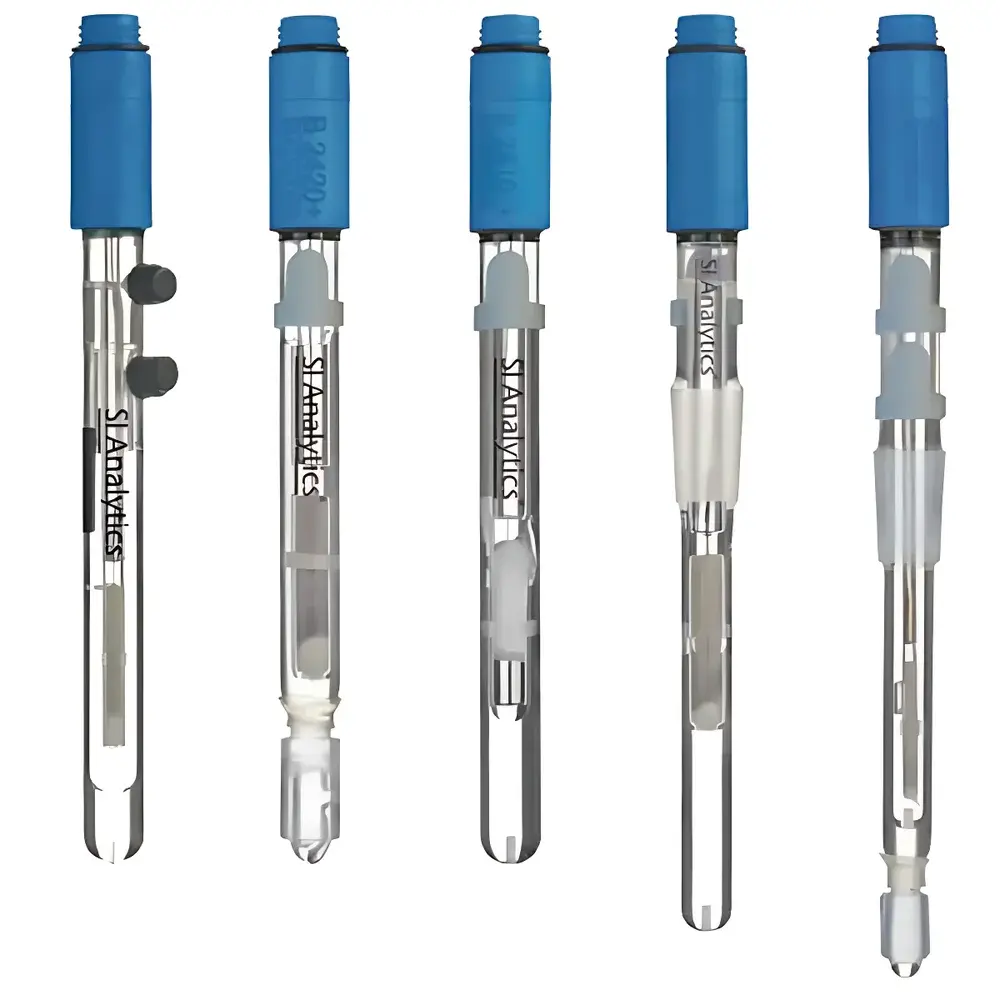
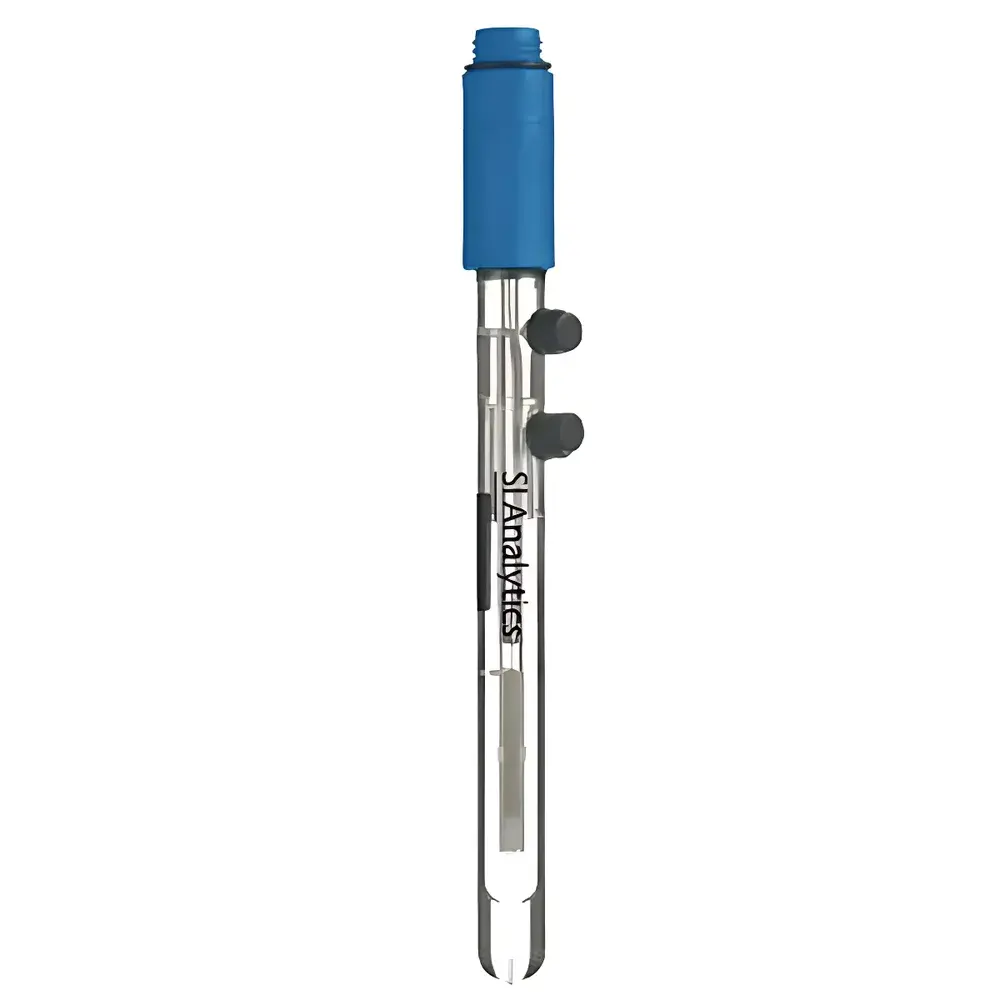
ChemTron ScienceLine B 2220+ Single-Reference Electrode
| Brand | ChemTron |
|---|---|
| Origin | Germany |
| Model | ScienceLine B 2220+ |
| Electrode Type | Single-Reference Electrode |
| Body Material | Glass |
| Reference System | Ag/AgCl (3 mol/L KCl) |
| Temperature Range | −5 °C to +100 °C |
| pH Range | 0–14 |
| Junction Type | Double-Liquid-Junction |
| Sensing Element | Platinum |
| Connection | L 1 N Cable |
| Compliance | ASTM D1129, ISO 7888, USP <798>, GLP-ready configuration |
Overview
The ChemTron ScienceLine B 2220+ is a precision-engineered single-reference electrode designed for high-stability potentiometric measurements in demanding laboratory and industrial electrochemical applications. Built upon a robust all-glass body architecture, it employs a double-liquid-junction (DLJ) configuration to minimize liquid junction potential drift and prevent contamination of the internal reference electrolyte—critical for long-term reproducibility in pH, ion-selective, or redox titration workflows. The electrode utilizes a stable Ag/AgCl reference element saturated in 3 mol/L KCl, ensuring low thermal hysteresis and rapid equilibration across wide temperature gradients (−5 °C to +100 °C). Its platinum sensing contact enables reliable electrical coupling with compatible indicator electrodes and potentiostats, while the standardized L 1 N coaxial cable interface ensures compatibility with major benchtop meters and data acquisition systems compliant with IEC 61000-4 electromagnetic immunity standards.
Key Features
- All-glass construction with borosilicate 3.3 tubing for chemical inertness and thermal shock resistance
- Double-liquid-junction design with outer sleeve filled with inert electrolyte (e.g., KNO₃ or LiOAc), reducing cation/anion migration and extending service life in protein-rich, sulfide-containing, or low-ionic-strength samples
- Platinum wire internal conductor for minimal ohmic drop and stable signal transmission
- Calibrated reference potential traceable to NIST SRM 1981 (Ag/AgCl in 3 M KCl at 25 °C: +199.0 ± 0.5 mV vs. SHE)
- Hermetically sealed electrolyte reservoir with refill port enabling field maintenance and extended operational lifetime
- NS 14.5 standard taper ground-glass joint for secure, leak-tight integration into reaction vessels, flow cells, or titration stands
Sample Compatibility & Compliance
The B 2220+ demonstrates broad compatibility with aqueous and mixed-solvent systems across pH 0–14, including aggressive media such as dilute acids (HCl, HNO₃), alkaline hydroxides (NaOH, KOH), and buffered biological solutions. Its DLJ architecture prevents KCl leaching into samples sensitive to chloride interference (e.g., silver titrations, enzymatic assays). The electrode conforms to key international standards governing reference electrode performance: ASTM D1129 (Standard Terminology Relating to Water), ISO 7888 (Water Quality — Determination of Electrical Conductivity), and USP <798> (Environmental Monitoring for Aseptic Processing). When used in validated analytical procedures, its design supports GLP and GMP audit requirements—including documented calibration history, traceable reference materials, and defined storage protocols per manufacturer’s technical bulletin TB-SC-2220+ Rev. 3.
Software & Data Management
While the B 2220+ operates as a passive analog sensor, its output integrates seamlessly with digital electrochemical workstations supporting IEEE 1451.2 transducer electronic data sheets (TEDS). When paired with ChemTron-compatible meters (e.g., pH/ISE modules of the TitroLine 7700 series), the electrode enables automated calibration logging, drift compensation algorithms, and timestamped measurement records compliant with FDA 21 CFR Part 11 Annex 11 requirements. Raw mV outputs are recorded without proprietary compression, facilitating third-party import into MATLAB, Python (via PySerial or NI-DAQmx), or LIMS platforms using standard ASCII or CSV export formats.
Applications
- High-accuracy pH monitoring in bioreactor control loops and fermentation processes
- Redox potential (Eh) measurement in environmental soil/water analysis per EPA Method 9040C
- Endpoint detection in potentiometric titrations (e.g., argentometry, complexometric EDTA titrations)
- Reference electrode in three-electrode corrosion testing per ASTM G59
- Stability validation of ion-selective electrodes (ISEs) under ISO 17025-accredited QA/QC programs
- In-line monitoring of cleaning-in-place (CIP) rinse conductivity and pH profiles
FAQ
What is the recommended storage solution for the B 2220+ when not in use?
Store vertically in 3 mol/L KCl solution at room temperature; avoid distilled water or dry storage to prevent junction crystallization.
Can the B 2220+ be used in non-aqueous solvents such as acetonitrile or ethanol?
Limited compatibility—only with ≥20% water content; use optional outer electrolyte (e.g., 0.1 M LiOAc in EtOH/H₂O) and validate junction potential stability per ISO 15197 Annex C.
How often should the reference electrolyte be refilled?
Refill every 4–6 weeks under continuous use; inspect junction flow rate monthly using gravimetric outflow test per ChemTron Technical Note TN-REF-02.
Is the B 2220+ suitable for steam sterilization (autoclaving)?
No—glass body withstands 100 °C but not pressurized steam; use only validated dry-heat decontamination up to 120 °C for ≤15 minutes.
Does this electrode support automatic temperature compensation (ATC)?
No—ATC requires a separate integrated Pt1000 or NTC thermistor; pair with ChemTron TempLine T-2000 probe for full compliance with ISO 3696 Class 2 water specifications.






