
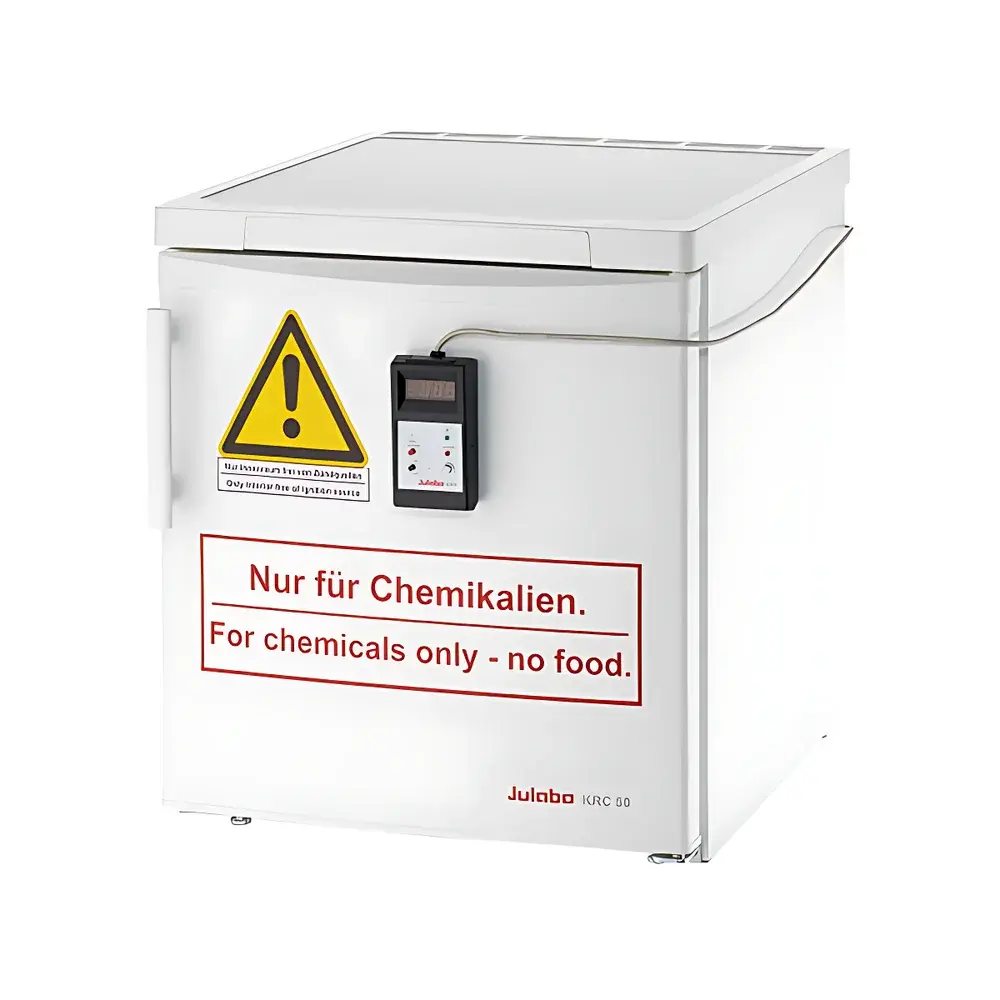
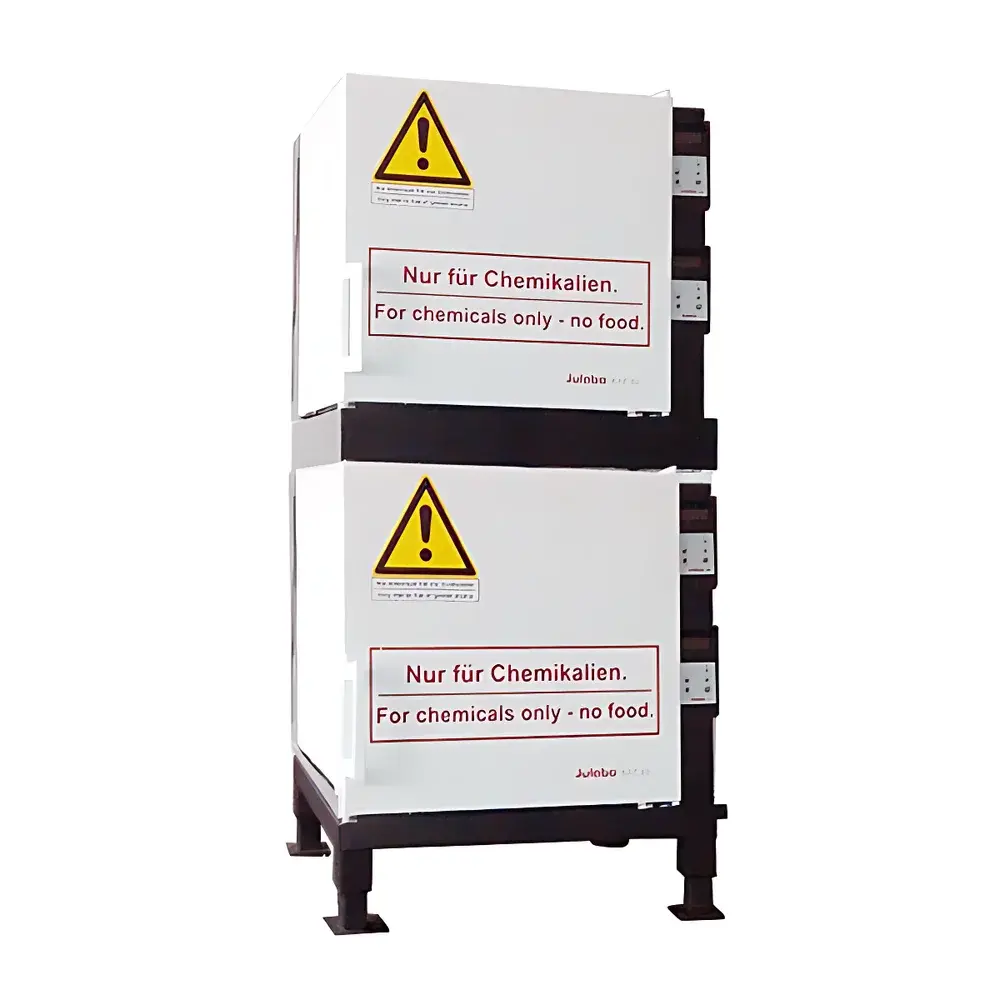
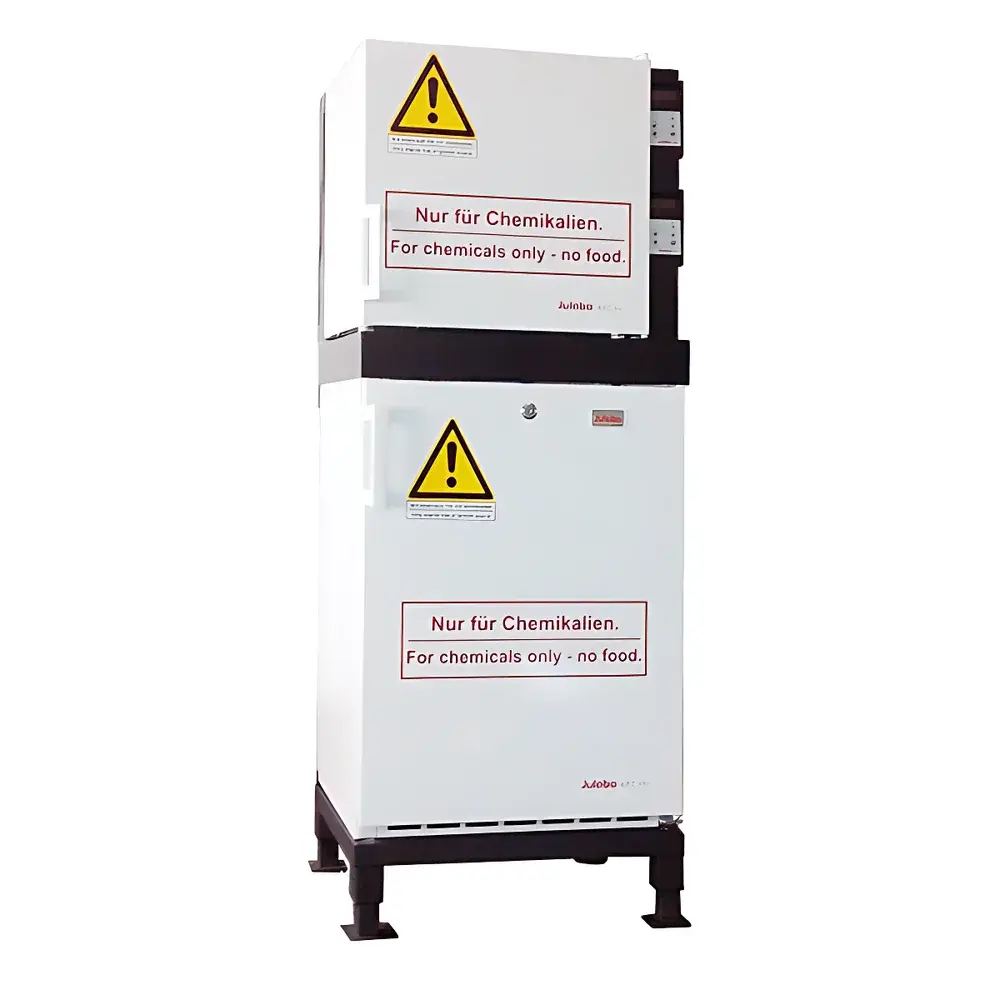
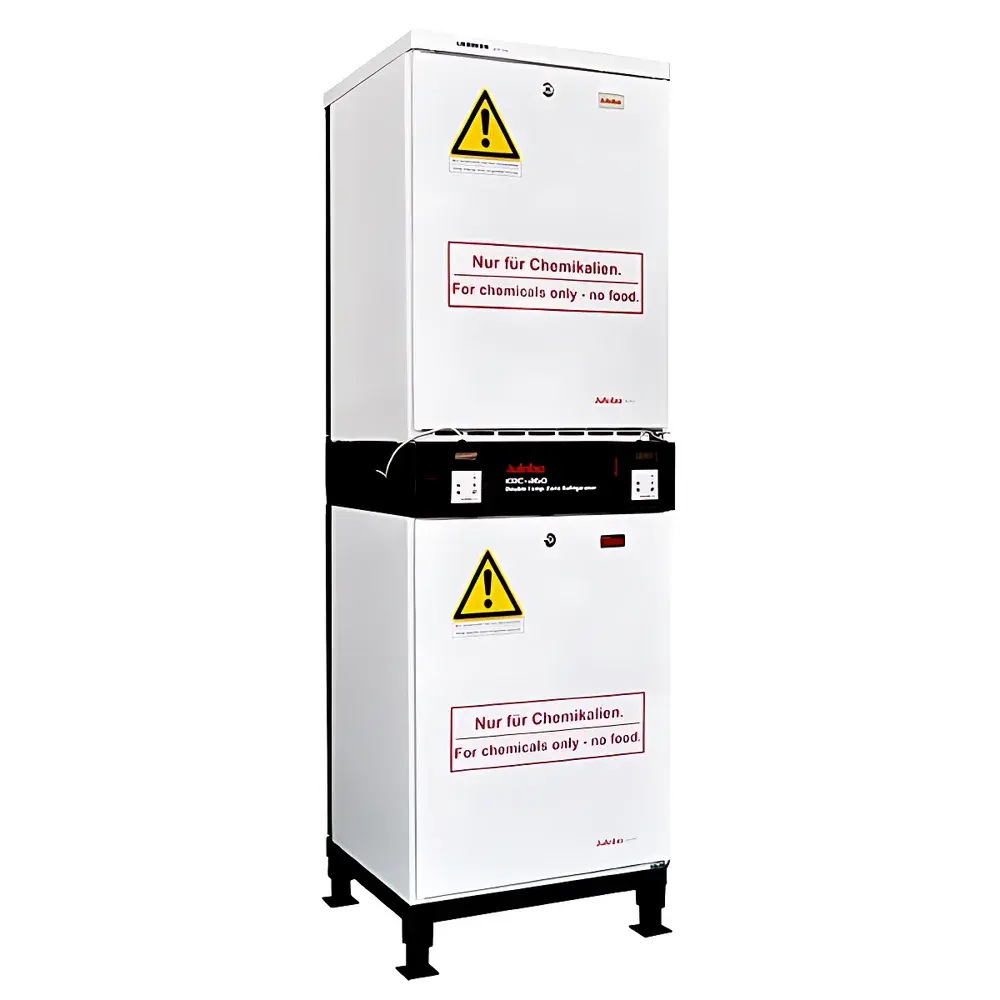
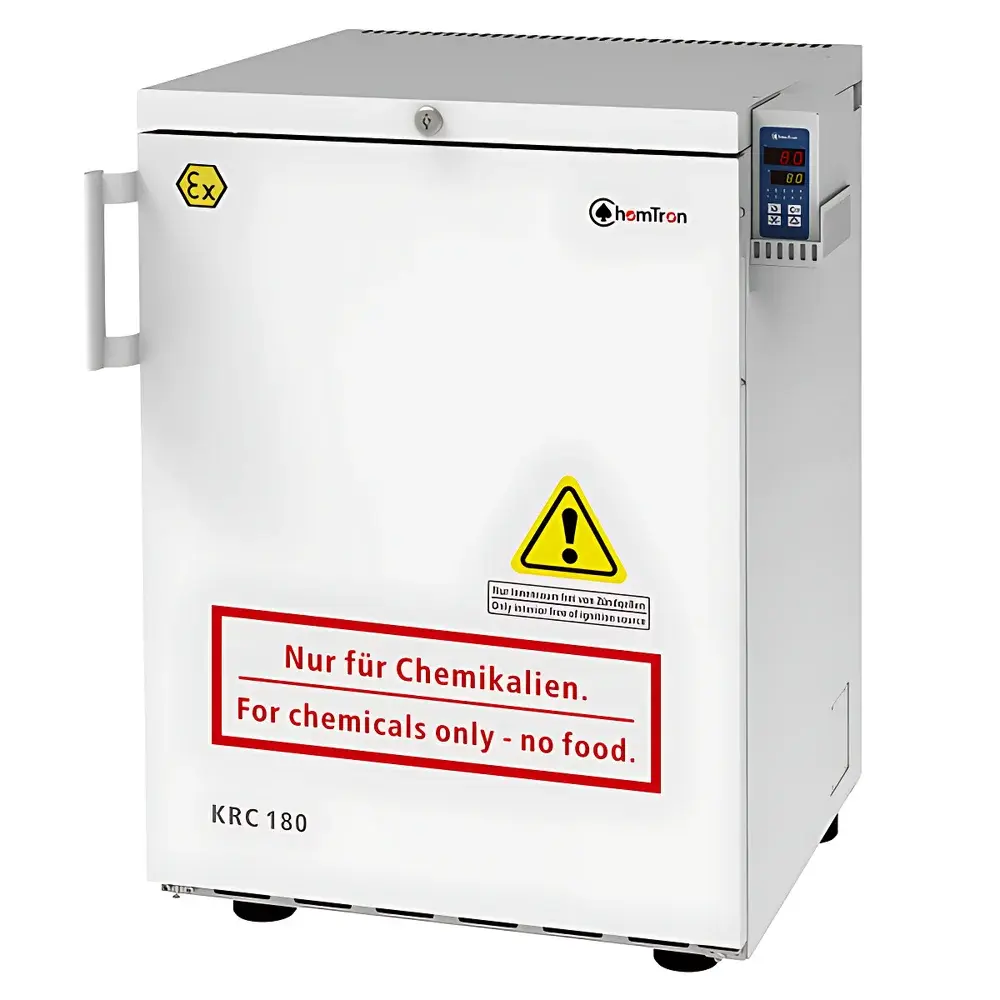
JULABO-ChemTron KRC180 Explosion-Proof Laboratory Medicine Cabinet
| Brand | JULABO-ChemTron |
|---|---|
| Origin | Germany |
| Model | KRC180 |
| Temperature Range | −2 °C to +12 °C |
| Temperature Stability | ±1 °C |
| Display Resolution | 0.1 °C |
| Internal Volume | 180 L (Single-Zone) |
| Internal Dimensions (W×L×H) | 52 cm × 40 cm × 70 cm |
| External Dimensions (W×L×H) | 55 cm × 64 cm × 136 cm |
Overview
The JULABO-ChemTron KRC180 is a certified explosion-proof laboratory medicine cabinet engineered for the secure, low-temperature storage of flammable, volatile, and thermally sensitive chemical reagents and pharmaceutical substances. Designed in accordance with European ATEX Directive 2014/34/EU and IEC 60079 standards for equipment used in potentially explosive atmospheres, the KRC180 eliminates ignition risks through its intrinsically safe architecture: no electrical components—including lighting, sensors, or control circuitry—are located inside the storage chamber. Instead, temperature regulation is achieved via a hermetically sealed, externally mounted refrigeration system with passive heat exchange. The unit maintains a precisely controlled environment between −2 °C and +12 °C (±1 °C stability), minimizing molecular volatility, inhibiting degradation pathways, and reducing solvent evaporation rates—critical parameters for preserving assay integrity, reference standard stability, and regulatory compliance in GxP environments.
Key Features
- Intrinsically safe storage cavity: zero internal wiring, no switches, no lamps, no spark-generating elements—fully compliant with Zone 1/2 hazardous area classification requirements
- Externally mounted, explosion-protected control electronics with shielded cabling; optional extended-length control cables support remote operation up to 30 m from the unit
- Digital LED interface with 0.1 °C resolution for both setpoint adjustment and real-time internal temperature monitoring
- Reversible door hinge design accommodates right- or left-handed access and integrates a robust mechanical lock for access-controlled inventory management
- Static-dissipative interior lining (surface resistivity <10⁹ Ω/sq) prevents electrostatic discharge during handling of low-flashpoint solvents
- Compressor with thermal overload protection and automatic shutdown to ensure long-term operational reliability under continuous duty cycles
- Built-in safety self-test function enables routine verification of audible/visual alarm activation without requiring external calibration tools
- Integrated condensate collection tray and magnetic controller mounting bracket included as standard accessories
Sample Compatibility & Compliance
The KRC180 is validated for storage of Class I flammable liquids (e.g., acetone, ethanol, diethyl ether, hexane), per NFPA 30 and OSHA 1910.106 classifications. Its uniform temperature distribution and absence of internal convection fans prevent localized thermal gradients that could accelerate decomposition of unstable compounds (e.g., peroxides, azides, nitrocellulose derivatives). All materials in direct contact with stored samples—including shelves, liners, and gaskets—meet USP extractables profiling requirements and are free of halogenated flame retardants. The cabinet conforms to EN 14470-1:2019 for fire resistance (S60 rating), ISO 15195:2013 for reference material storage, and supports audit readiness for FDA 21 CFR Part 11 (when paired with optional data-logging accessories), EU Annex 11, and GLP/GMP documentation workflows.
Software & Data Management
While the base KRC180 operates via standalone hardware controls, optional accessories enable integration into regulated digital infrastructure. An ATEX-certified external temperature probe (model KRC-TP-EX) provides traceable, NIST-traceable readings directly to a validated data logger compatible with 21 CFR Part 11-compliant software platforms (e.g., DeltaTrak Validator, Eurotherm iChart). The cabinet’s alarm outputs (dry contact relay) interface with building management systems (BMS) or centralized lab monitoring networks. All firmware updates and configuration changes require physical access and multi-level authentication—eliminating remote cyber vulnerabilities inherent in cloud-connected appliances.
Applications
- Storage of flammable organic solvents in analytical chemistry labs (HPLC, GC, spectroscopy sample prep)
- Secure holding of peroxide-forming reagents (e.g., tetrahydrofuran, dioxolane) under stabilized sub-ambient conditions
- Controlled-temperature staging of APIs and excipients during formulation development (ICH Q5C stability guidelines)
- Inventory management of cytotoxic agents and controlled substances in oncology research facilities
- Backup cold storage for reference standards and certified reference materials (CRMs) requiring non-frost-free, vibration-minimized environments
- Compliance-aligned storage for ISO/IEC 17025-accredited testing laboratories performing chemical analysis
FAQ
Is the KRC180 certified for use in Zone 1 hazardous locations?
Yes—the entire unit carries ATEX II 2G Ex db ib IIB T4 Gb certification, permitting installation in areas where explosive gas-air mixtures are likely to occur periodically.
Can the internal temperature be logged continuously?
Not natively; however, the optional KRC-TP-EX probe and external Class I, Division 2-rated data logger provide compliant, auditable temperature history with electronic signatures.
Does the cabinet meet fire-resistance requirements for laboratory renovation codes?
Yes—it achieves S60 fire resistance per EN 14470-1:2019, with structural integrity maintained for 60 minutes at 1000 °C furnace exposure.
Are shelves adjustable or removable?
All stainless-steel shelves are fully removable and repositionable on fixed-height supports to accommodate variable container heights (e.g., 1-L carboys, 4-L solvent cans, or stacked 50-mL centrifuge tubes).
What maintenance intervals are recommended for long-term reliability?
Compressor oil and refrigerant integrity should be verified annually by an ATEX-qualified technician; door gasket integrity and lock mechanism function must be inspected quarterly per internal SOPs.



