
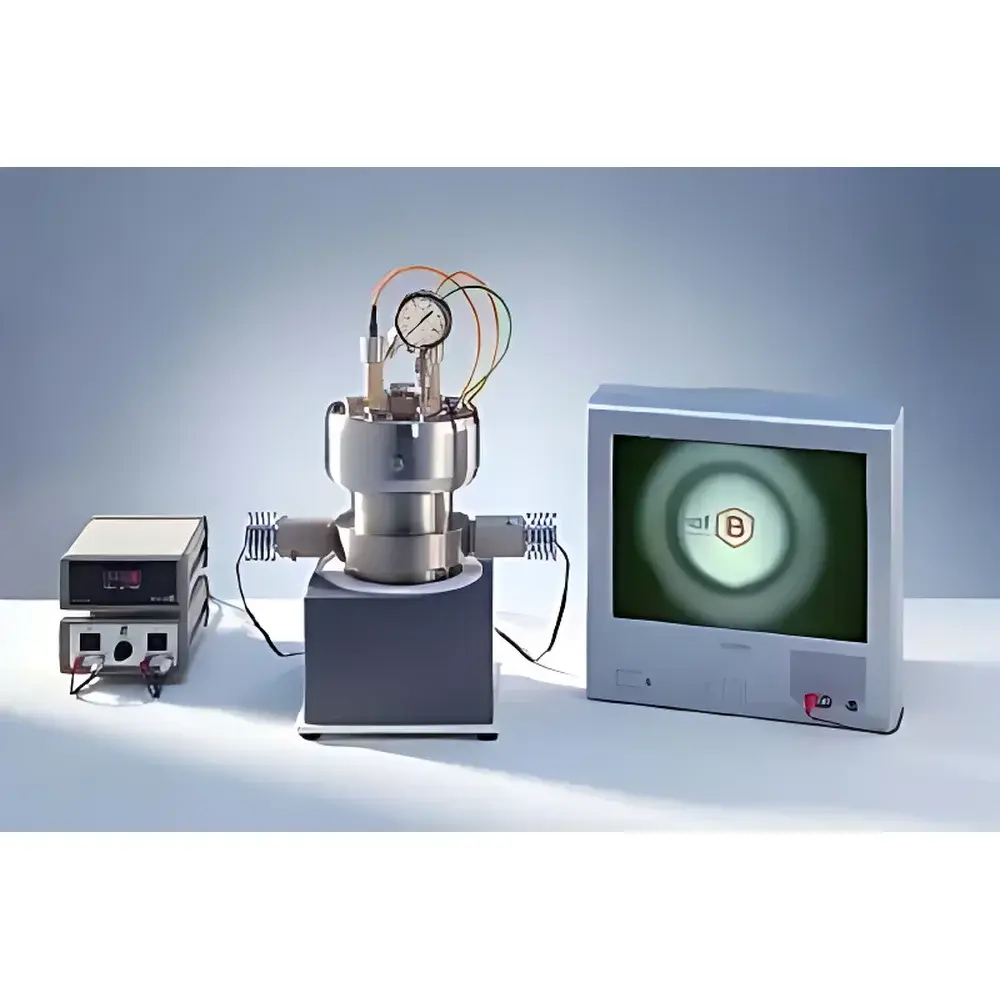
ChemTron Camera Series Double-Window High-Pressure Photochemical Reactor
| Brand | ChemTron |
|---|---|
| Origin | Germany |
| Model | Camera |
| Material | SS 316 Ti |
| Max. Working Pressure | 50 bar (725 psi) |
| Max. Temperature | 300 °C (230 °C with FPM seals) |
| Volume Range | 1200–6000 mL |
| Standard Volume | 1800 mL |
| Vacuum/Pressure Rating | –1 to +25 bar (gauge) |
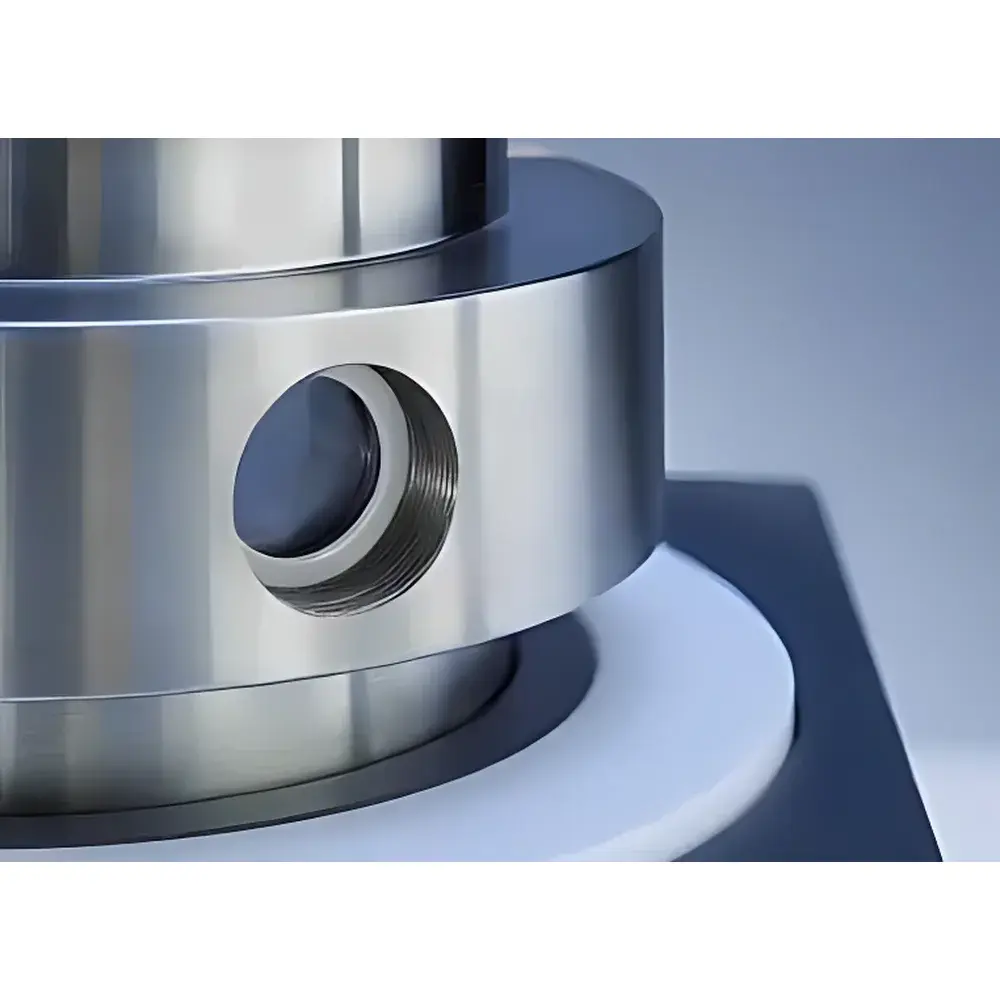
| Viewing Windows | Two opposing quartz windows (Ø21 mm) with integrated LED illumination |
| Explosion Protection | Ex d IIB T4 or higher (Zones 0, 1) |
| Stirring System | Magnetic coupling drive (RV 100, 100 N·cm torque, 300 °C rated, max. viscosity 4000 mPa·s) |
| Pressure Monitoring | Intrinsically safe pressure transducer (25 bar, SS 316 L) |
| Temperature Sensing | ATEX-certified Pt-100 (250 mm × 1.5 mm sheath) |
| Seals | FPM (Viton) or optional FFKM (Perlast) O-rings |
| Safety Components | Monel rupture disc (20 bar, PFA-coated, certified) |
| Jacket Type | Double-wall circulation jacket for external heating/cooling |
Overview
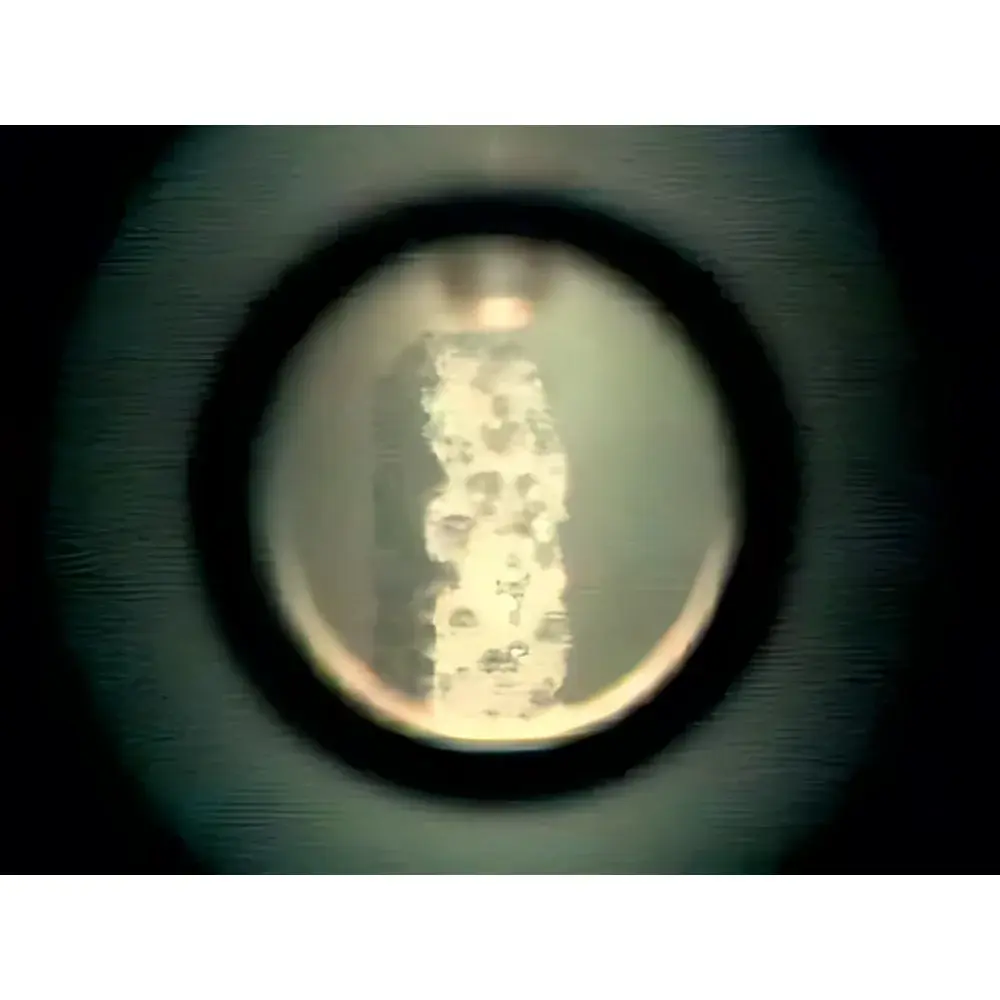
The ChemTron Camera Series is a purpose-engineered high-pressure photochemical reactor system designed for real-time visual monitoring of heterogeneous and homogeneous reactions under rigorously controlled thermal, pressure, and atmospheric conditions. Built upon a robust SS 316 Ti monobloc architecture, the reactor integrates two diametrically opposed fused quartz observation windows (Ø21 mm) with coaxial LED illumination—enabling unobstructed optical access for in situ imaging, video recording, or integration with external microscopy and spectroscopic systems. Its operational envelope spans up to 50 bar (725 psi) and 300 °C, with material compatibility validated for aggressive reagents, catalytic slurries, supercritical fluids, and photoactive media. The double-wall circulation jacket supports precise temperature control via external thermostats or heat-transfer fluid loops, while the quick-lock chain closure ensures repeatable sealing integrity and rapid reactor opening—critical for iterative synthesis workflows in R&D laboratories.
Key Features
- Optically optimized dual-quartz viewport system with integrated cold-light LED illumination, minimizing thermal interference and enabling high-fidelity image capture during exothermic or photolytic processes.
- ATEX-certified explosion-proof components across all critical subsystems: magnetic drive (Zone 1), pressure transducer (Zone 0), Pt-100 sensor (Zone 1), and camera interface (Ex d IIB T4 or higher), ensuring compliance with EU Directive 2014/34/EU and IEC 60079 standards.
- Magnetic coupling stirrer (RV 100) with 100 N·cm torque rating, capable of handling viscosities up to 4000 mPa·s at full speed—eliminating dynamic seal leakage risks while maintaining rotational stability under high-pressure gas headspace conditions.
- Full SS 316 Ti wetted construction—including vessel body, lid, valves, fittings, and rupture disc holder—with optional FFKM (Perlast) or FPM (Viton) elastomeric seals selected per chemical compatibility and temperature requirement (FPM limited to ≤230 °C).
- Integrated safety architecture featuring certified Monel rupture disc (20 bar, PFA-coated, traceable certificate), overpressure relief tubing (PTFE-lined, 550 bar burst rating), and redundant gas feed/exhaust lines with stainless-steel braided PTFE hoses (200 bar working pressure at 20 °C).
Sample Compatibility & Compliance
The ChemTron Camera reactor accommodates diverse sample types—including solid-catalyzed gas–liquid reactions, photocatalytic suspensions (e.g., TiO₂, g-C₃N₄), hydrogenation mixtures, CO₂ hydrogenation slurries, and polymerization media—without compromising optical clarity or mechanical integrity. All wetted surfaces meet ASTM A240/A240M specifications for SS 316 Ti, and quartz windows comply with ISO 17165-1 for optical homogeneity and UV transmission down to 190 nm. The system supports GLP-compliant operation when paired with audit-trail-capable data loggers and calibrated sensors traceable to NIST or DAkkS standards. Pressure and temperature instrumentation conform to EN 837-1 and IEC 61511 for functional safety in process environments.
Software & Data Management
While the base hardware operates as a standalone instrument, the Camera Series is fully compatible with third-party acquisition platforms (e.g., LabVIEW, MATLAB, Python-based OpenCV pipelines) via analog 4–20 mA outputs from the pressure transducer and Pt-100 signal conditioner. Optional digital interfaces (RS-485 Modbus RTU) enable direct integration into SCADA or LIMS environments. All explosion-proof sensors include calibration certificates with uncertainty budgets and metrological traceability. Data logging must adhere to 21 CFR Part 11 requirements if used in regulated pharmaceutical development—achieved through validated electronic signatures, user access controls, and immutable audit trails implemented at the host software layer.
Applications
- In situ kinetic studies of photocatalytic water splitting and CO₂ reduction using time-resolved imaging coupled with online GC or FTIR.
- High-pressure hydrogenation screening under visible/UV irradiation, with simultaneous monitoring of bubble dynamics, catalyst dispersion, and phase separation.
- Development of continuous-flow photochemical reactors via modular scale-up using identical optical and thermal boundary conditions.
- Safety-critical reaction calorimetry where visual confirmation of runaway onset (e.g., foaming, precipitation, discoloration) supplements thermal and pressure signals.
- Material synthesis under supercritical CO₂ or ethane, leveraging optical access to assess solubility limits and nucleation behavior in real time.
FAQ
What is the maximum allowable operating pressure for continuous use?
The reactor is rated for continuous operation at up to 25 bar gauge pressure; the 50 bar rating reflects short-term hydrostatic test pressure per PED 2014/68/EU Annex I, Section 2.2.
Can the quartz windows be replaced in-house without recalibration?
Yes—quartz window assemblies are field-replaceable using standard torque-controlled procedures; no recalibration of pressure or temperature sensors is required, though optical alignment verification is recommended after replacement.
Is the magnetic drive compatible with corrosive halogenated solvents at elevated temperatures?
The RV 100 drive housing and coupling are SS 316 Ti; however, prolonged exposure to anhydrous HBr or Cl₂ above 200 °C may accelerate surface oxidation—FFKM seals and inert gas purging are strongly advised.
Does the system support vacuum-ultra-high vacuum (UHV) operation?
The design supports vacuum down to 1 mbar absolute; UHV (<10⁻⁶ mbar) is not supported due to elastomer outgassing and absence of metal-sealed flange options.
Are spare parts such as rupture discs and O-rings supplied with documented lot traceability?
Yes—each rupture disc carries a unique serial number and manufacturer’s certificate of conformity (EN 13445-3); Viton and FFKM O-rings are supplied with material certification per ASTM D1418 and EN 60811-502.



