
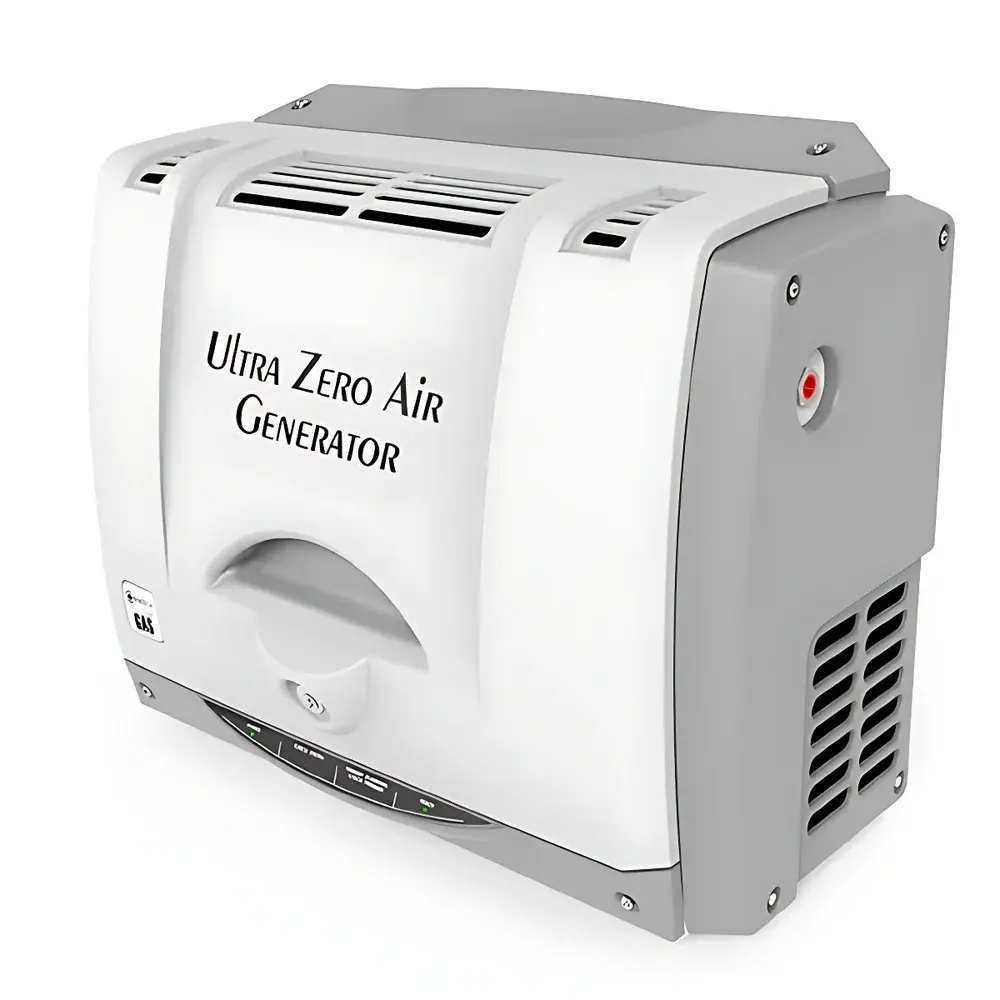
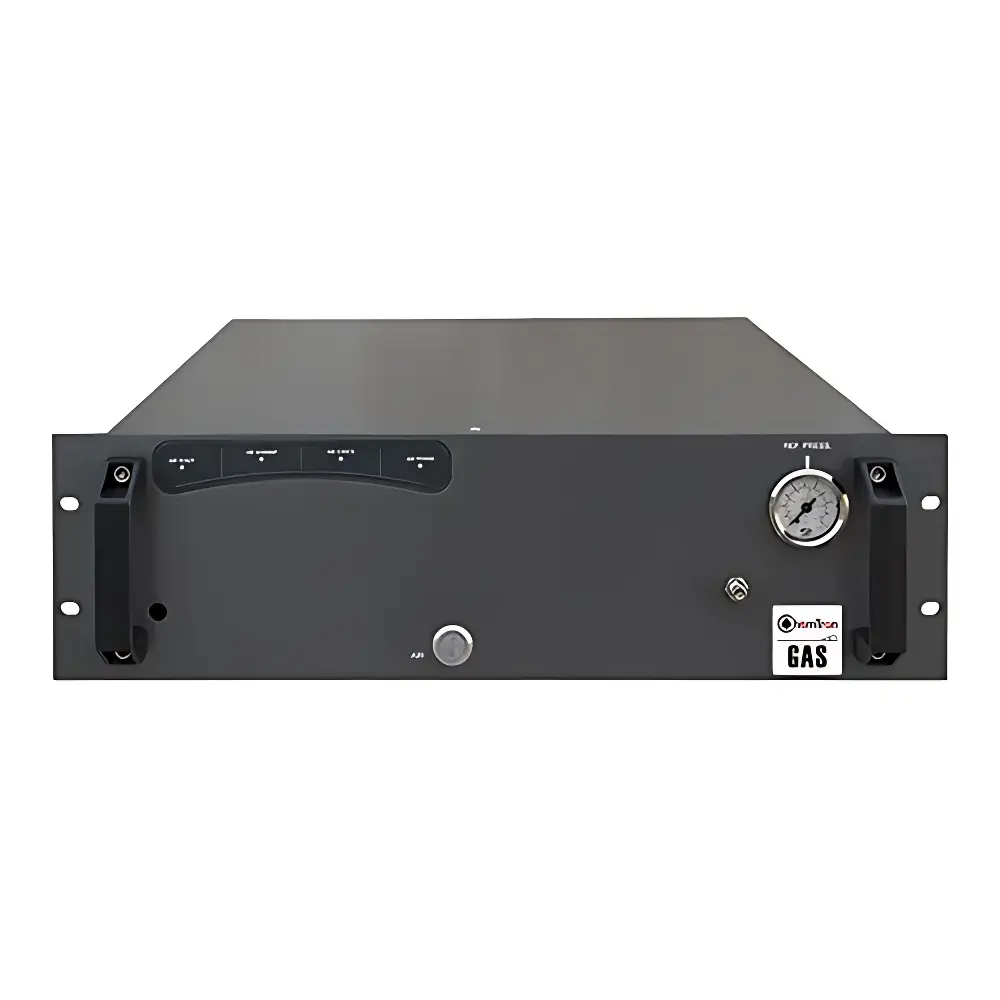
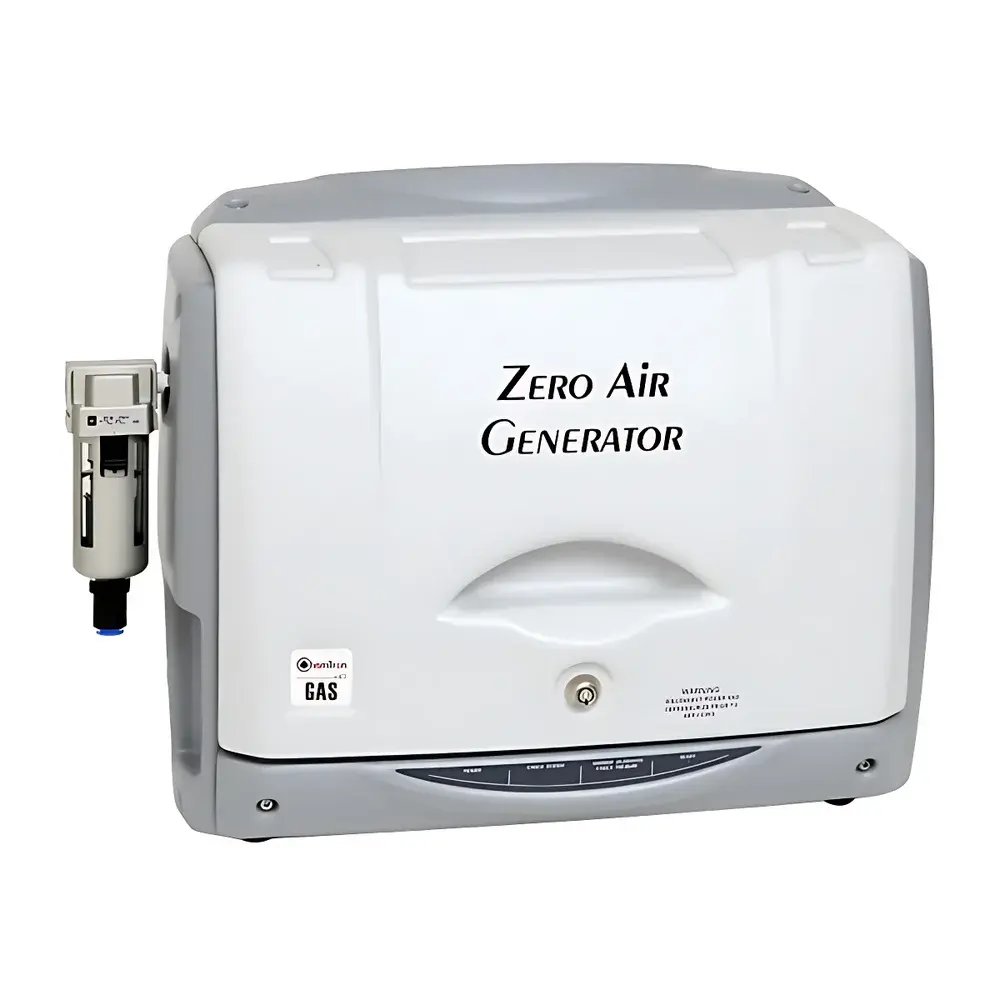
ChemTron GC3000 Zero Air Generator
| Brand | ChemTron |
|---|---|
| Origin | Switzerland |
| Model | GC3000 |
| Hydrocarbon Removal Principle | High-Temperature Catalytic Cracking |
| Output Flow Rate | 1.5–30 L/min |
| Output Pressure | 4.5–10 bar |
| Total Hydrocarbons (THC) | <0.05 ppm |
| Dew Point | −30 °C |
| Certifications | CE, CSA, FCC |
| Power Supply | 110–120 V / 60 Hz or 220–240 V / 50 Hz |
| Dimensions (H×W×D) | 410 × 550 × 230 mm |
| Weight | 12 kg |
| Inlet Connection | 1/4″ NPT |
| Outlet Connection | 1/8″ NPT |
Overview
The ChemTron GC3000 Zero Air Generator is an engineered solution for laboratories requiring continuous, high-purity zero air as a combustion and makeup gas in gas chromatography (GC) systems, flame ionization detectors (FID), and other trace-level analytical instrumentation. It eliminates dependency on high-pressure compressed air cylinders by generating zero air on-demand via a three-stage purification process rooted in catalytic oxidation thermodynamics and precision filtration science. Unlike ambient air compressors, the GC3000 integrates a high-temperature catalytic converter (operating at >350 °C) to fully oxidize hydrocarbons (HC) and carbon monoxide (CO) into CO₂ and H₂O—subsequently removed in downstream stages. The resulting zero air meets stringent analytical requirements defined in ASTM D6216, ISO 8573-1 Class 1:2:1 (for particles, water, and oil), and USP for residual hydrocarbon content. With a certified THC level of <0.05 ppm (v/v) and a dew point of −30 °C, the GC3000 ensures baseline stability, reduced detector noise, and enhanced reproducibility across extended run times.
Key Features
- Three-stage purification architecture: pre-filtration (coalescing + auto-drain moisture separation), high-temperature catalytic oxidation (>350 °C), and sub-micron final filtration (99.99% removal of particles ≥0.5 µm)
- Real-time system diagnostics: integrated pressure sensors monitor inlet and outlet conditions; thermal protection circuits detect catalyst bed under- or over-temperature events with audible/visual alarms
- Intelligent pressure regulation: automatic inlet pressure compensation maintains stable output pressure (4.5–10 bar) regardless of upstream fluctuations
- Low-risk operational design: non-ASME pressure vessel construction; maximum internal working pressure remains below 12 bar—well within safe limits for laboratory environments
- Flexible deployment: benchtop or wall-mount configuration; compact footprint (410 × 550 × 230 mm) supports integration into crowded analytical labs or centralized utility rooms
- Continuous-duty rated: designed for 24/7 operation with scheduled maintenance intervals tracked via built-in catalyst runtime counter
Sample Compatibility & Compliance
The GC3000 is compatible with standard laboratory-grade compressed air sources (oil-free, ≤40 °C inlet temperature, ≤100 ppm THC, ≤50 ppm CO) and integrates seamlessly with ChemTron’s proprietary oil-free air compressors—eliminating the need for optional secondary inlet filtration. All materials in contact with the gas stream comply with USP Class VI biocompatibility standards and are free of leachable organics or metallic contaminants. The unit conforms to electromagnetic compatibility (EMC) requirements per EN 61326-1 and safety standards per IEC 61010-1. Its CE, CSA, and FCC certifications validate compliance with EU Machinery Directive 2006/42/EC, North American electrical safety regulations, and radio-frequency emission limits—ensuring readiness for GLP/GMP-regulated environments where auditability and documentation integrity are mandatory.
Software & Data Management
While the GC3000 operates as a standalone hardware system without embedded firmware-based user interfaces, it supports full traceability through analog monitoring outputs (0–10 V or 4–20 mA) for pressure, catalyst temperature, and runtime hours—enabling integration into LabVantage, Thermo Fisher SampleManager, or custom SCADA platforms. Optional RS-485 Modbus RTU communication allows remote status polling and alarm logging. All critical operational parameters—including catalyst service life, cumulative runtime, and fault event timestamps—are stored in non-volatile memory and accessible via external data acquisition systems. This architecture satisfies FDA 21 CFR Part 11 requirements when deployed with validated electronic record systems that enforce user authentication, audit trails, and electronic signatures.
Applications
- Flame ionization detection (FID) and nitrogen-phosphorus detection (NPD) in gas chromatography
- Carrier and makeup gas supply for GC–MS systems requiring ultra-low background interference
- Calibration gas dilution systems requiring inert, hydrocarbon-free air matrices
- Environmental air monitoring instrumentation including ozone analyzers and chemiluminescent NOx detectors
- Pharmaceutical stability testing chambers requiring controlled, contaminant-free purge air
- Research applications in atmospheric chemistry, combustion kinetics, and catalyst evaluation studies
FAQ
What inlet air quality is required for optimal GC3000 performance?
The generator requires oil-free compressed air with ≤100 ppm total hydrocarbons, ≤50 ppm CO, ≤40 °C inlet temperature, and ≤10 bar inlet pressure. Use of ChemTron-certified air compressors eliminates need for optional secondary inlet filtration.
Can the GC3000 be used with FID detectors from Agilent, Shimadzu, or Thermo Fisher?
Yes—the GC3000 delivers zero air meeting OEM-specified purity thresholds for all major GC manufacturers’ FID systems, including flow stability ±1% and THC <0.1 ppm (verified per ASTM D6216 Annex A2).
How often does the catalytic converter require replacement?
Under typical lab conditions (24/7 operation, clean inlet air), catalyst service life exceeds 12,000 hours; runtime is tracked automatically and alerts users 500 hours prior to recommended maintenance.
Is wall-mounting hardware included with the GC3000?
Yes—standard mounting brackets and fasteners for vertical installation are supplied; load-bearing capacity supports full operational weight (12 kg) with 15 mm clearance behind unit for heat dissipation.
Does the GC3000 support integration into a centralized lab gas management network?
Yes—via analog signals (0–10 V / 4–20 mA) or optional RS-485 Modbus RTU, enabling real-time status monitoring, predictive maintenance scheduling, and compliance reporting within enterprise laboratory information management systems (LIMS).
Related Products



