
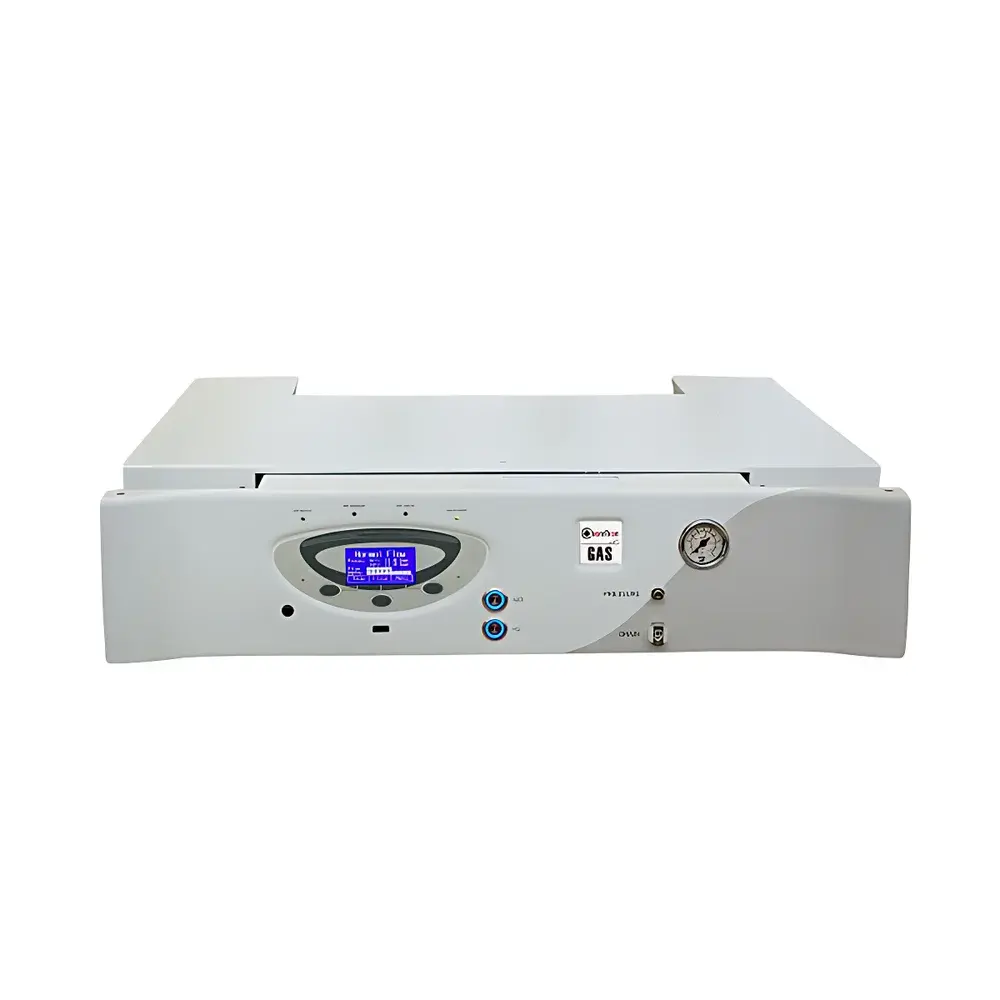
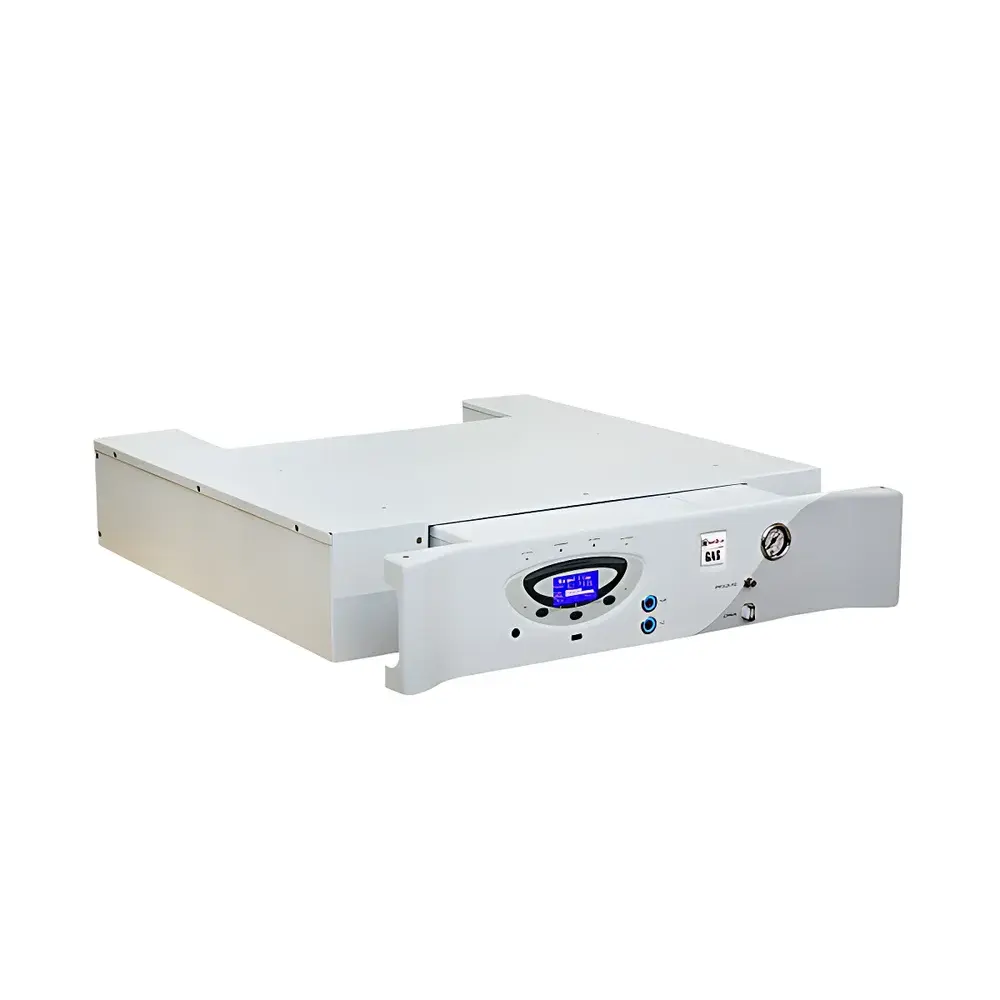
ChemTron FID FLAT NM Platform-Type Ultra-High-Purity Hydrogen Generator
| Brand | ChemTron |
|---|---|
| Origin | Germany |
| Model | FID FLAT NM |
| Hydrogen Generation Principle | PEM Electrolysis of Deionized Water |
| Output Flow Rate | 100–1350 mL/min |
| Output Pressure | 11 bar (160 psig) |
| Hydrogen Purity | 99.99996% |
| Water Reservoir Capacity | 7 L |
| Internal Gas Volume | <50 mL |
| Dimensions (W×D×H) | 690 × 680 × 150 mm |
| Weight | 41–45 kg |
| Power Consumption | 90–450 W |
| Operating Environment | 15–40 °C, 0–80% RH (non-condensing) |
| Certifications | CE, CSA, FCC |
| Display | 128×64-pixel LCD with tactile buttons |
| Noise Level | ≤46 dB(A) |
| Max Load Capacity | 80 kg |
| Gas Outlet | 1/8" Swagelock |
| Water Resistivity Requirement | ≥5 MΩ·cm (min. 1 MΩ·cm acceptable) |
Overview
The ChemTron FID FLAT NM is a platform-type ultra-high-purity hydrogen generator engineered for continuous, safe, and autonomous operation in analytical laboratories requiring certified-grade hydrogen for gas chromatography (GC), GC-MS, ICP-MS, FAST-GC, hydrogen flame ionization detection (FID), fuel cell testing, catalytic hydrogenation, and deuterium carrier applications. Unlike conventional alkaline or metal-hydride-based systems, the FID FLAT NM employs a solid polymer electrolyte (SPE) architecture centered on a high-performance CPEM (Catalyzed Proton Exchange Membrane) and a titanium-bodied CCELL electrolytic cell. This design eliminates liquid electrolytes, caustic solutions, and regenerative desiccants—reducing maintenance overhead while ensuring intrinsic safety and long-term stability. Hydrogen is generated exclusively via electrolysis of high-resistivity deionized water (≥5 MΩ·cm), yielding a certified purity of 99.99996% (≤0.4 ppm total impurities), validated by independent third-party analysis per ISO 8573-1 Class 1 compressed air/gas standards. The integrated pressure-regulated delivery system maintains stable output at up to 11 bar (160 psig), enabling direct coupling to high-backpressure GC inlets and capillary columns without auxiliary compressors.
Key Features
- Platform-integrated mechanical architecture rated for 80 kg static load—enables direct mounting of GC or GC-MS instruments to optimize bench space and minimize vibration transmission.
- CPEM membrane coated with platinum-group catalysts and housed within a high-purity titanium CCELL electrolyzer—ensures corrosion resistance, electrochemical stability, and zero metallic leaching into the gas stream.
- Triple-stage purification: (1) membrane-based static drying, (2) dual-stage cold-regenerative purifier (non-palladium), and (3) real-time electrochemical monitoring of H₂ quality—eliminates need for consumable desiccants or periodic catalyst regeneration.
- Comprehensive safety architecture: internal gas volume <50 mL; dual-pressure monitoring (internal leak & external demand); water conductivity sensing (auto-shutdown if resistivity falls below threshold); seismic/vibration-triggered shutdown; overpressure relief at outlet; and redundant thermal and voltage supervision of the CCELL stack.
- Intuitive local interface: 128×64-pixel backlit LCD with tactile keys displays real-time pressure, water level, conductivity, temperature, fault codes, and operational status—no PC required for routine operation.
- Energy-efficient design: power draw scales linearly with flow demand (90–450 W), minimizing idle consumption during low-flow GC methods; noise emission limited to ≤46 dB(A) for quiet lab integration.
Sample Compatibility & Compliance
The FID FLAT NM delivers hydrogen meeting ASTM D7217–22 specifications for GC carrier and detector gases, and complies with ISO/IEC 17025 requirements for calibration traceability of gas purity certification. Its output satisfies USP <691>, EP 2.5.27, and ICH Q5C guidelines for inert carrier gases in pharmaceutical QC workflows. As a non-ASME-coded device (internal pressure <11 bar, gas volume <50 mL), it is exempt from pressure vessel regulation in EU, US, and Canada—streamlining installation and reducing facility compliance burden. CE, CSA, and FCC certifications confirm electromagnetic compatibility and electrical safety per EN 61326-1, CSA C22.2 No. 61010-1, and FCC Part 15 Subpart B. All firmware and control logic are designed to support 21 CFR Part 11-compliant audit trails when used with optional PC software and networked logging.
Software & Data Management
Optional PC-based control software enables remote configuration, real-time parameter monitoring (flow, pressure, water conductivity, cell voltage), event logging, and alarm history export in CSV format. When deployed in multi-unit installations, the cascade control module synchronizes up to six FID FLAT NM generators via RS-485 or Ethernet—dynamically redistributing flow capacity upon individual unit failure to maintain uninterrupted GC operation. Firmware updates are provided free of charge throughout product lifetime and include security patches, diagnostic enhancements, and regulatory alignment (e.g., updated alarm thresholds for GLP/GMP environments). All system logs retain timestamps with millisecond precision and support role-based access control for QA/QC administrators.
Applications
- GC and GC-MS carrier and detector (FID, HID, TCD) gas supply—eliminating cylinder logistics, pressure fluctuations, and oxygen/moisture contamination risks.
- FAST-GC and microbore column applications requiring rapid pressure ramping and ultra-stable flow profiles.
- ICP-MS hydrogen reaction gas mode for polyatomic interference removal (e.g., ArO⁺, ClO⁺).
- Hydrogen fuel cell R&D and durability testing where trace CO, CH₄, or NH₃ must remain below sub-ppb levels.
- Catalytic hydrogenation screening in parallel reactor systems requiring precise, scalable, and repeatable H₂ dosing.
- Deuterium carrier gas generation (when coupled with isotopic water feed) for specialized MS and NMR applications.
FAQ
What water quality is required for optimal performance?
Deionized water with resistivity ≥5 MΩ·cm is recommended; the system tolerates down to 1 MΩ·cm but triggers conductivity alarms and halts electrolysis below this threshold to prevent membrane degradation.
Can the FID FLAT NM be used as both carrier and combustion gas simultaneously?
Yes—its pressure-regulated dual-output configuration (standard on NM 600 Plus and above) supports independent flow control for carrier and detector lines, eliminating cross-contamination risk.
Is the cold-regenerative purifier serviceable in-house?
No—this is a sealed, field-replaceable module with a 2-year service life under continuous operation; replacement requires certified technician calibration.
Does the generator require ventilation or exhaust ducting?
No—hydrogen is consumed entirely within the instrument’s closed-loop gas path; no venting or room-air dilution is necessary per IEC 60079-10-1 Zone 2 guidance.
How does the cascade control handle load balancing across multiple units?
Using proprietary dynamic load-sharing algorithms, the master controller continuously monitors real-time flow demand and adjusts current distribution across active units—maintaining ±0.5% flow accuracy even during transient GC oven ramping events.



